The Worst Show Ever, 2025

I normally wait some time before writing a show review – that’s partially because I want to digest what happened, and partially because I can be quite lazy about it. I didn’t want to wait too long for this, because I need to make sure I remember all the details and my brain’s efforts to mask the trauma might make that difficult if I leave it too long. (If you’d like to skip the rant and go straight to the models, click here. But you’ll be missing out on some A-grade invective.)

The World Model Expo in Versailles was the worst model show I have ever been to, and by quite a margin.

I’ve been to IPMS-type shows in decaying church halls where old men coo over each other’s models and glare mistrustfully at anyone under 50 for being too young to understand the importance of a flanged screw bolt on the T-17A, and those shows were more enjoyable.

Before I get into the detail, I should note that there’s some things even the show organisers couldn’t get wrong or ruin: painters meeting up with painters. The best part of any show is meeting up with friends, meeting new friends, and talking crap about models. I can’t imagine what you’d have to do to get that wrong, but I’m sure it was on a list somewhere and the organisers just forgot about it.

So, despite everything else, I had a lovely time catching up with friends and chatting to people.

To begin, it’s not solely the Expo’s fault (although the vast majority of blame does lie with the organisers). The World Model Soldier Federation bears some responsibility, and not just because they awarded the show to Versailles. Here’s a quick explanation of how the selection process works as I understand it (full disclosure: Fen Model Show got to vote on the 2028 World Model Expo, so I have some insight about the process).

World Expo selection

Groups of people (usually members of a club or organisers of a show) put together proposals to host the World Model Expo. The proposal should include information about the venue itself, local amenities, predicted costs, experience running model shows and/or other large events, and so on. They’re pretty much what you’d expect of a fairly light business proposal.

The competing proposals are then put to a vote by the voting body, which is mostly composed of clubs and model shows around the world. For instance, France has 13 voting bodies, the UK has 6, and so on.

The Versailles proposal was, apparently, unopposed, so there was no vote. It won by default.

So, back to the World Federation and its culpability for some of the issues.

What particularly annoys me about the World Federation is that, for an organisation that wants to claim the right to declare something a World Model Expo, they’re stuck firmly in the past. The system of categories and classes is dated and confusing. If you started modelling in the 90s or you’ve spent a lot of time at old-style shows, I’m sure a lot of the distinctions make sense. If, however, you came to the hobby later or via fantasy shows like Golden Demon, they make very little sense and usually aren’t explained.

For instance, why is ‘diorama’ solely a scale modelling category (which usually means that you need to have a vehicle or similar in it)? I go to these shows and see that figure dioramas are usually put in the open figure categories. But it’s almost never explained until you get it wrong or figure out who you can ask. Lots of shows are guilty of this.

The World Expo only noted that box dioramas should go in the open figure categories, which, by following the maxim of the exception that proves the rule, suggests that all other dioramas must logically go in the diorama category. I know at least one person who put their figure dioramas in the ‘diorama’ category because they fairly sensibly assumed that’s where they belong. I’ve seen the same in the ‘sci-fi’ category: figures rather than scale models (which also leads me to the point that ‘scale model’ is also horrifyingly general, and the alternative ‘ordnance’ seems to propose that it’s solely a military hobby, which I think is an awful thing to suggest).

Why do these misleading terms persist? Why can’t someone in the World Federation sit down and take a proper look at not just the names of the categories but the current state of the hobby – the things people actually model, their specific interests, etc. – and revise this? If it’s the World Expo, it should absolutely reflect the current state of the hobby, not the state as it was in 1995.

Model shows are effectively how we know what’s ‘good’ in the hobby. We sit at home and poke paint and glue at things, and maybe see some pictures online, but it’s not until you get to a show that you a) see what those other models really look like, and b) get judged and thus told whether it’s good or bad. As such, shows are really the arbiters of what ‘the hobby’ is at the moment, and I think shows therefore are also responsible for growing with the hobby, and for being welcoming and not restrictive. We’ve seen other shows bring in new types of categorisation, recognising other elements of artistic pursuit like storytelling and ambience, and so on. It’s not hard to look around and see that the world has moved on.

So, on with the disaster that unfolded in Versailles specifically. I’ll begin with ‘communication’.

From the beginning, the show was poorly communicated. They put up a website less than a year before the show, having only otherwise told people about the dates and that it would be in Versailles. The website was clearly still littered with placeholder pages (“Add your content here” sort of thing) and contradictory information – for instance, the page that said the competition would be in the town hall, while a map of the two venues stated that the competition would be at both sites. Or when tickets finally went on sale, but registration tickets for entrants were on a different page entirely.

Couple this with the ongoing insistence on French. I have no problem with them prioritising French, but if you’re running a World Expo, you should be ready to provide the same information in the modern lingua franca (see what I did there?): English. I don’t demand flawless English, or to have everything in English, but there’s really a minimum amount of information that you need to make sure is in good enough English that people can understand it.

It’s also handy if the information actually exists somewhere. Like where to go to register your models. Which was explained precisely nowhere. At most shows, you can probably get away with that because it’s all at one site, so you have signs up on the day directing people to the registration desk and where to put out their models. When you’ve announced that people with tickets to visit the show need to go to the trade hall, but not said anything about registration, you’re just inviting people to take their models to the wrong venue. Which, as everyone who was there will recall, was about half a mile from the trade hall. In summer. While probably carry some fairly weighty and very delicate models.

As such, the best information came from other attendees. We often found out that something had changed because one of our friends who speaks French read a hastily scrawled sign and told us about it. That obviously wasn’t very effective, because they had to have three separate prize giving ceremonies, and during two of them they tried to give out the same prizes to the same people who still didn’t turn up probably because they didn’t know those ceremonies were happening. I only found out about one of them because I was enjoying the air conditioning in the theatre when it happened.

As mentioned above, the show was spread across two sites. This isn’t fundamentally bad, but they were quite a distance apart, which means that if you’re at one, you need to consider the investment when going to the other. I’m middle aged and reasonably fit, but I don’t want to walk a round trip of a mile without good reason. If I was older or my ankylosing spondylitis was flaring up, that trip could be considerably more challenging. And it’s not like there are no old or disabled people in the hobby…

And while we’re on the topic of two sites… it was actually three. Which, again, no one was told about until they got to registration. Down behind the town hall was a gymnasium that had been kitted out to handle overflow of models because the town hall, when you got inside, was clearly never going to be adequate for the number of models that turn up to a World Expo. You’d need to be utterly oblivious to think that space could hold even half of the models. At least the gymnasium wasn’t another half mile away, I suppose.

Of course, all this starts coming together into a growing, tumorous morass of mistakes when you also realise that the town hall is a historic building with a stringent limit on number of people who can be inside at one time. This, of course, meant that queues to get into registration were up to two and half hours long, and similar the next day if you just wanted to look at models. Queues for the gymnasium were basically nonexistent, so I imagine most people saw a lot more of the models in there than they did of the ‘prestige’ categories up in the town hall.

So, let’s say that on the Friday you want to go register your models but you don’t know where to go. You start off at the Palais de Congres and find out that you need to walk 750 metres to the town hall. It’s approaching 30 degrees that day, but there are trees over the avenue most of the way there. But then you discover that you need to queue for two and half hours without any shade or shelter to register your models. Lucky thing that you brought a bottle of water!* Unlucky thing that you can’t use the toilet in the town hall until you get inside. You don’t yet know about the gymnasium or that there’s a toilet hidden underneath it, but tomorrow you find out about it and use it. Until they put tape over the stairs to stop people using the toilet. Because fuck you for trying to stay hydrated, and fuck your bladder in particular. (Based on many, many true stories.)

Oh, and remember how they sold day tickets for people who want to see the show but not enter? Lots of those people bought tickets for Friday and Saturday. Friday was essentially a permanent queue until about 4pm because people needed to register. Meanwhile, Saturday was judging day. Yes, judging was done during the day for four hours. At a small, one-day show, I think that’s obviously forgivable and probably inevitable. At a multi-day, international show where you’re selling day tickets to people who want to see the models, I think the vast majority of judging should be done in the evening or staggered so people can still enjoy the models (assuming they can get in, of course, because the Saturday queues weren’t much more generous than Friday’s).

But seeing models is what you go to a show for. Even if you’re the most narrow-minded, selfish, competitive painter in the world, you still want to see other people’s models. The three most important things to get right so that people can see the models are (in order):

  1. Access to the venue
  2. Lighting
  3. Stands to ideally bring the models closer to the eye

Obviously, the queues ruined access.

There were no dedicated lights. In some parts of the hall and the gynasium, that wasn’t a terrible problem. In other areas it was a significant problem.

The ‘stands’ that they put in the hall were simply extra tables folded up and stacked on top of the other tables, so they didn’t really function as effective stands. I’m sure there’s also a health and safety warning about this somewhere, but I generally expected at least one table to collapse before the show ended. Somehow, the tables survived. There were some stands in the gymnasium, which suggests they knew that stands were necessary but just decided they didn’t need that many.

By the time we got to Sunday, I think it’s fair to say that everyone thought the worst had passed. We were wrong. The organisers still had TWO prize giving ceremonies to get through, and for at least one of them, had come up with probably the worst method of giving out prizes I’ve ever seen. I can’t even imagine the thought process behind it. For those of you who were lucky enough not to witness this absurdity, here’s how it worked:

  • If you had won a highly commended, you were to come up on stage and get your name confirmed against a list and collect your pin badge.
  • There were probably about 400 people who had won a highly commended (based on there being slightly more than 1000 competitors).
  • There was no “come up now if your surname begins with the letters A through D” to manage the numbers.
  • The only way of knowing you had won a highly commended was to see the stickers on your models.
  • See the earlier issues getting into the town hall to discover if you had, in fact won a highly commended.
  • Compound this with the fact that they apparently ran out of stickers, and some categories therefore had no stickers at all.

So it was entirely possible that you’d won a highly commended and didn’t know about it. And the only way to find out was to join the 400 other people queuing to get on stage where three people were sifting through long lists of names.

Before the debacle finished, I quit. I was done with the show. I know I’d won a medal for one of my entries, but I no longer cared. I was afraid that they’d do the same with the medals and take away any dignity associated with the prize. I might also have won a commended, but I was one of the people who couldn’t know if they had or not and I wasn’t about to join YET ANOTHER FUCKING QUEUE.

So, for the rest of the show, I have relied on reports, and, oh my, what a doozy followed this debacle.

The show had organised a saxophone band to play between the highly commended prize giving and the main prize giving. This might have been quite a nice interlude at any other show. But, of course, the queue was still going when the band arrived. Any sensible show would take the loss and ask the band to wait a bit and play a shorter set while they finished up giving out the pin badges. NOT THIS WORLD EXPO, MY FRIENDS.

No, rather than do the sensible thing, they opted to do the stupid and frankly insulting thing, and closed the curtain on the people still queuing. Out of sight, out of mind, I guess. And the band played. As my favourite Dane, Thomas, pointed out, it felt like the band continuing to play on the Titanic.

Not content with just this insult, the abuse continued during the final prize giving as the old bigoted misogynists then went on to only thank the male judges. I am reliably informed that the specific French used was “Merci, Messieurs les juges”. But the women were remembered – we must credit them with that. Because they thanked the (translation provided by a friend) “feminine sex that accompanies us in the hobby”.

And that’s really the diarrhea icing on the lumpy, corn-filled turd cake. You can’t even stand to treat women in the hobby with a modicum of respect. They are hobbyists like us. They were judges and volunteers. They were competitors who spent a lot of money to come to the show and hundreds of hours working on their models.

And with that, the show was done. Thank god.

Was Versailles nice, at least? Yeah, I guess so. I’ve spent quite a lot of time in Versailles before, when my now wife was working there. I didn’t particularly like it at the time, and while it is a bit nicer (certainly a lot cleaner), the town doesn’t really have any appeal as a tourist destination for me. We found some good cafes and less good restaurants. There were some interesting beers. Mostly, there were my friends, and that was indeed good.


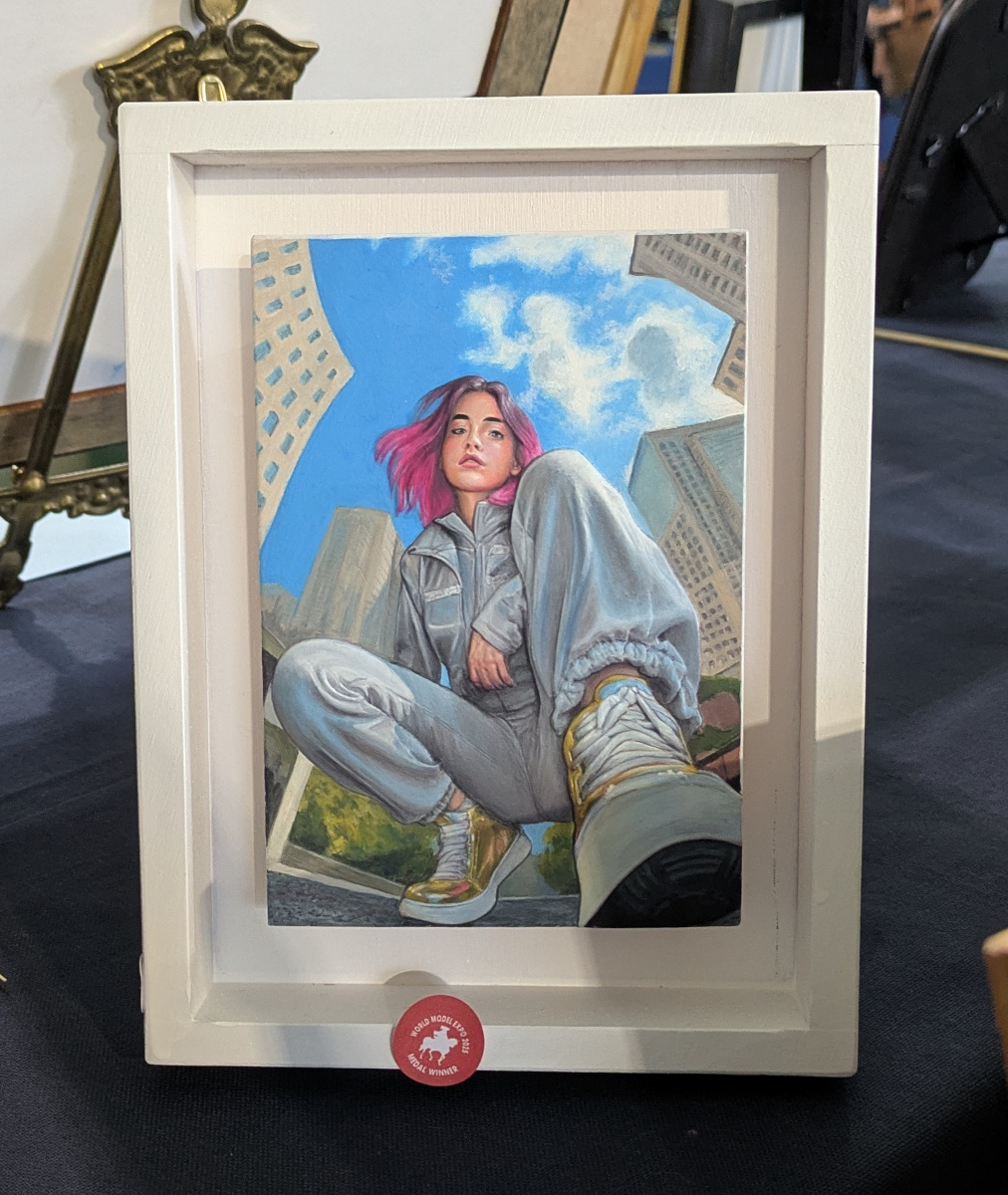
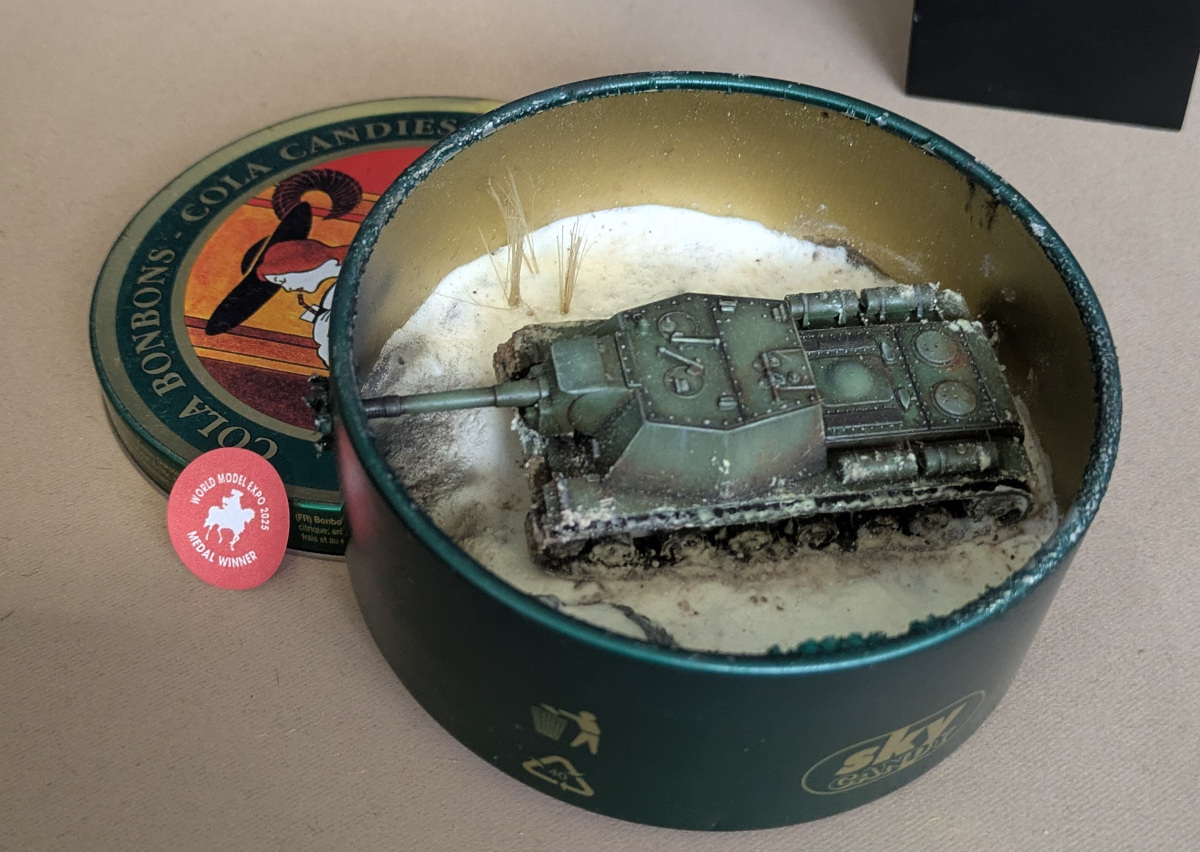
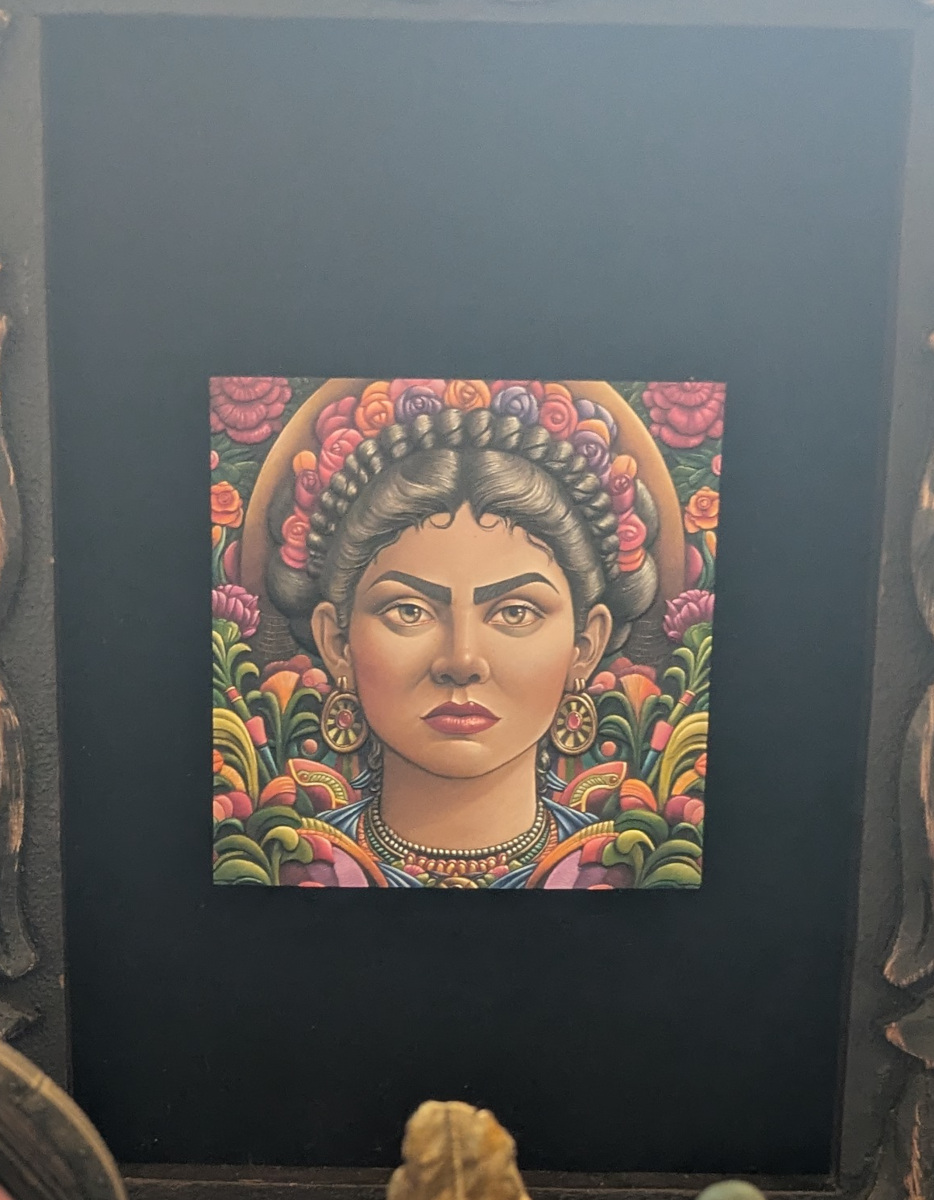
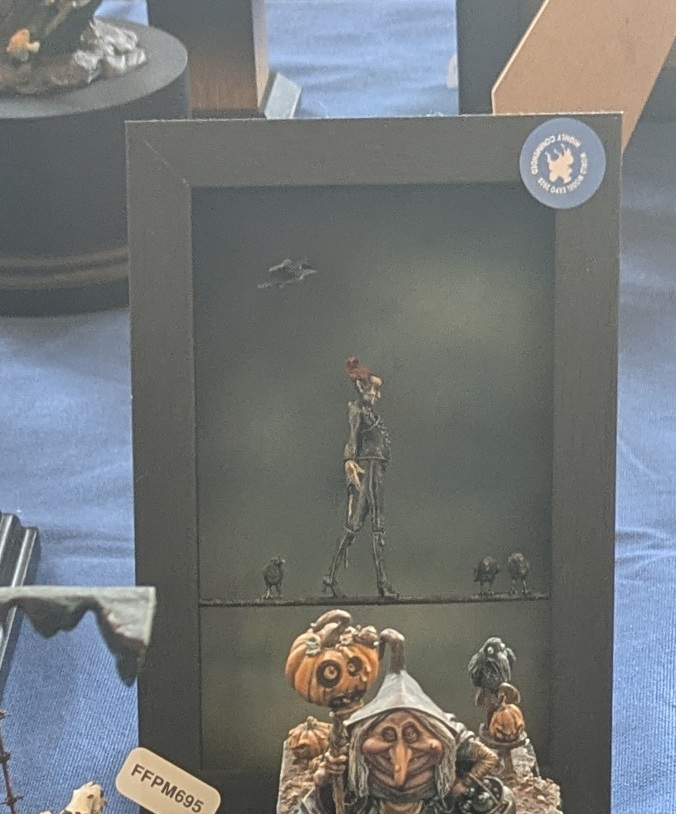
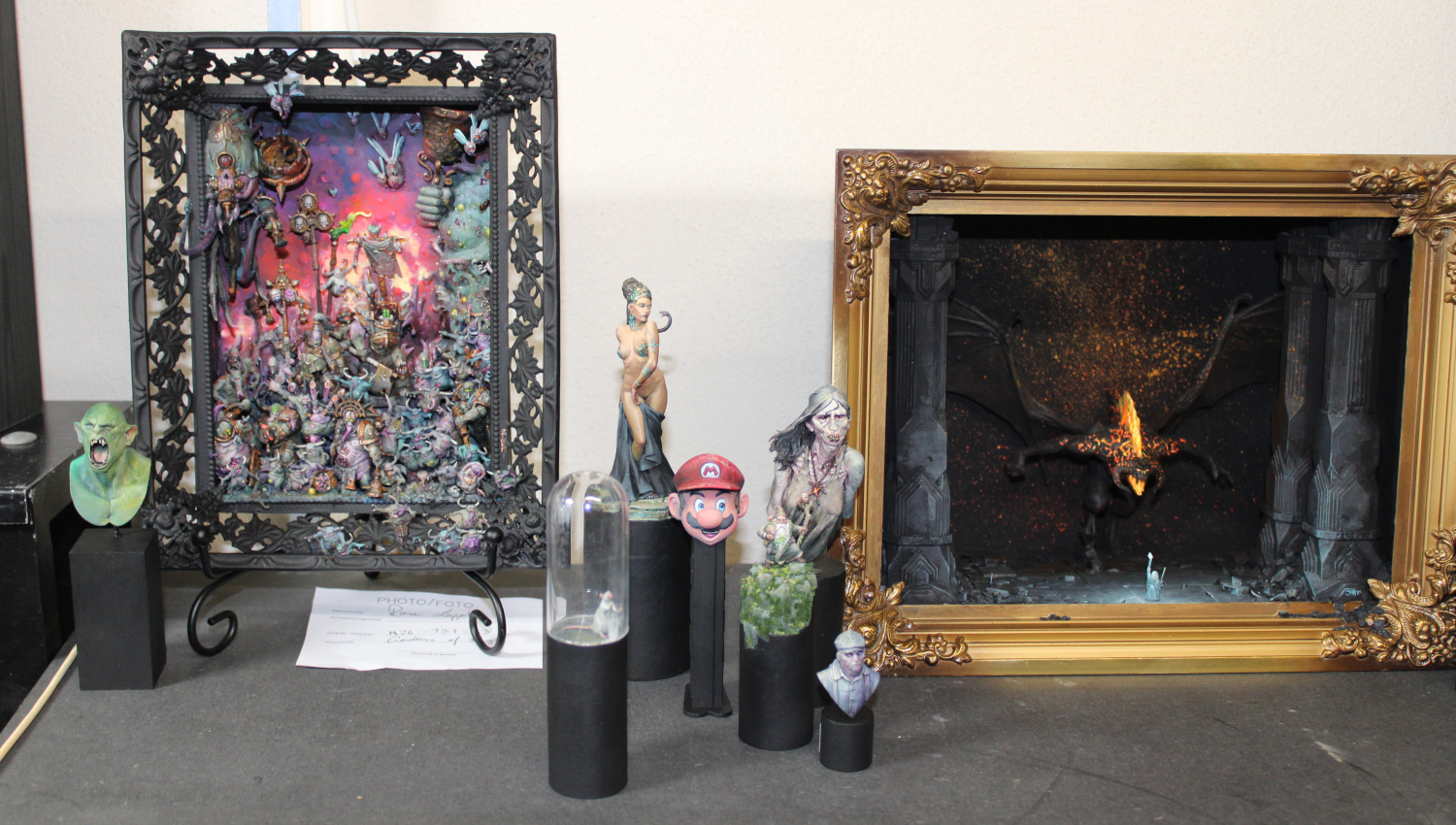
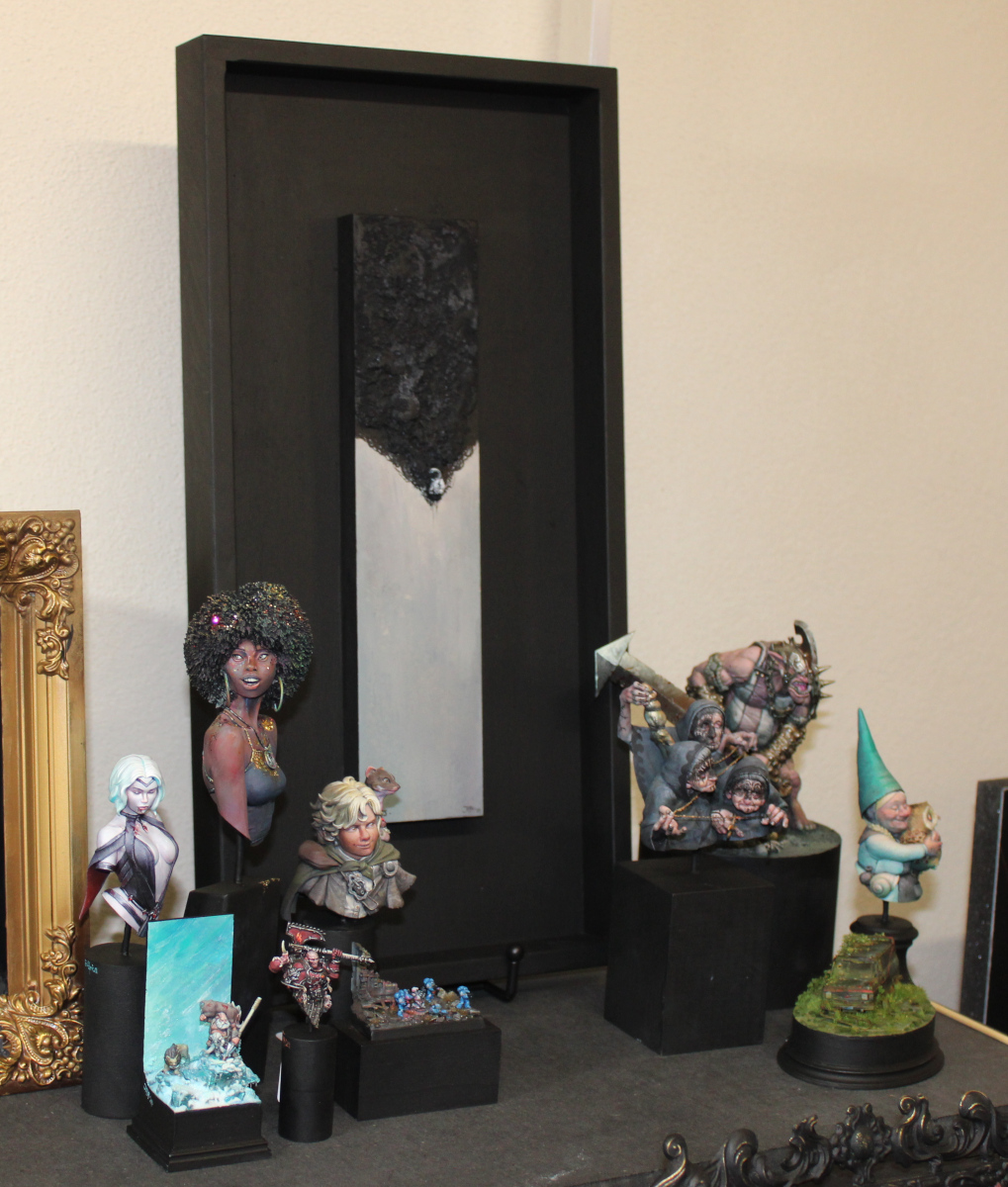
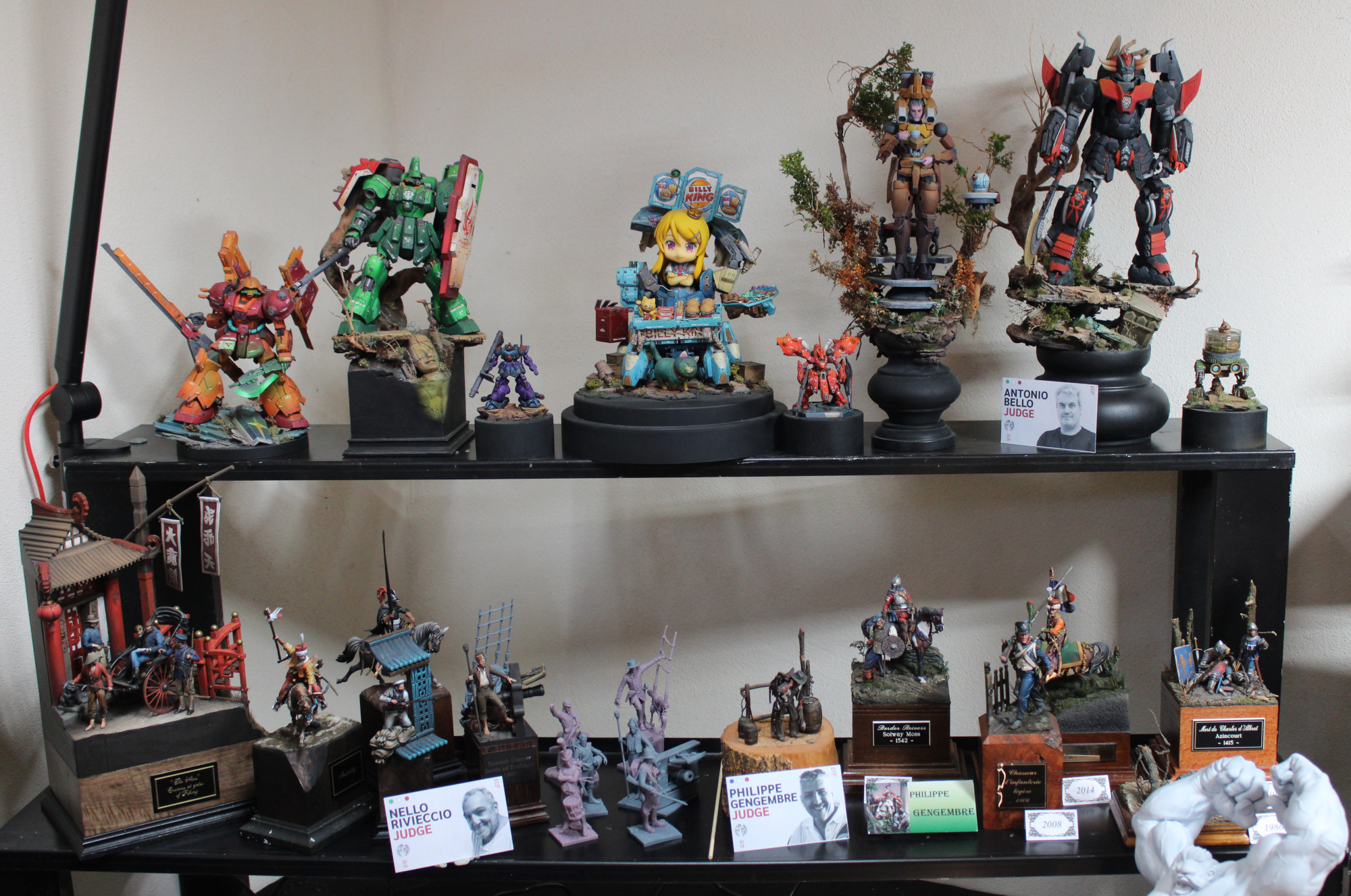
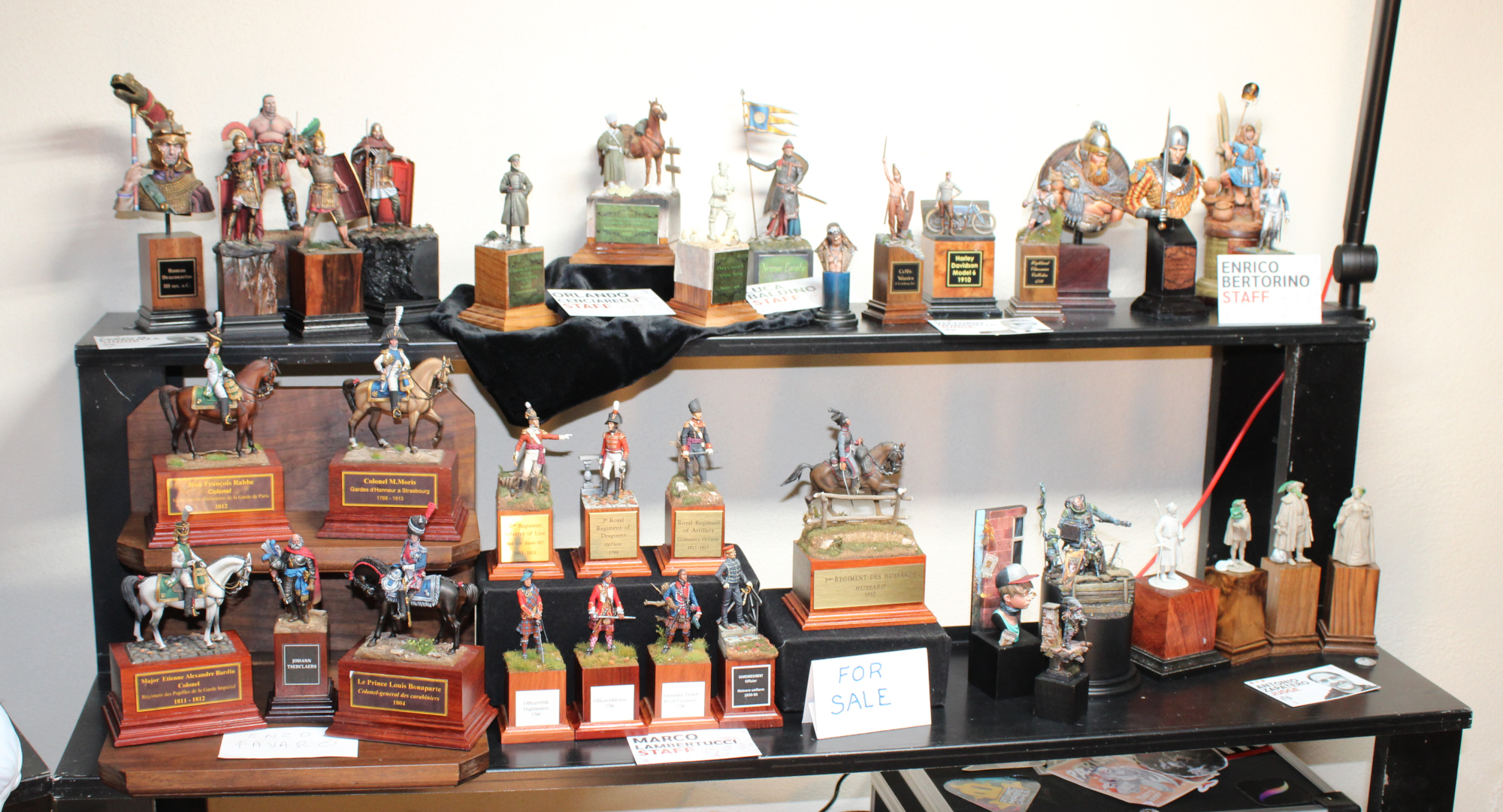
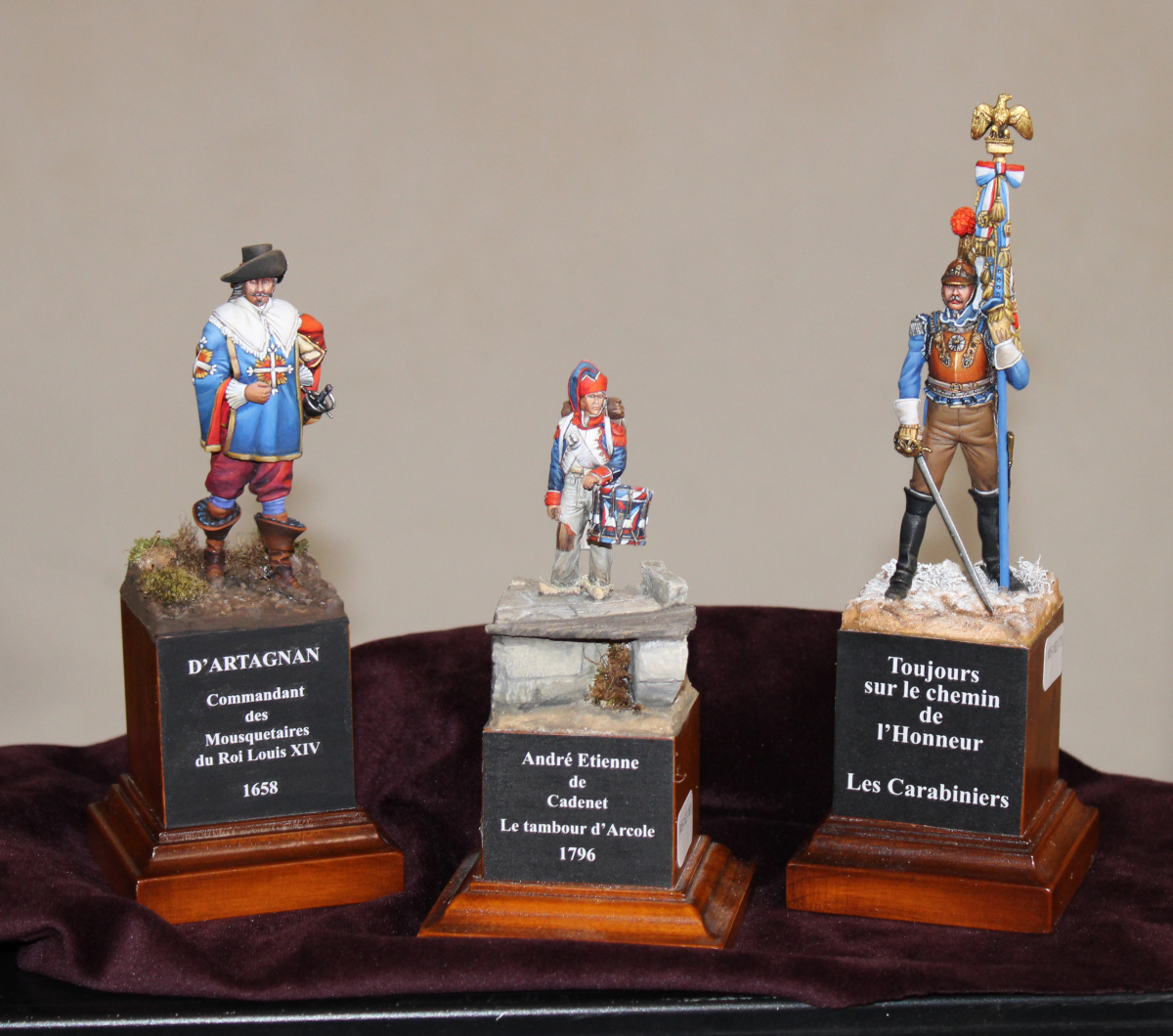
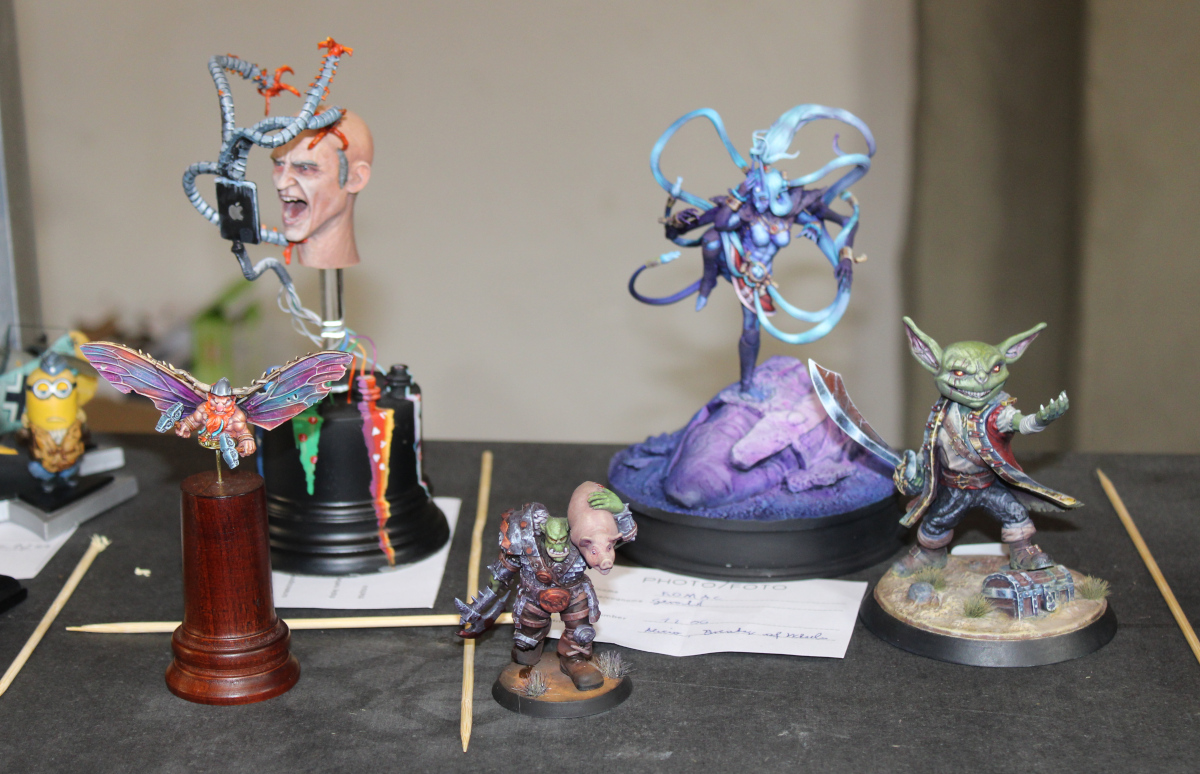
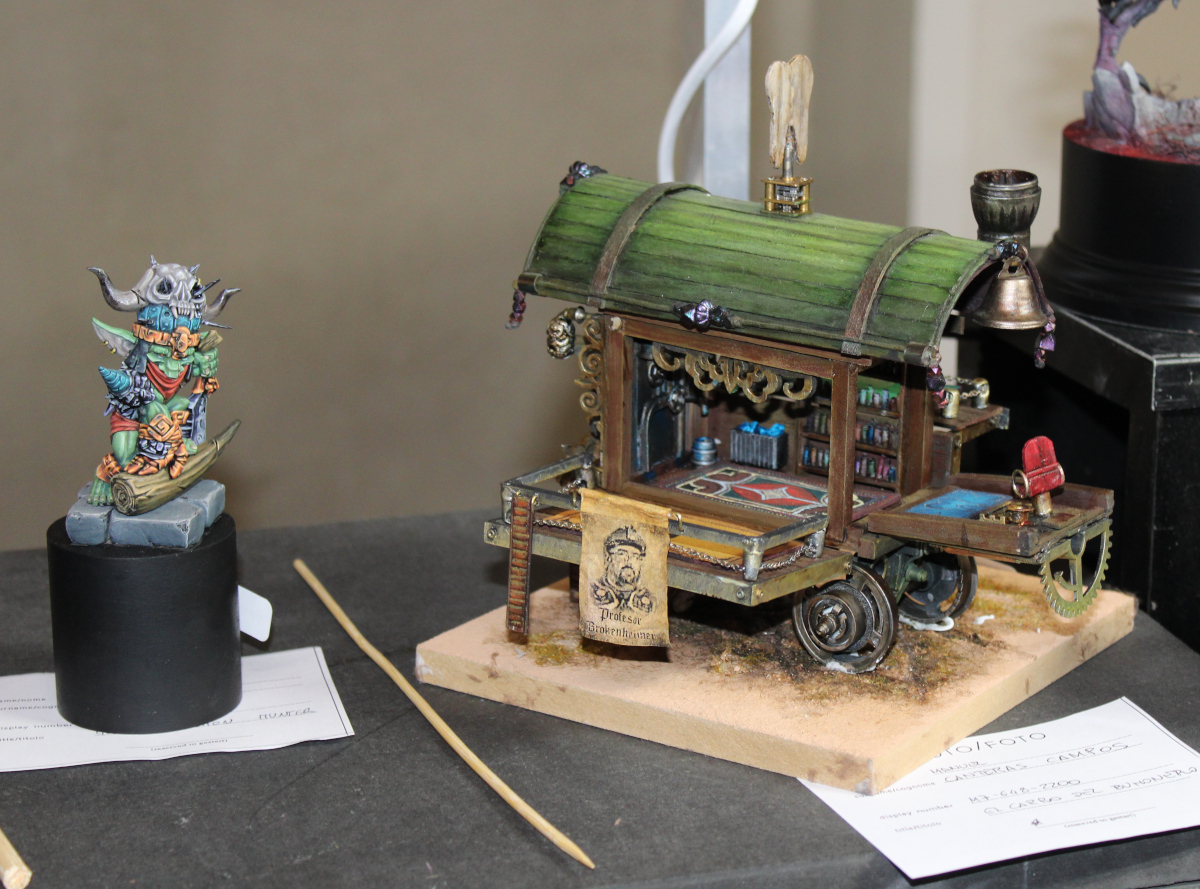
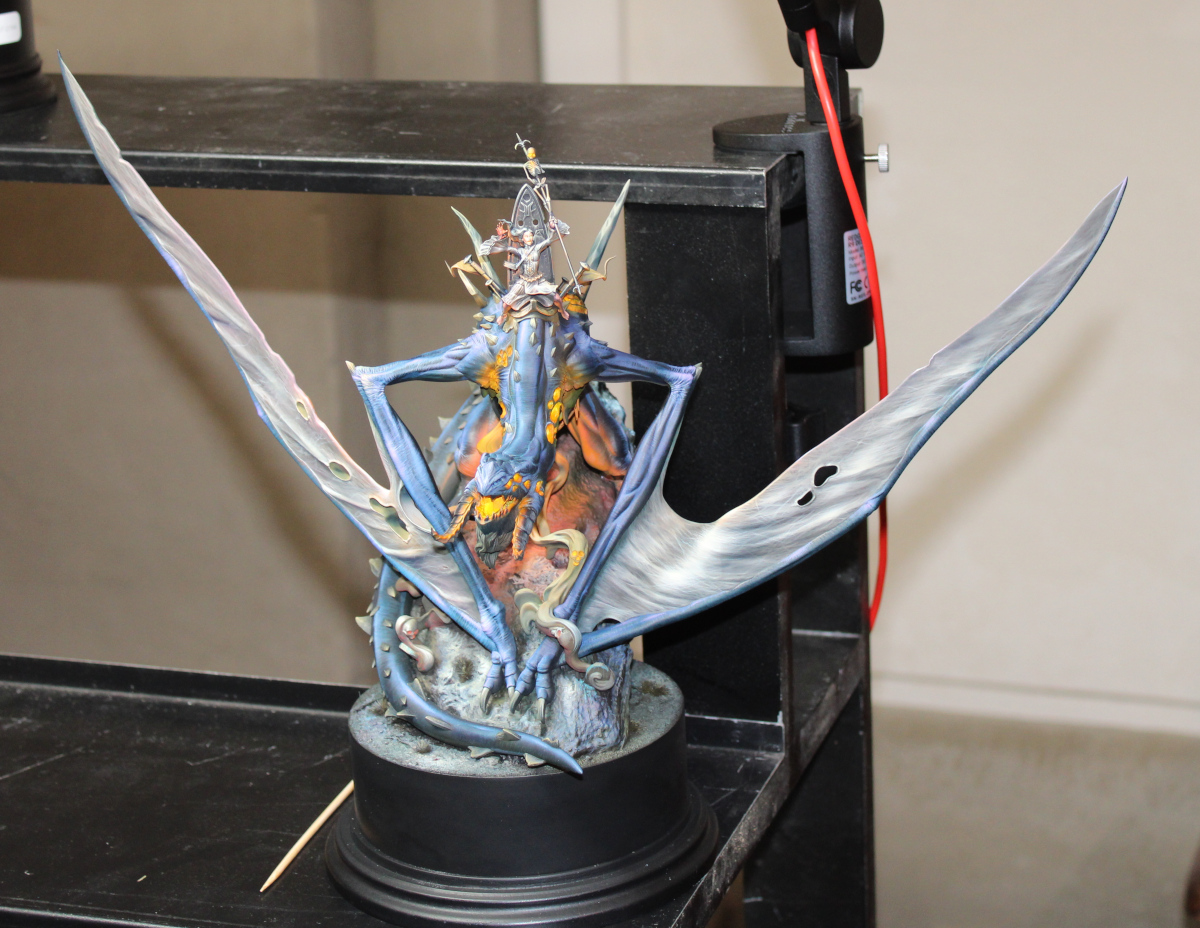
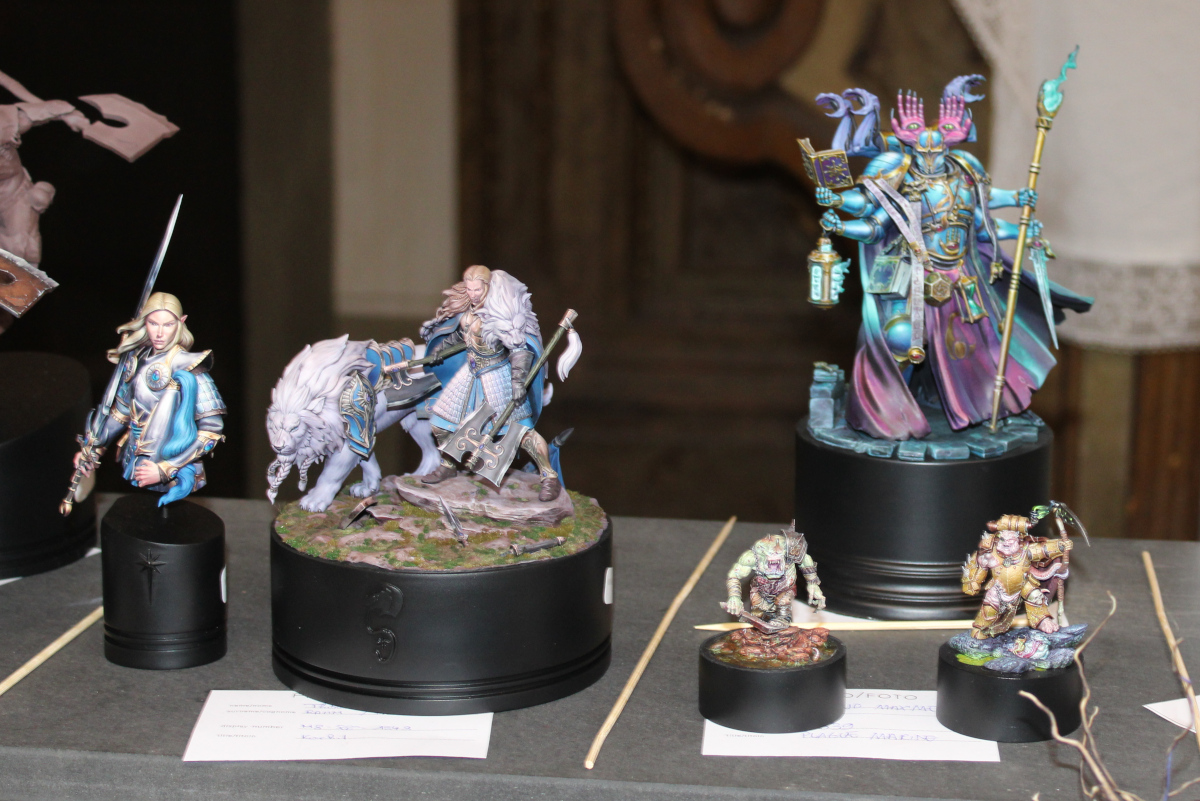
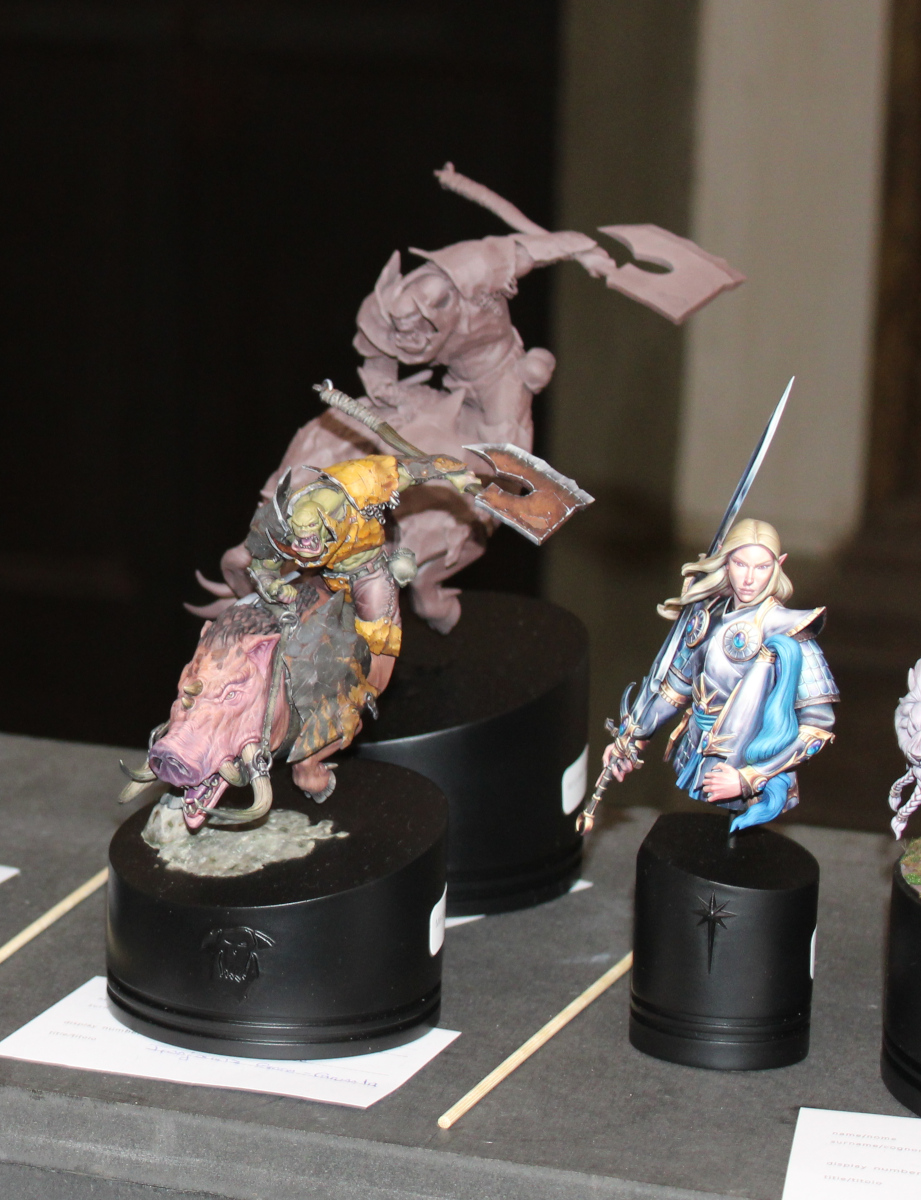
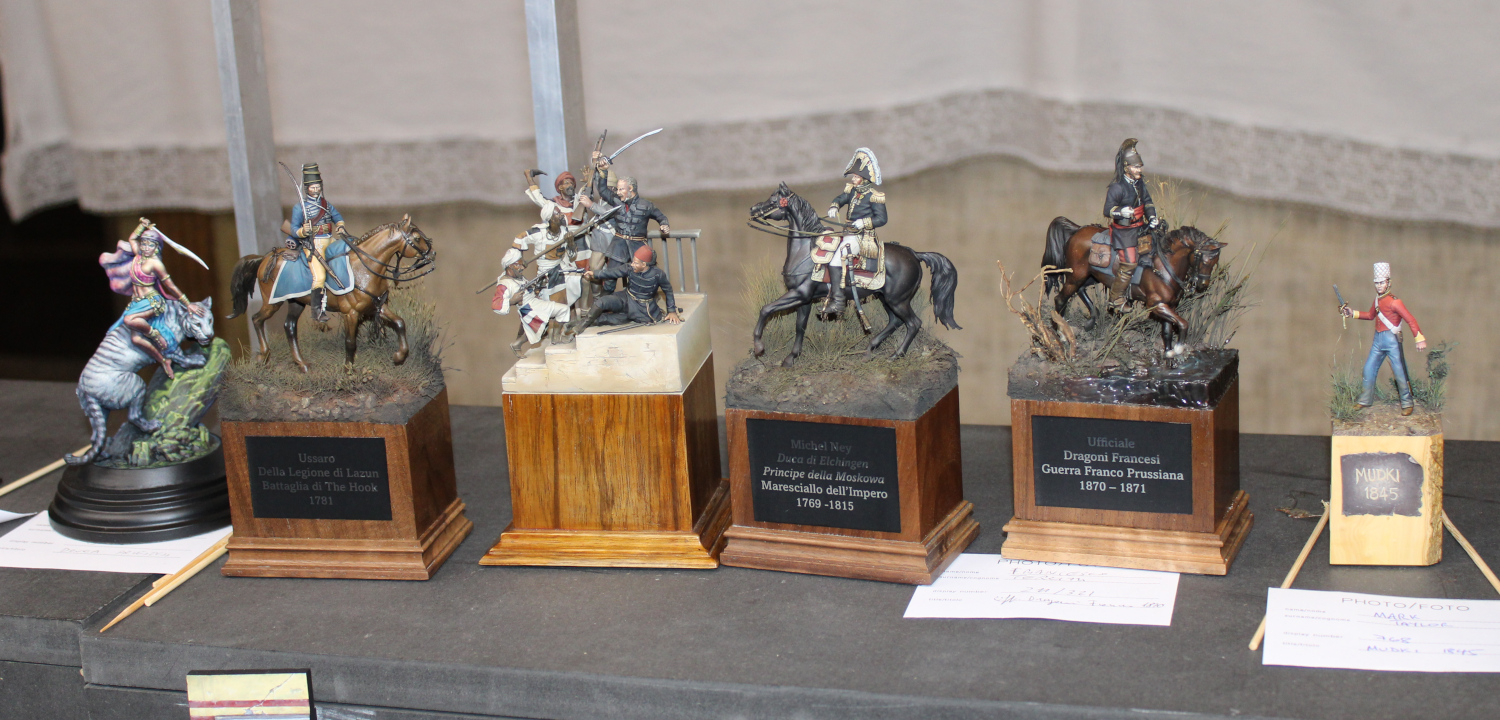
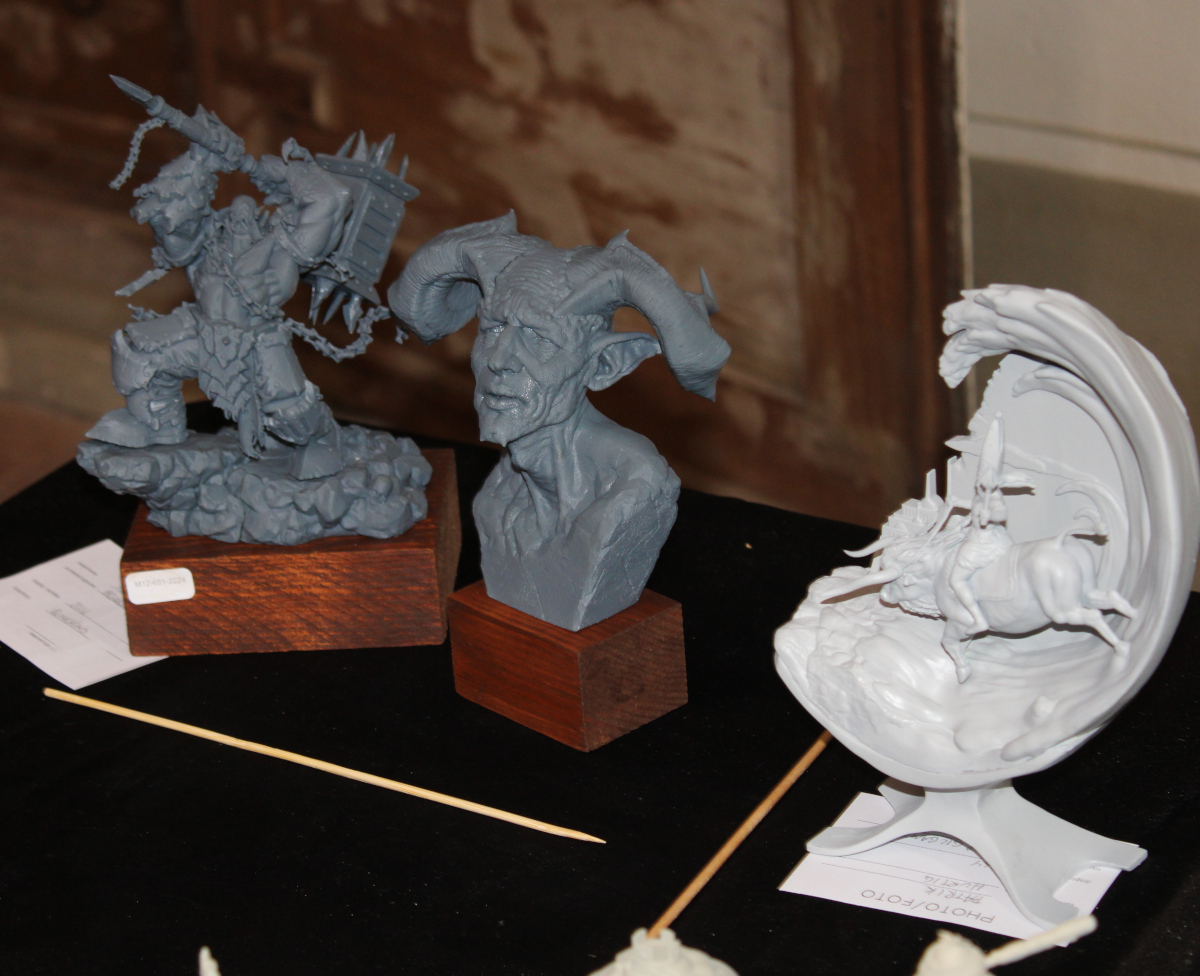
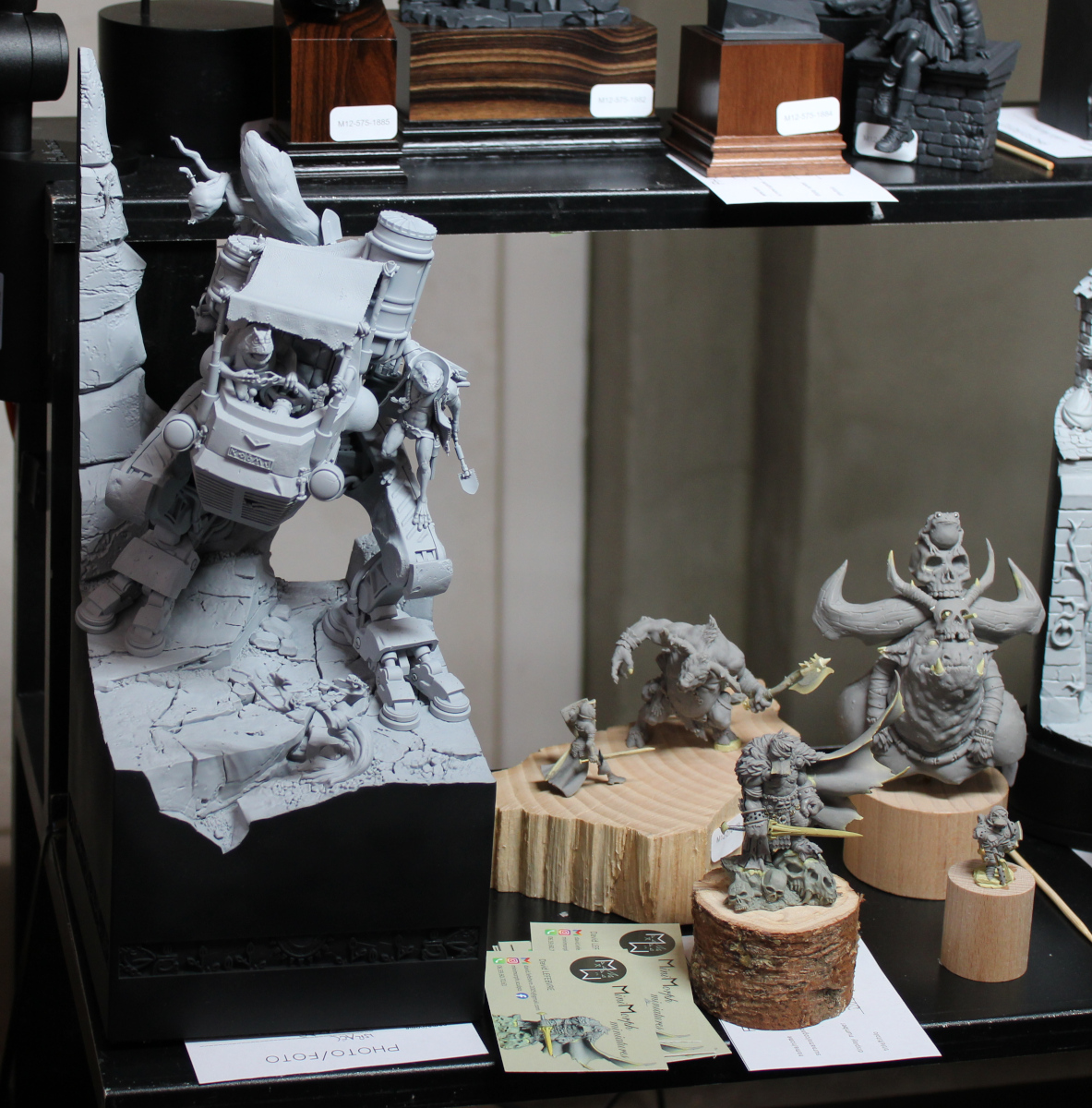
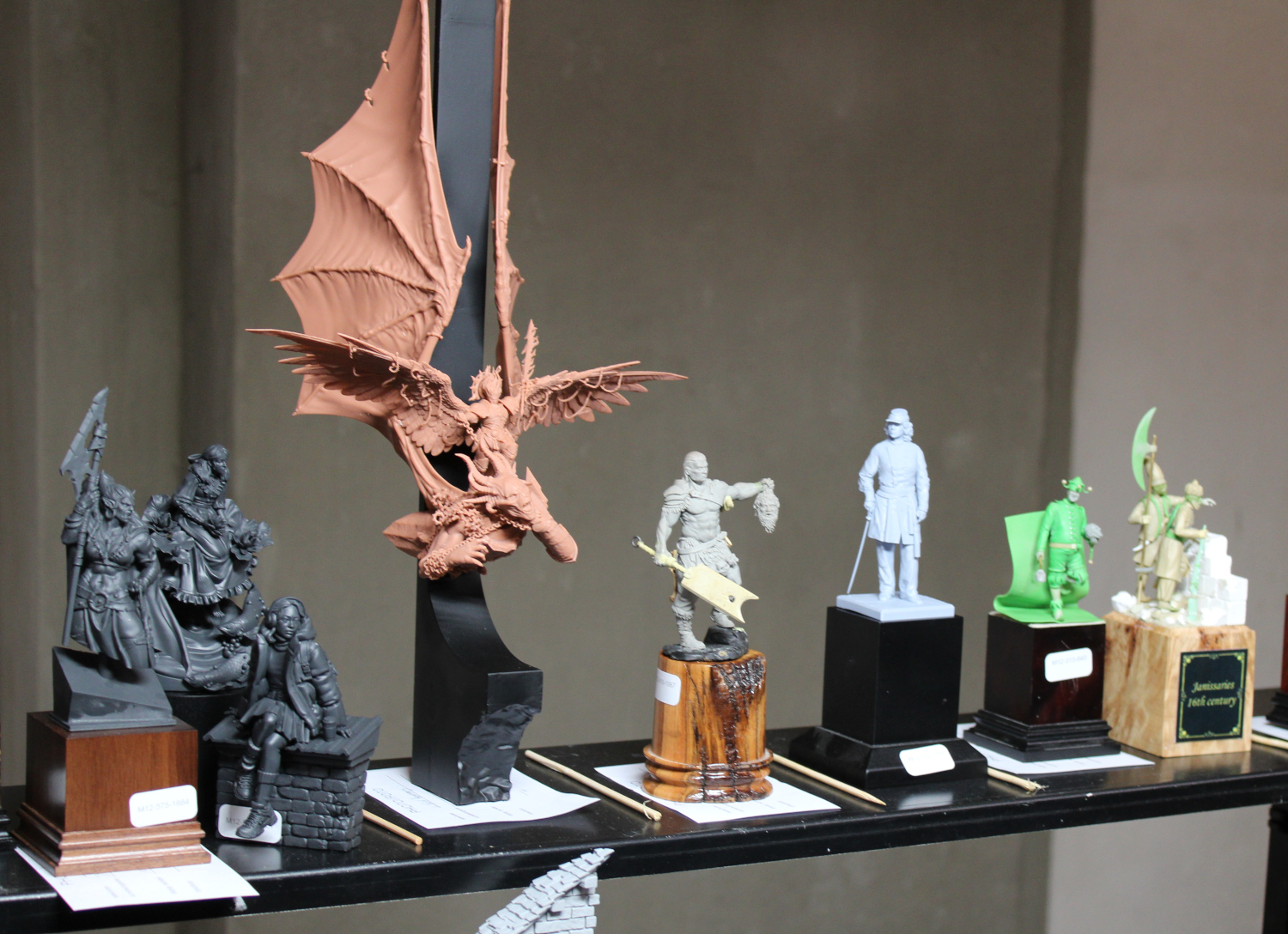
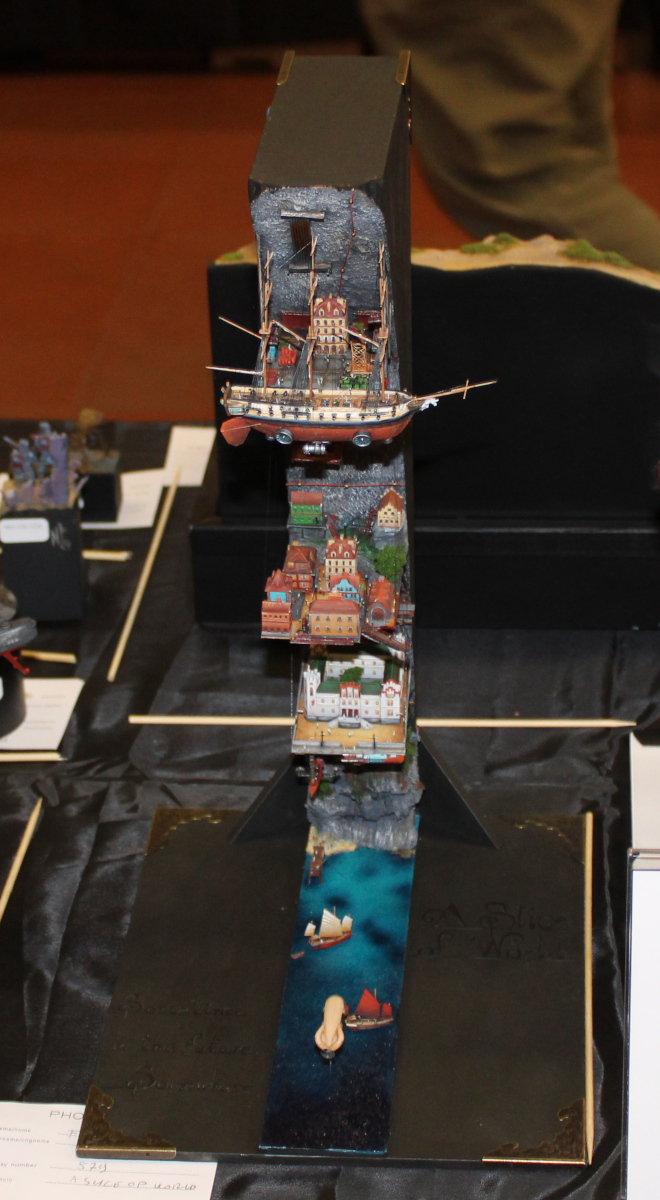
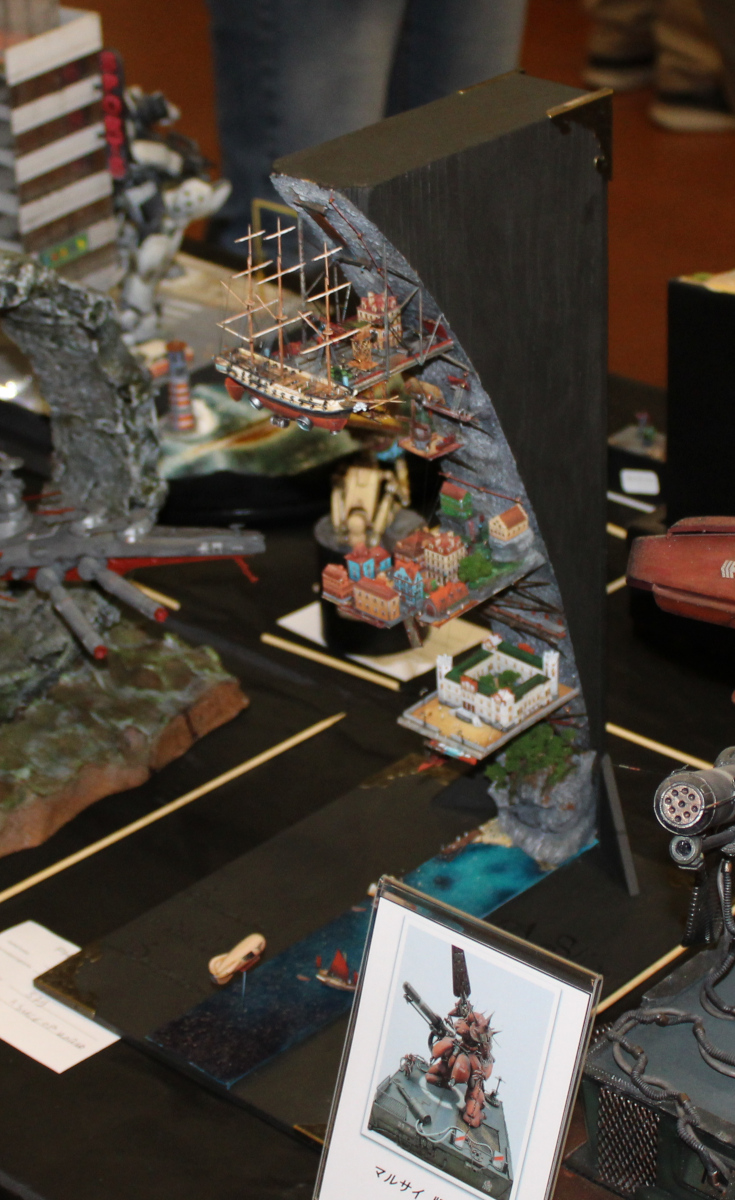
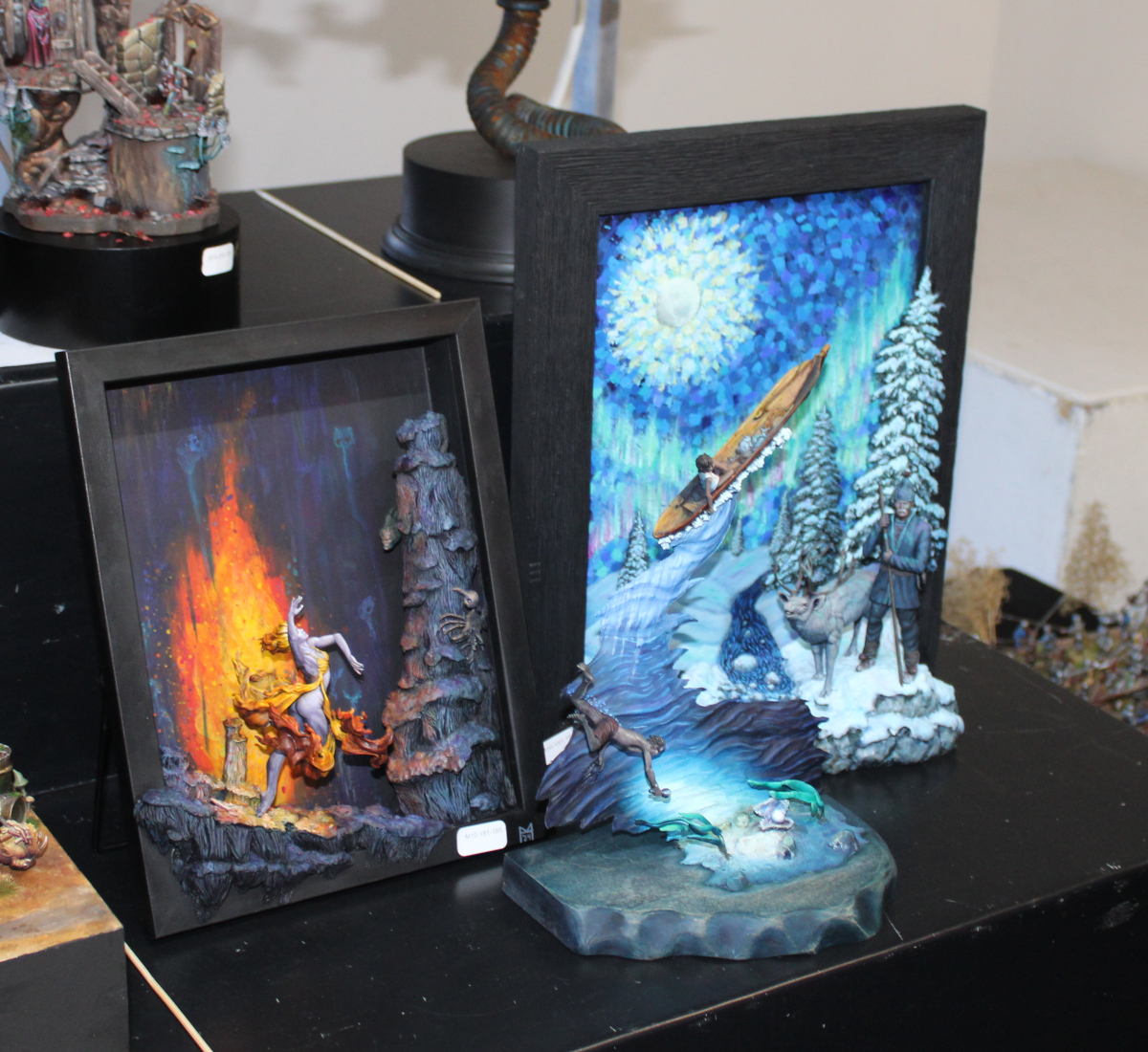
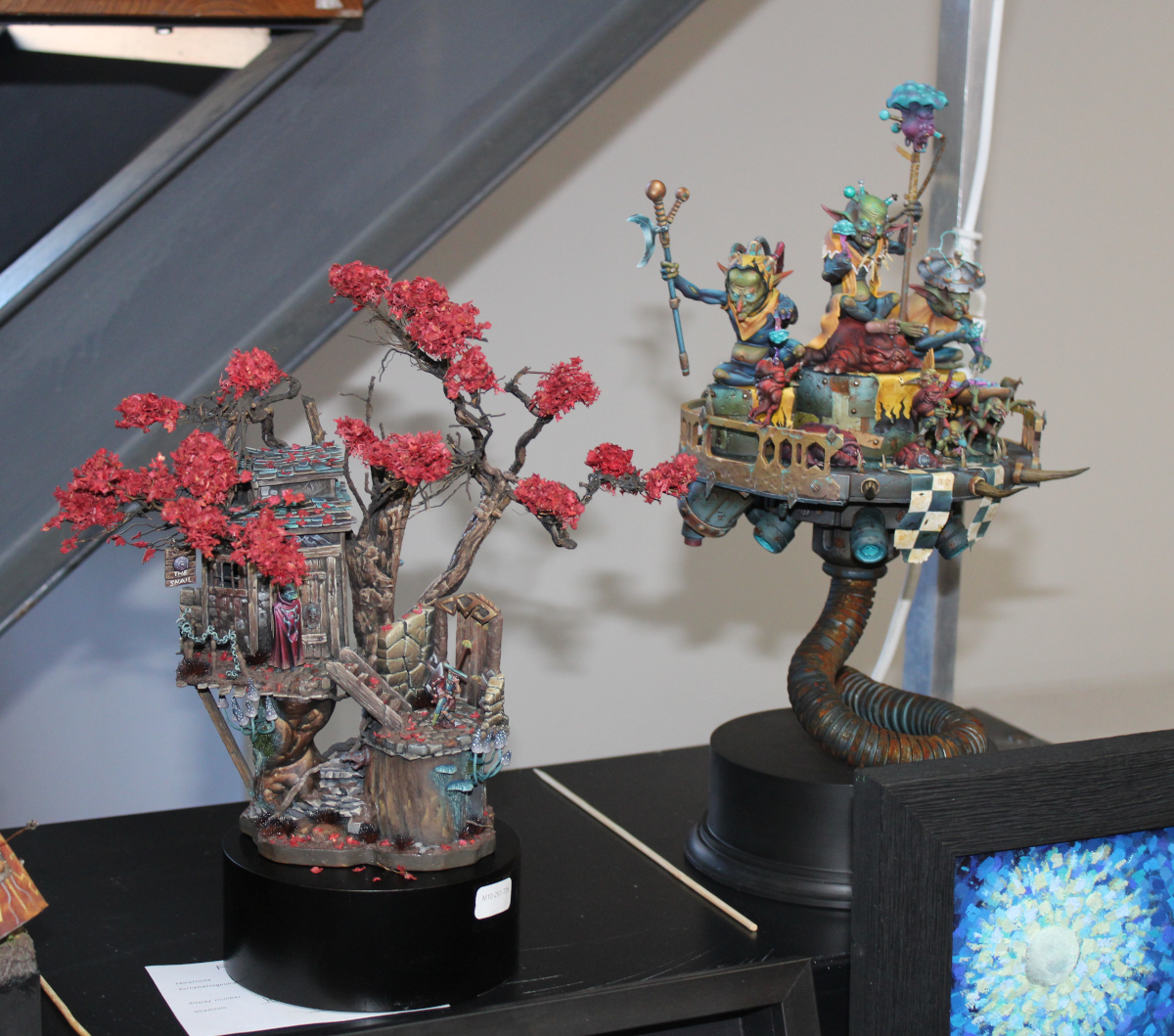
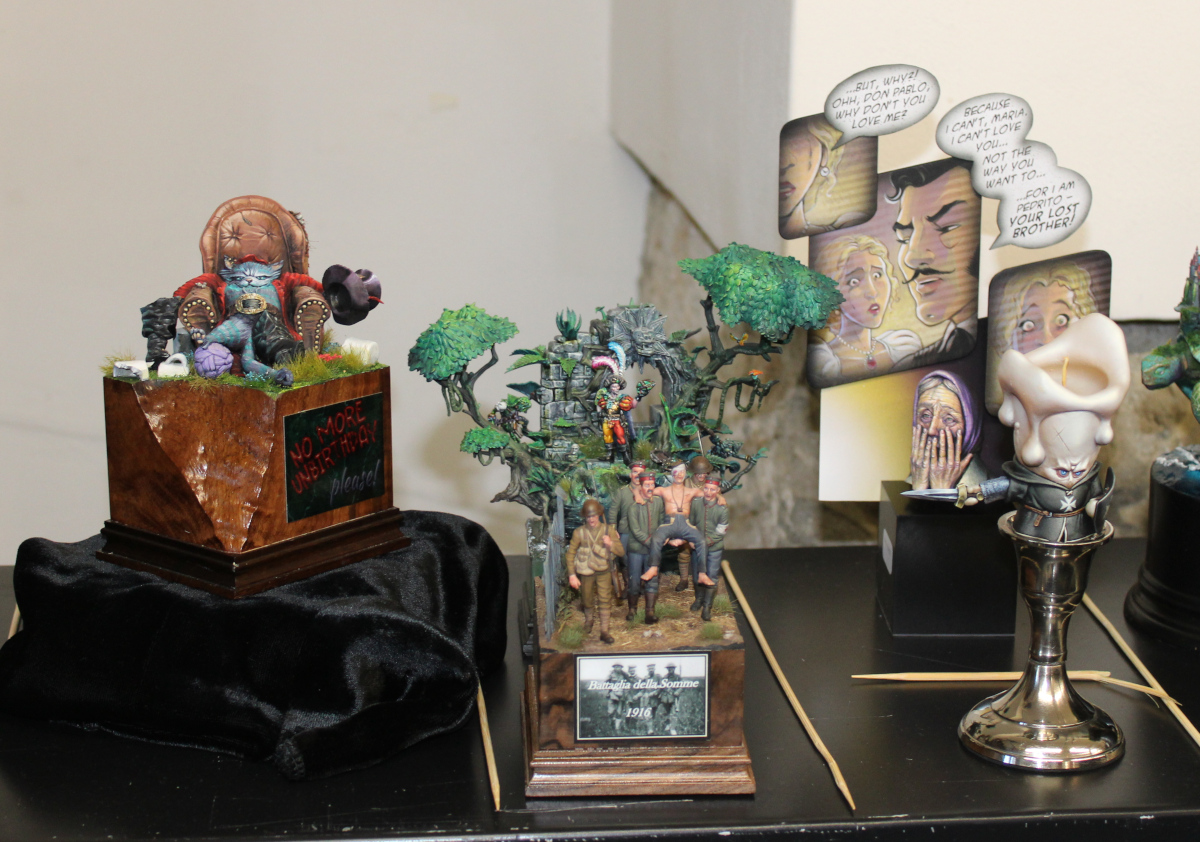
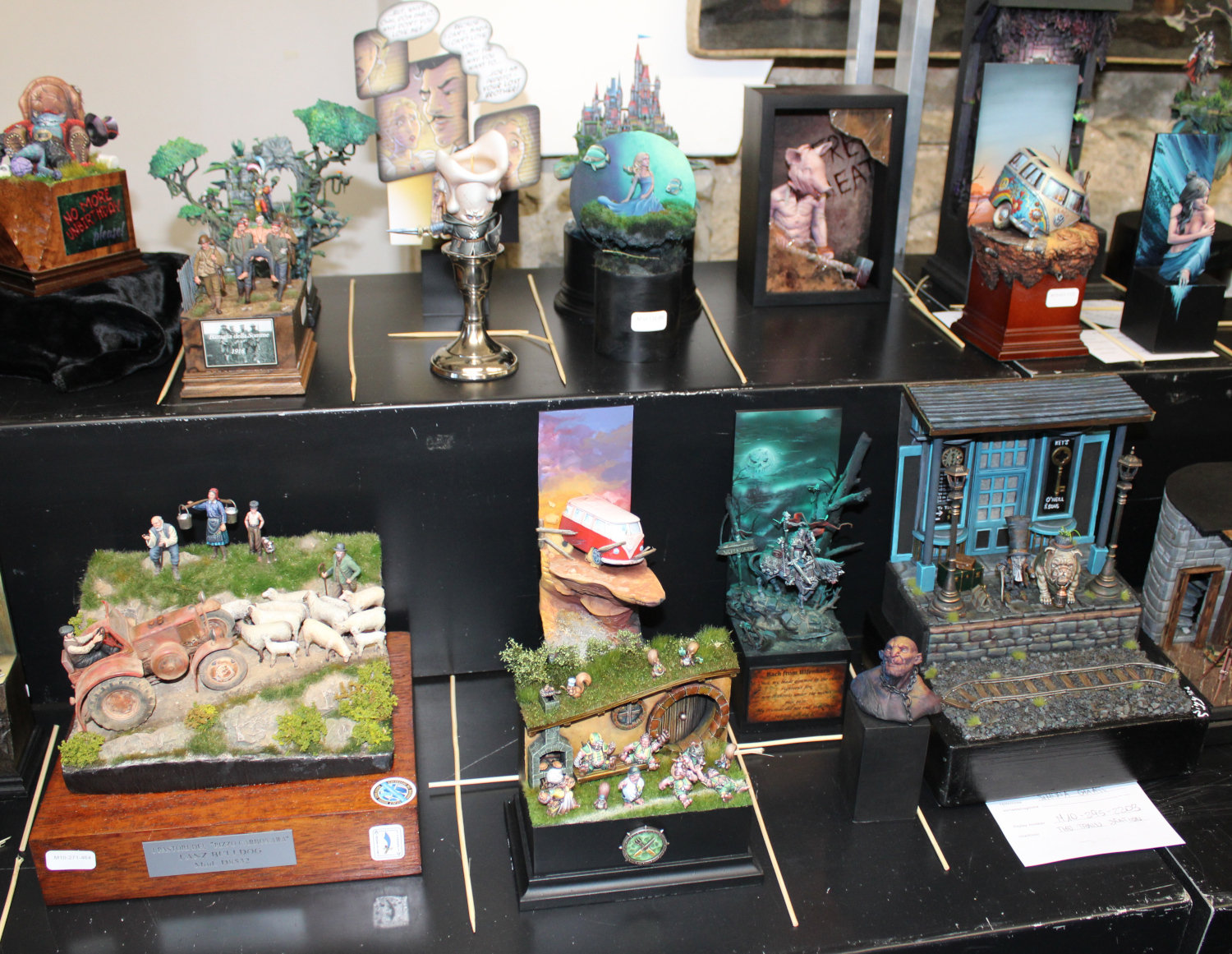
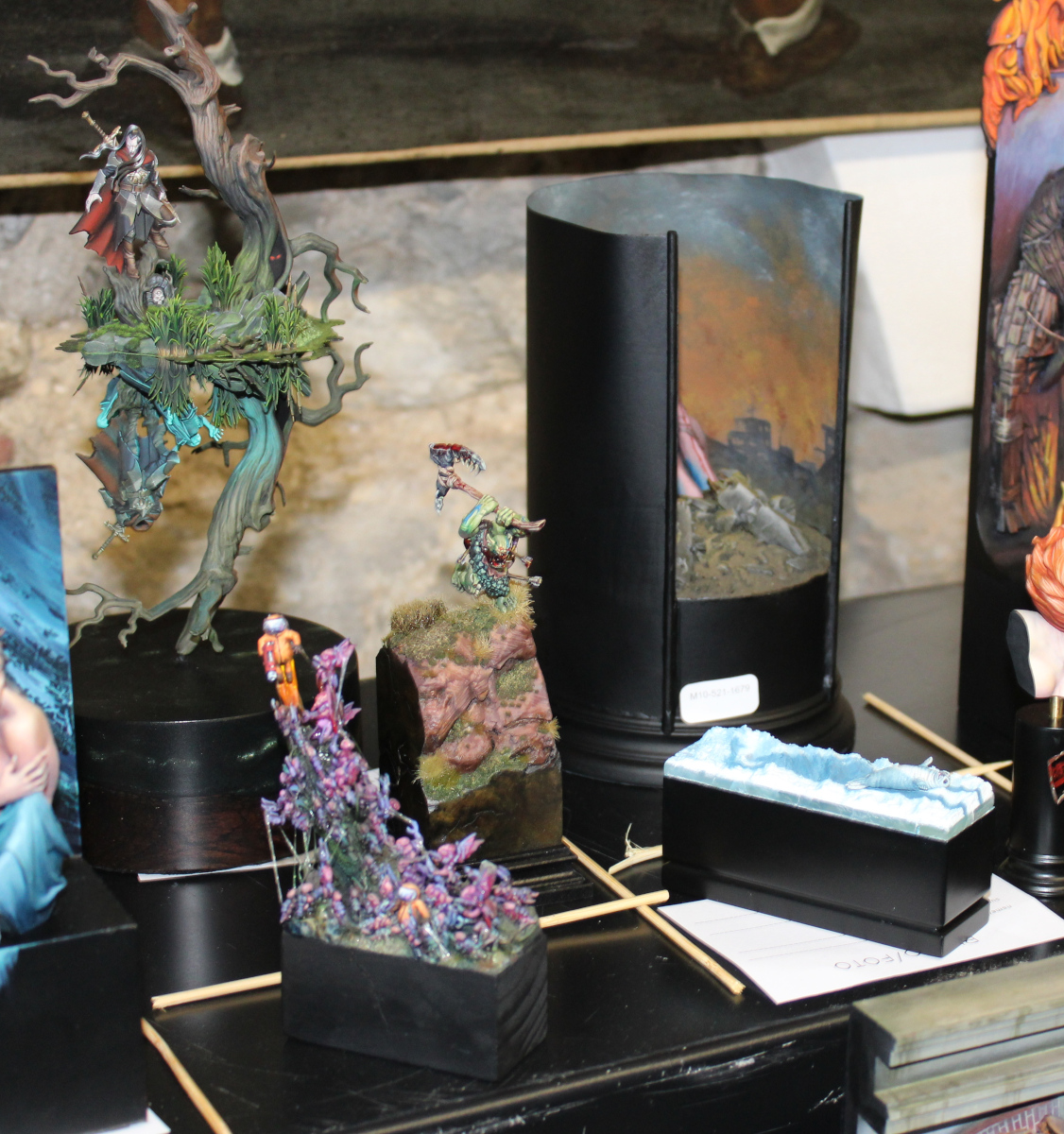
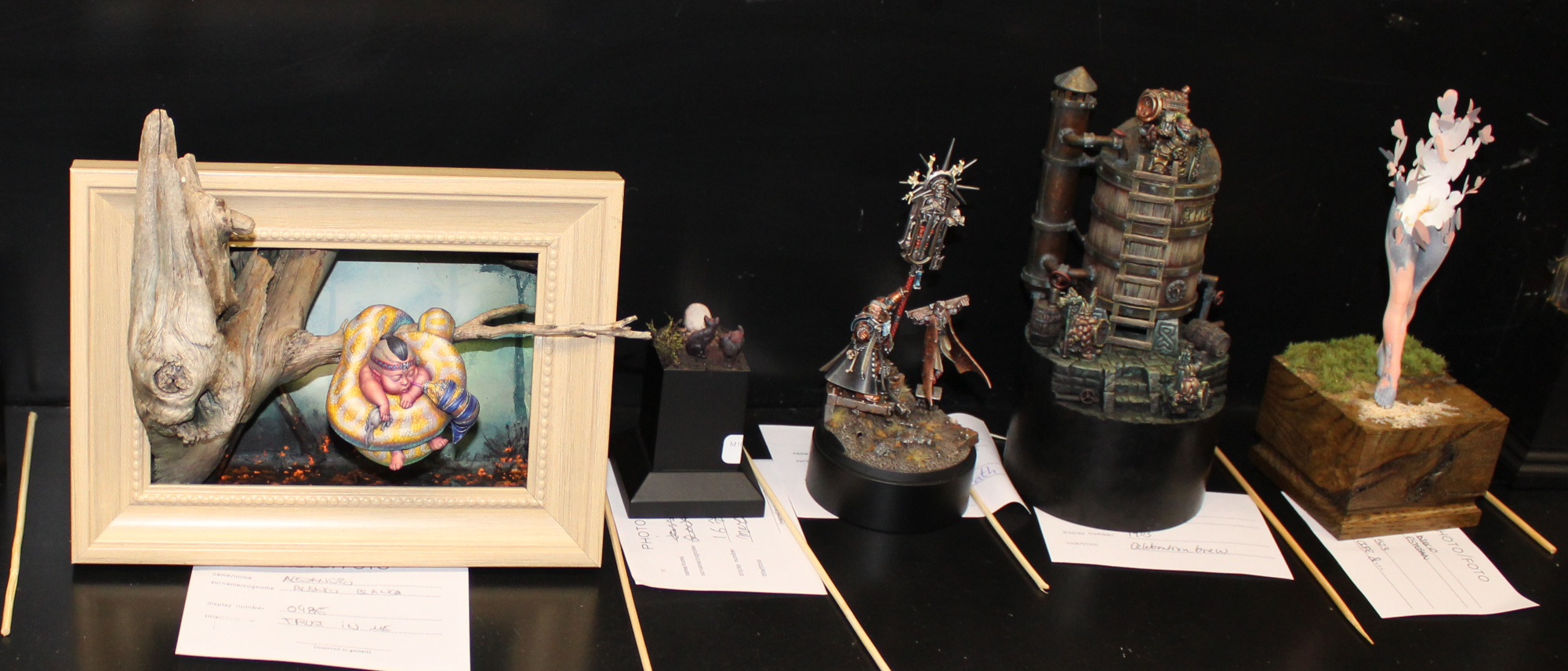
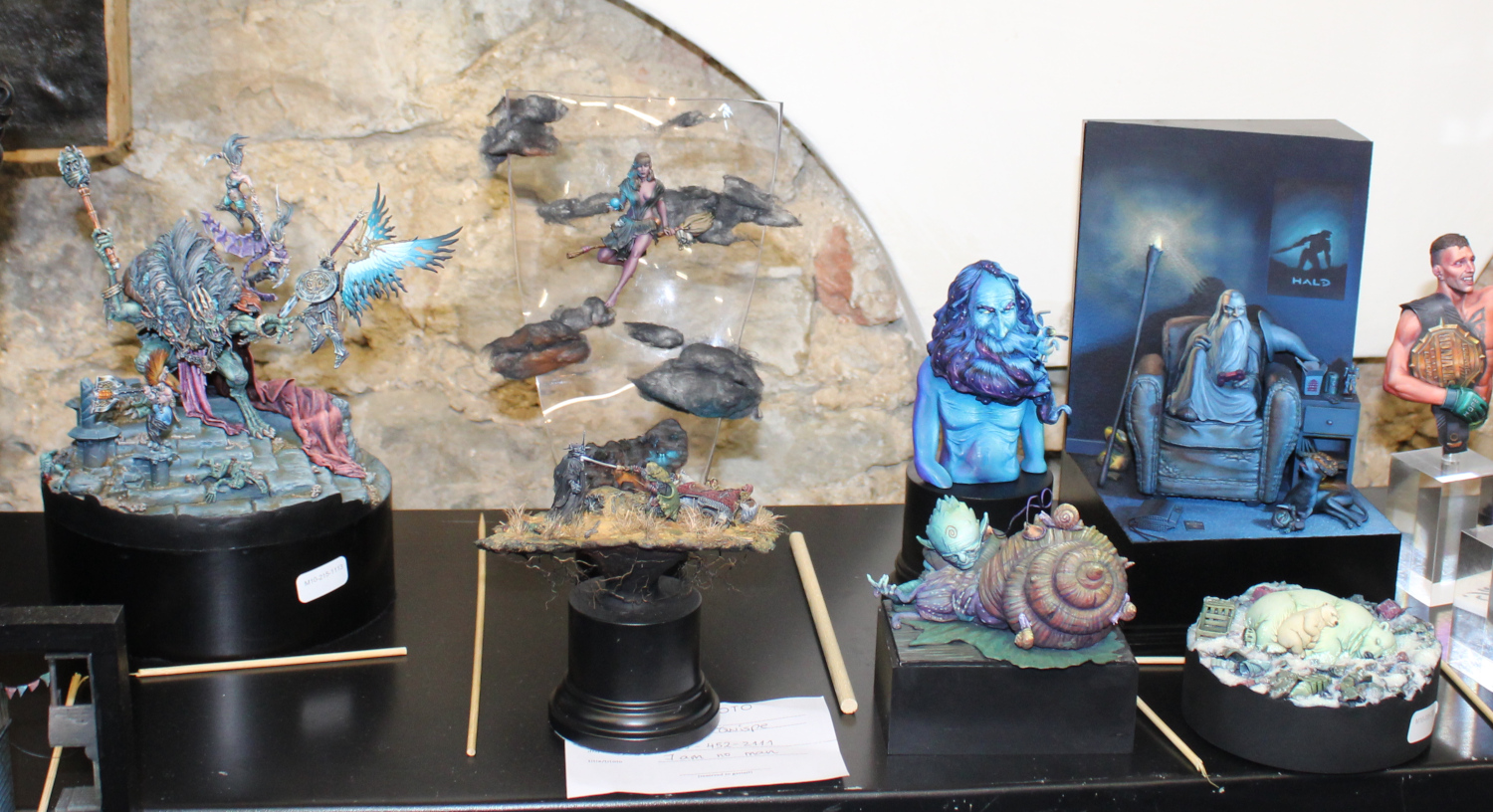
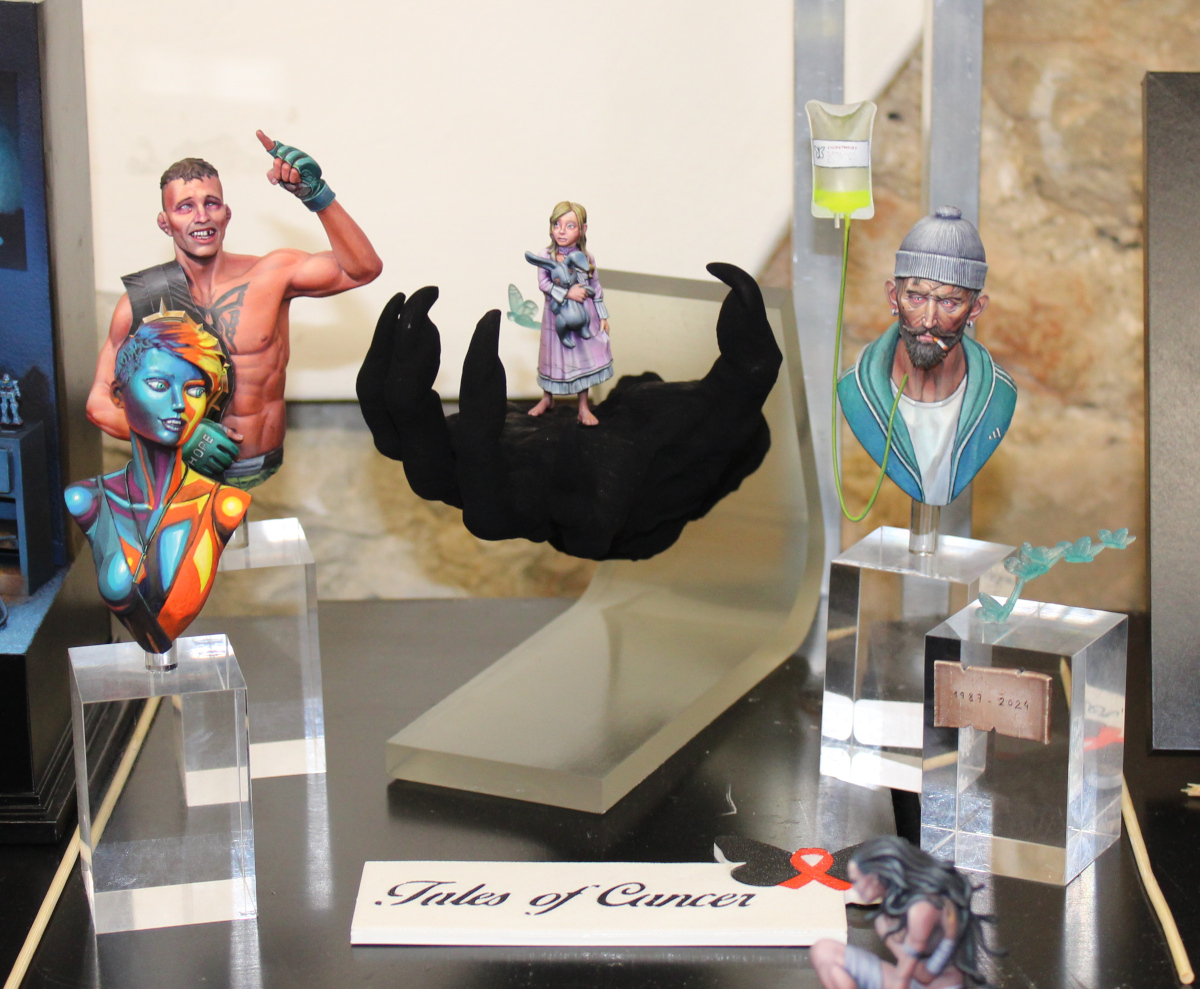
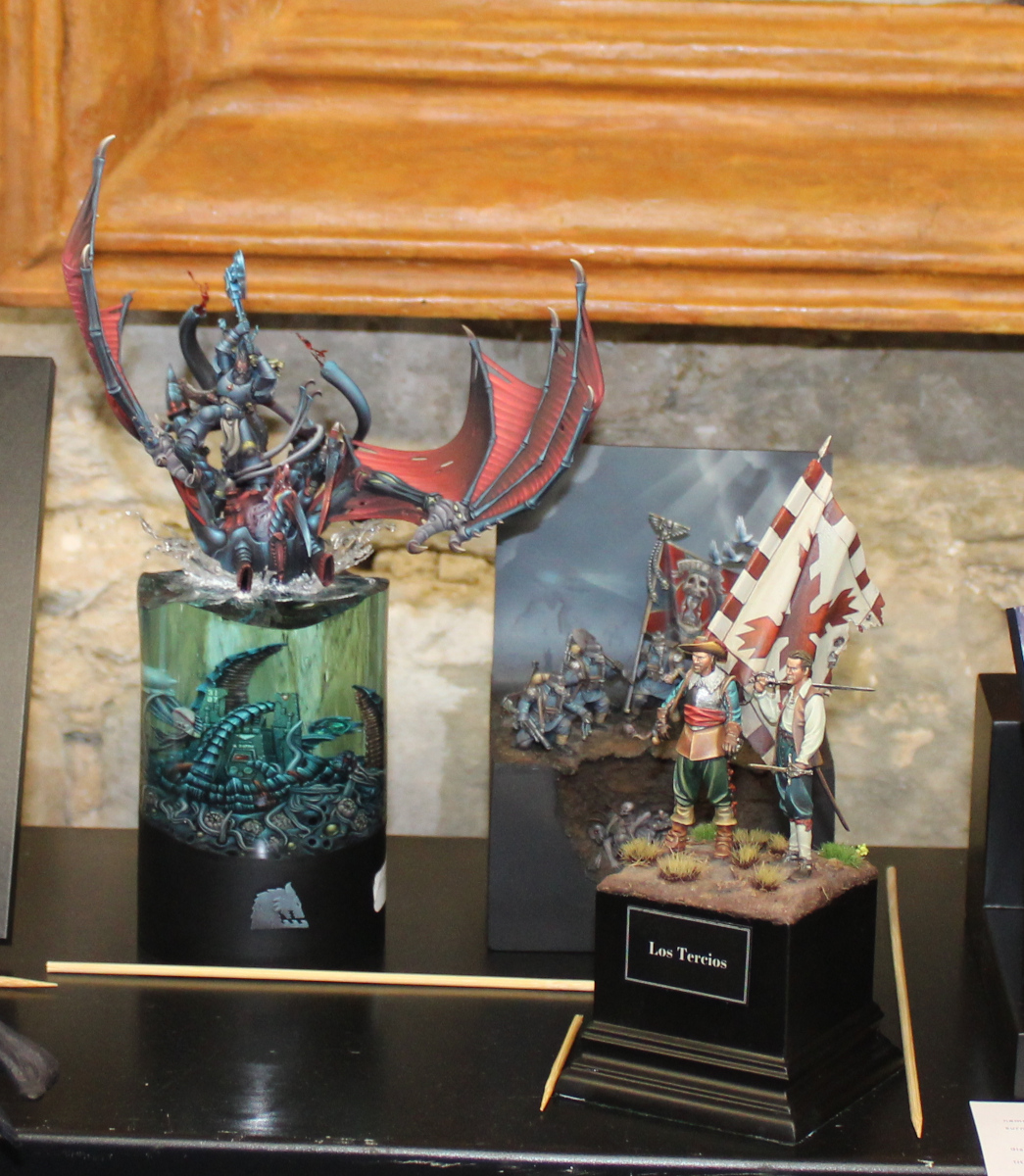
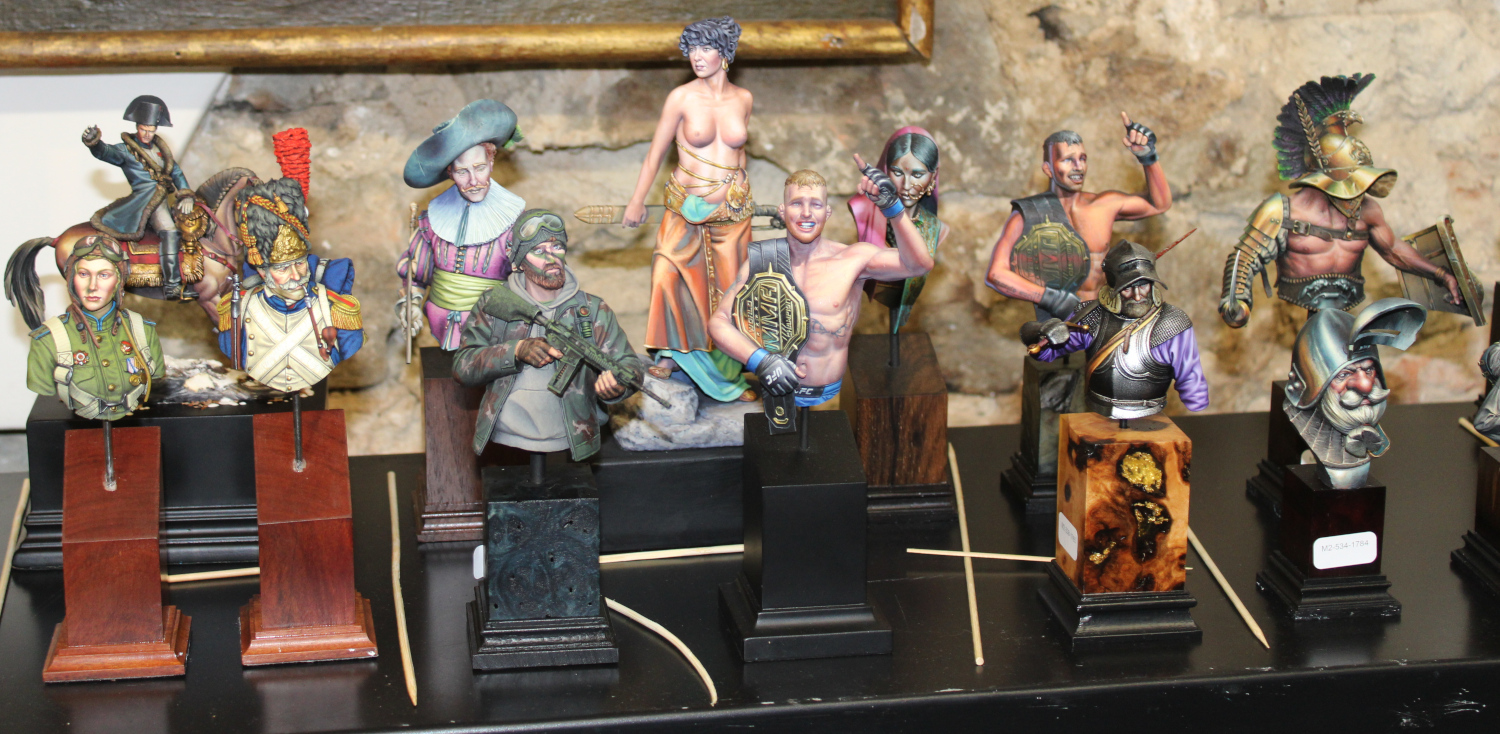
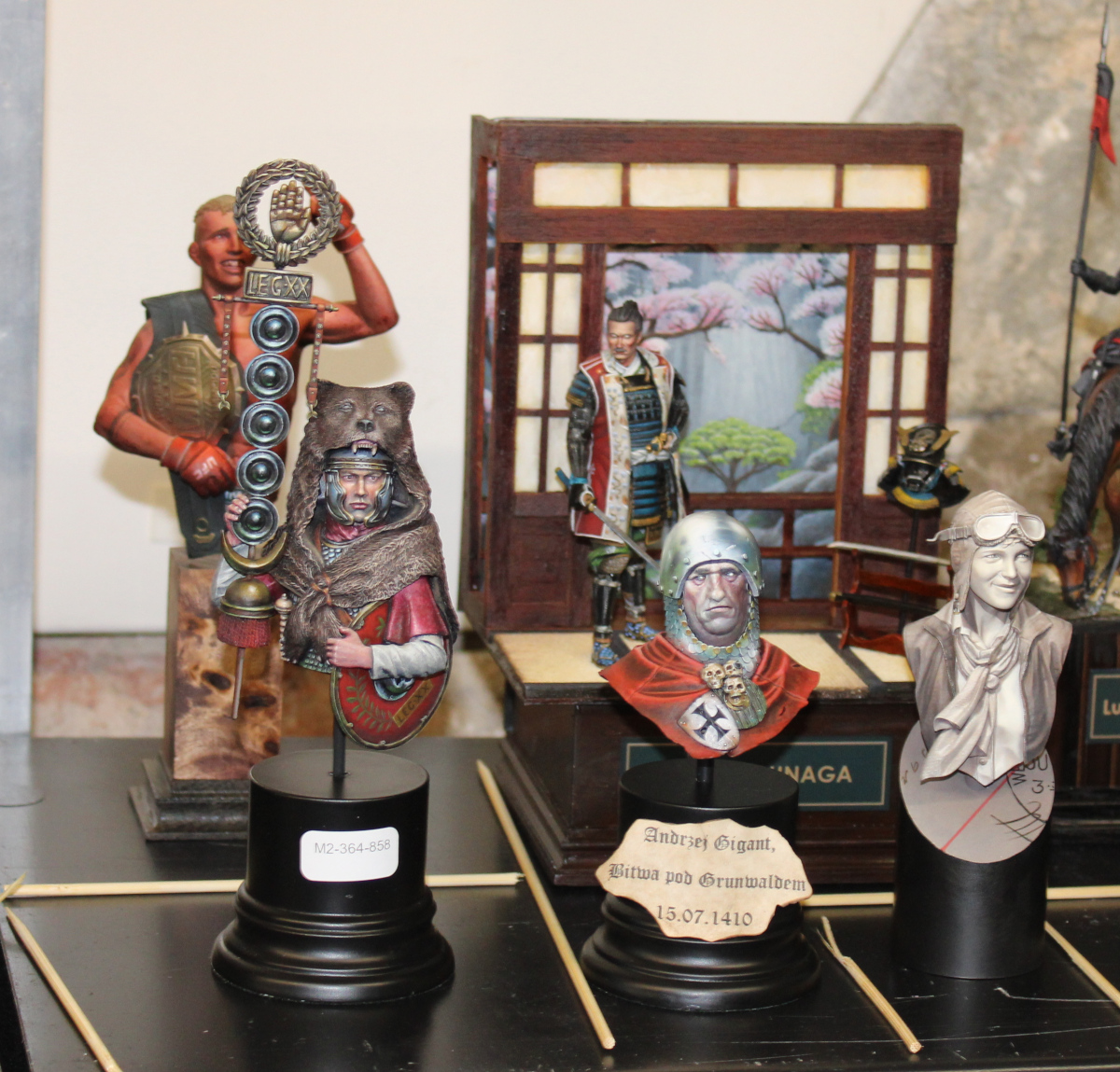
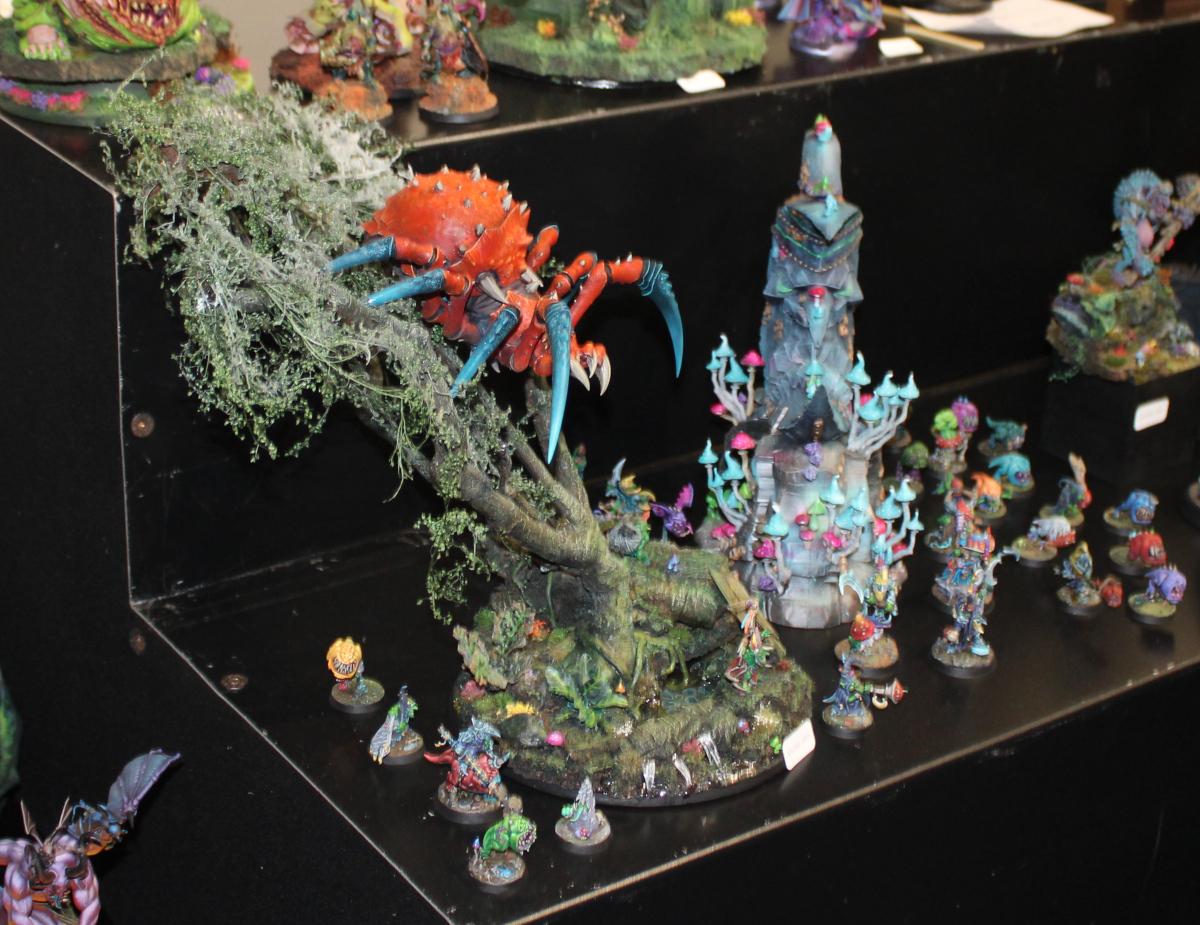
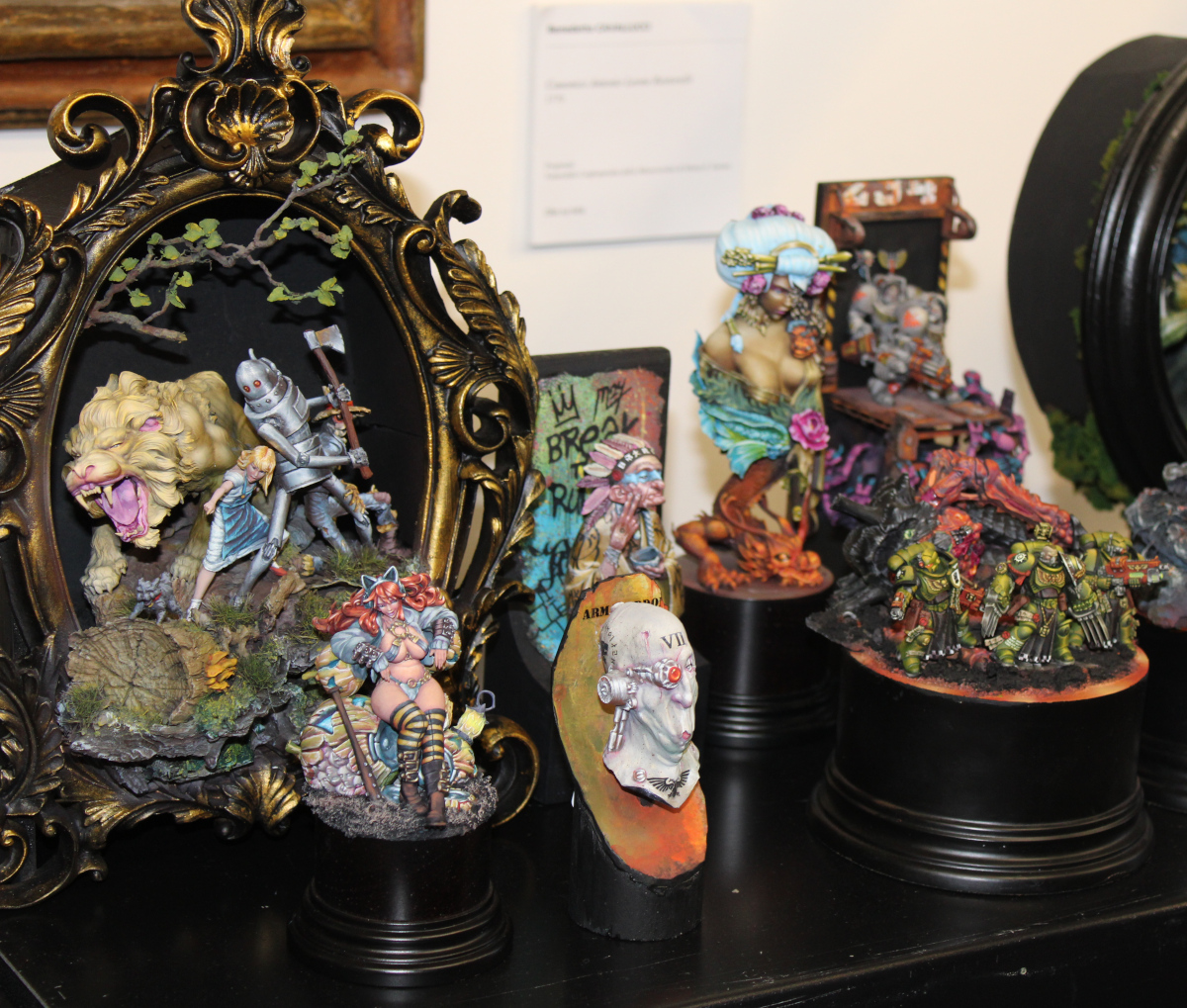
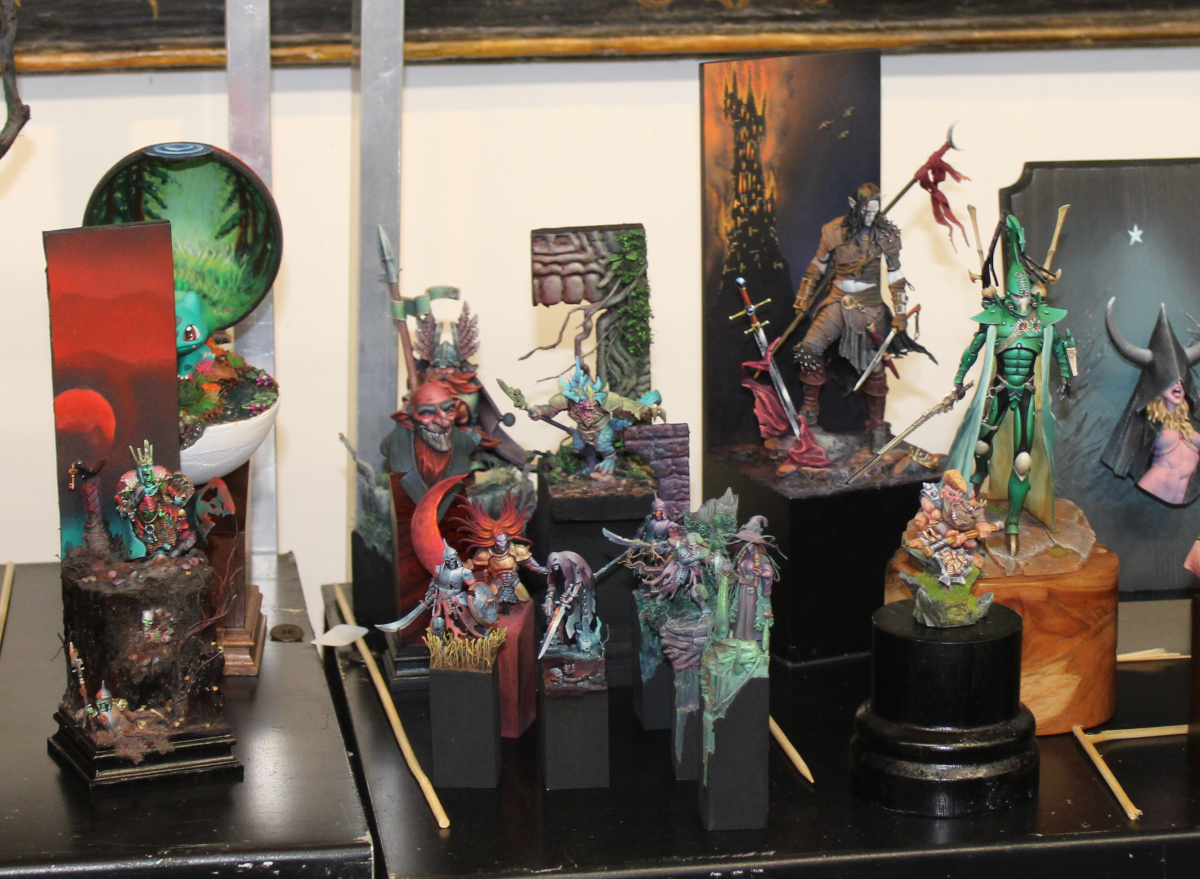
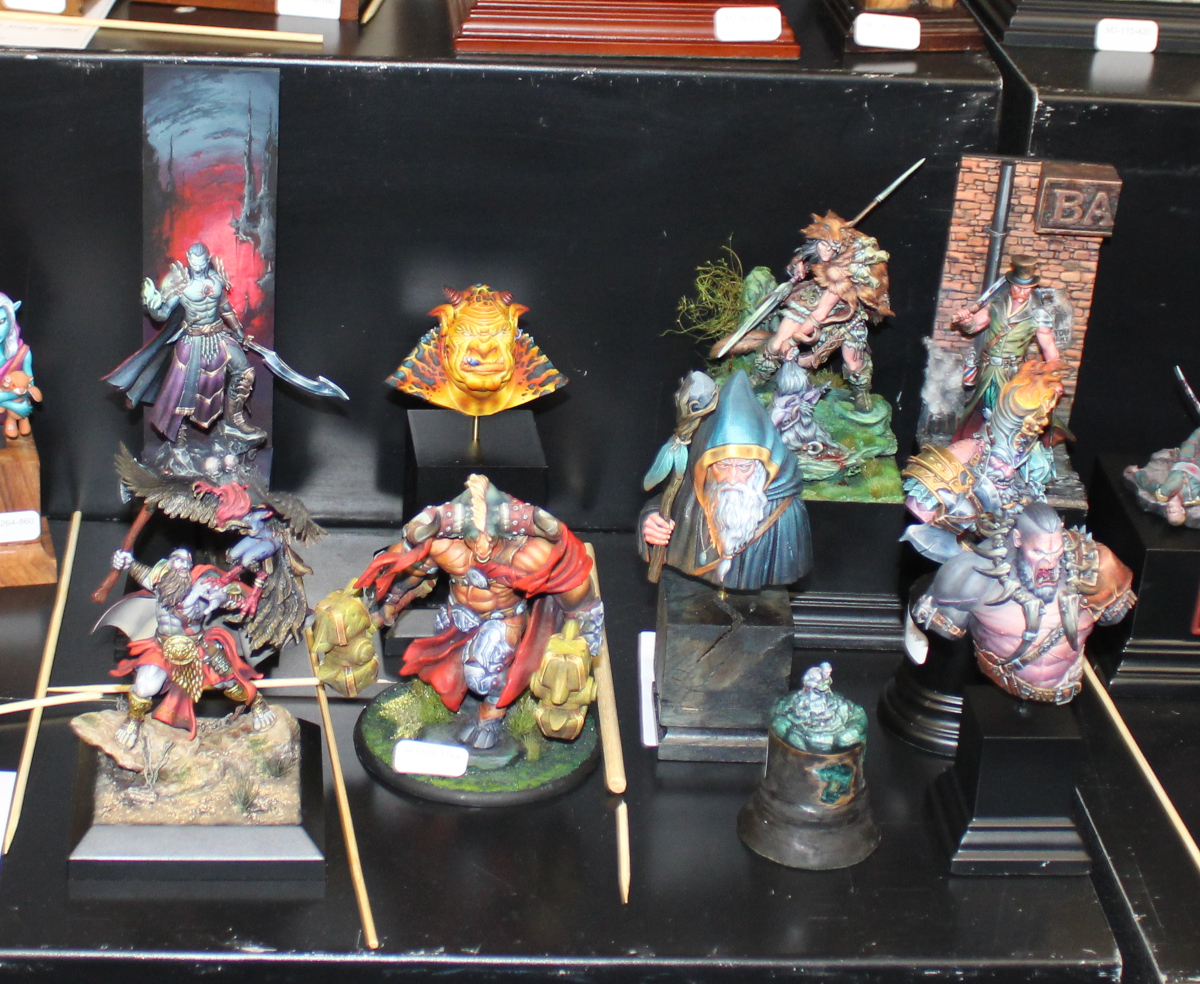
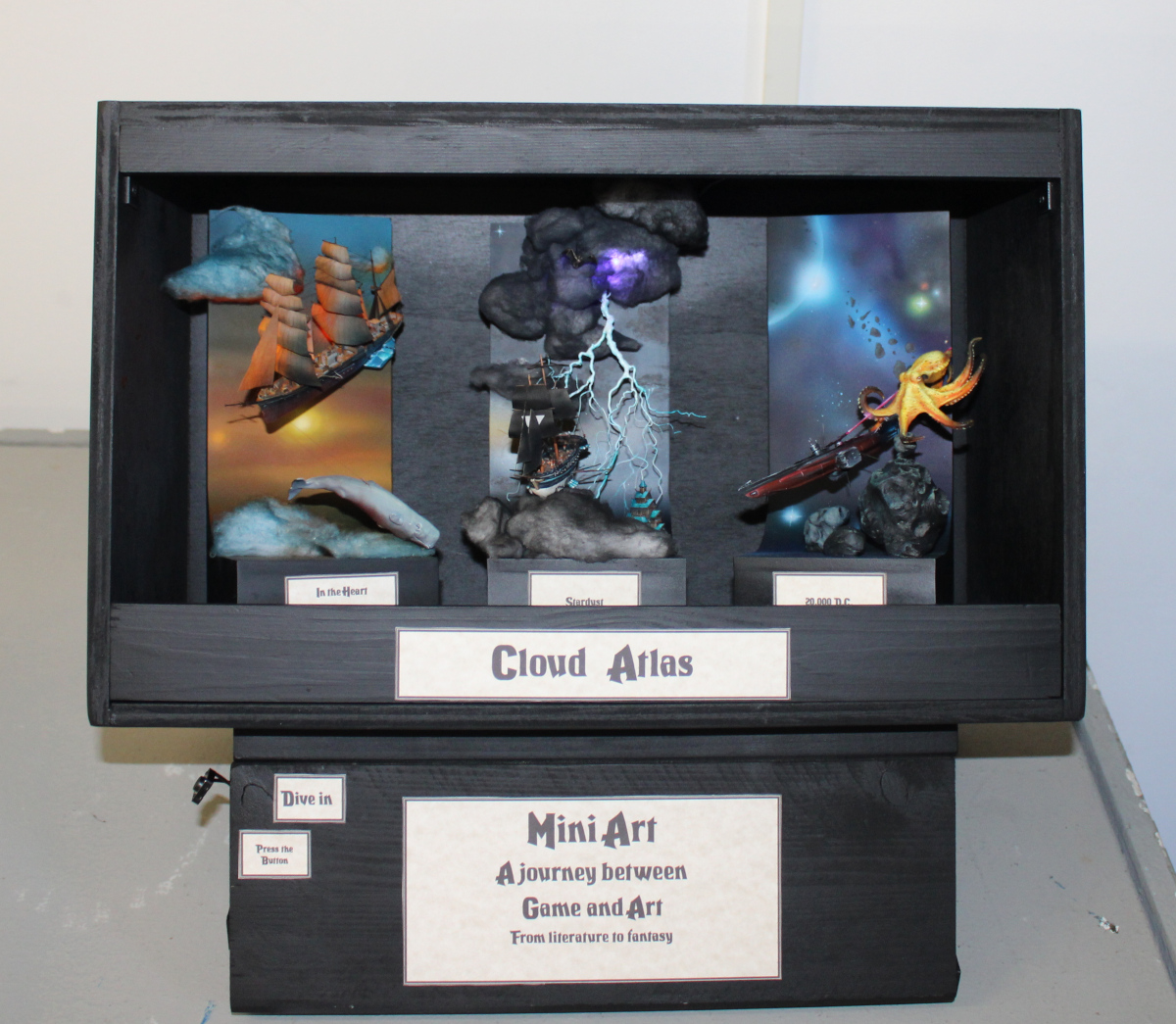
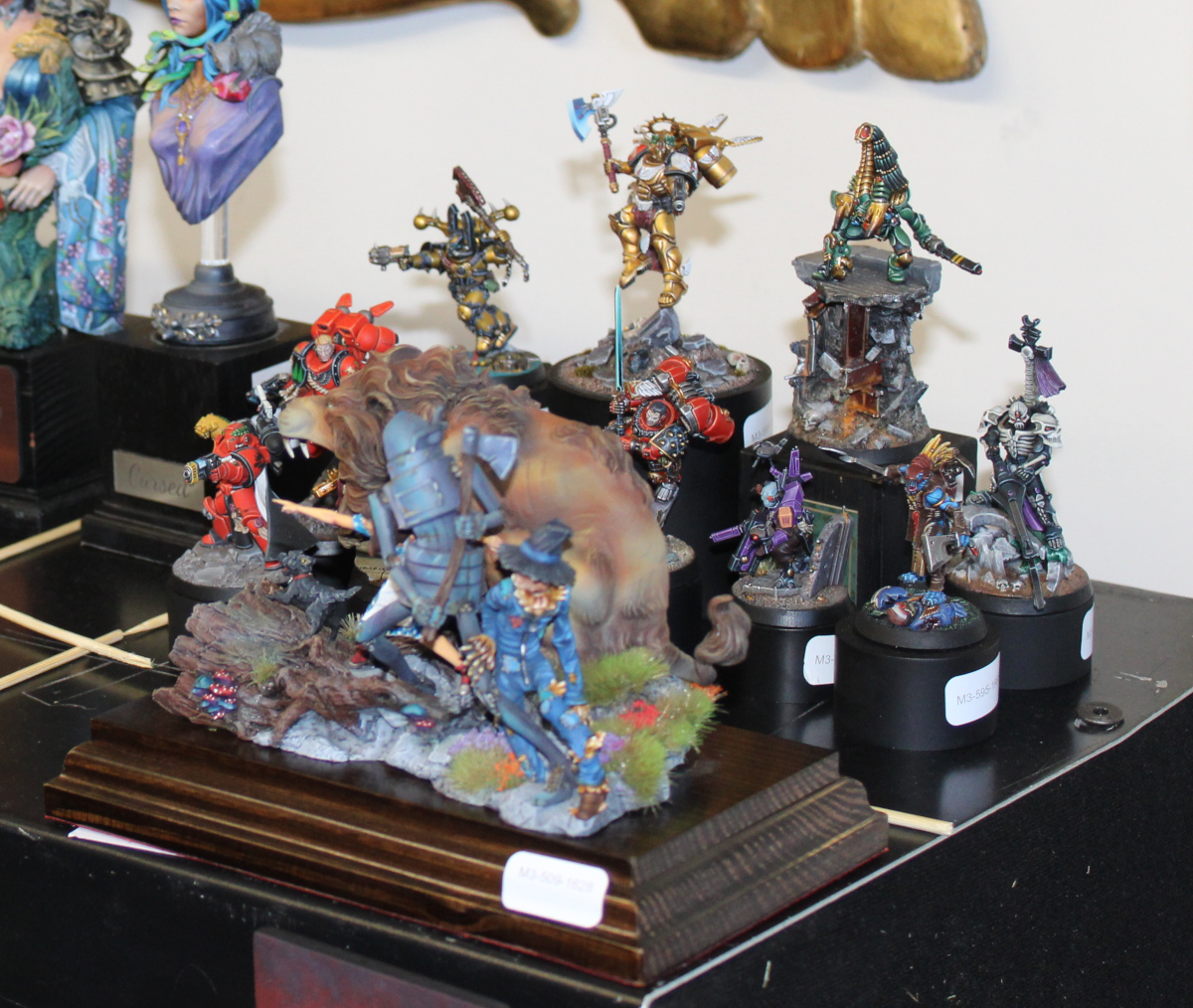
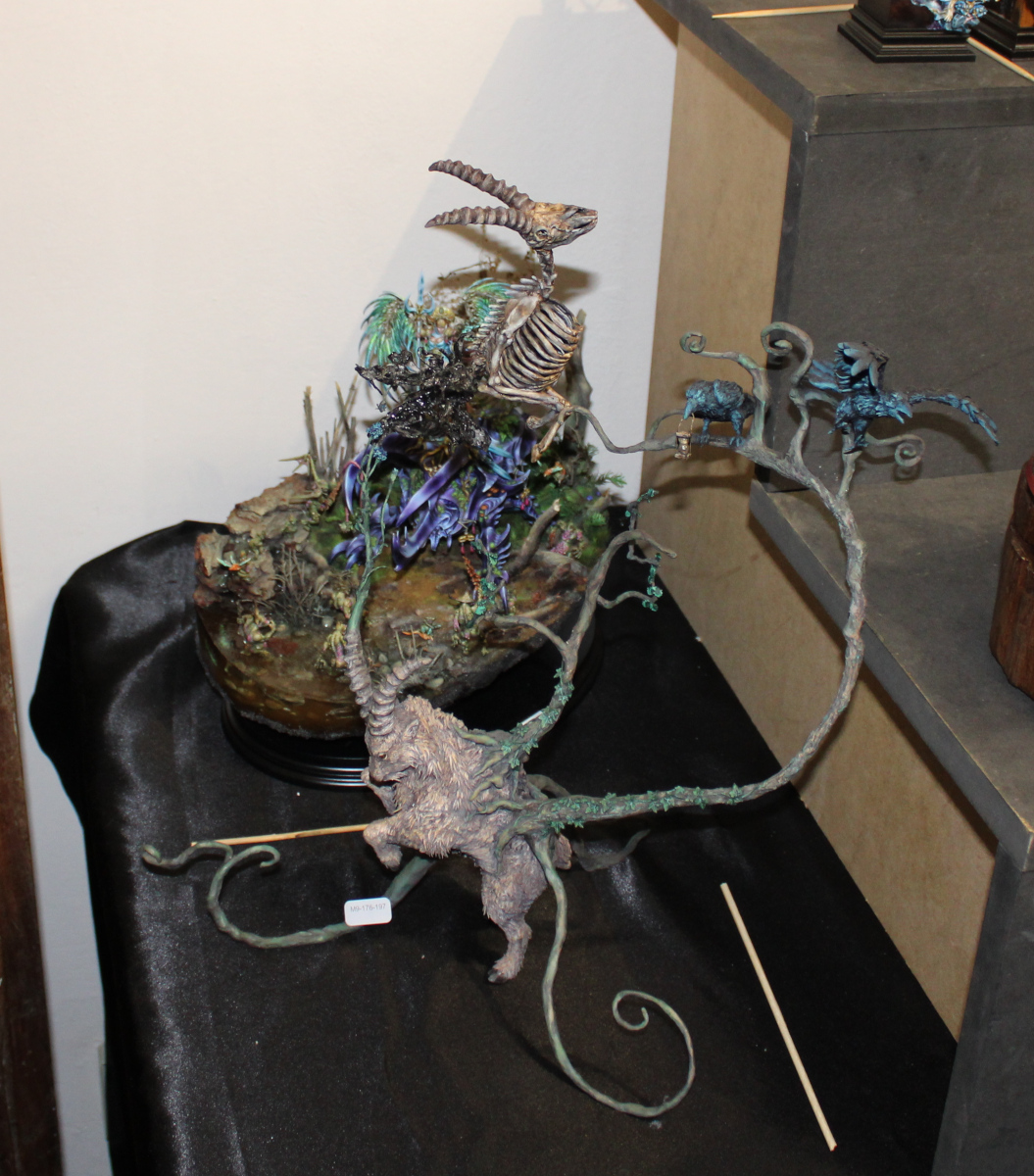
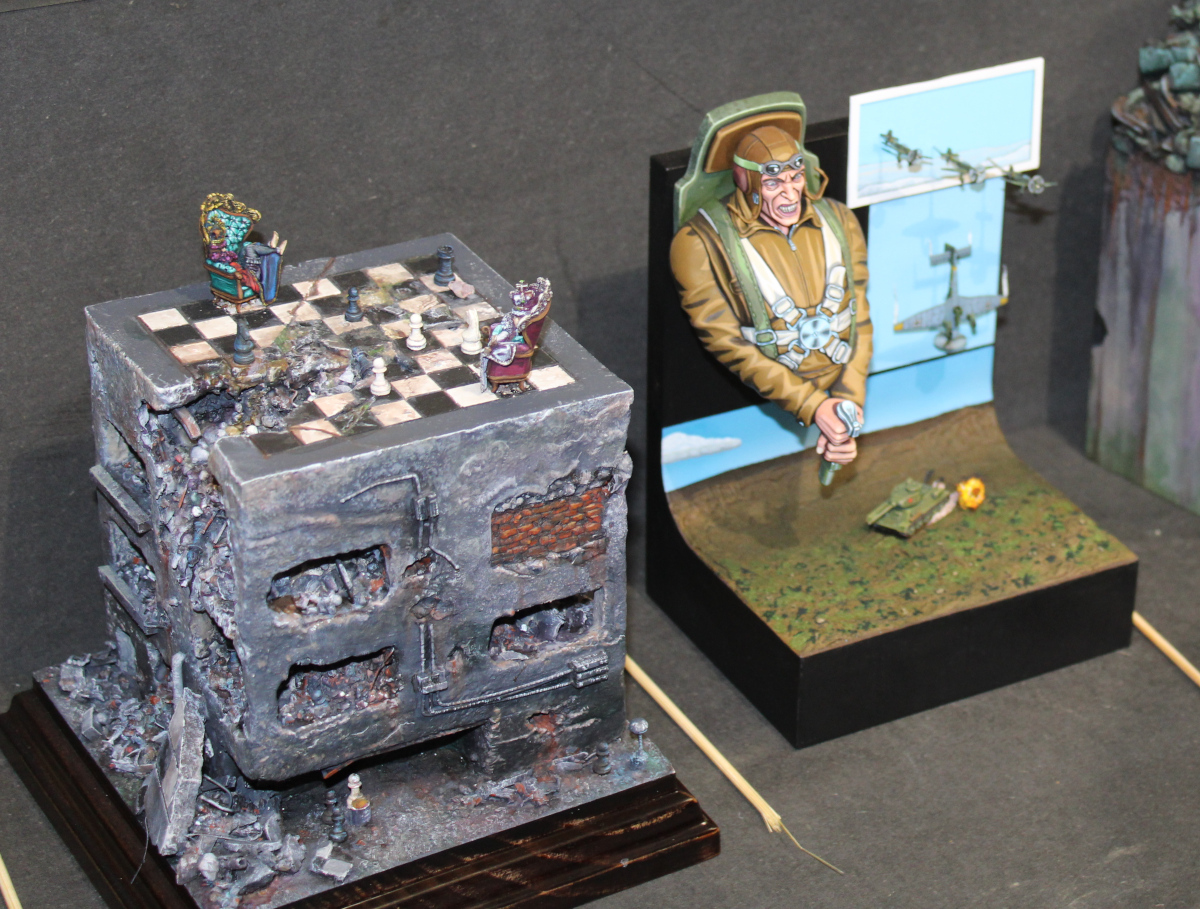
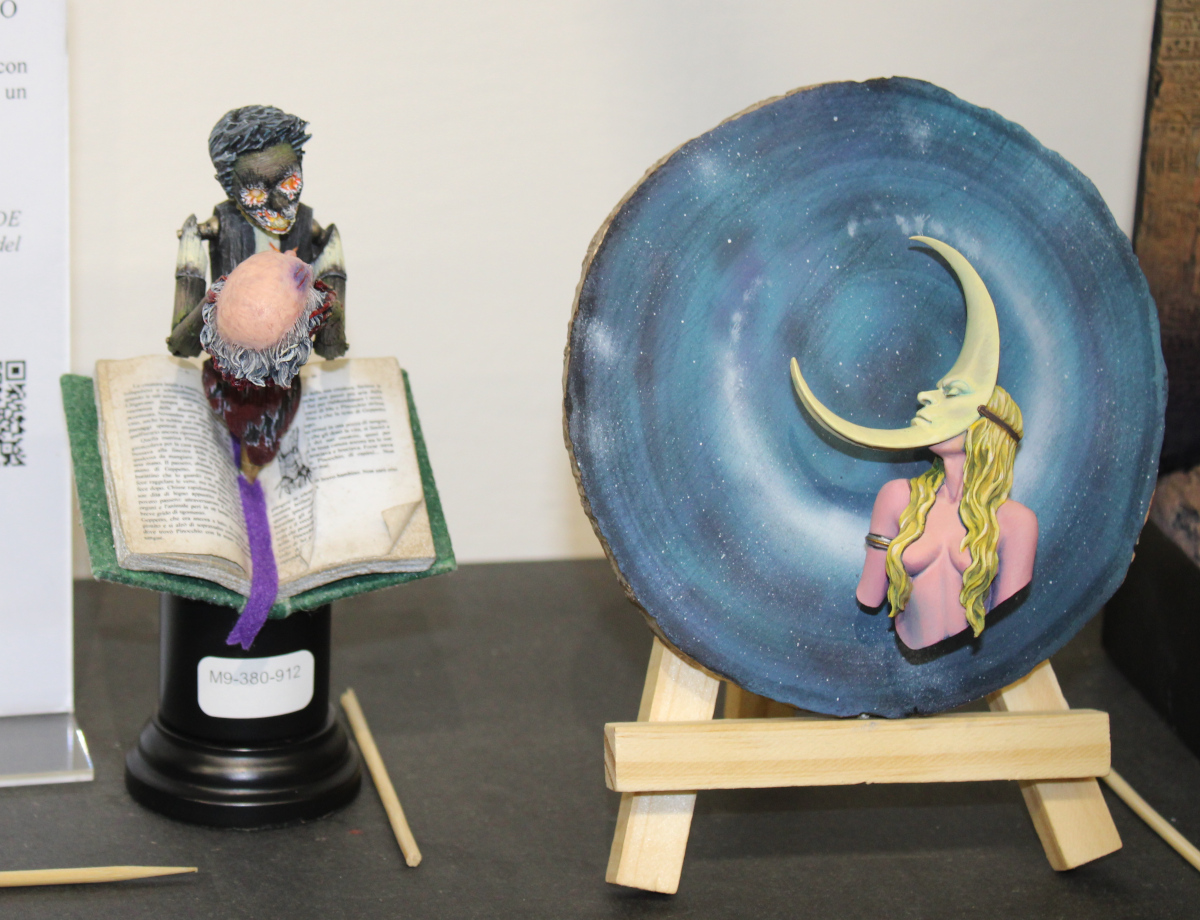
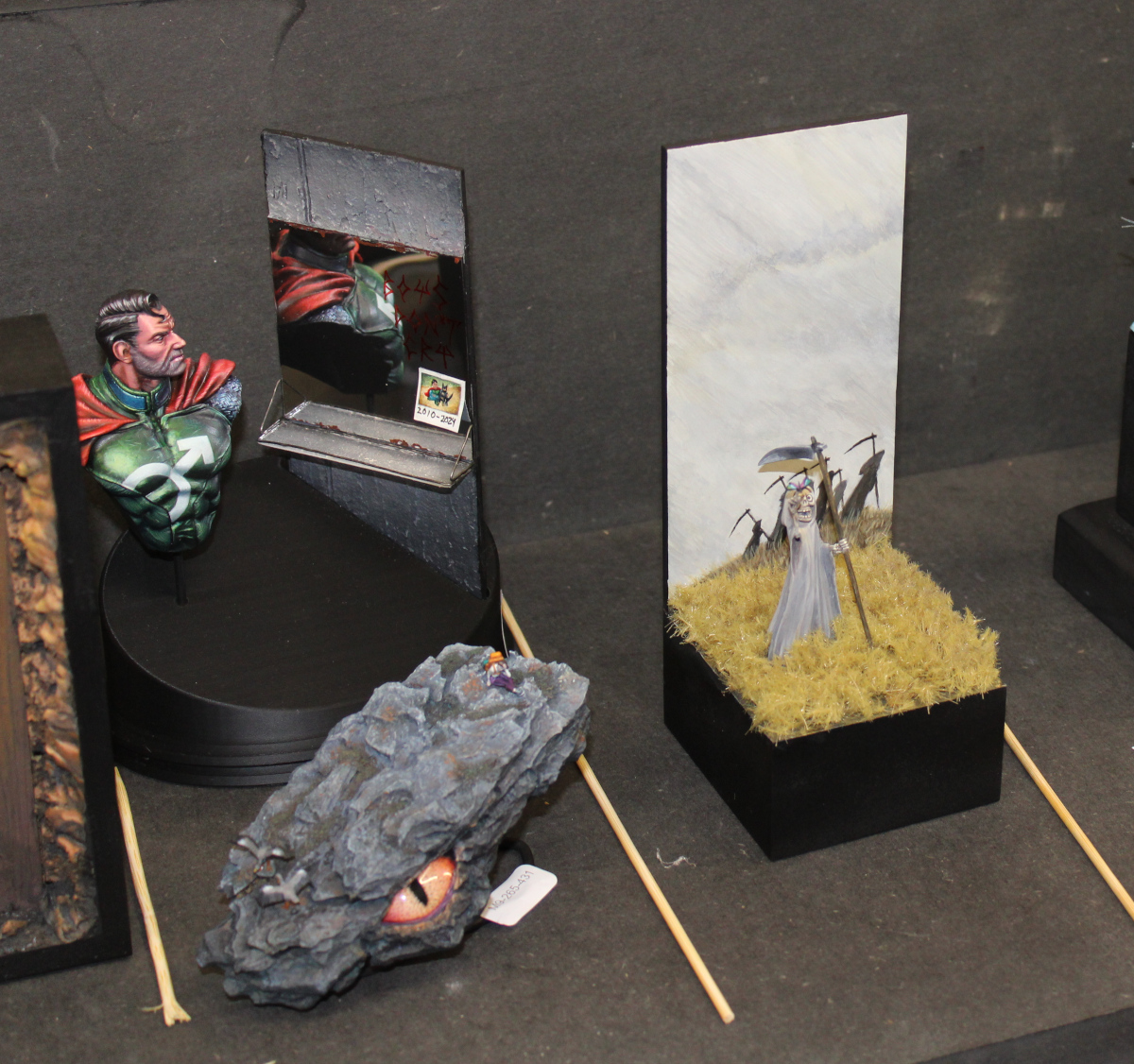
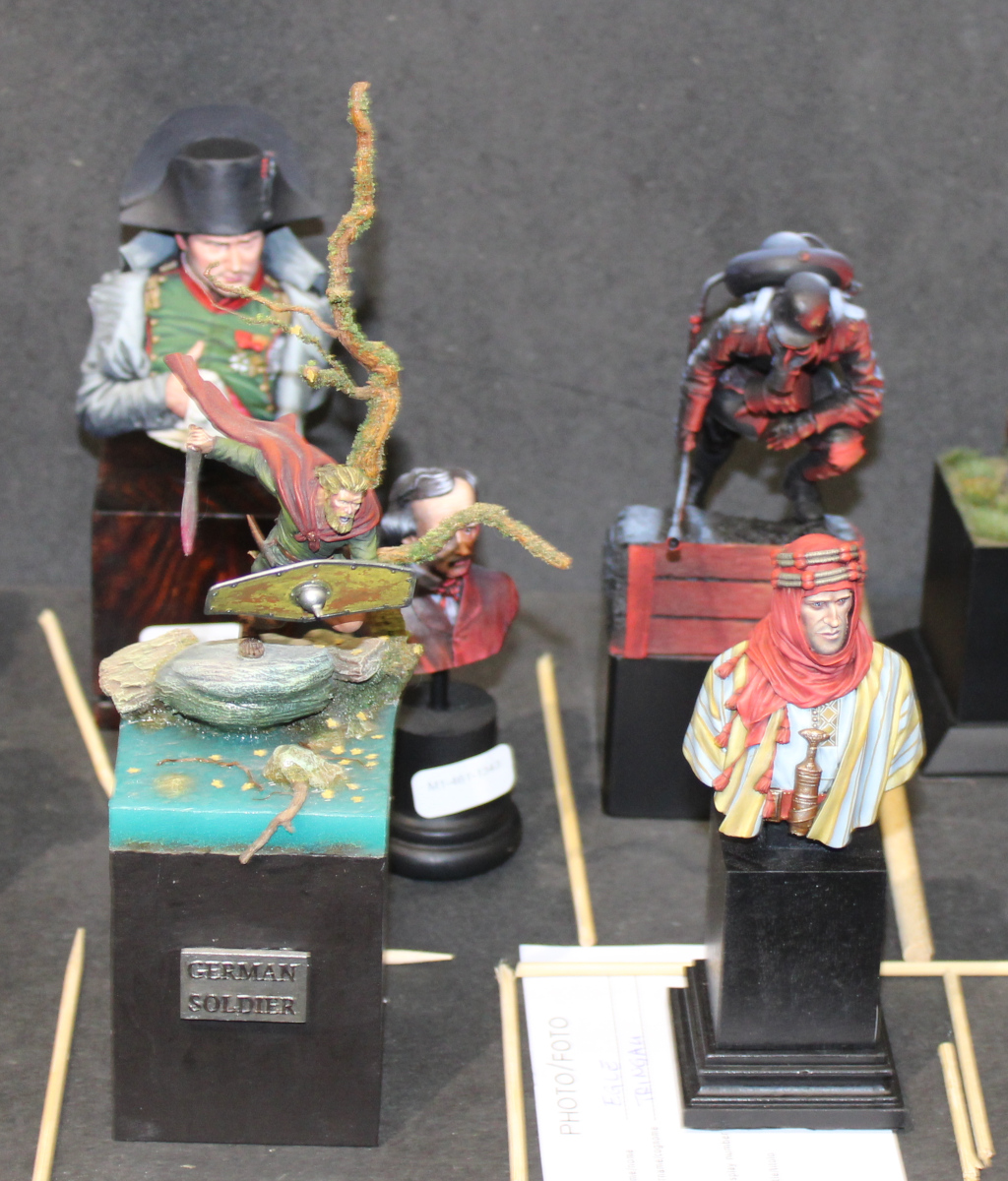
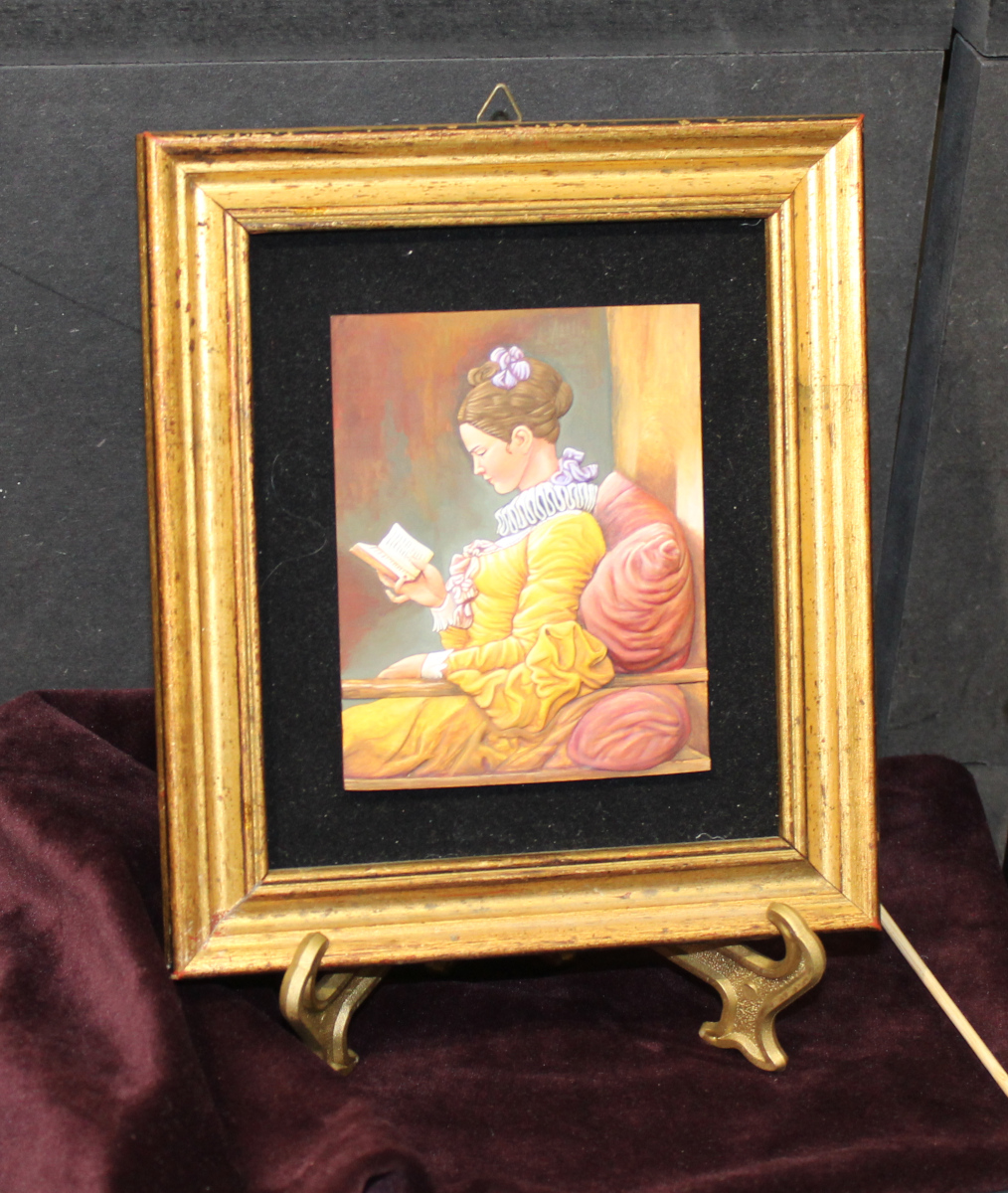
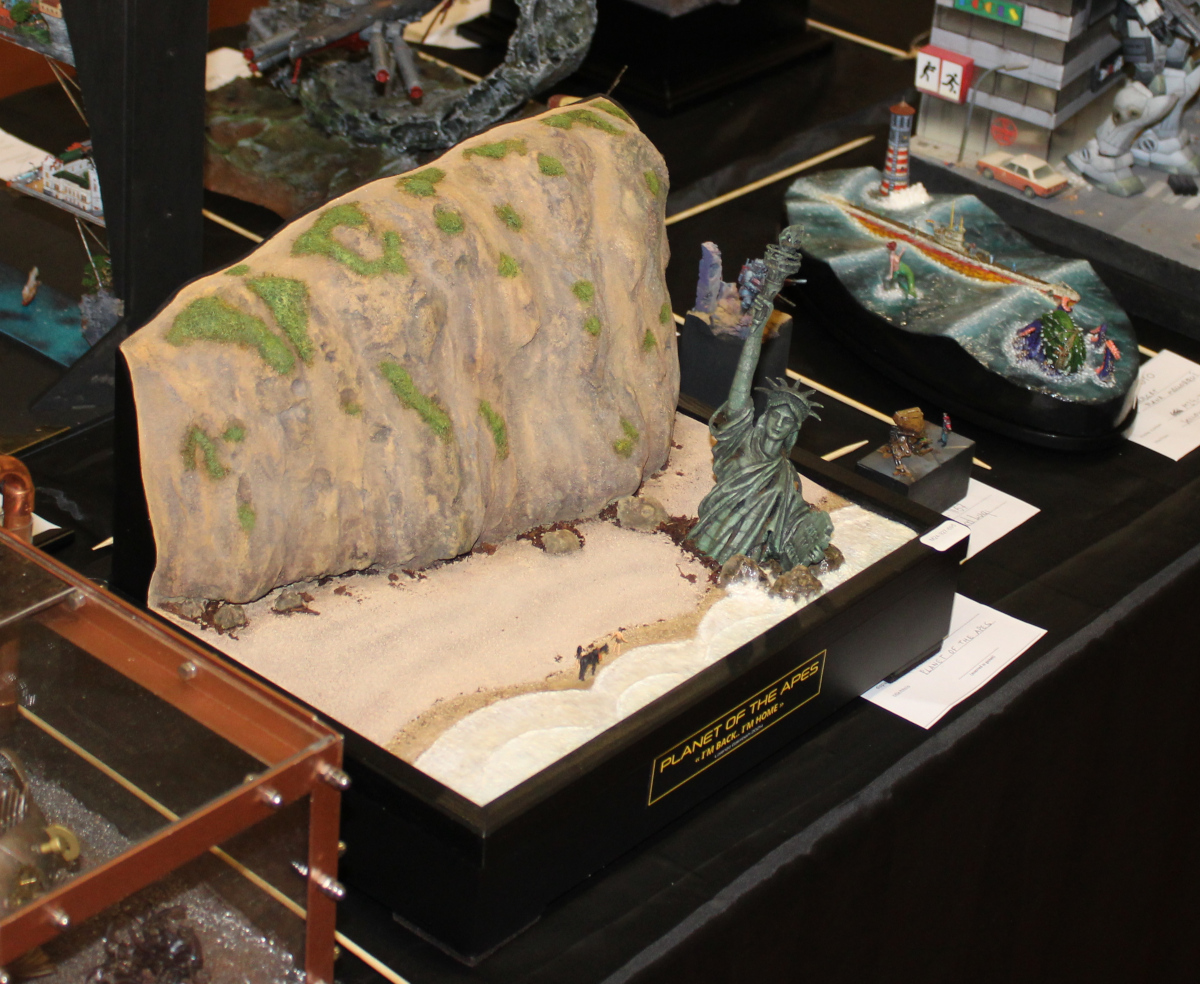
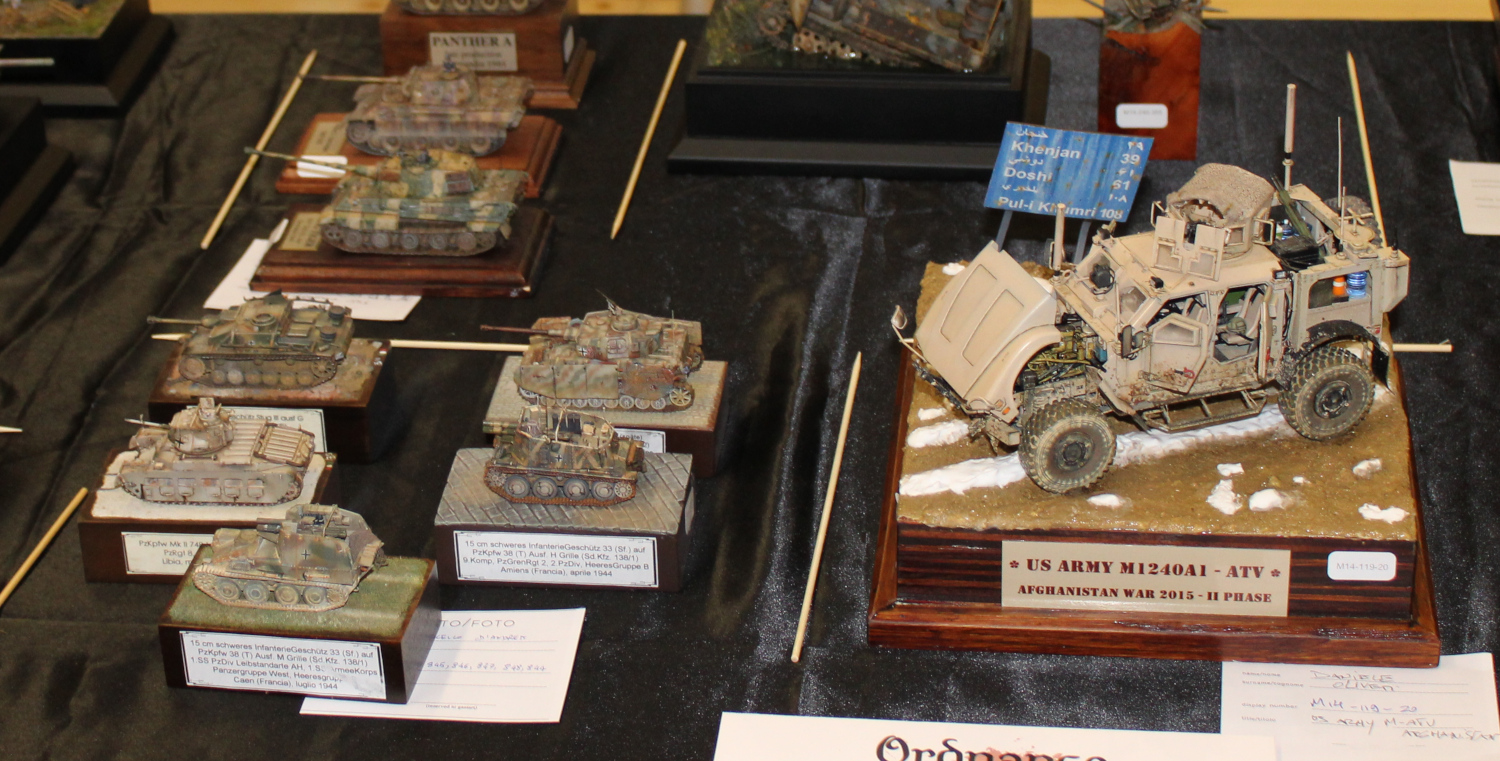
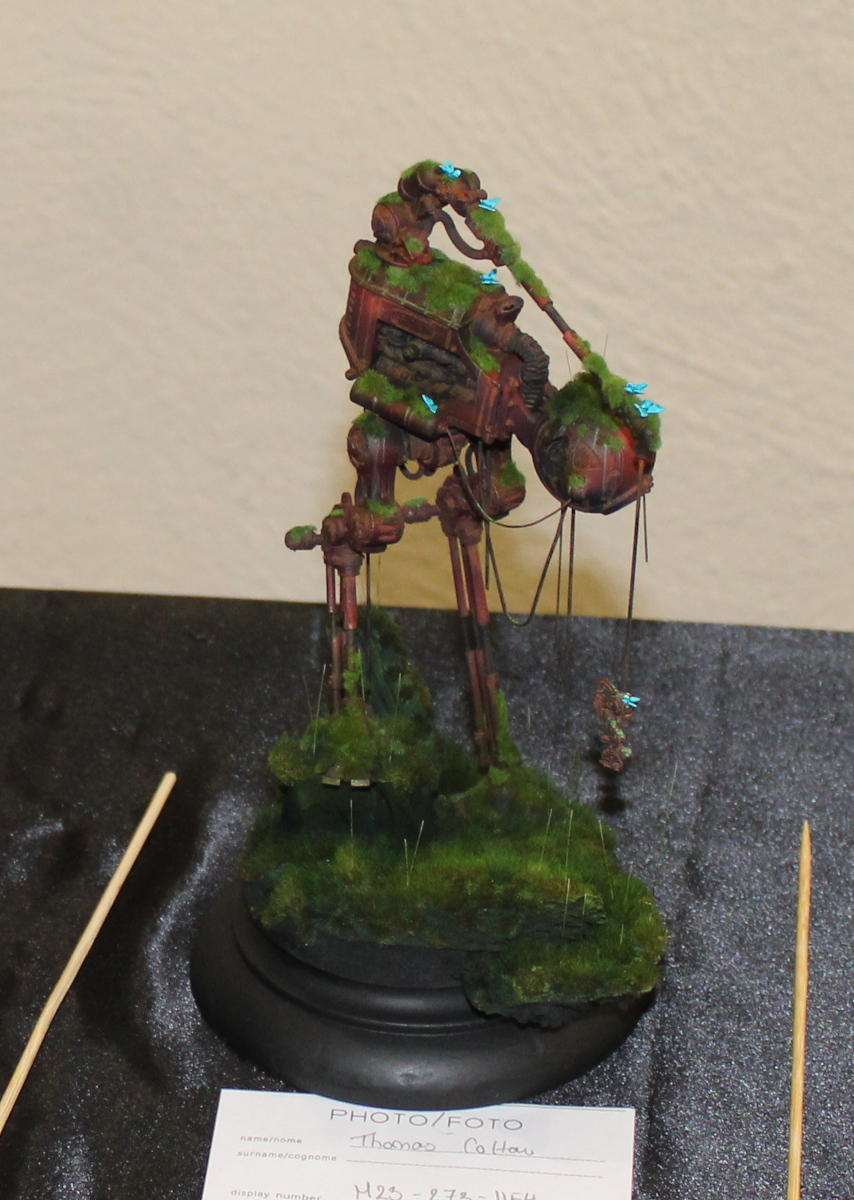
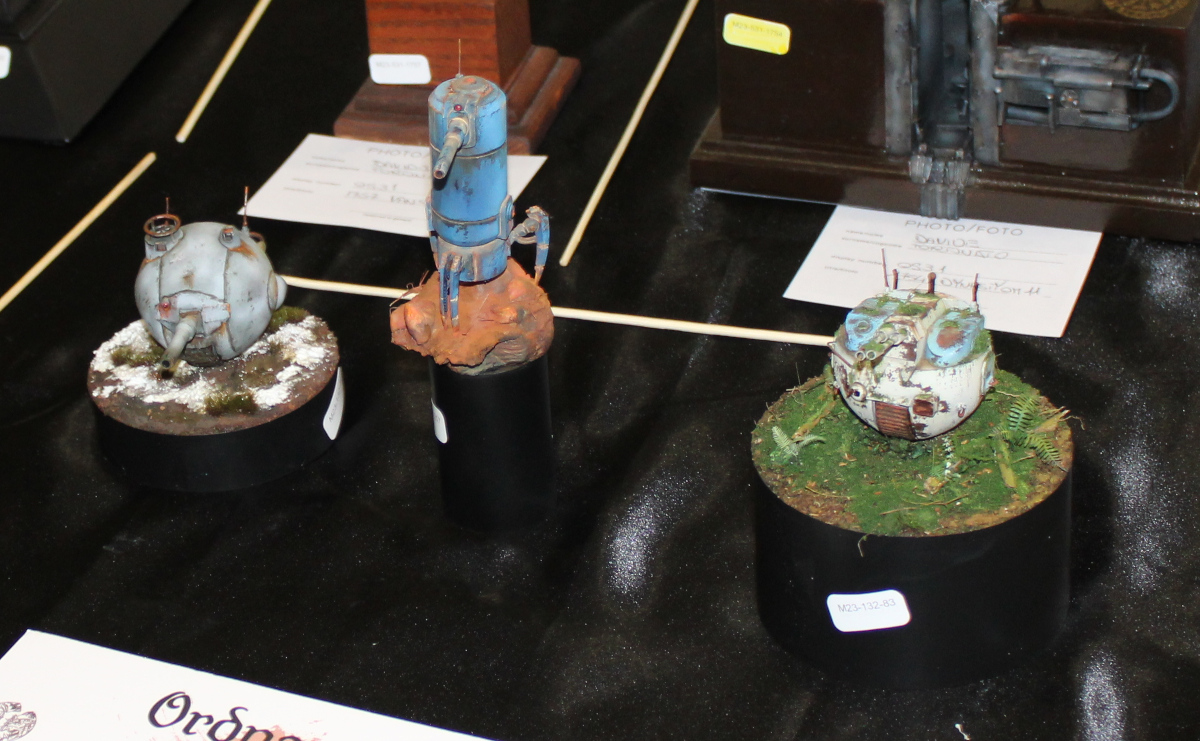
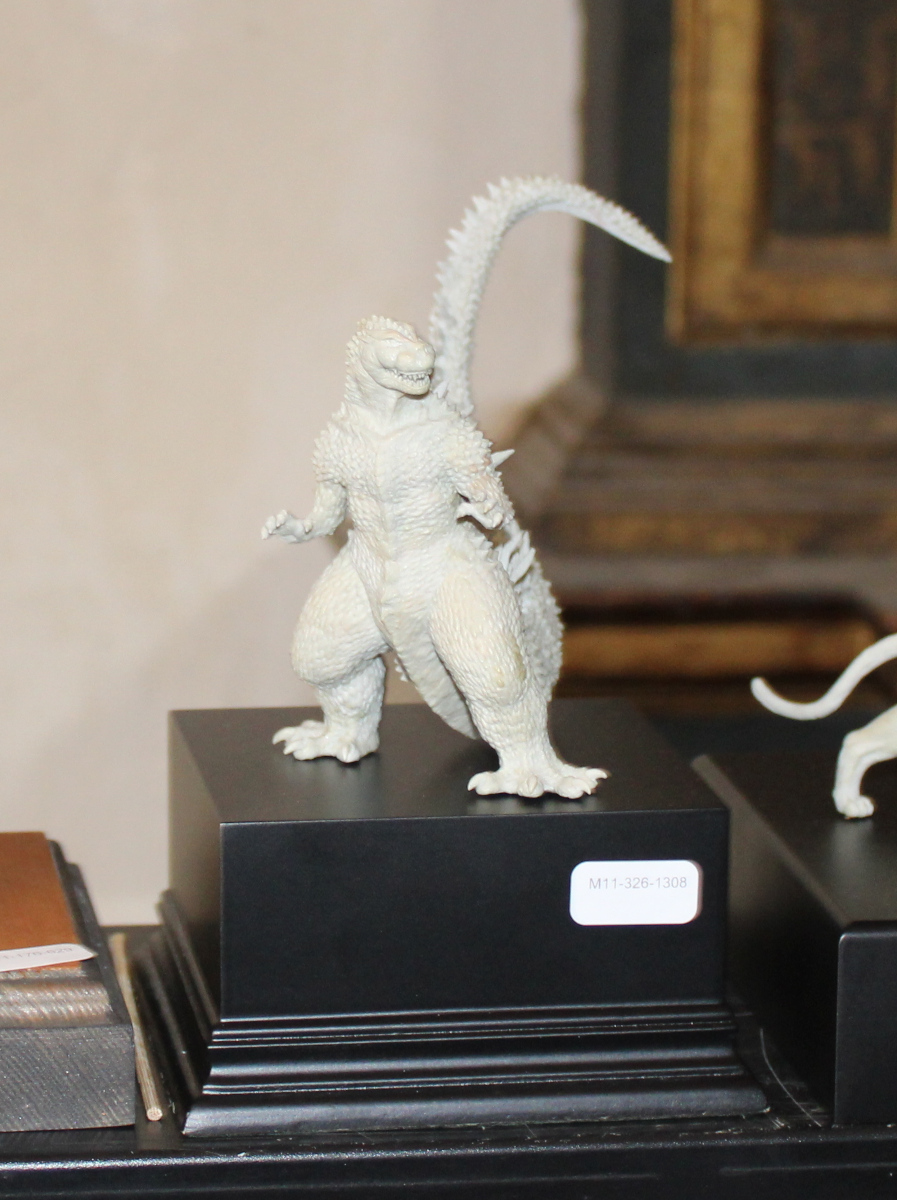
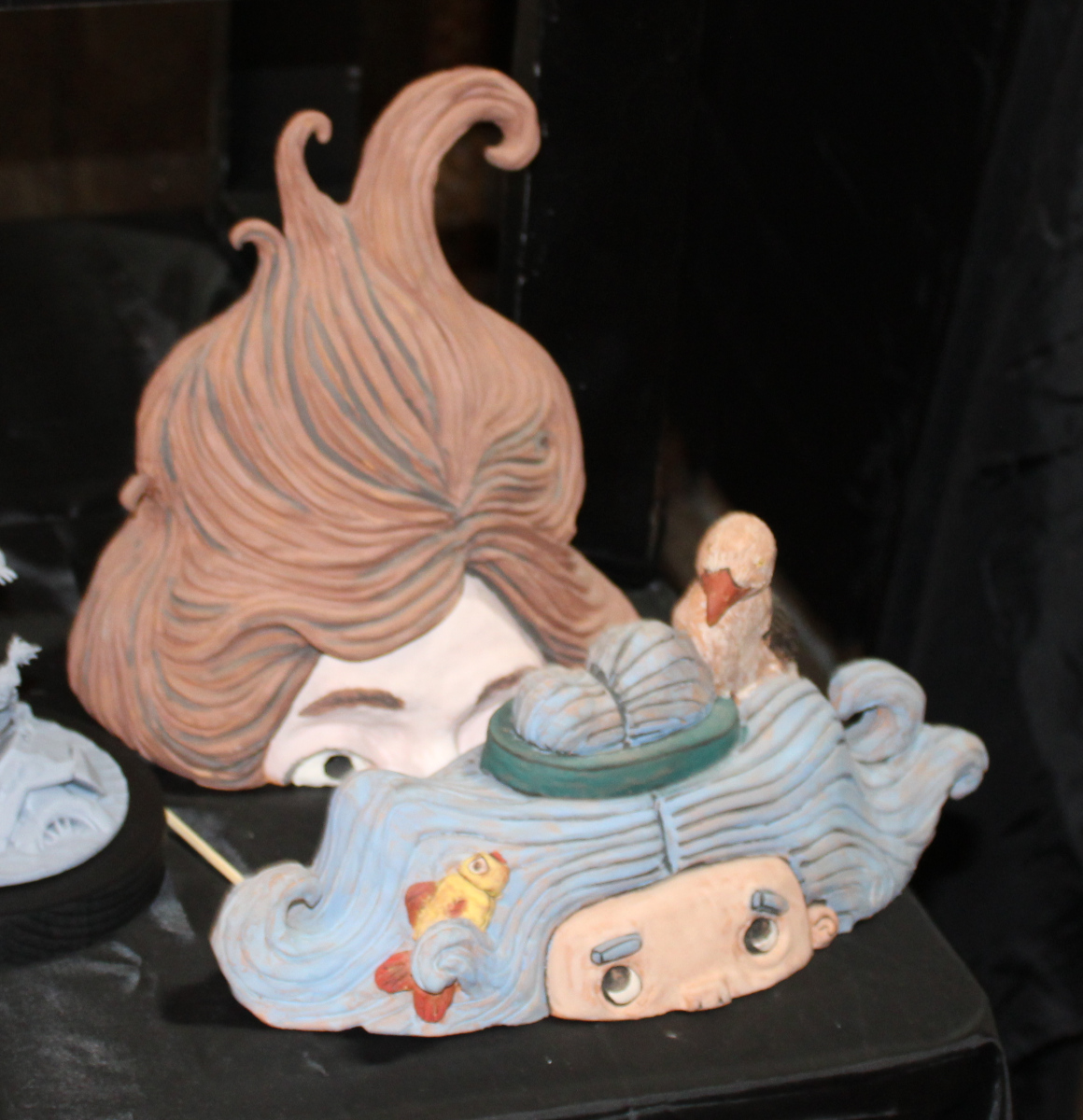
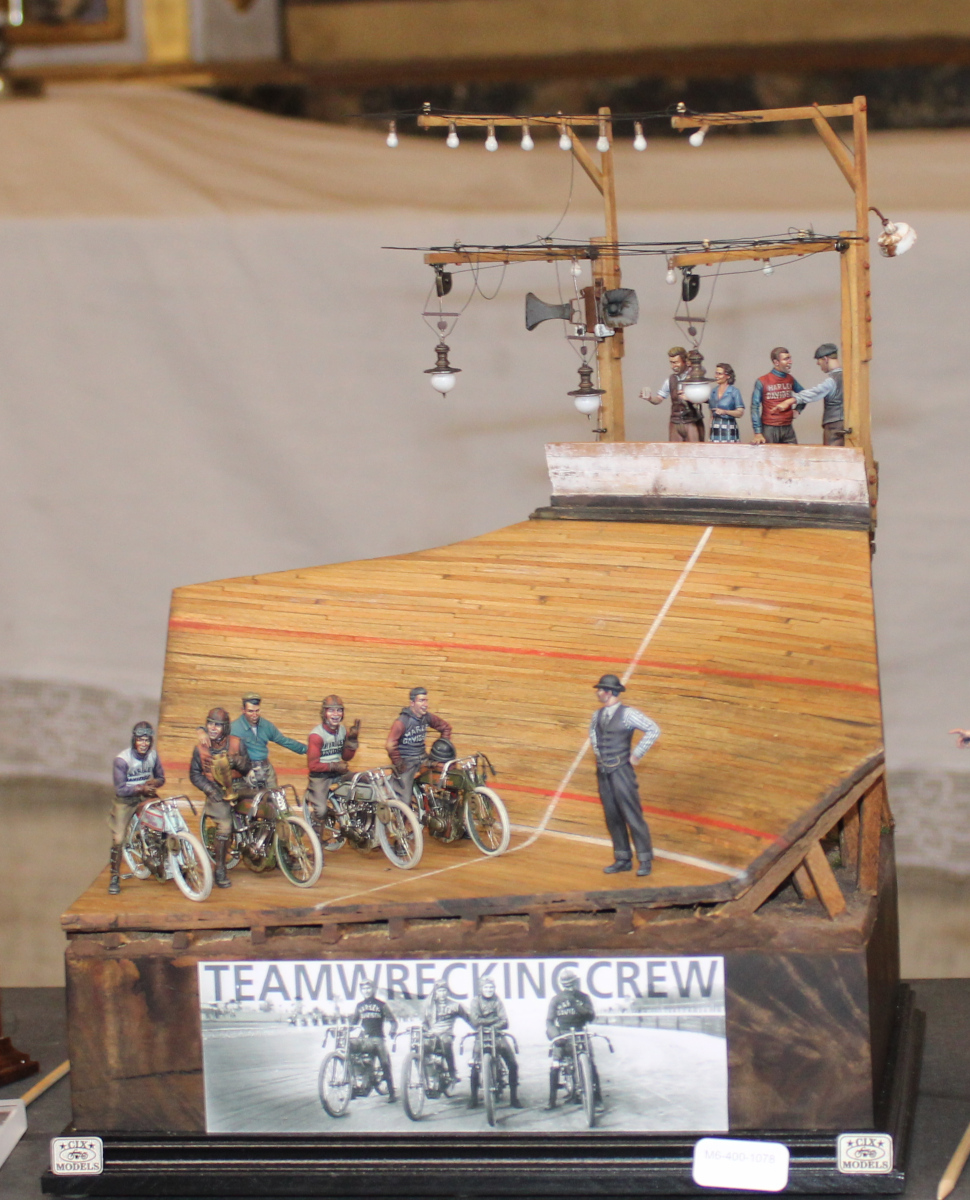
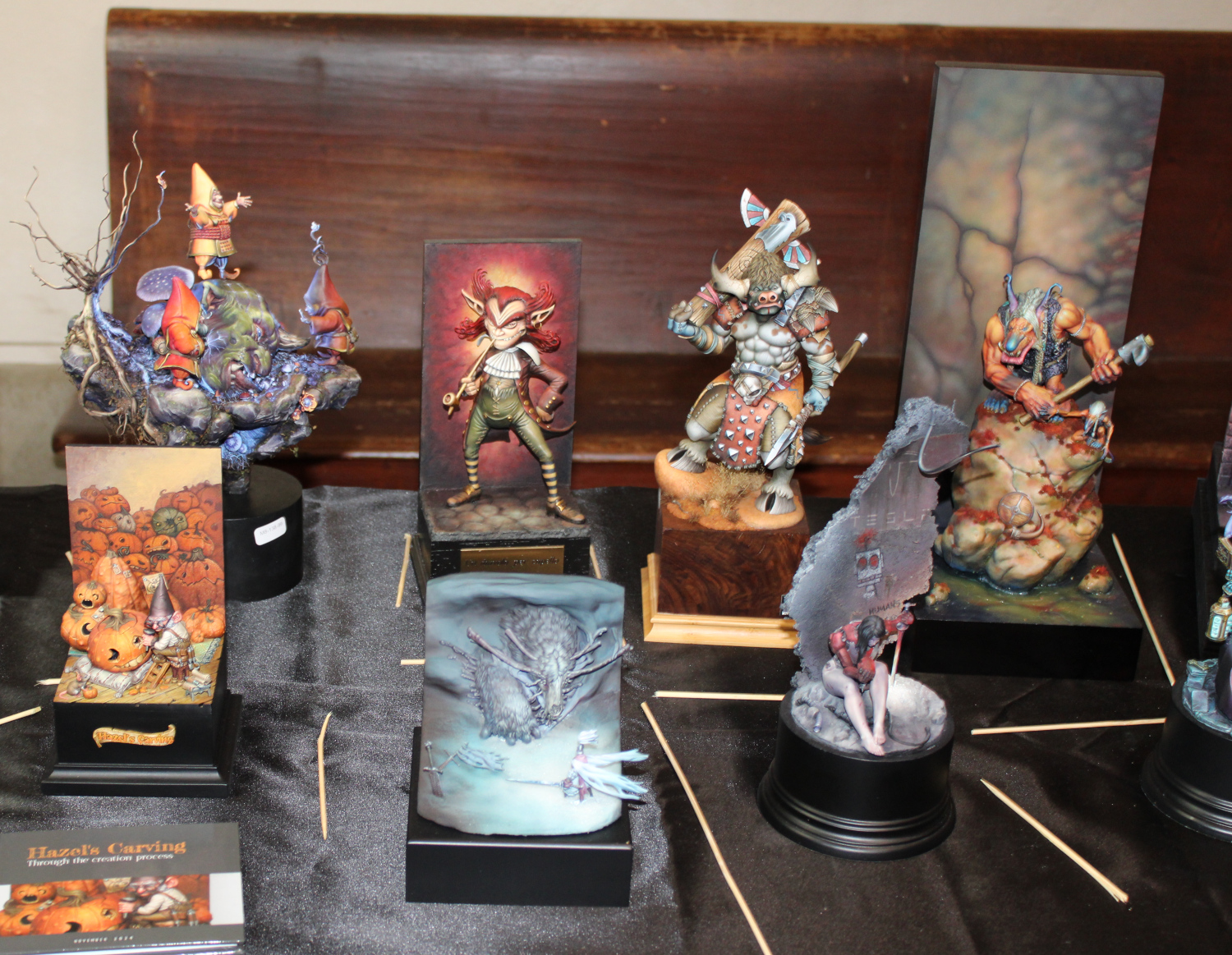
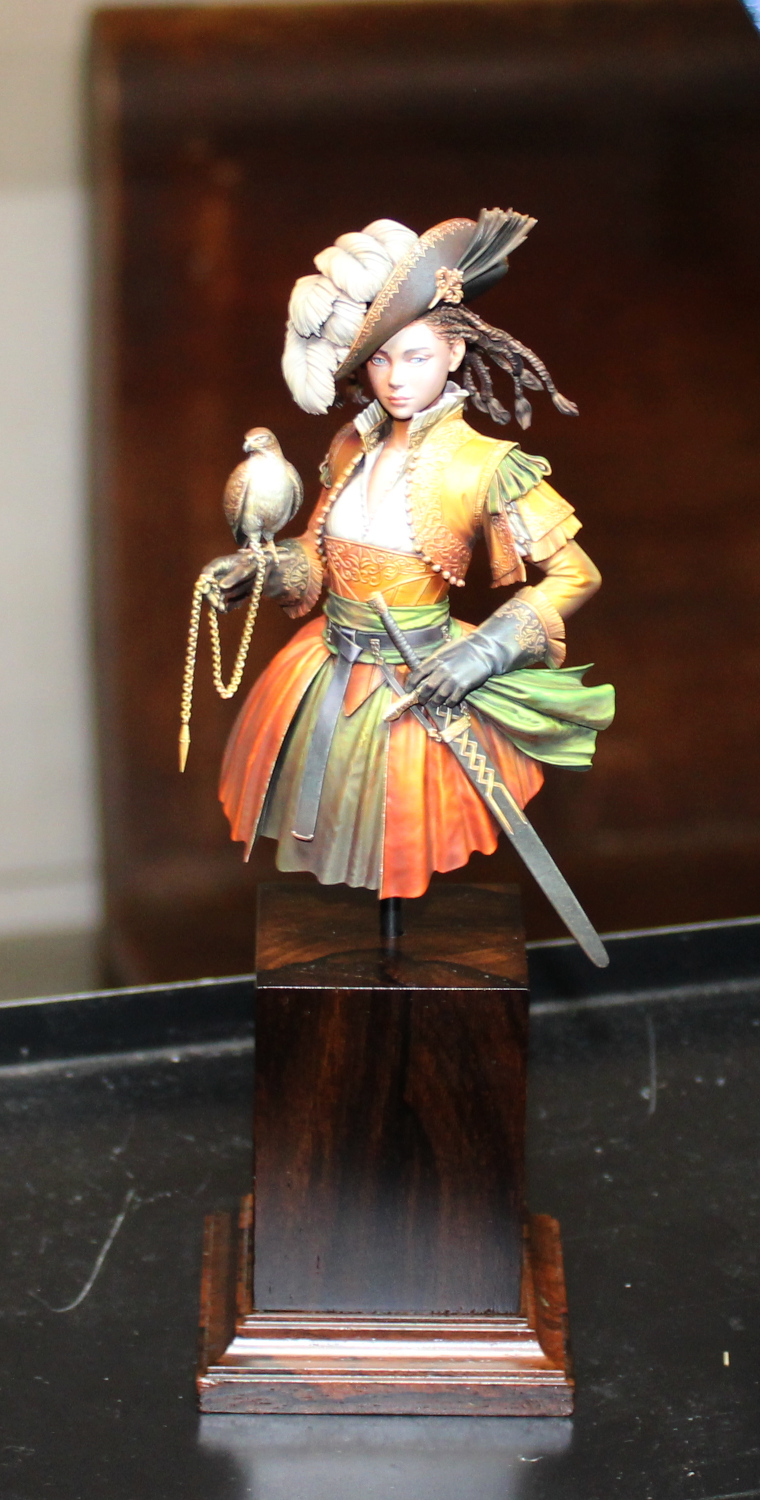
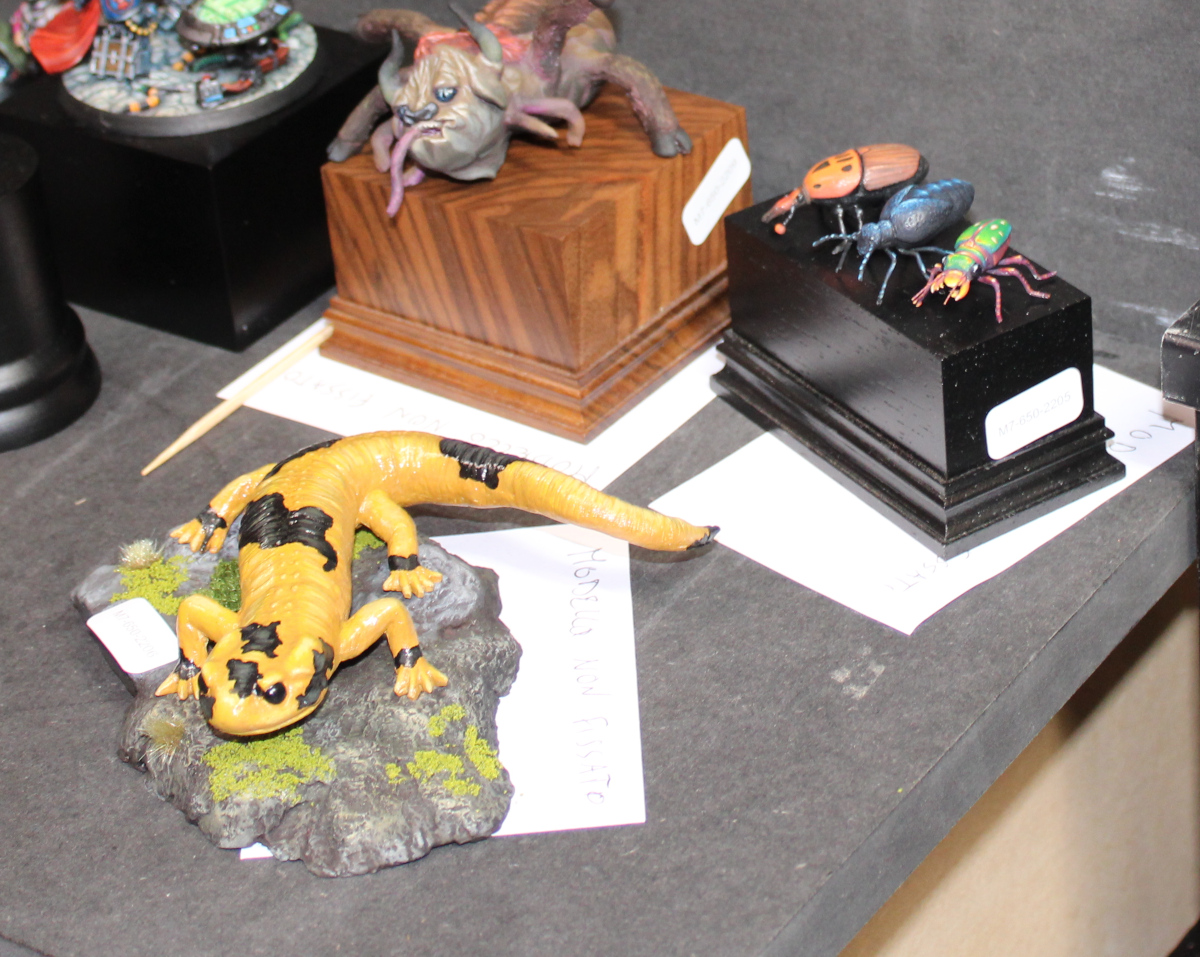
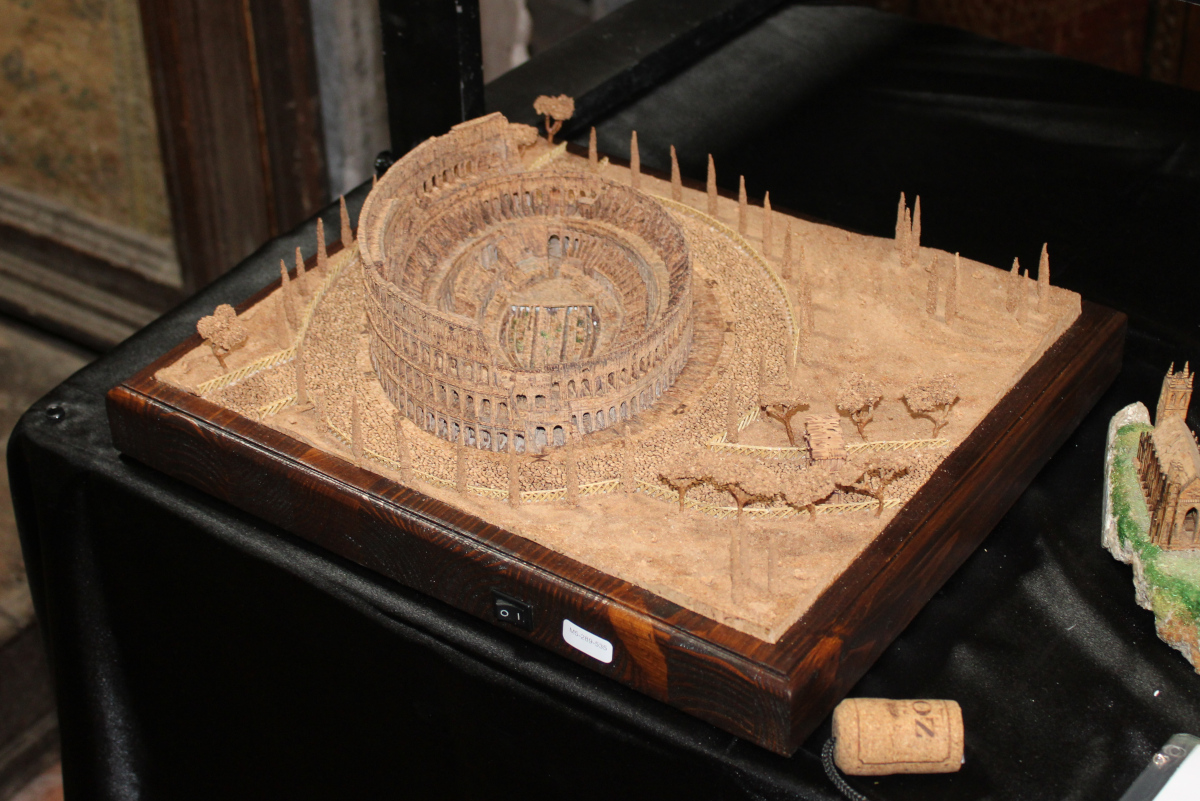
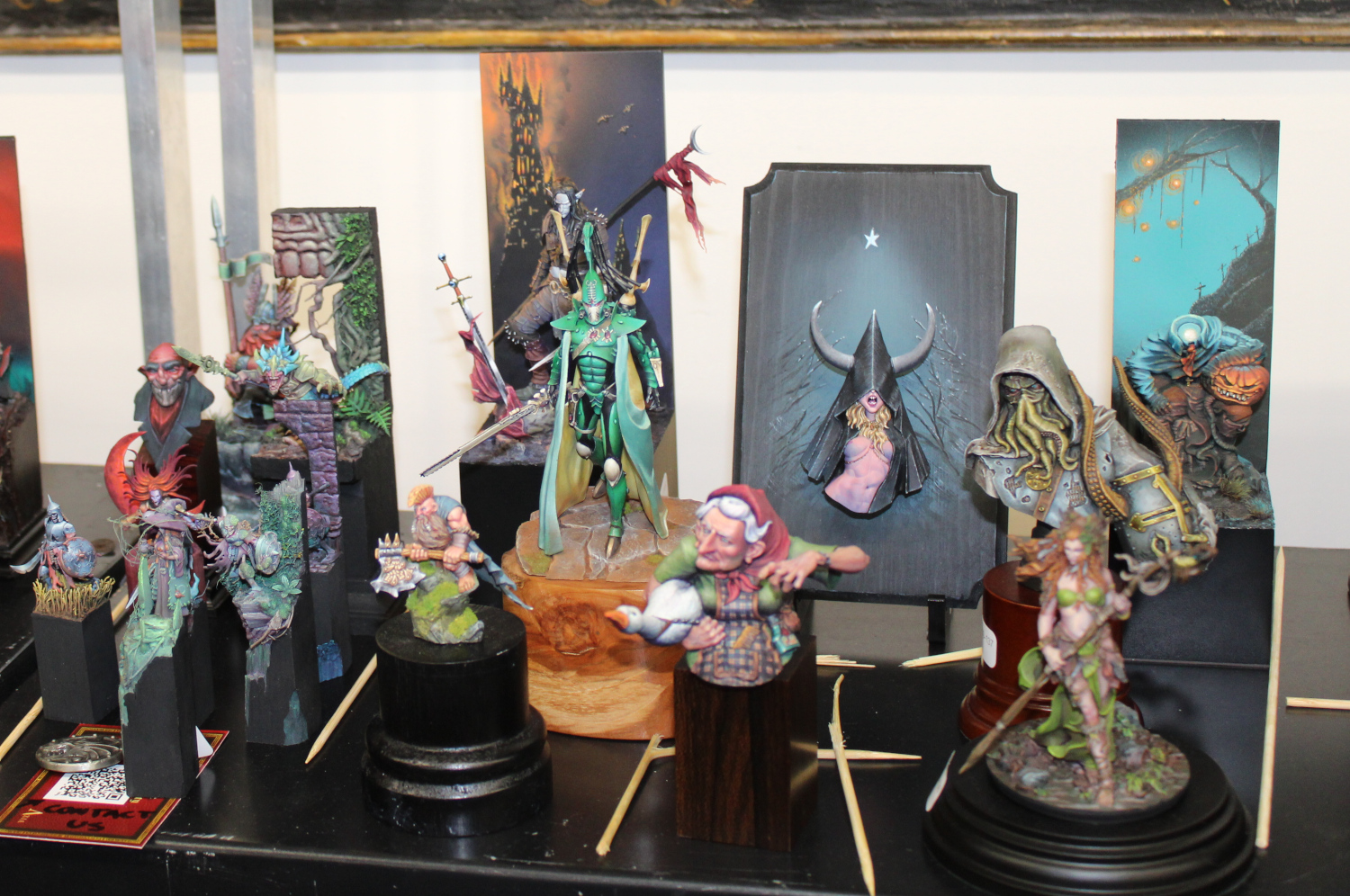
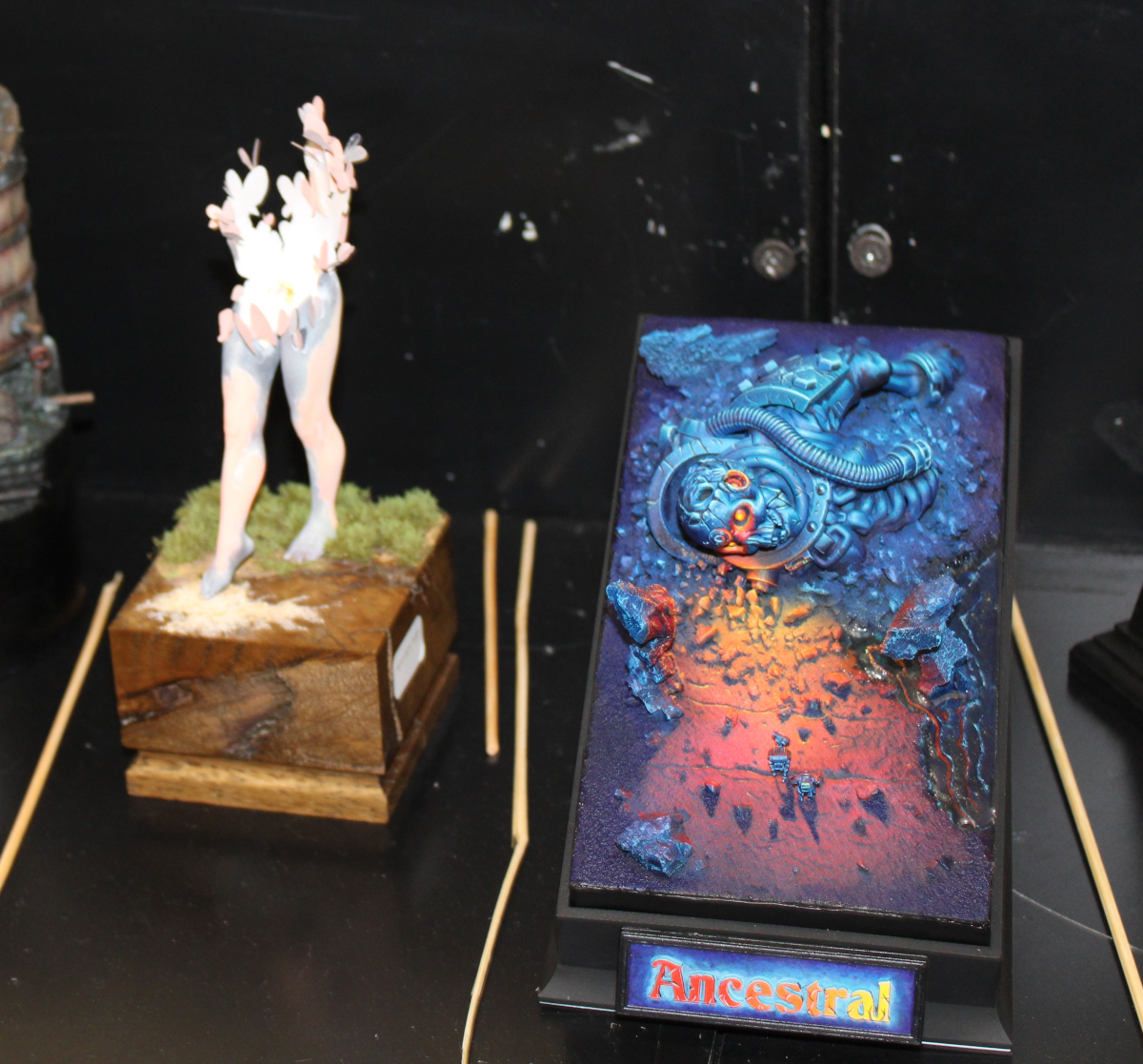
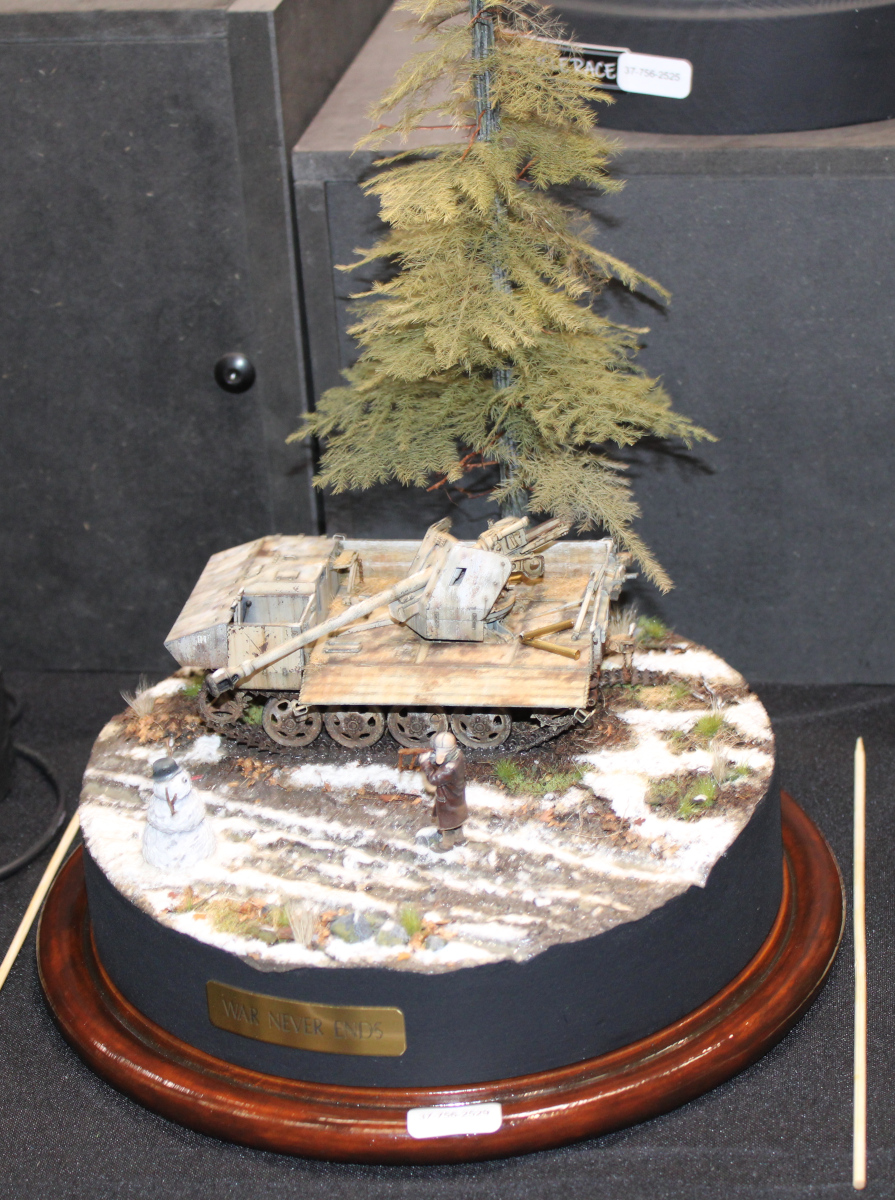
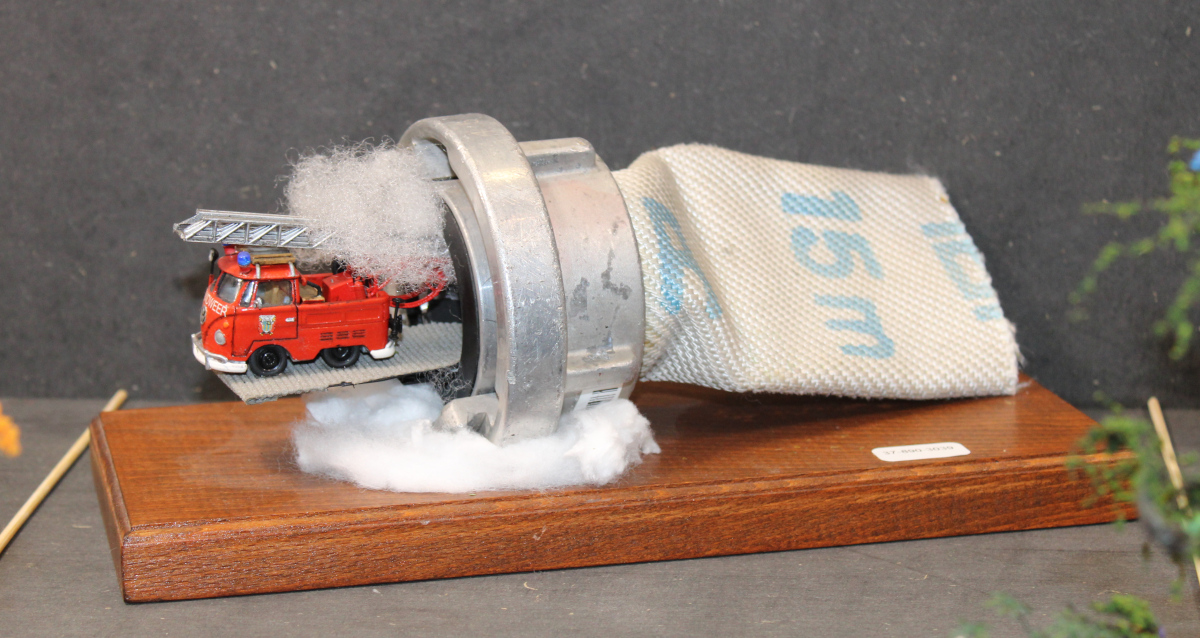
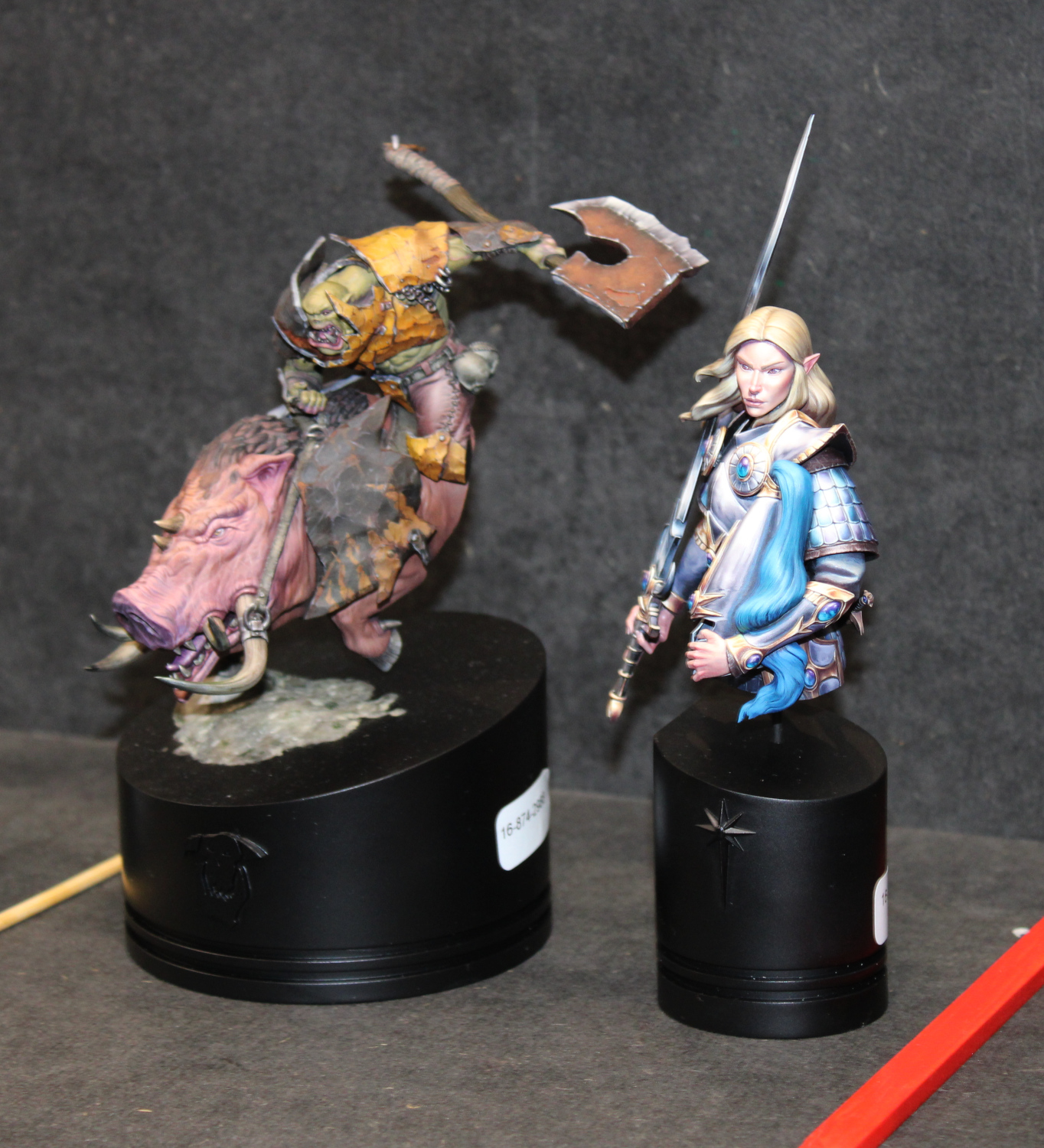
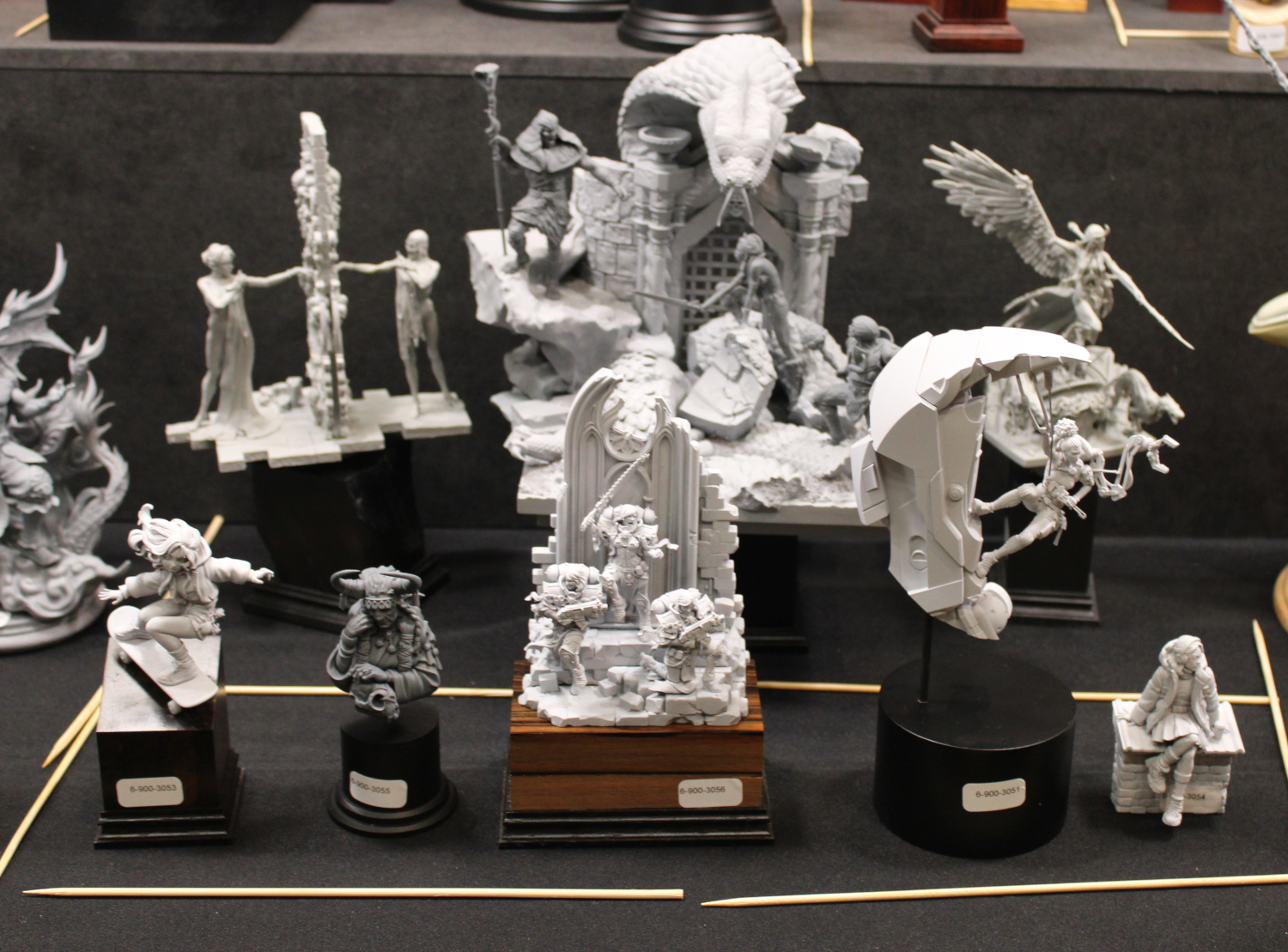
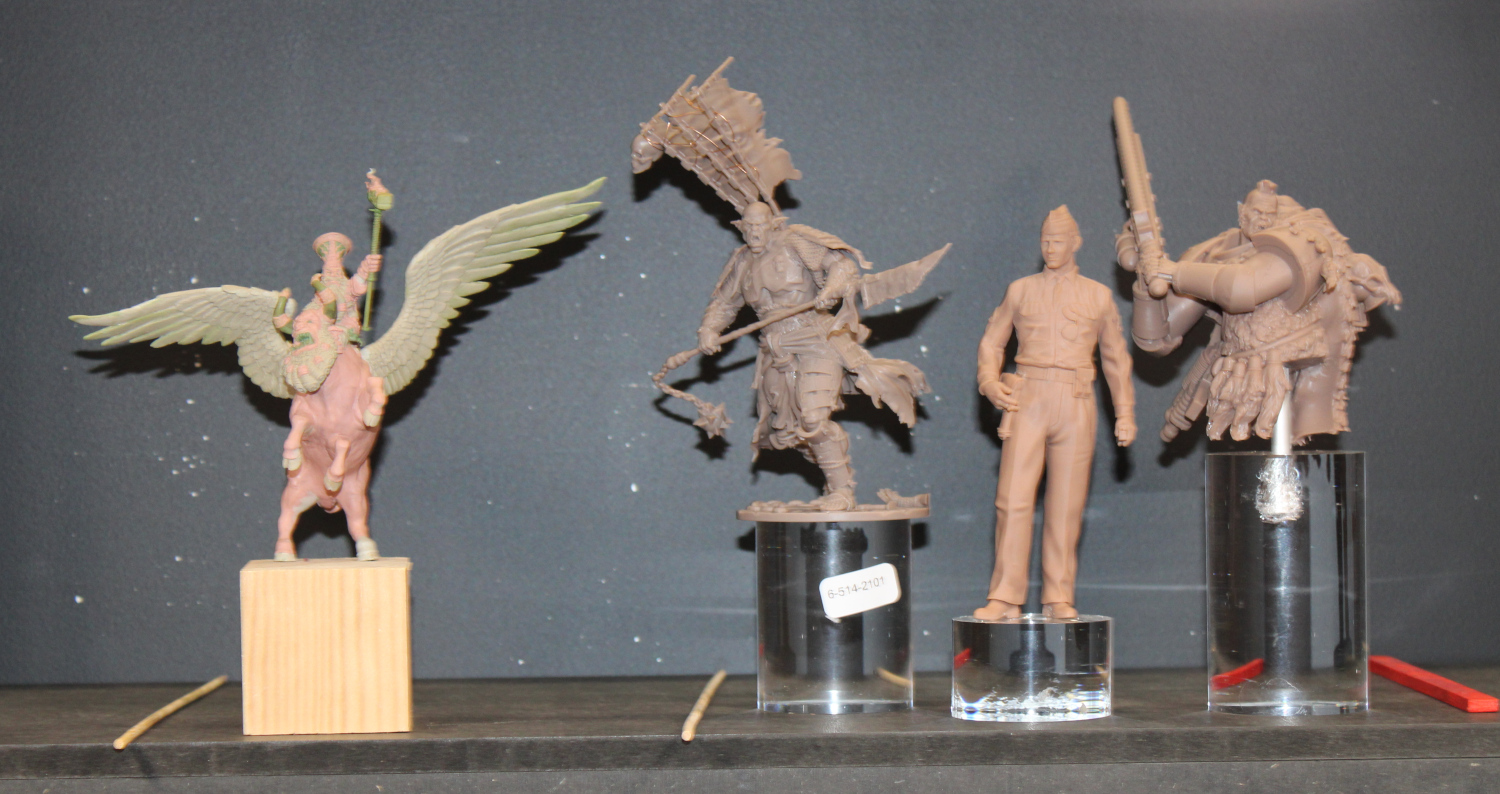
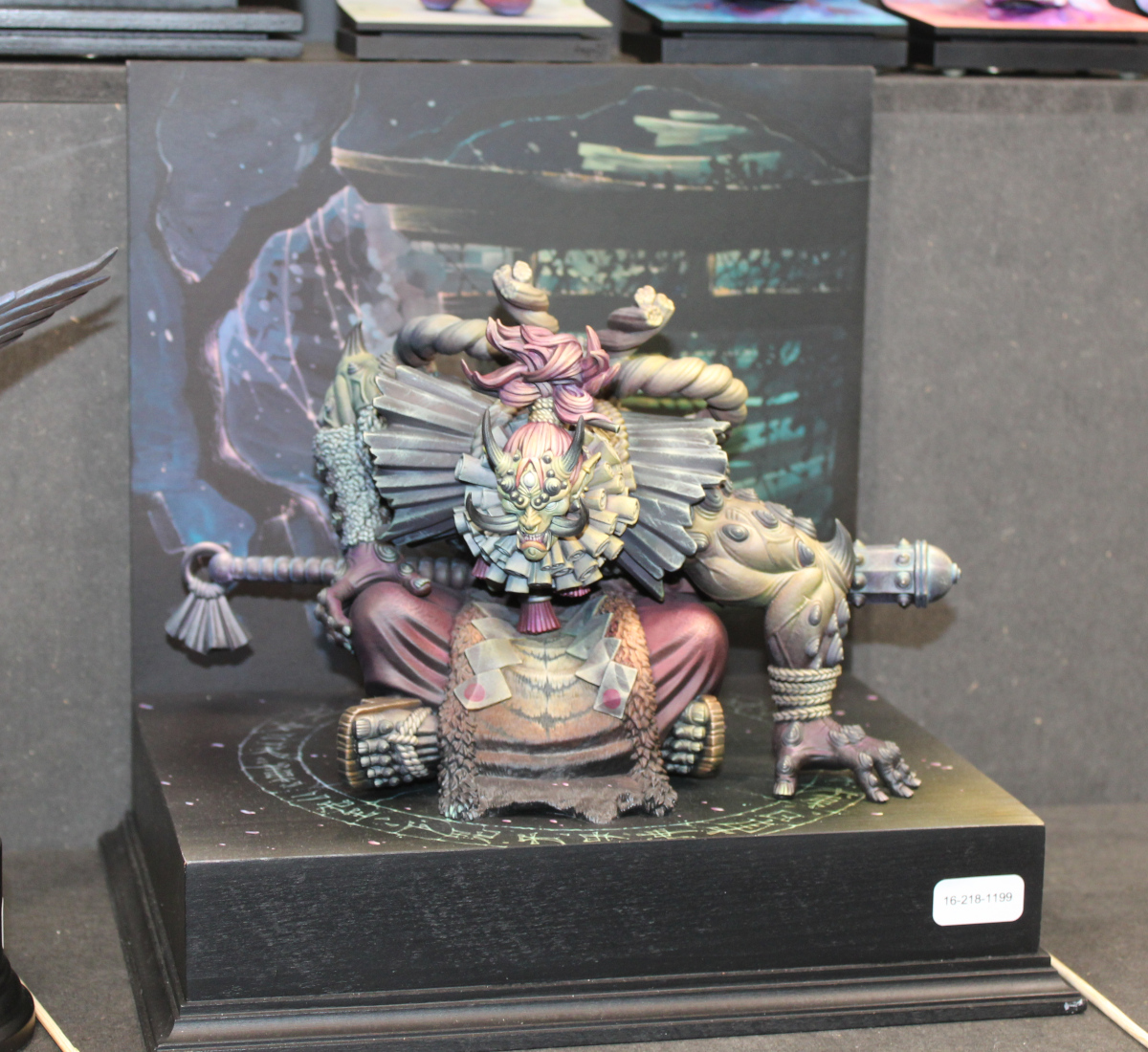
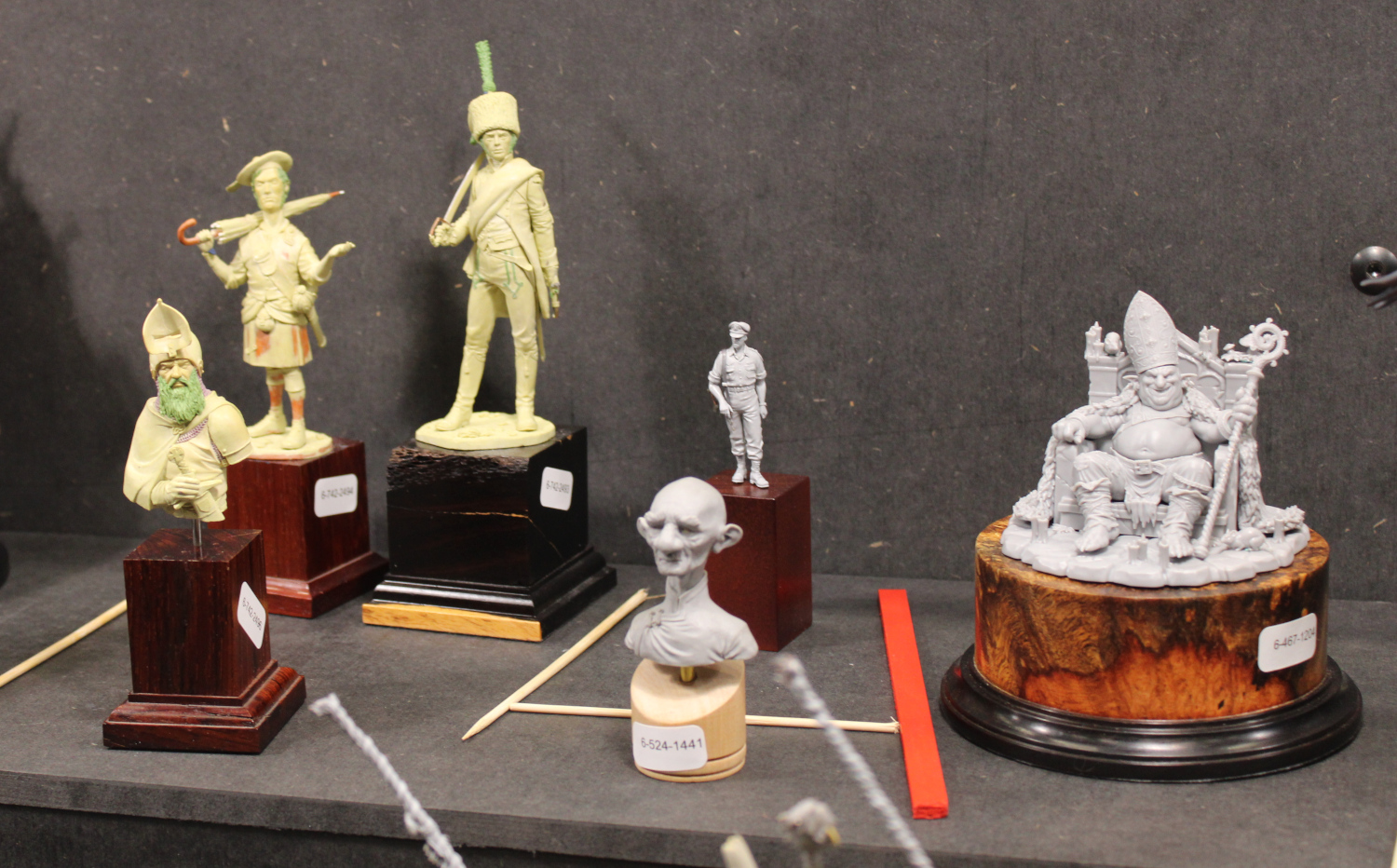
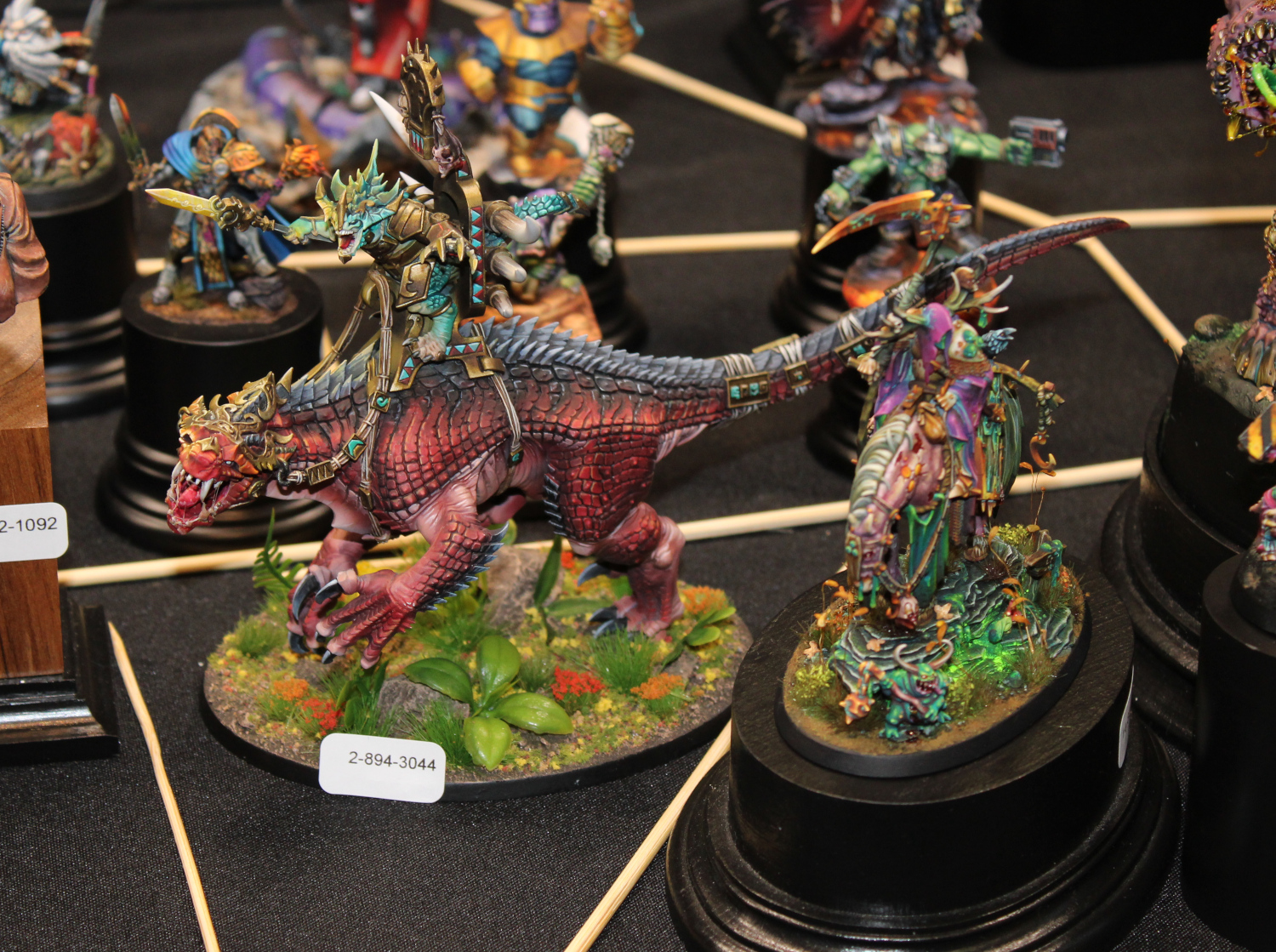
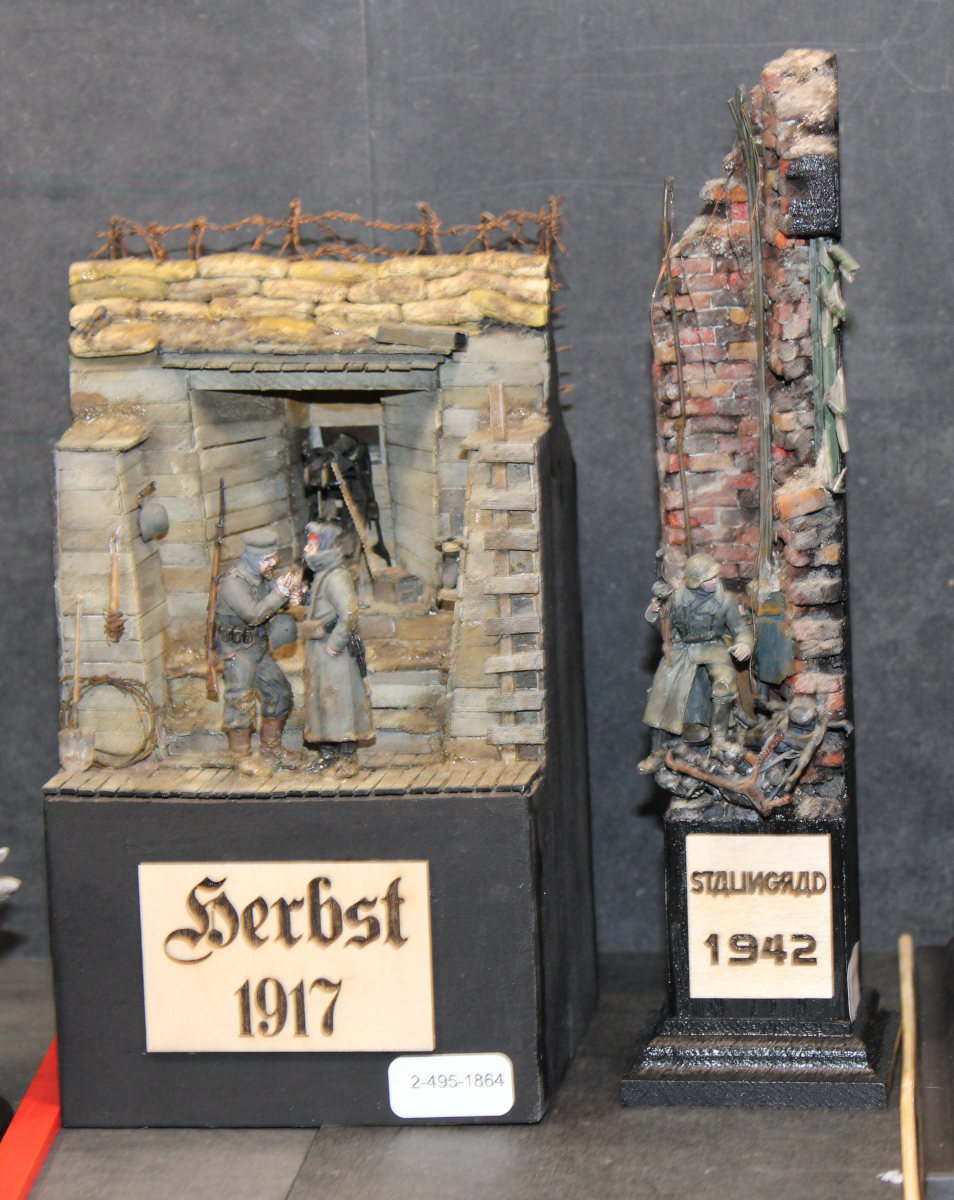
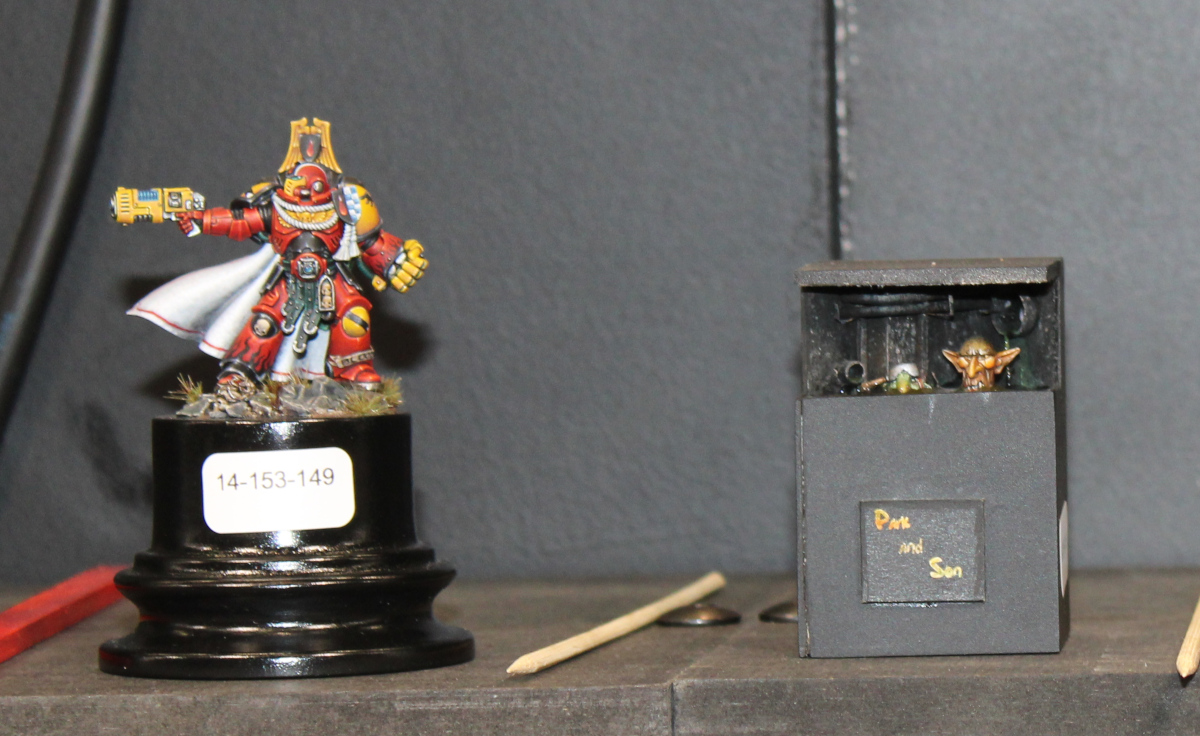
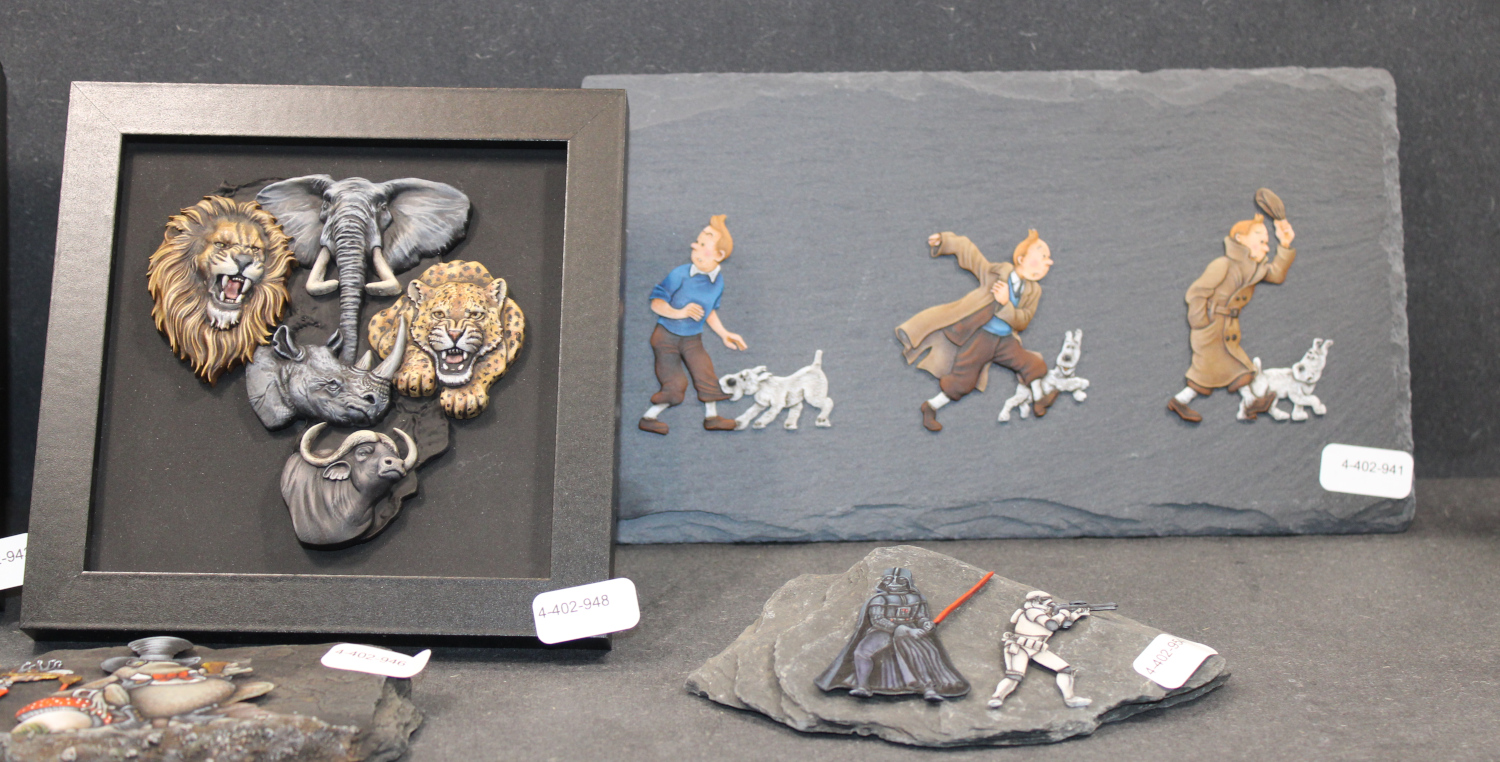
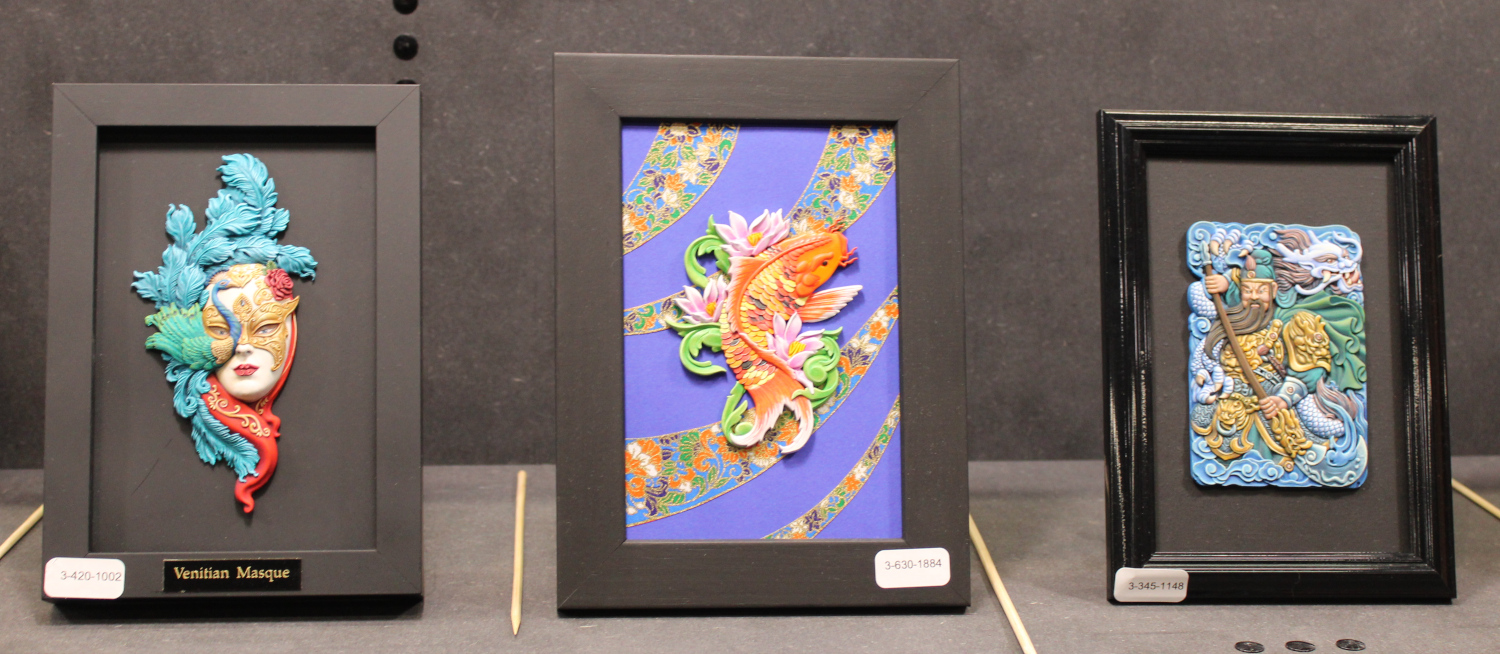
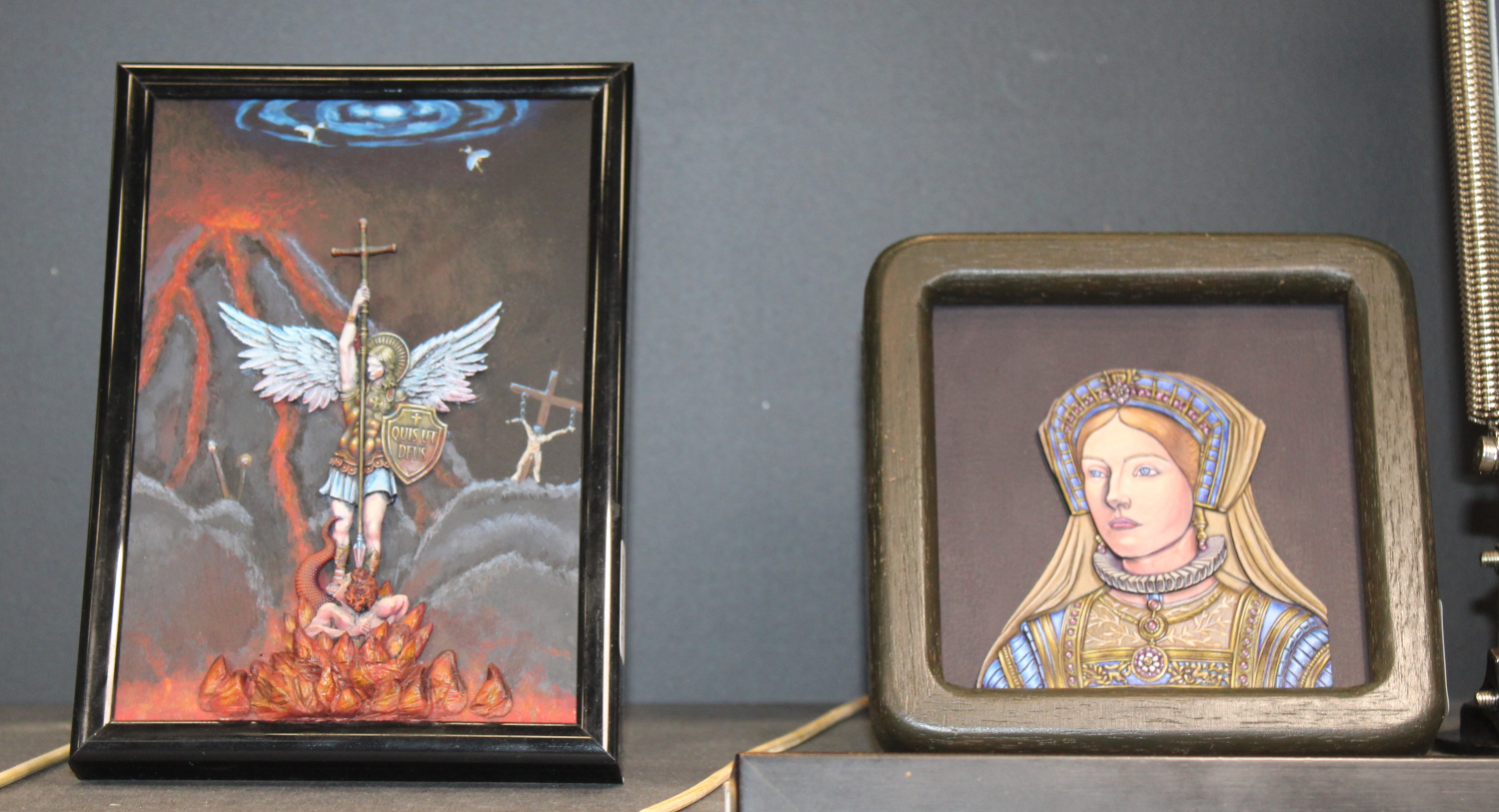
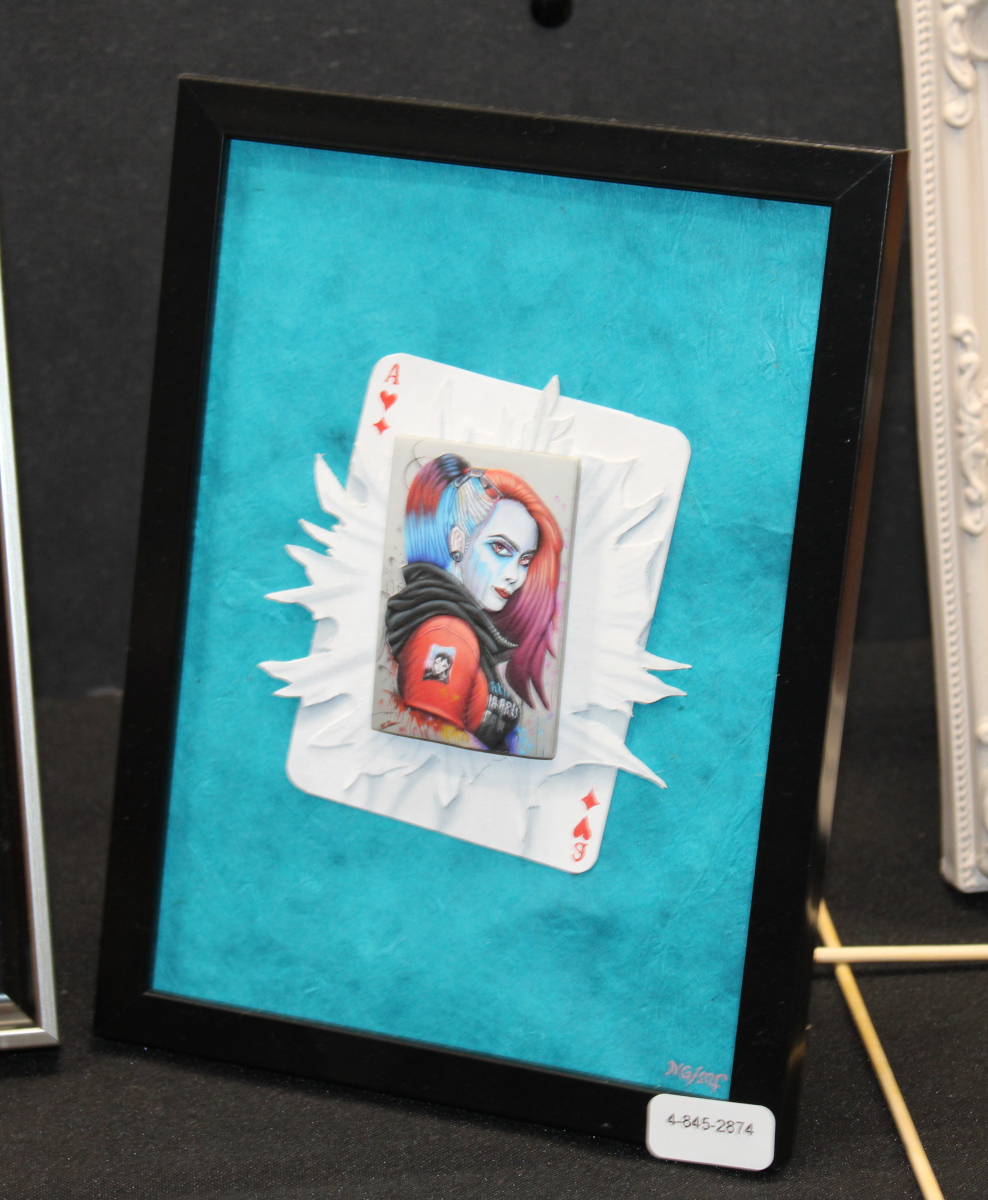
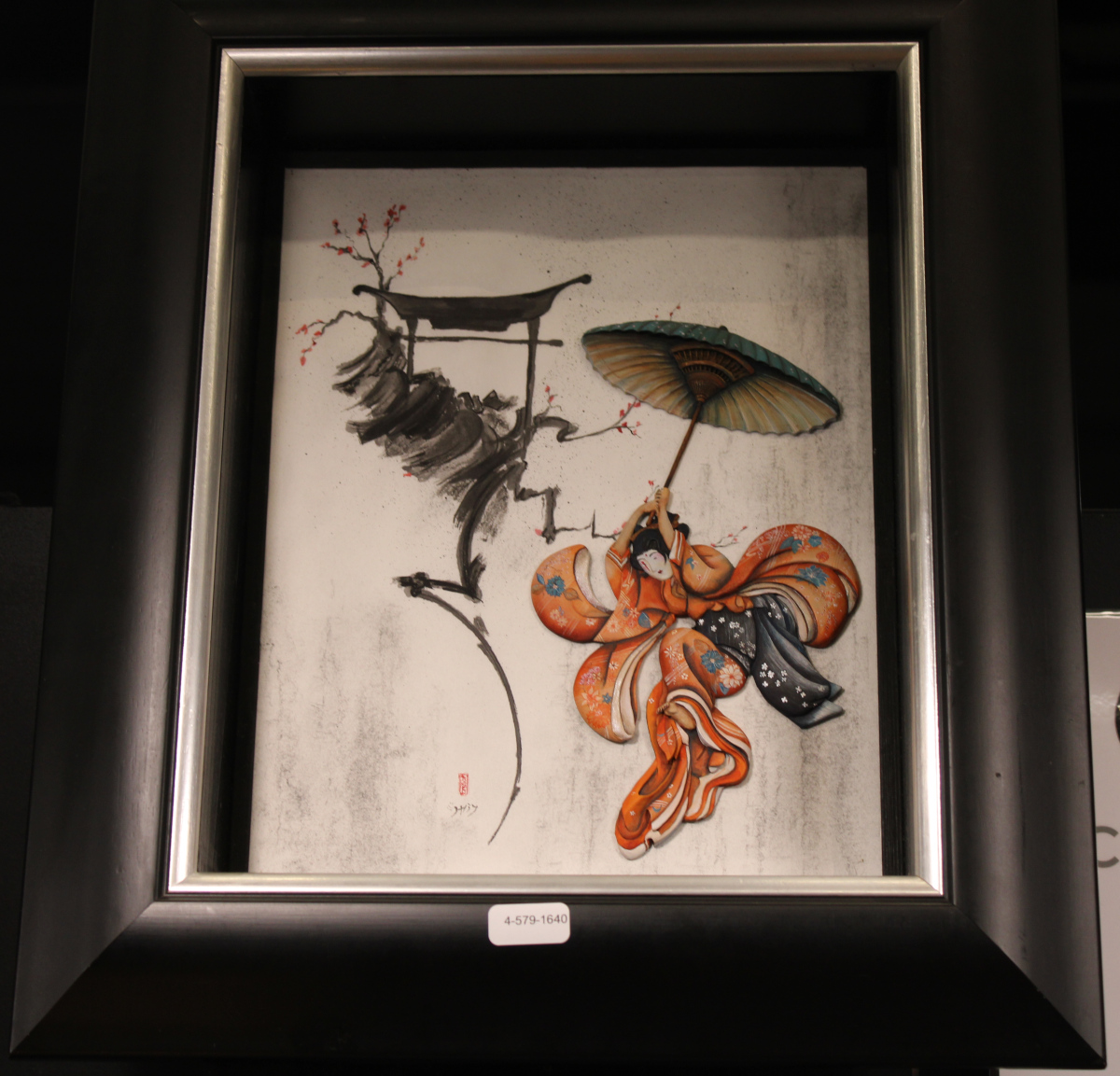
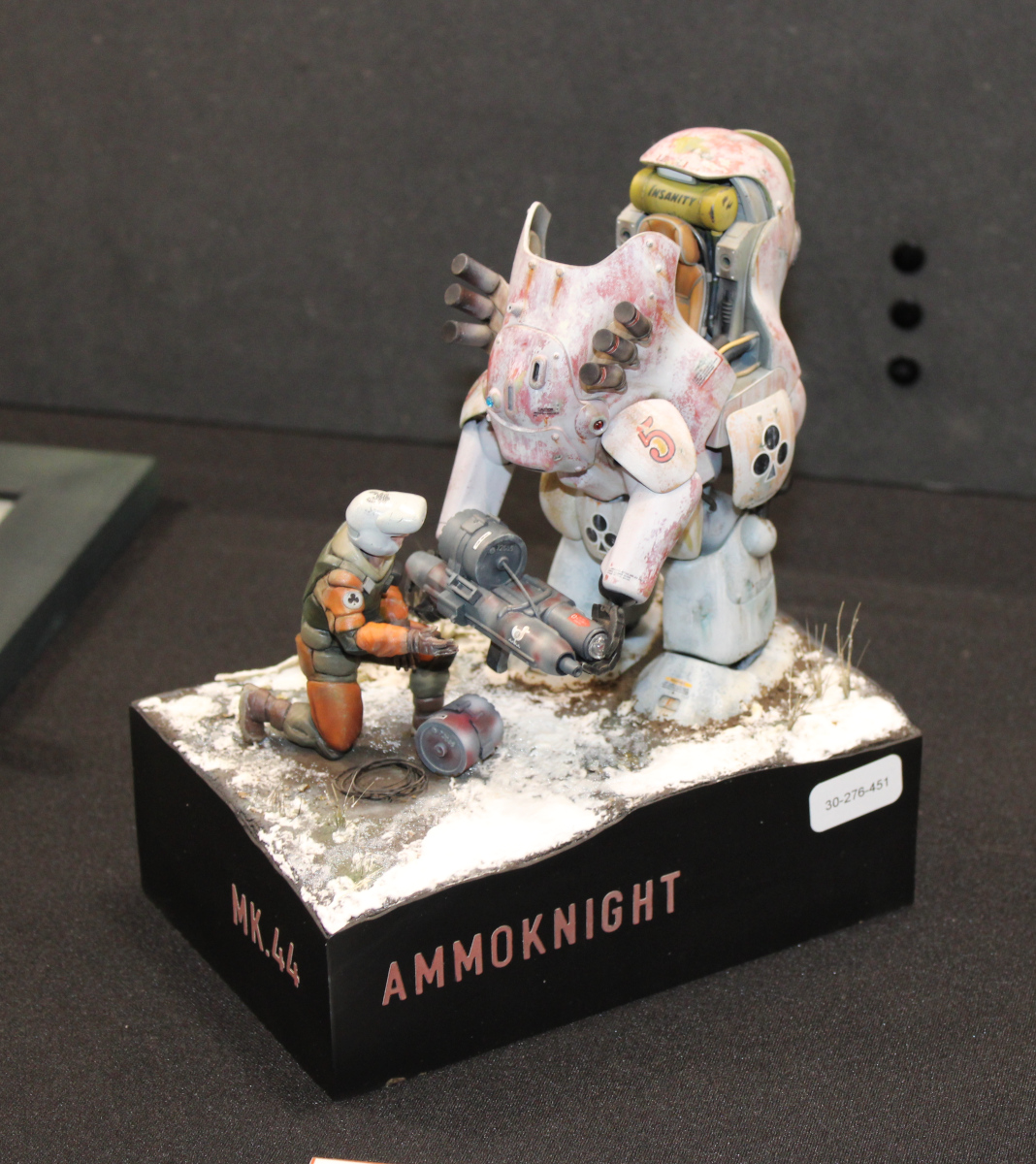
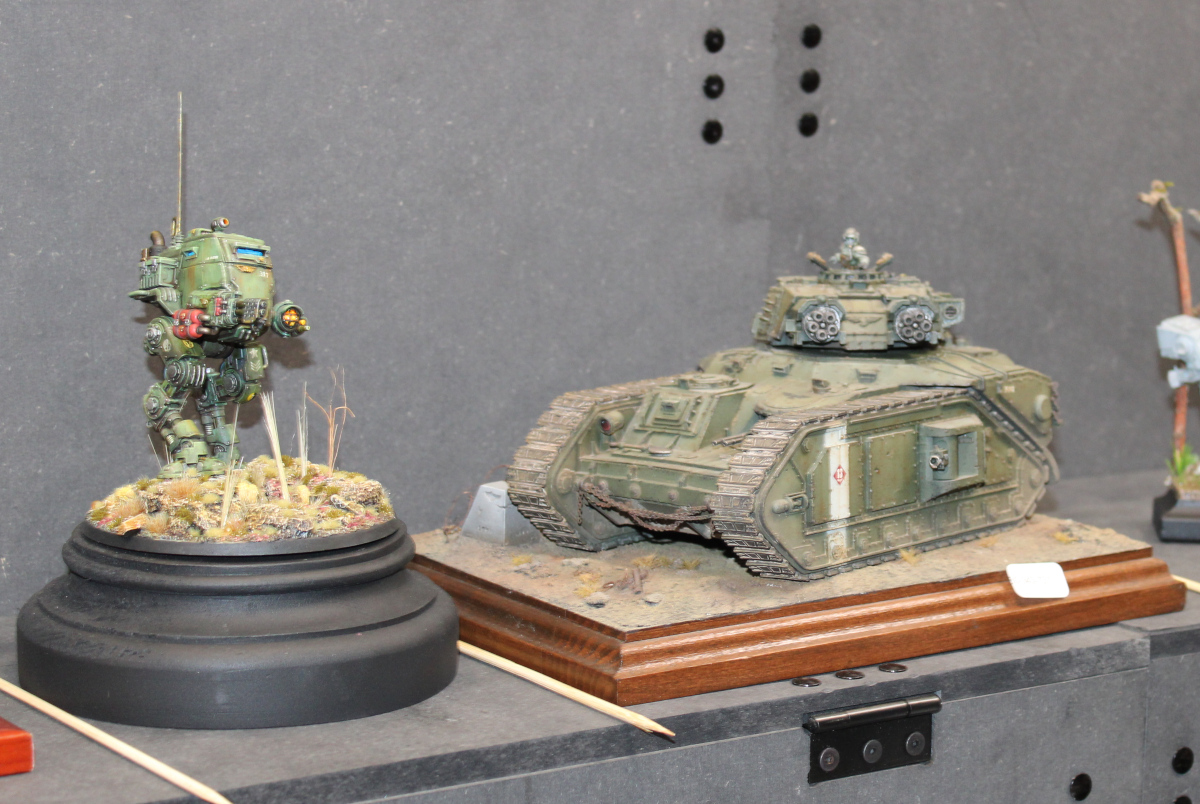
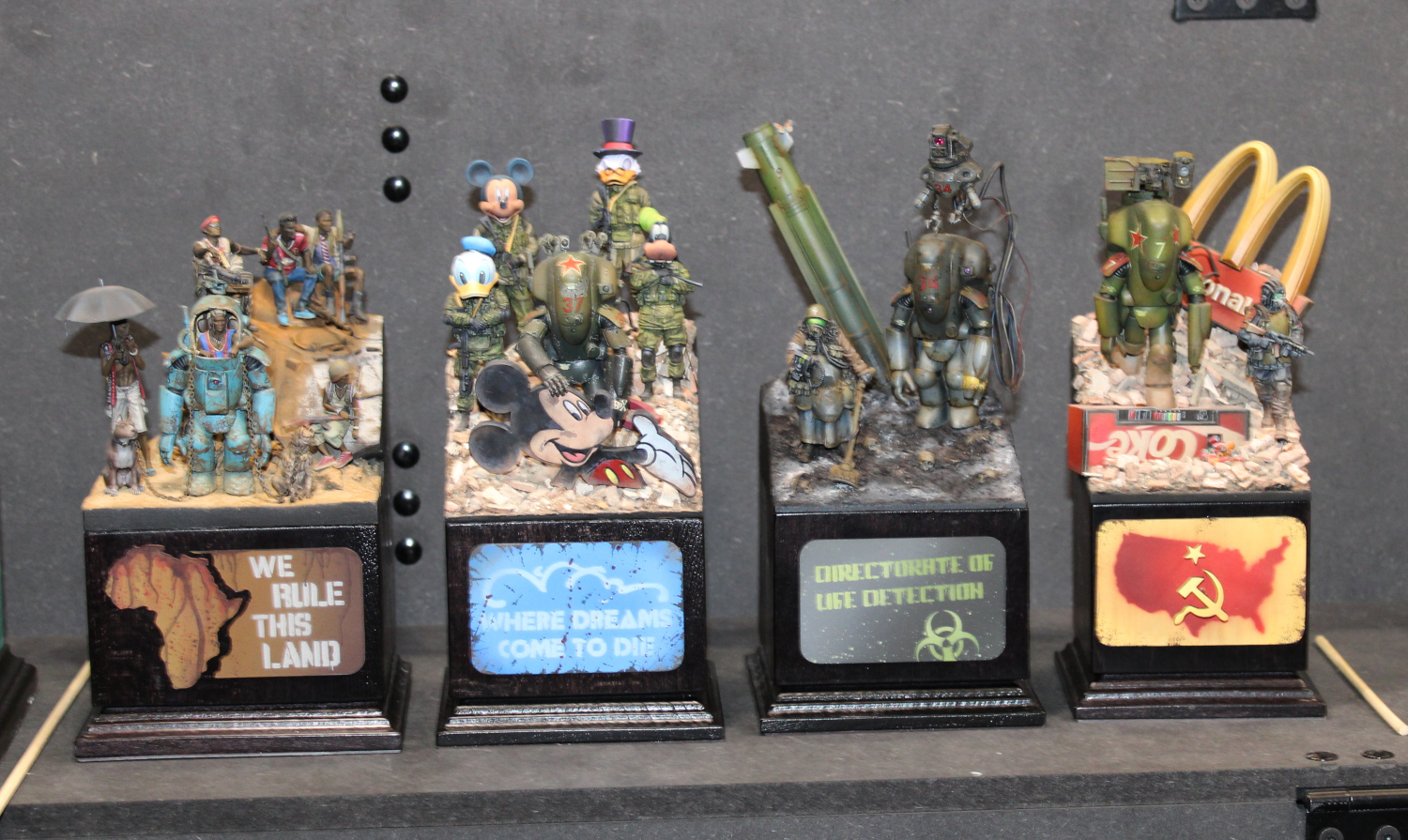
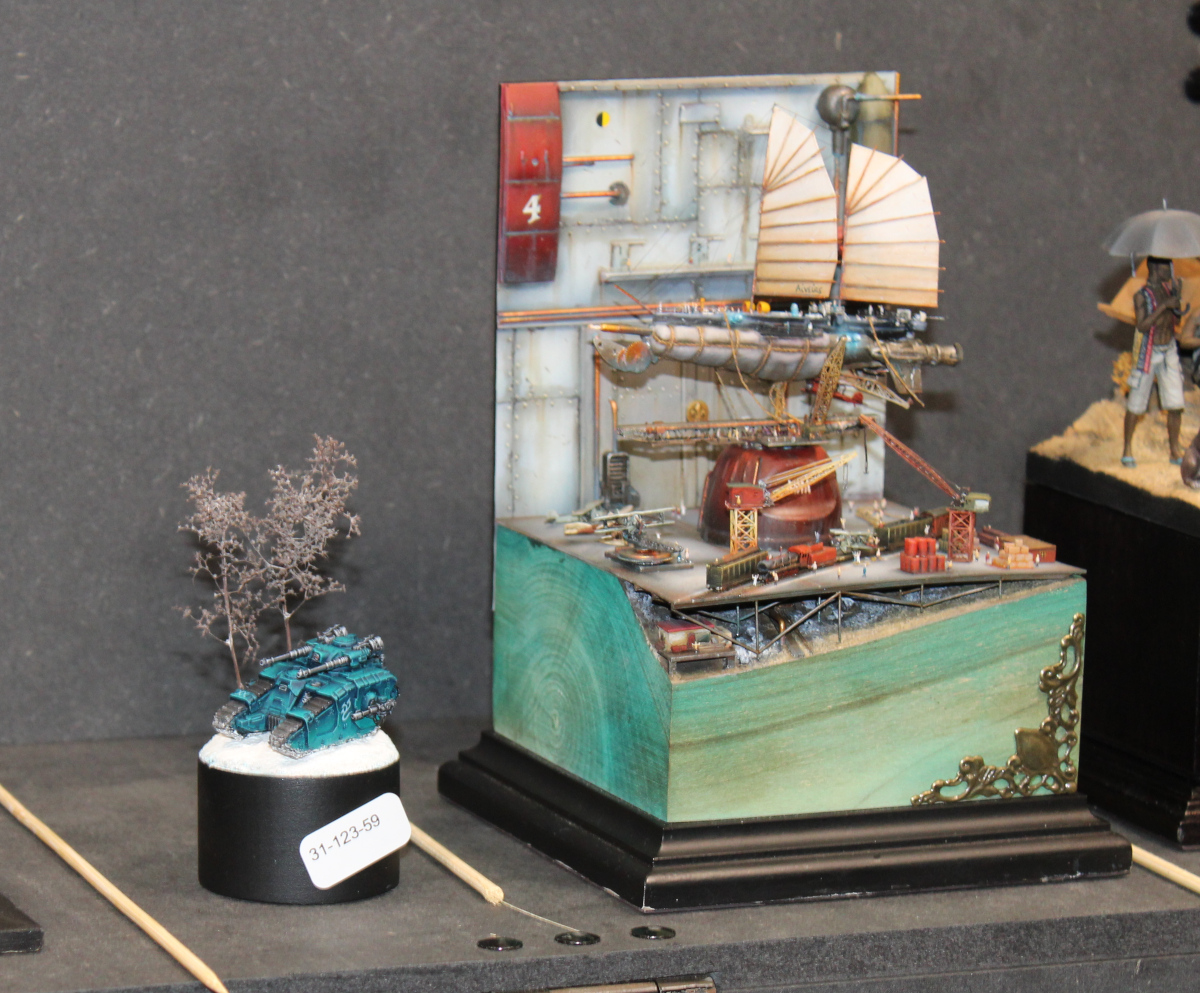
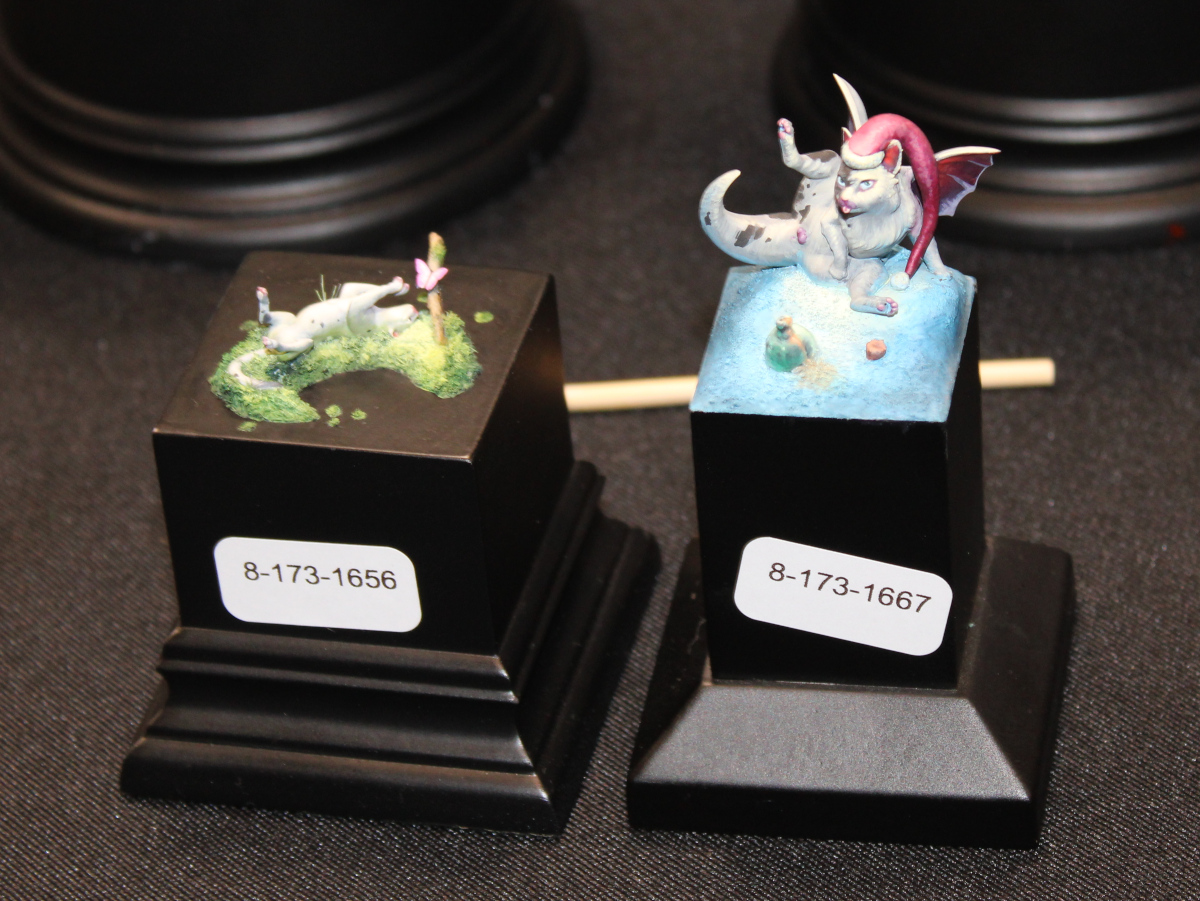
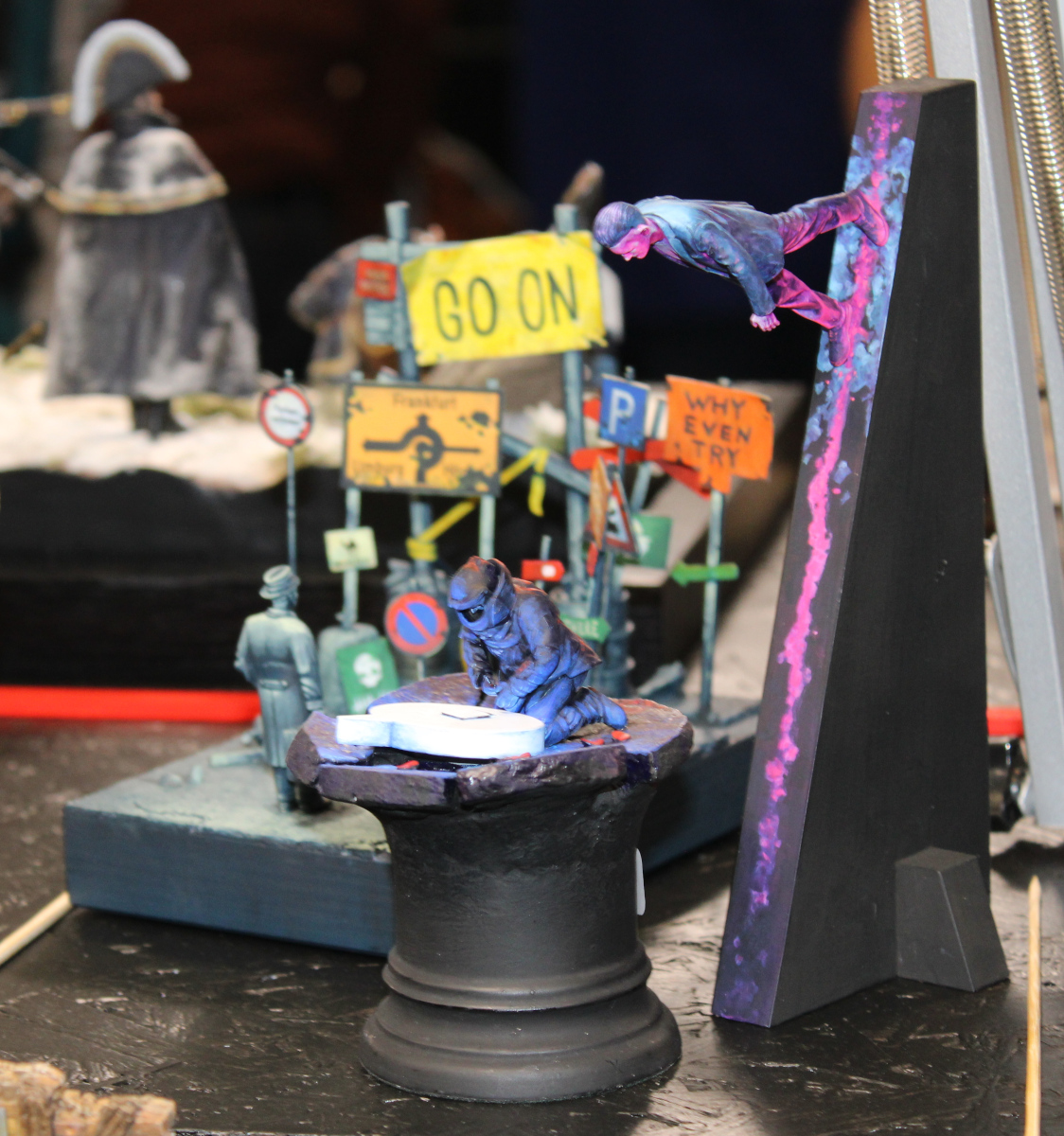
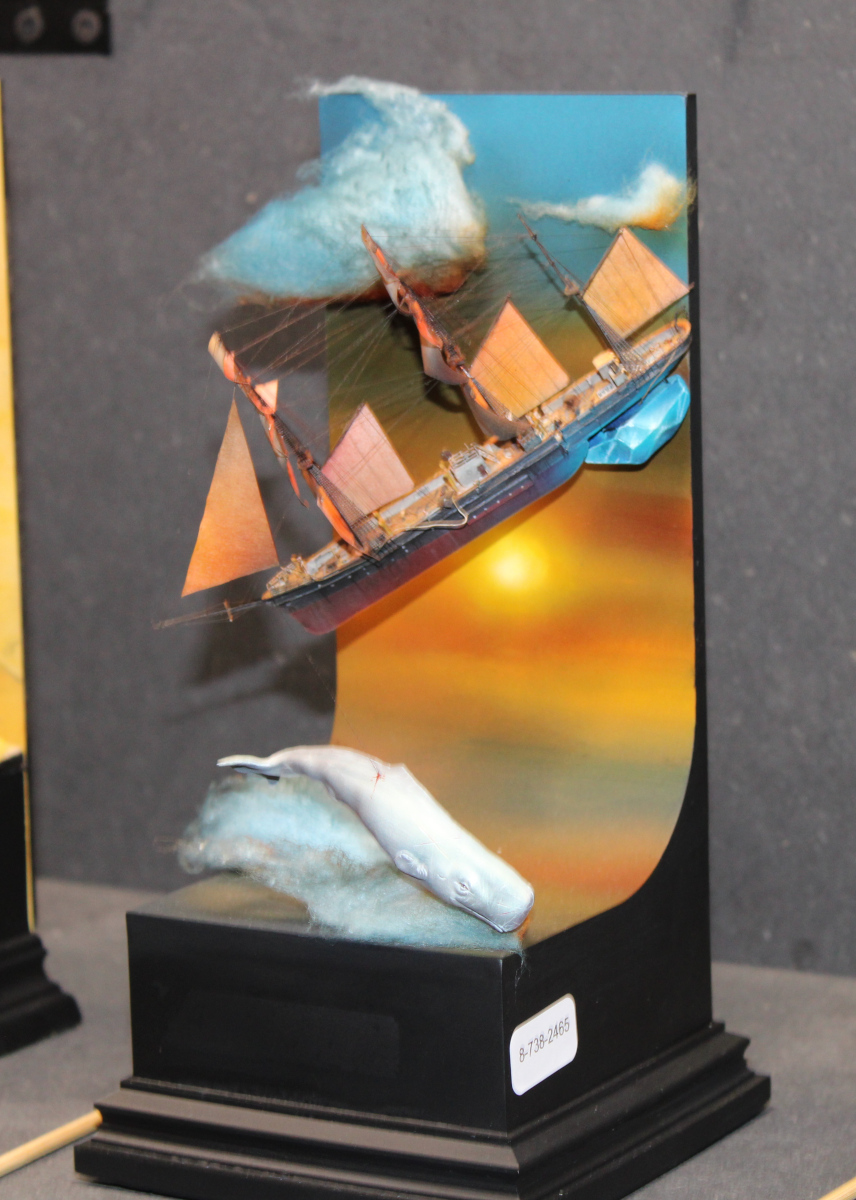
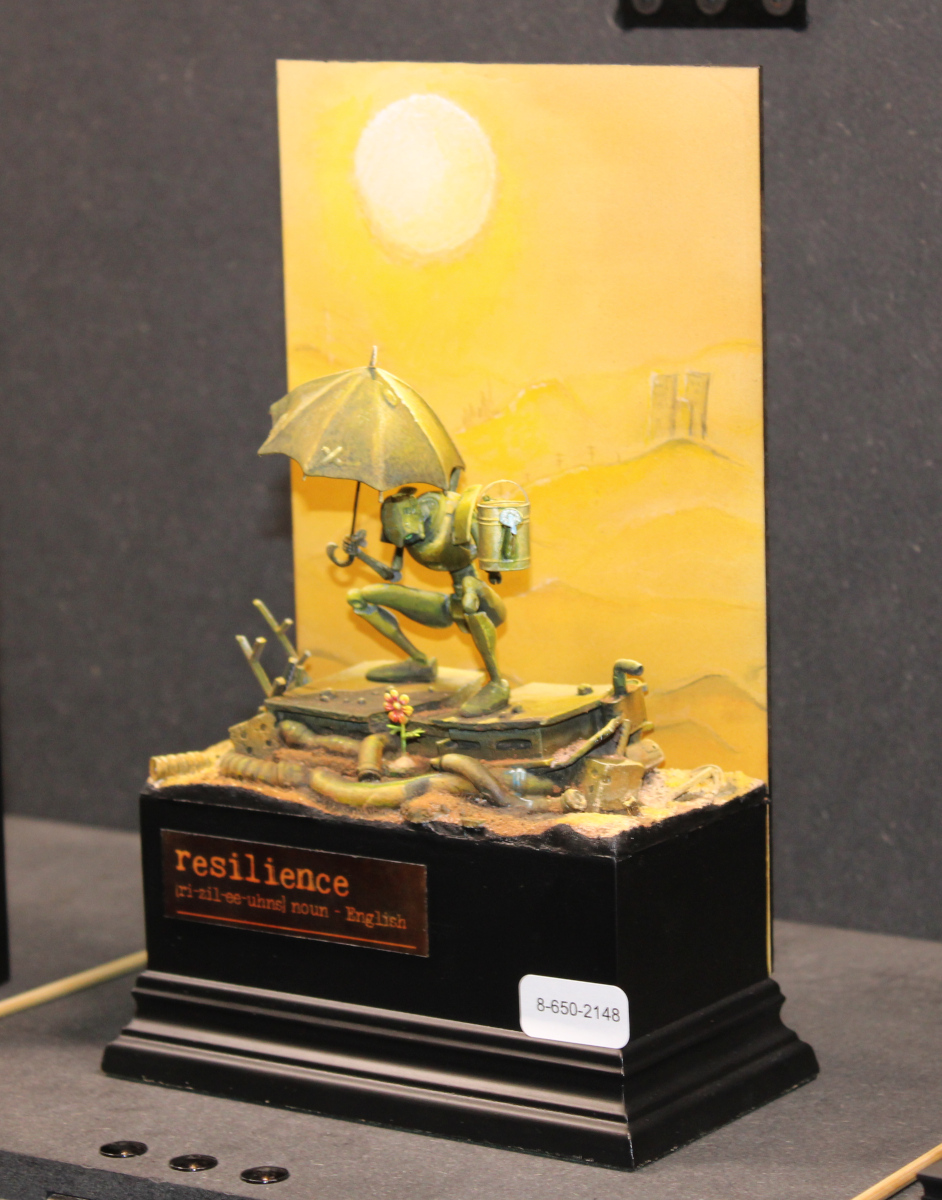
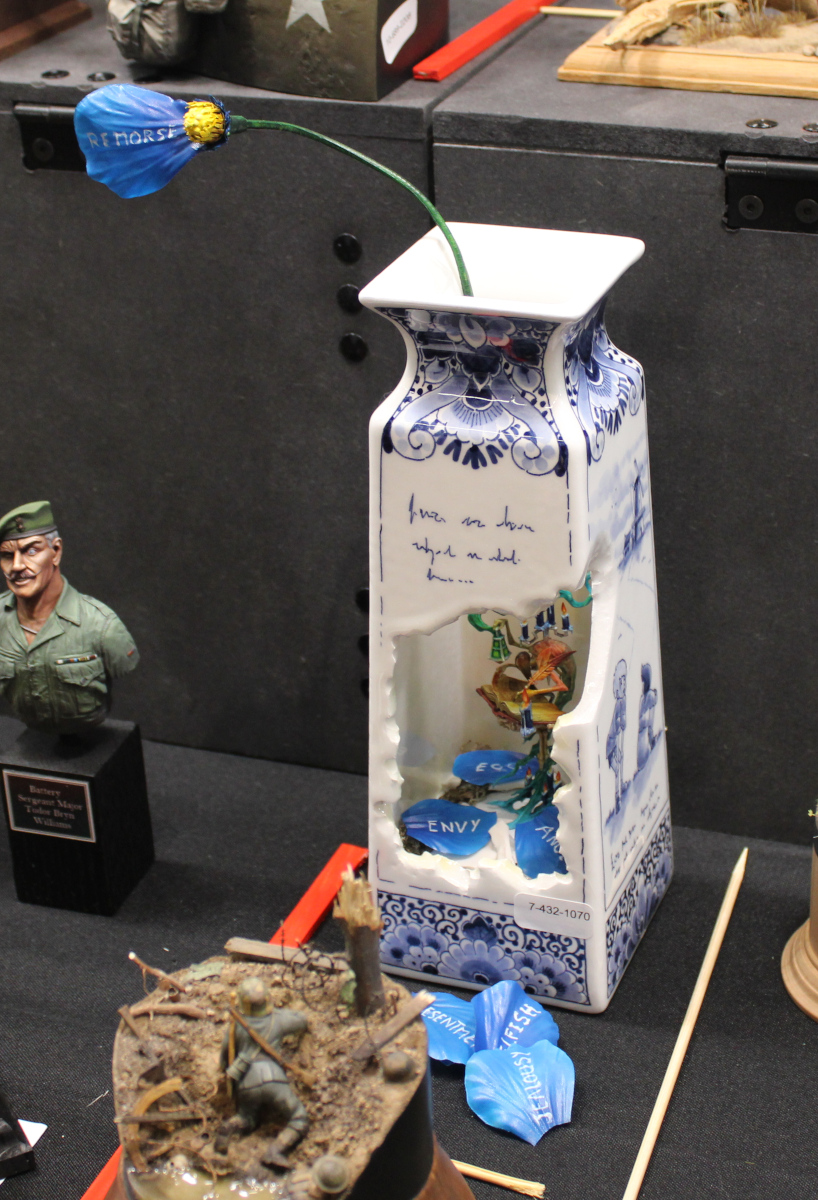
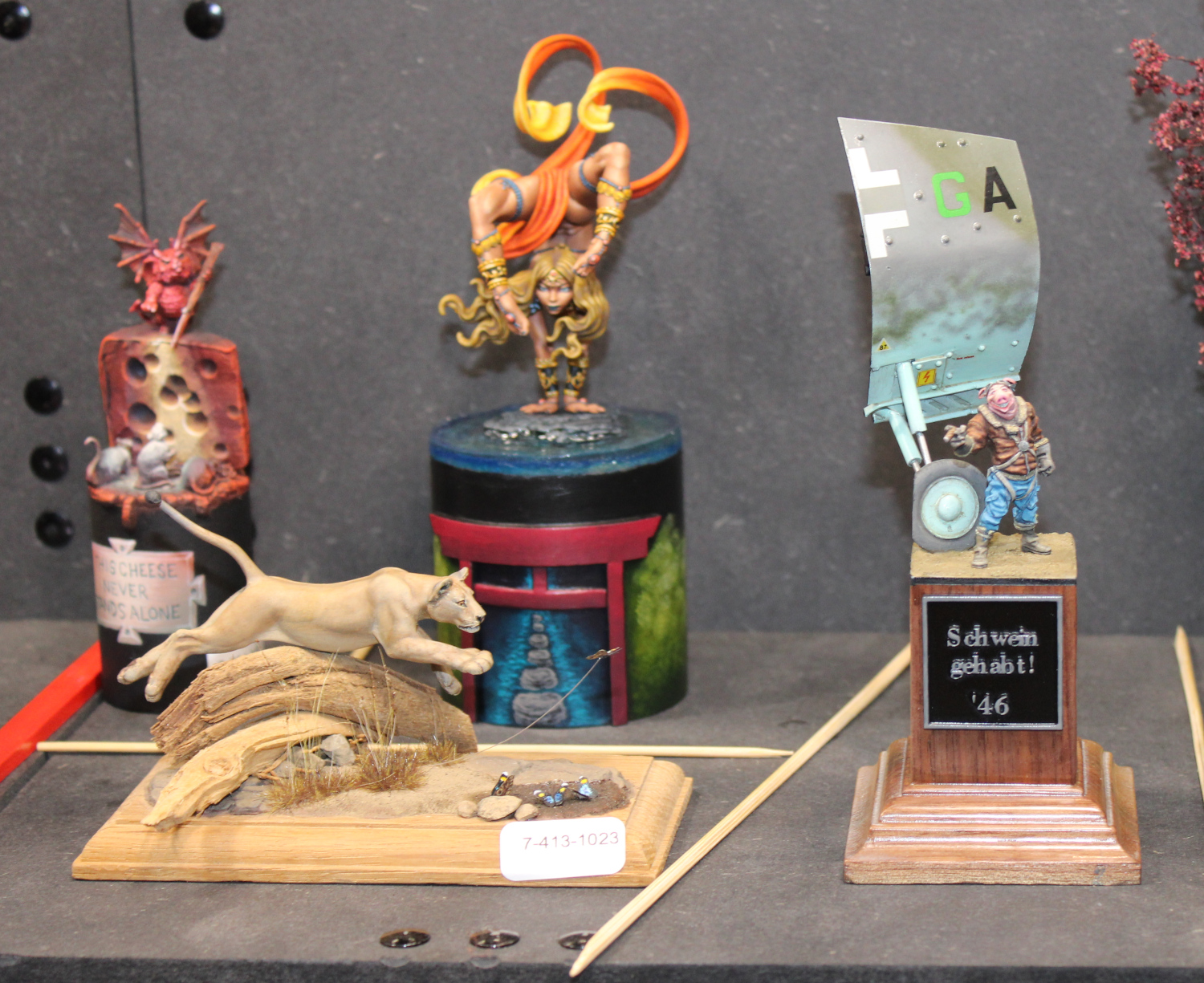
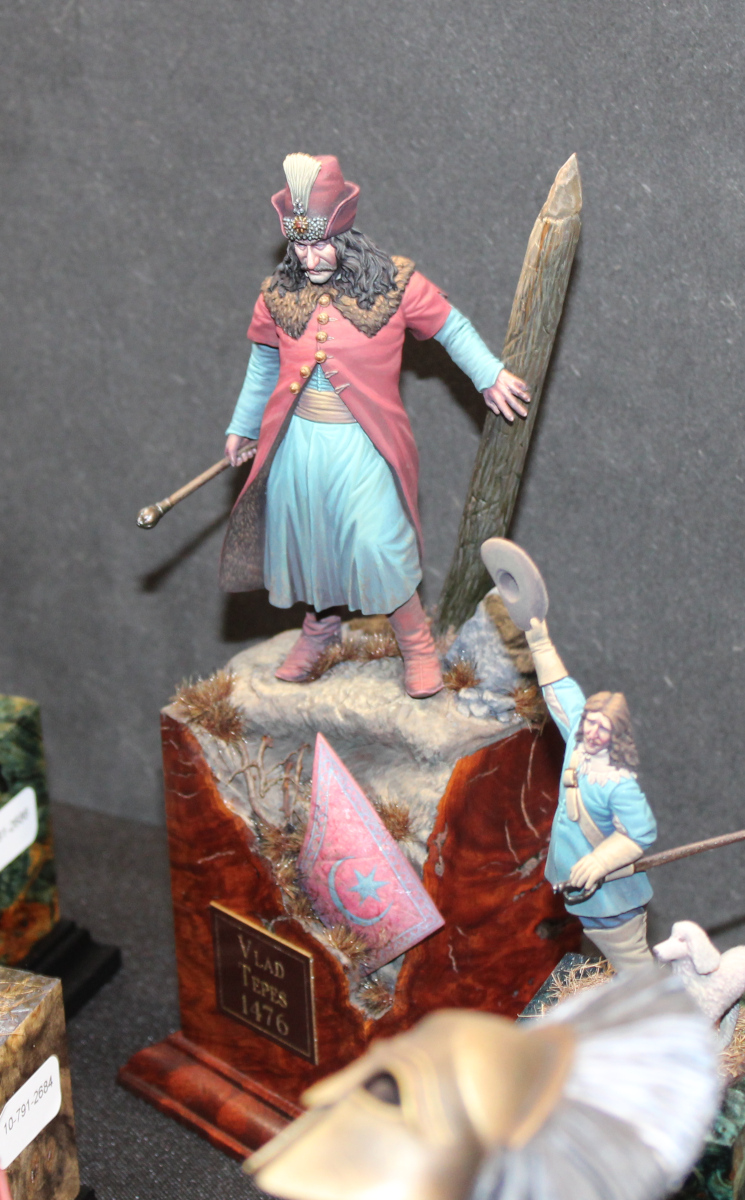
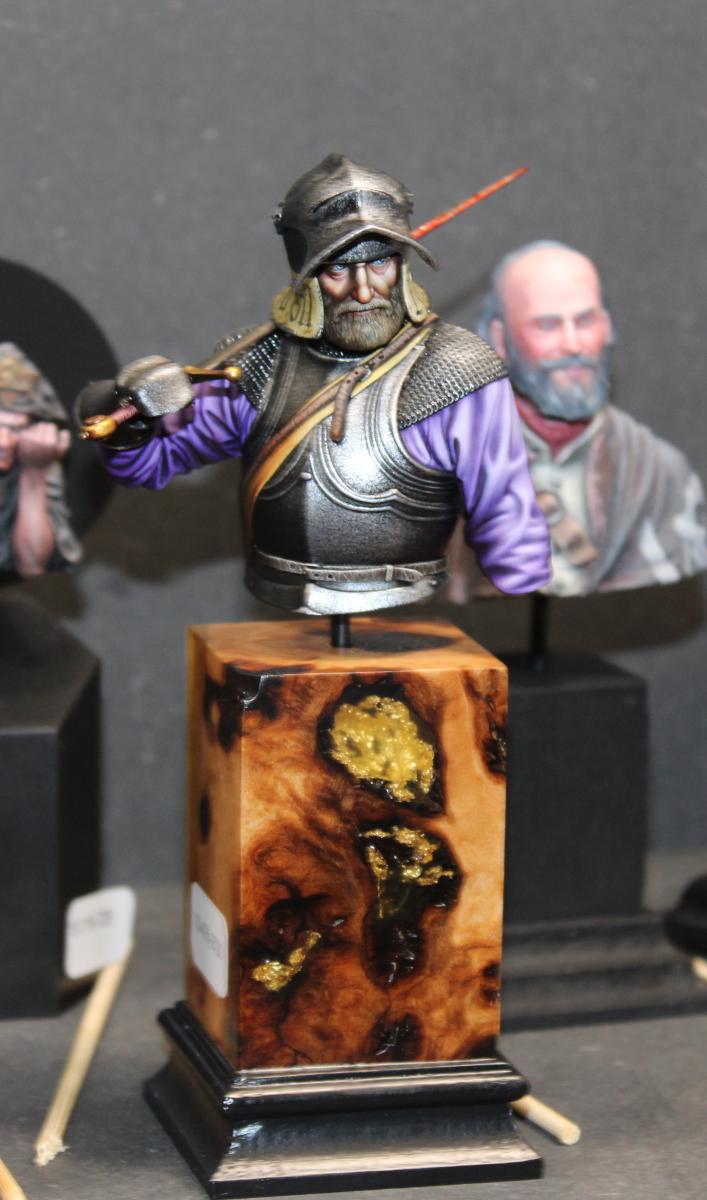
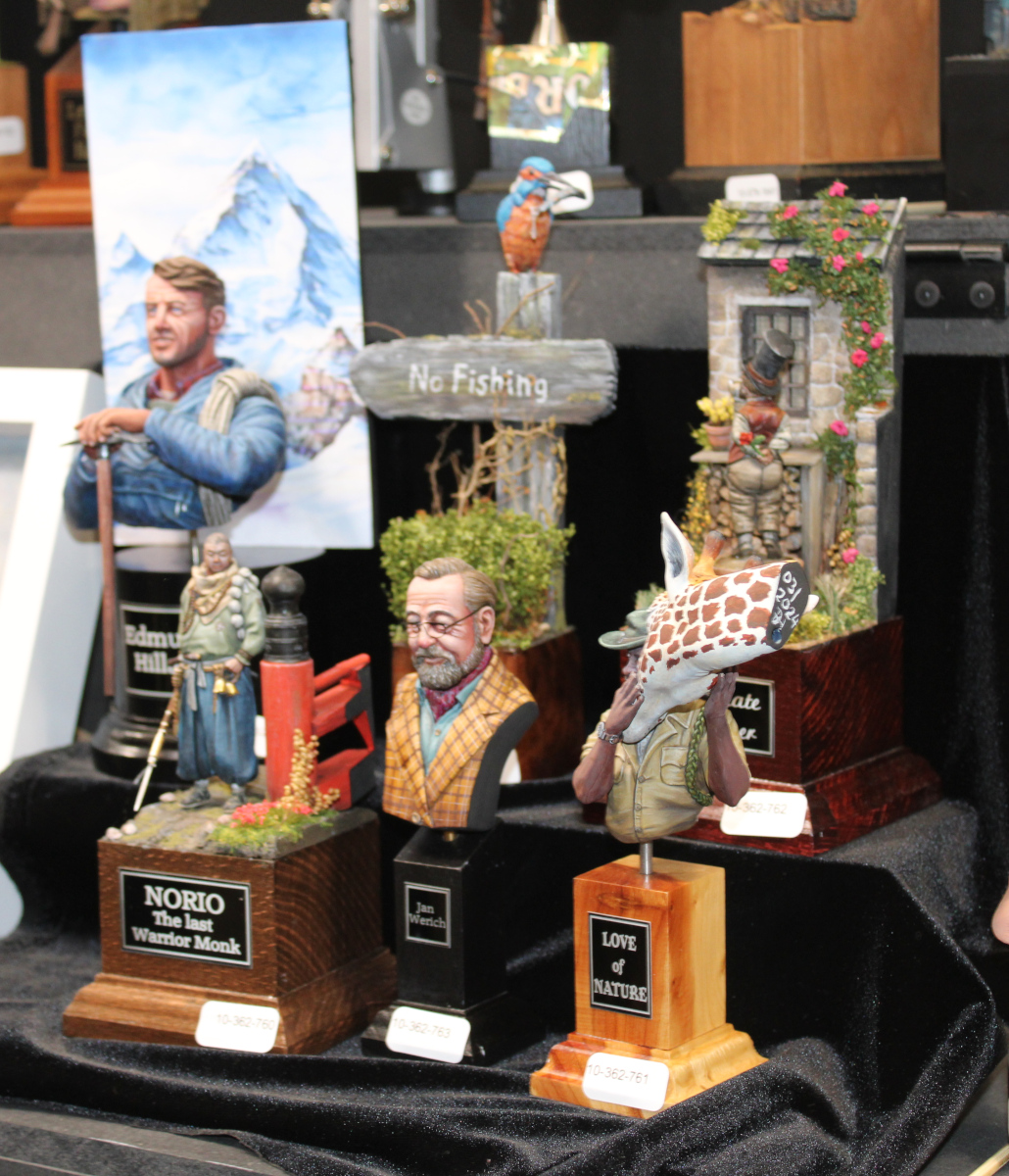
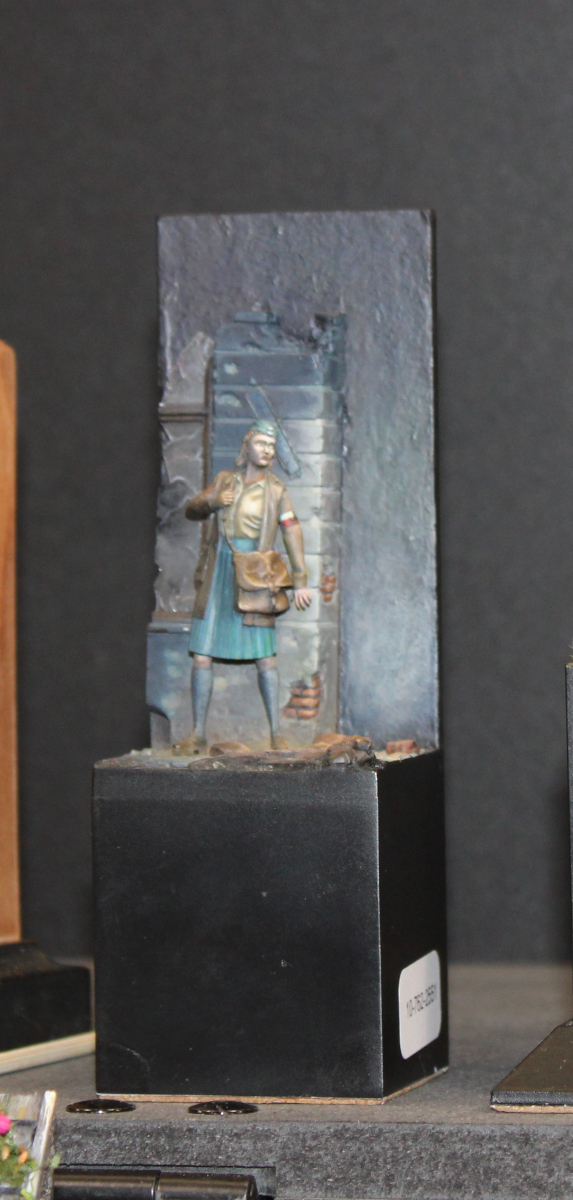
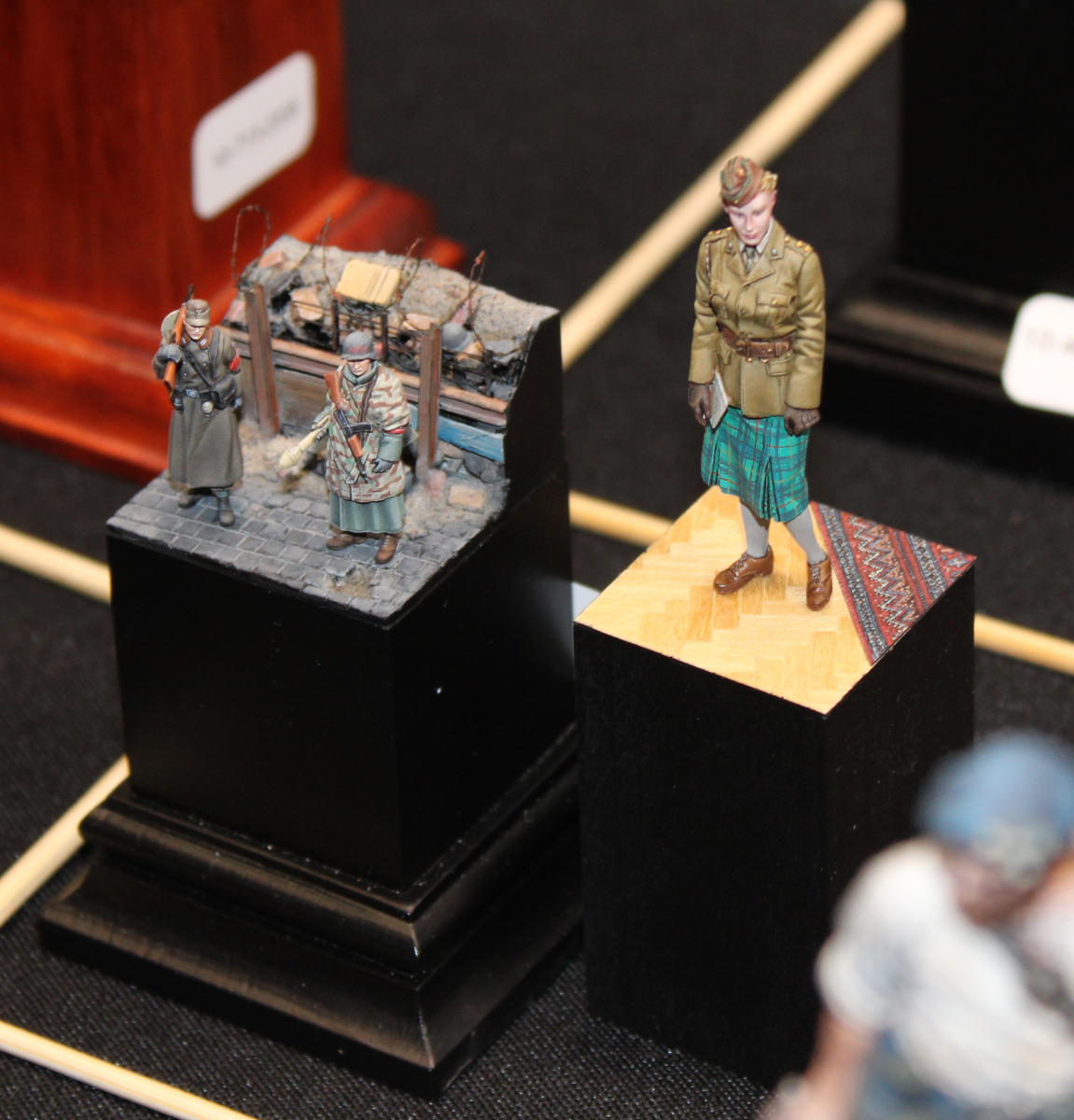
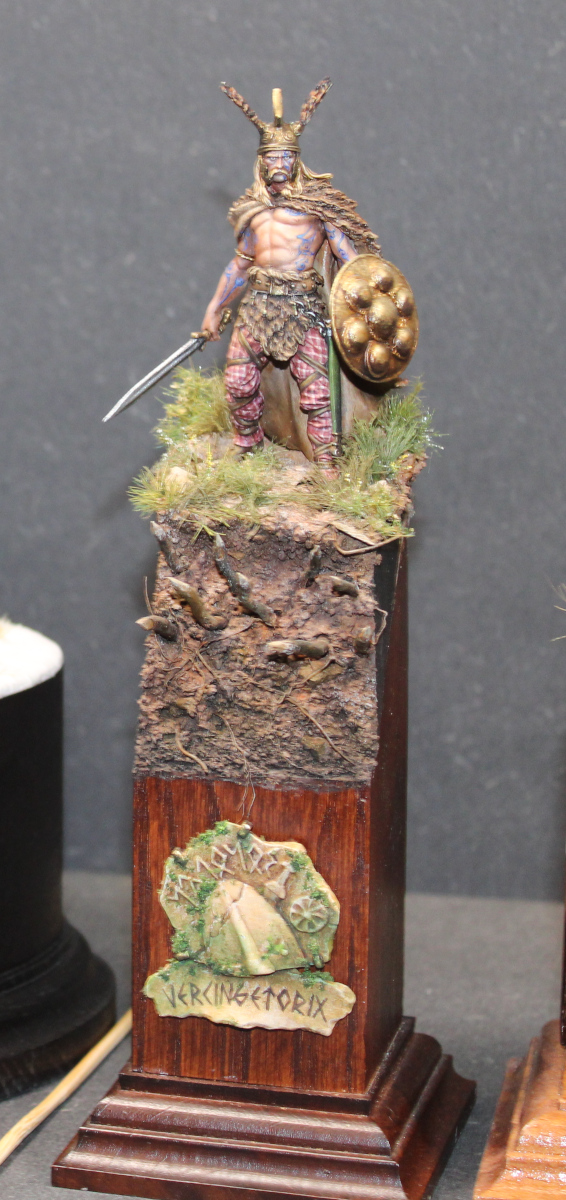
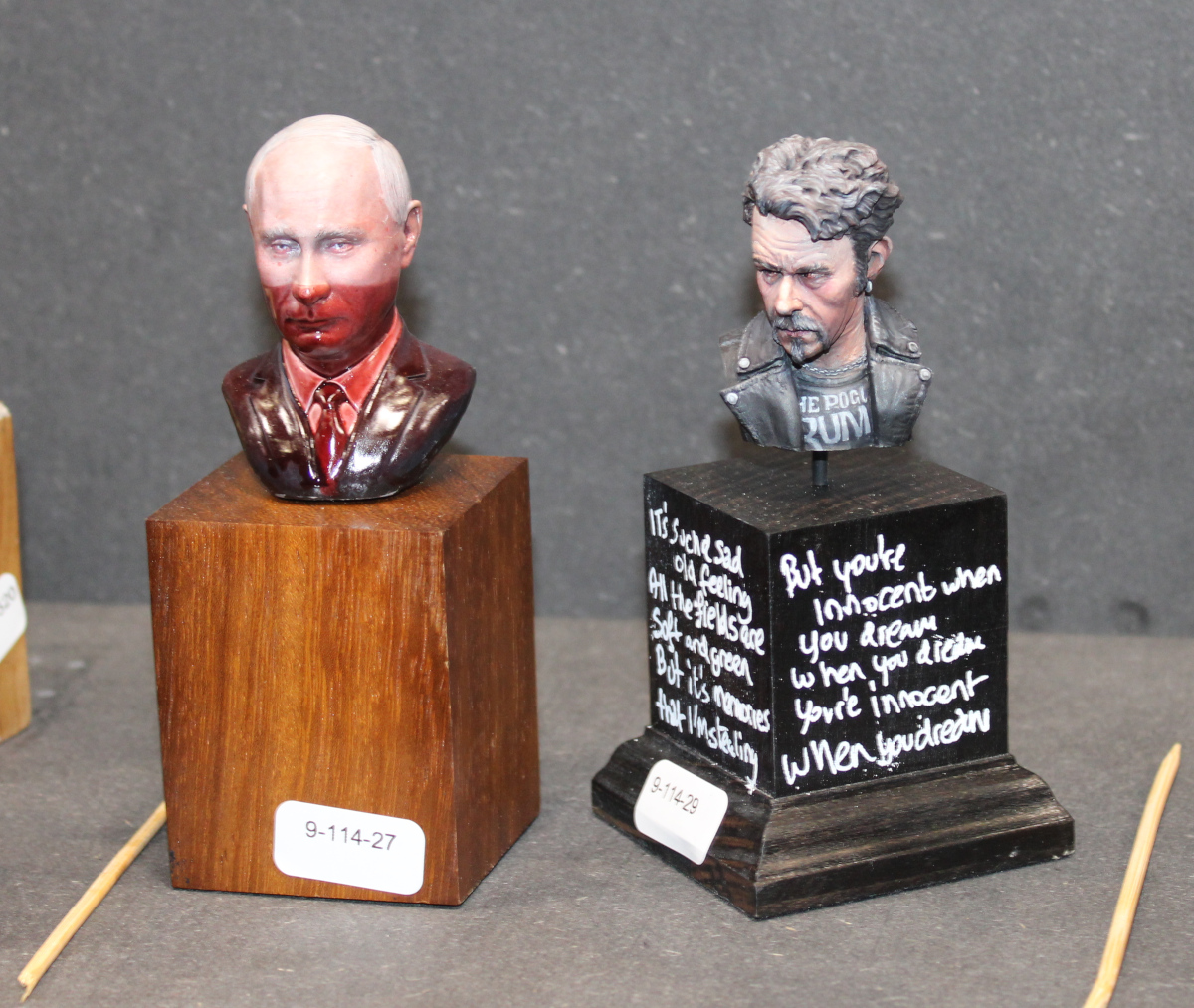
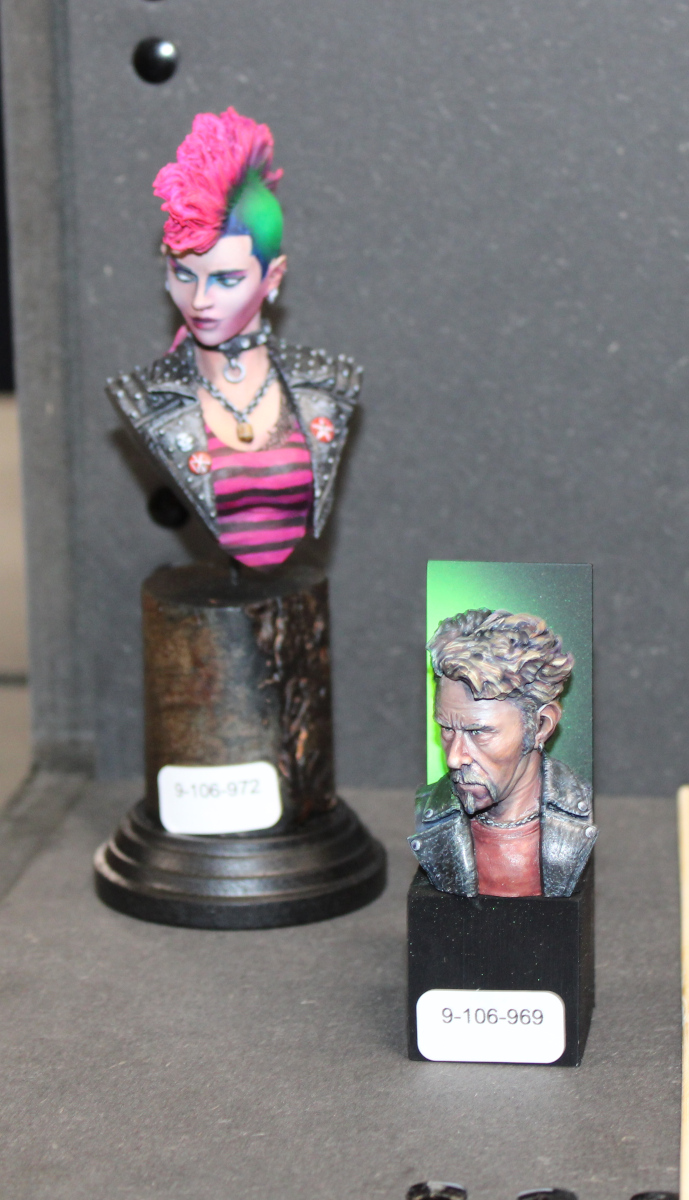
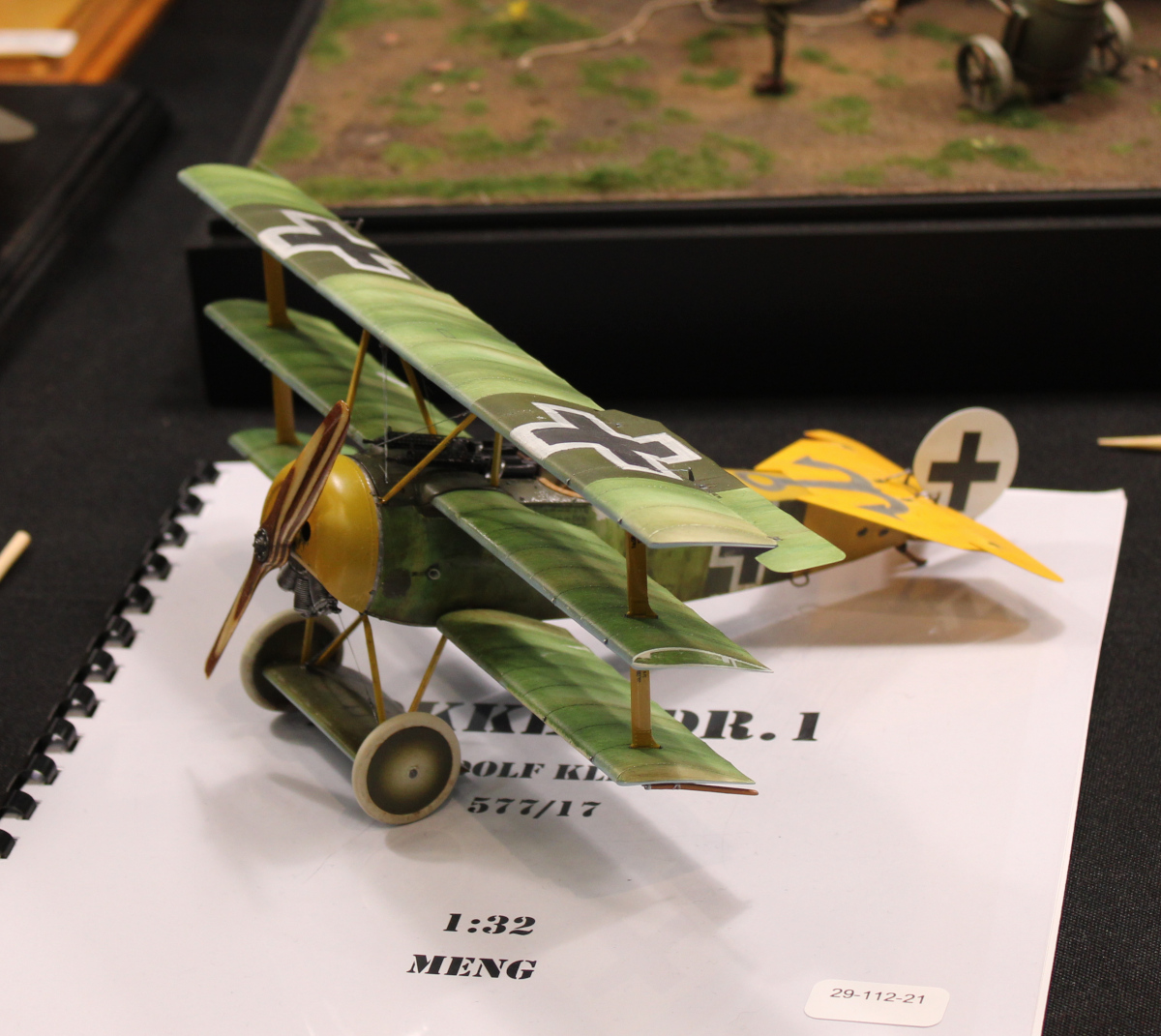
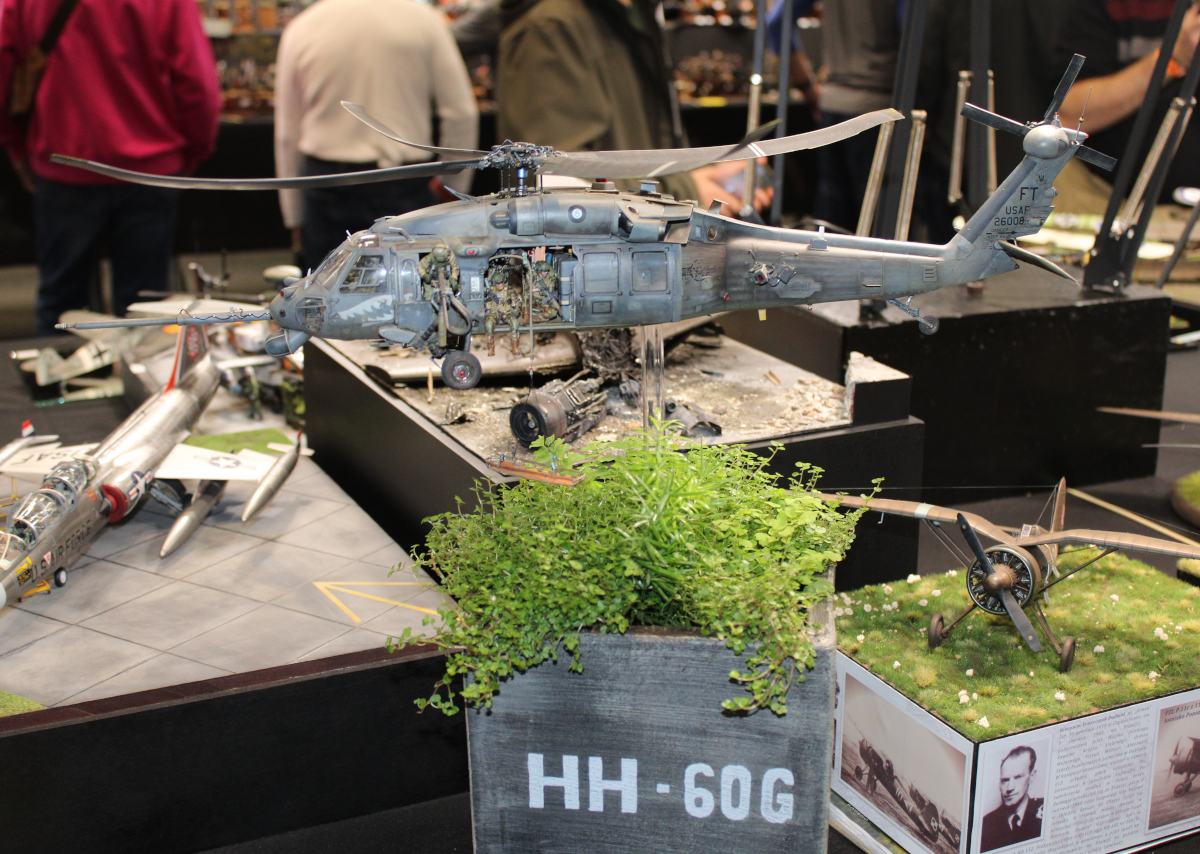
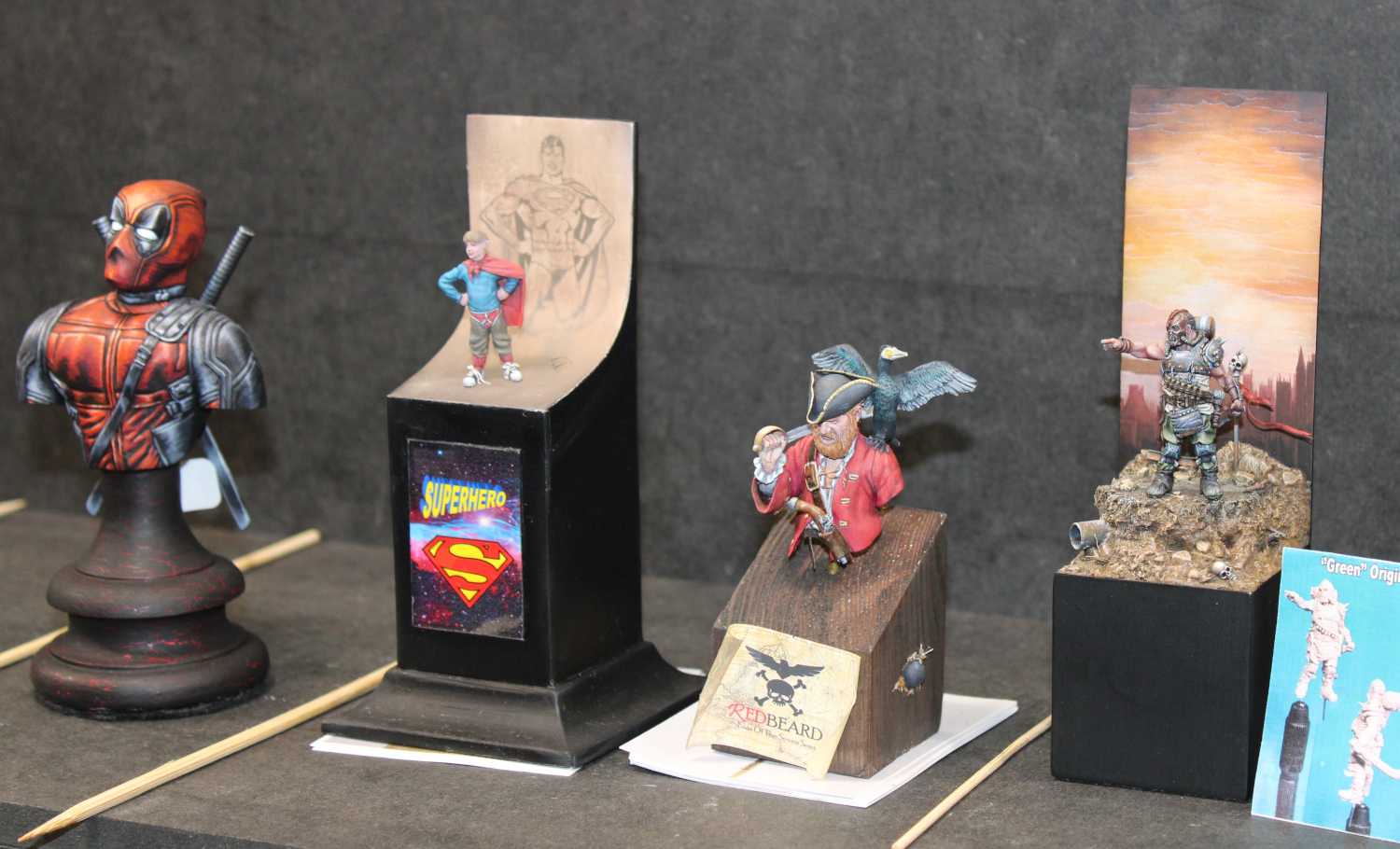
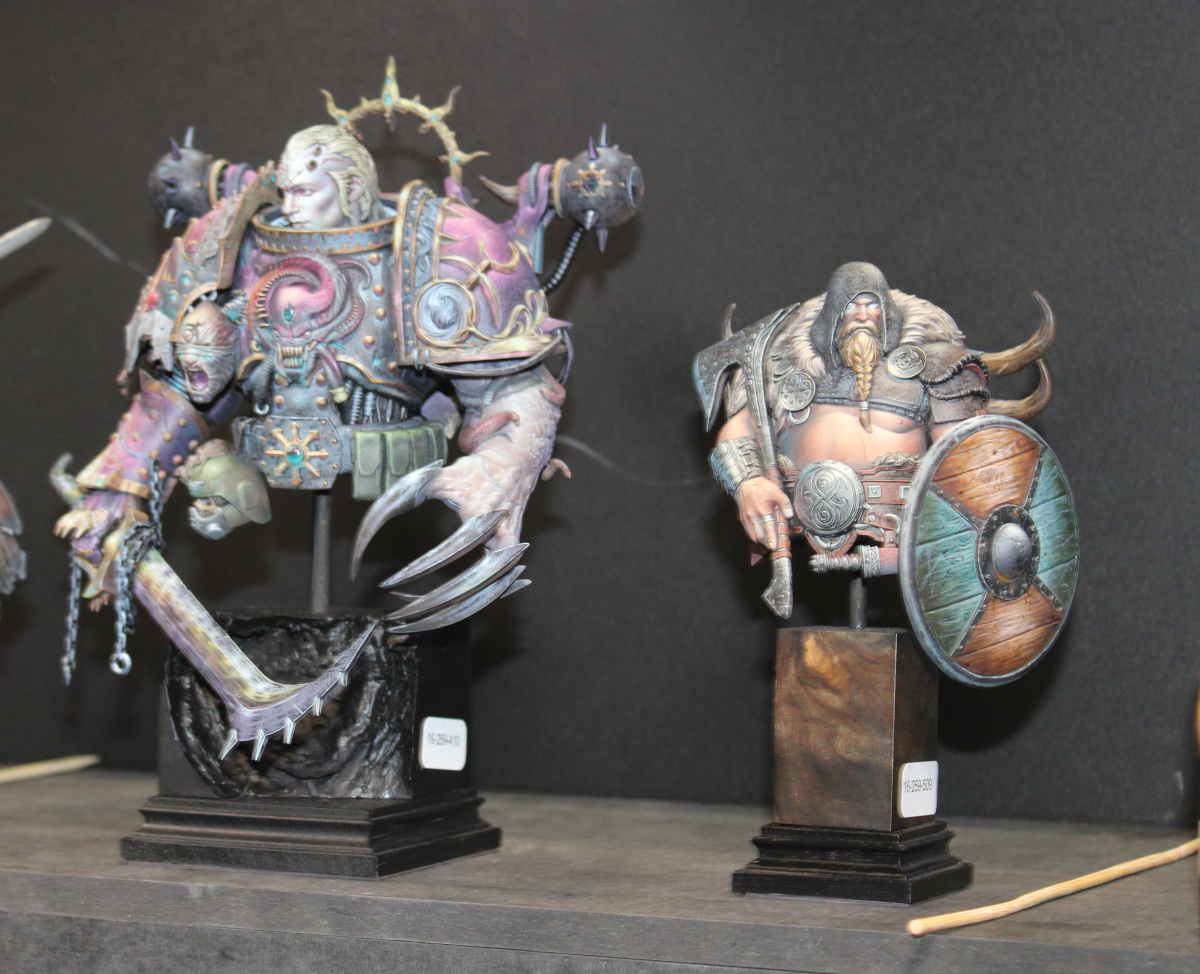
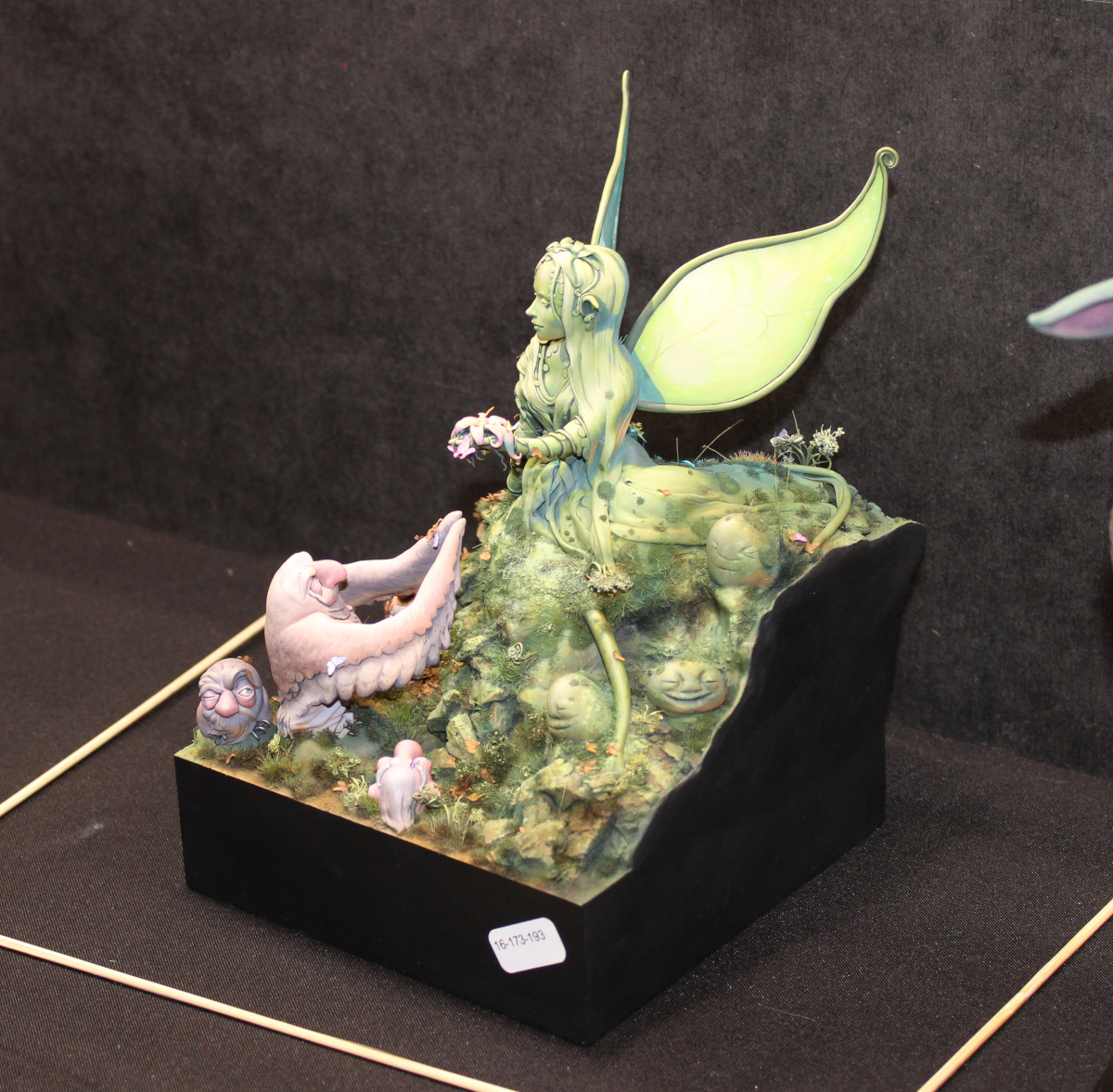
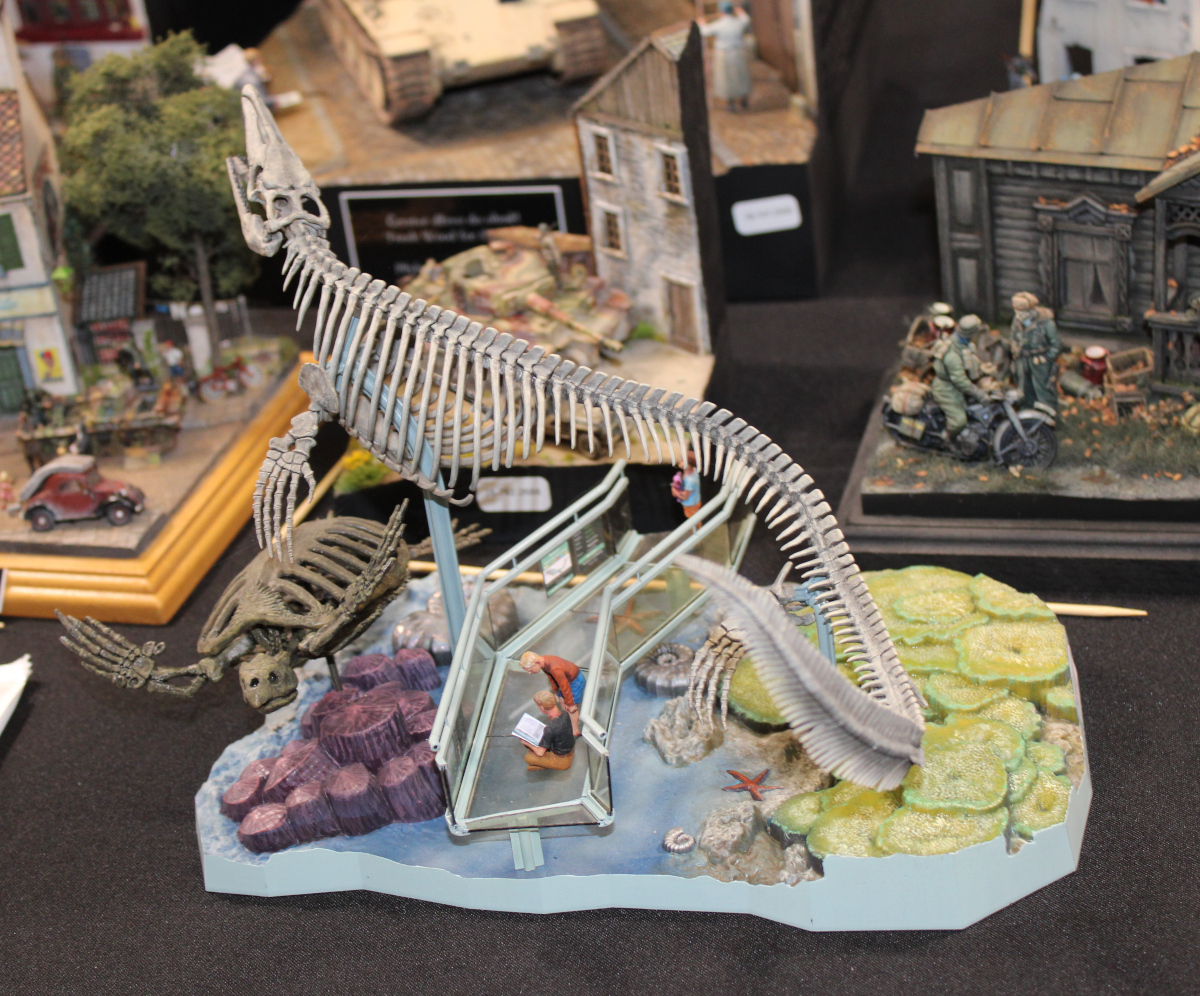
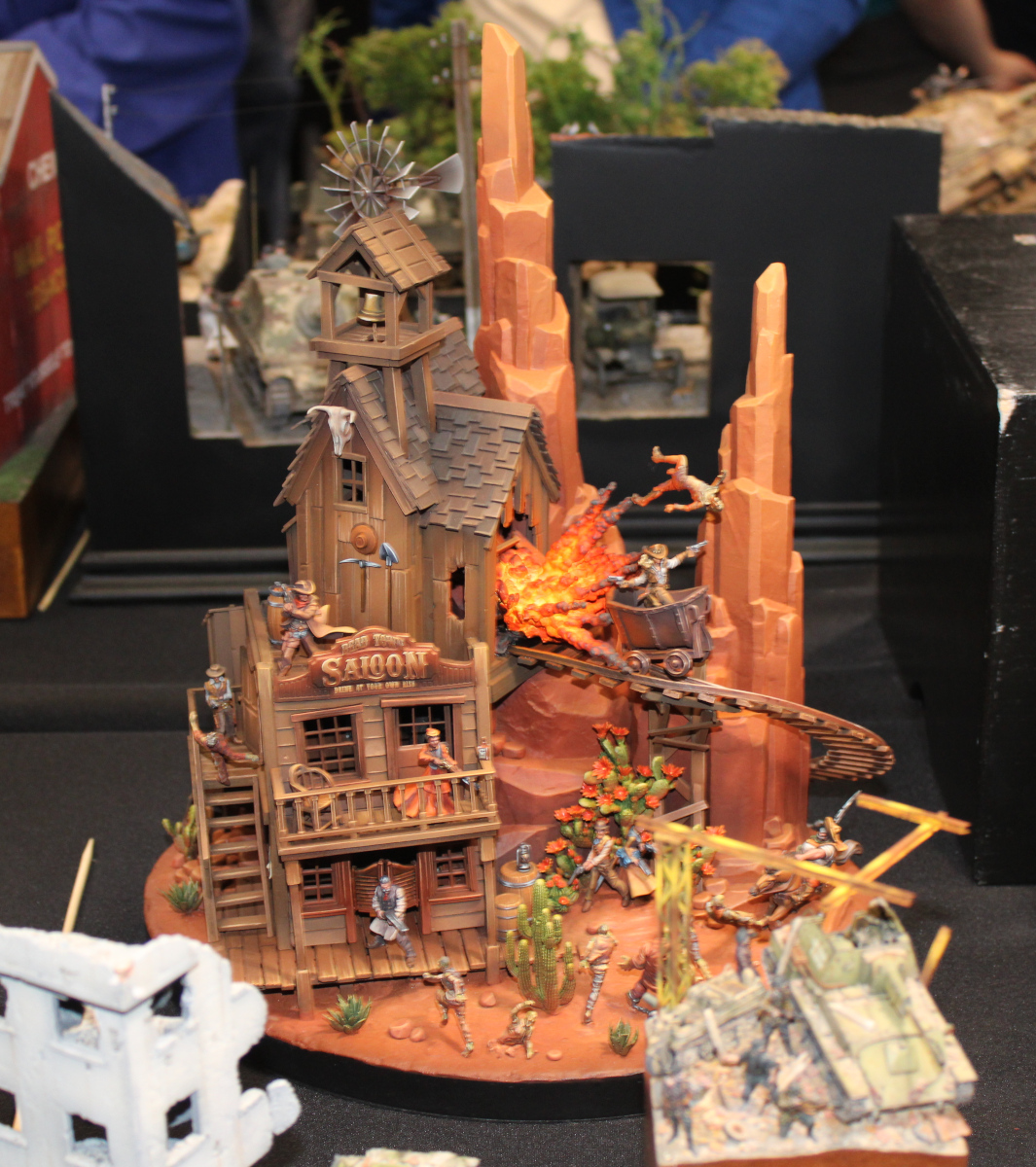
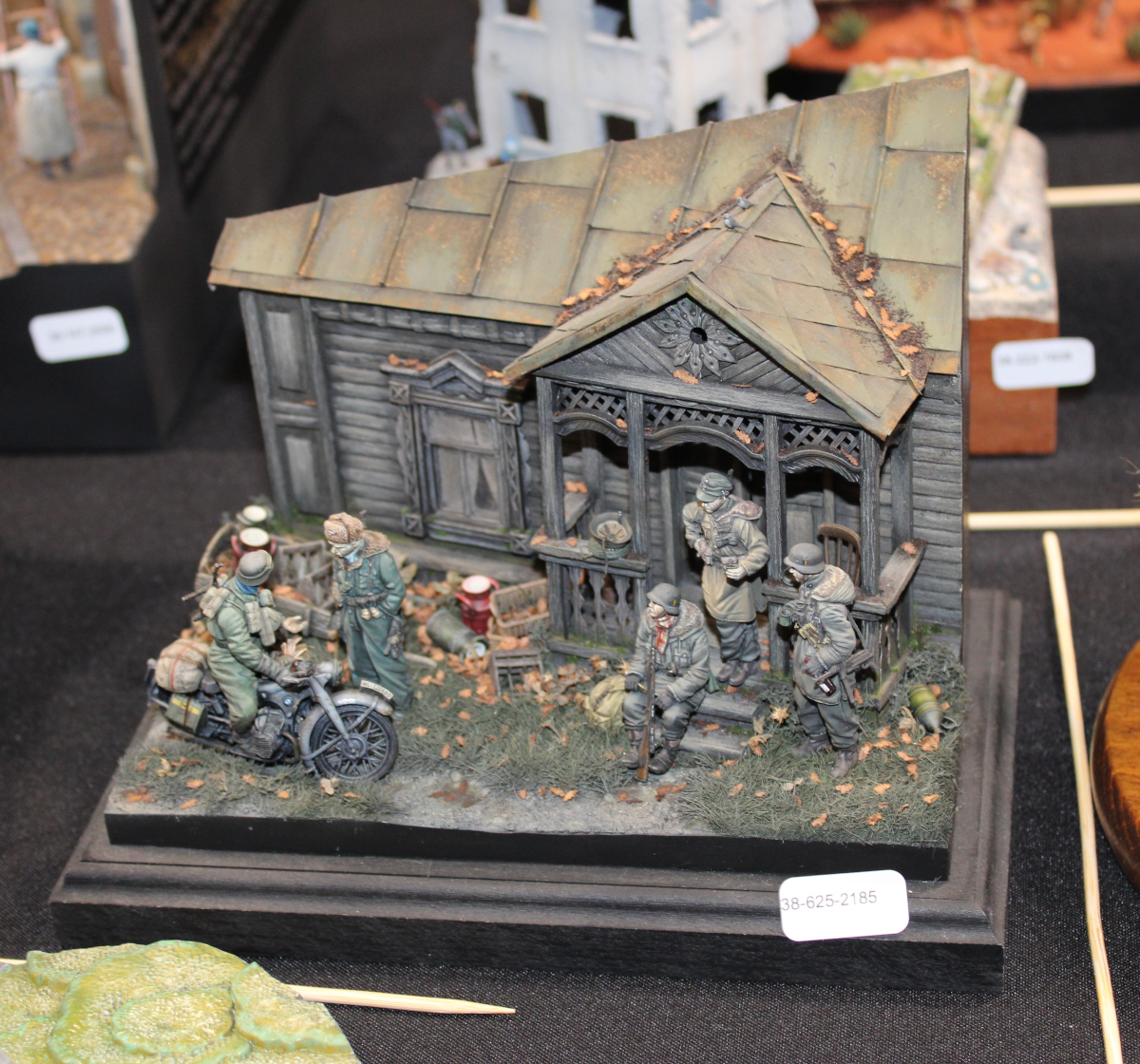
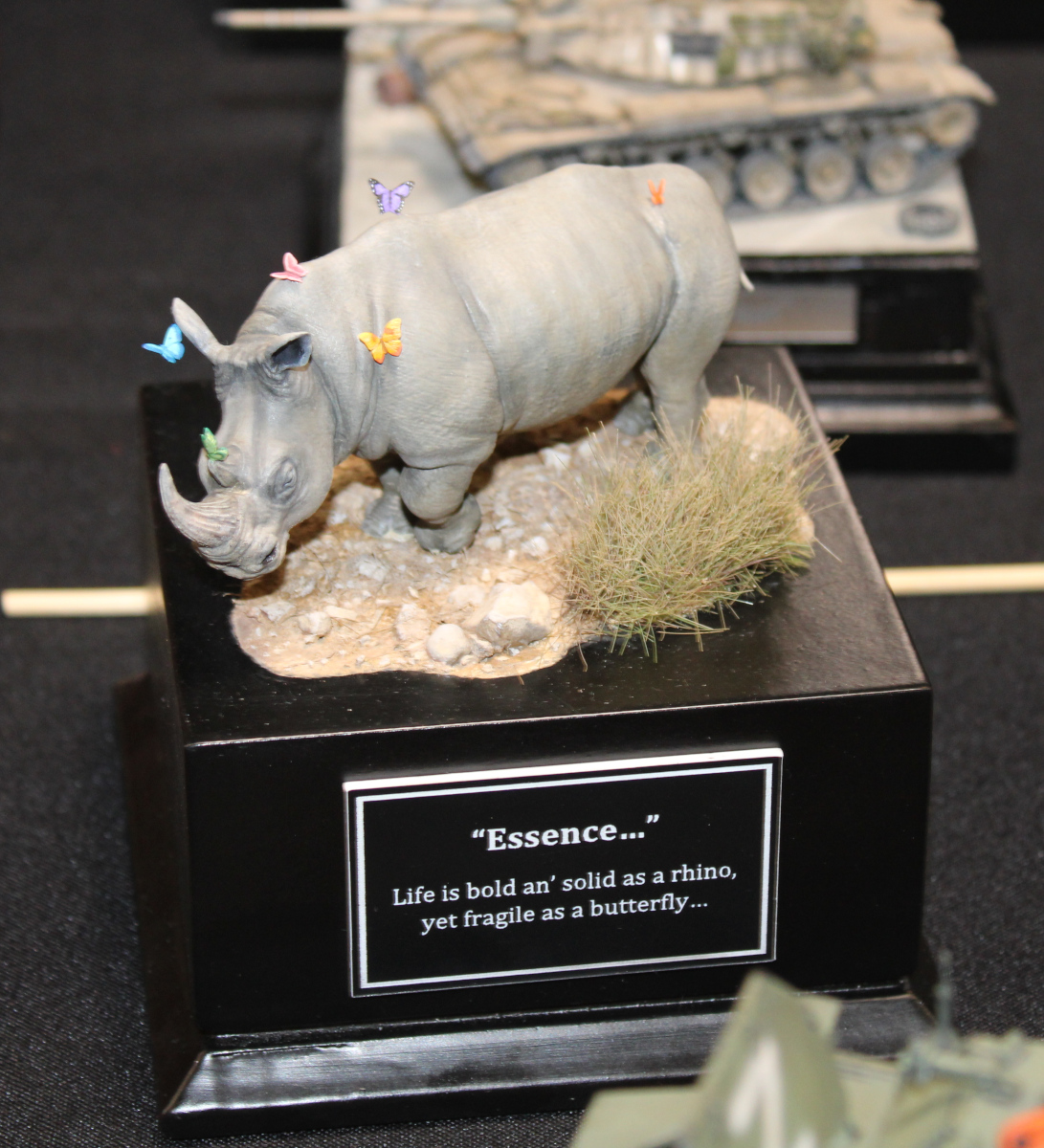
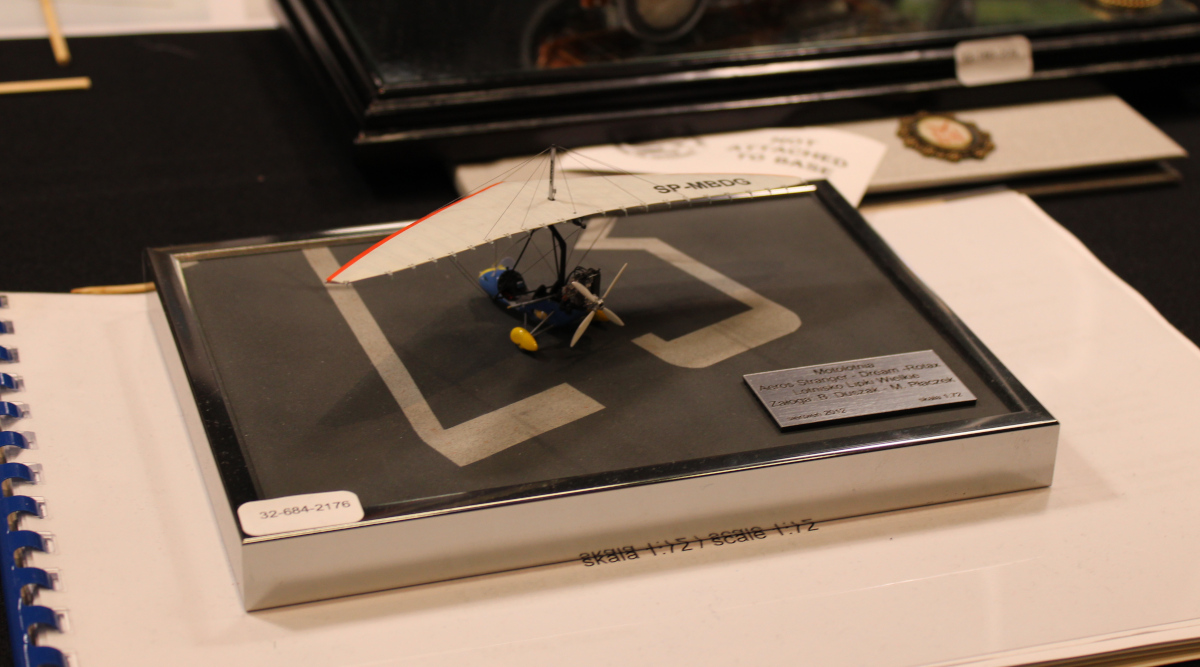
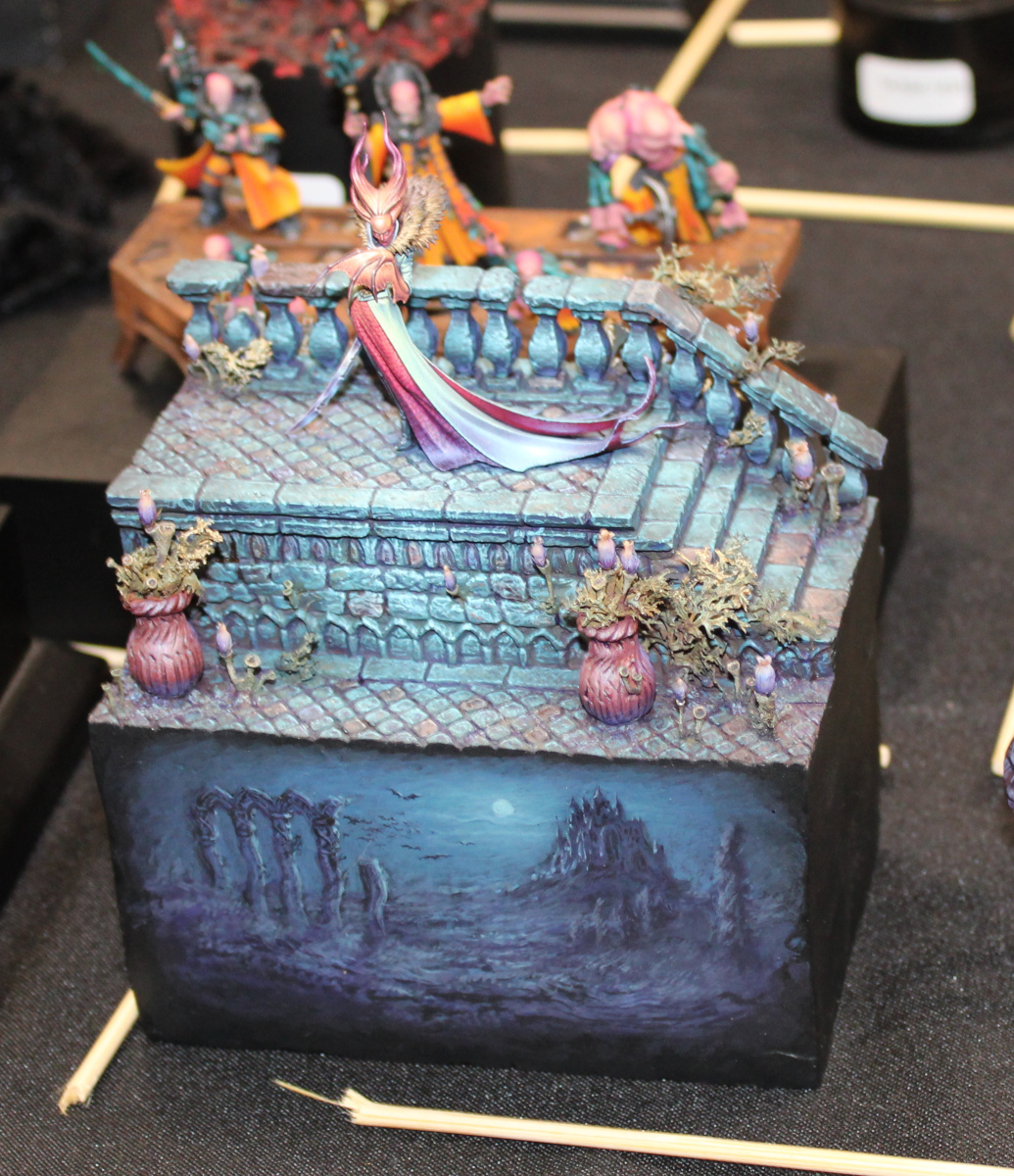
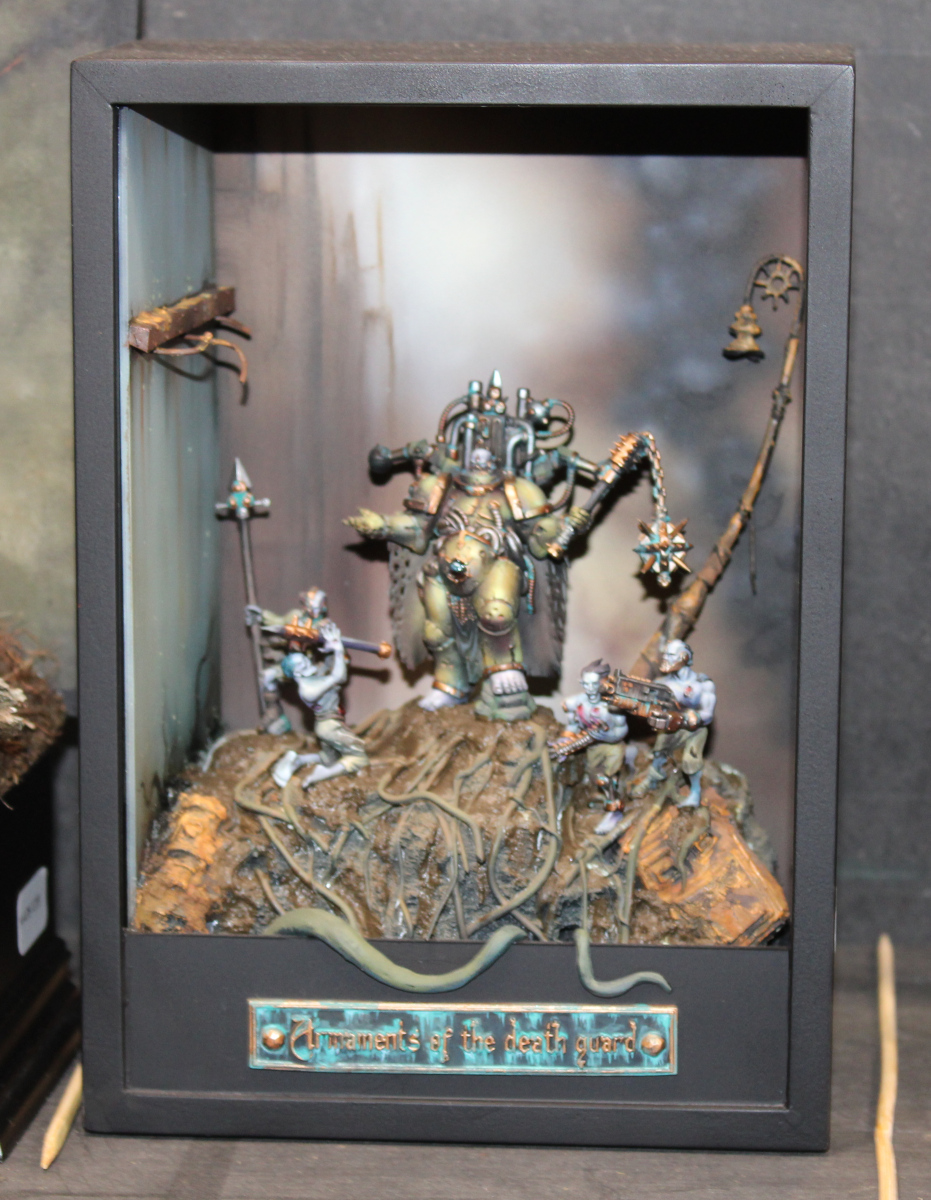
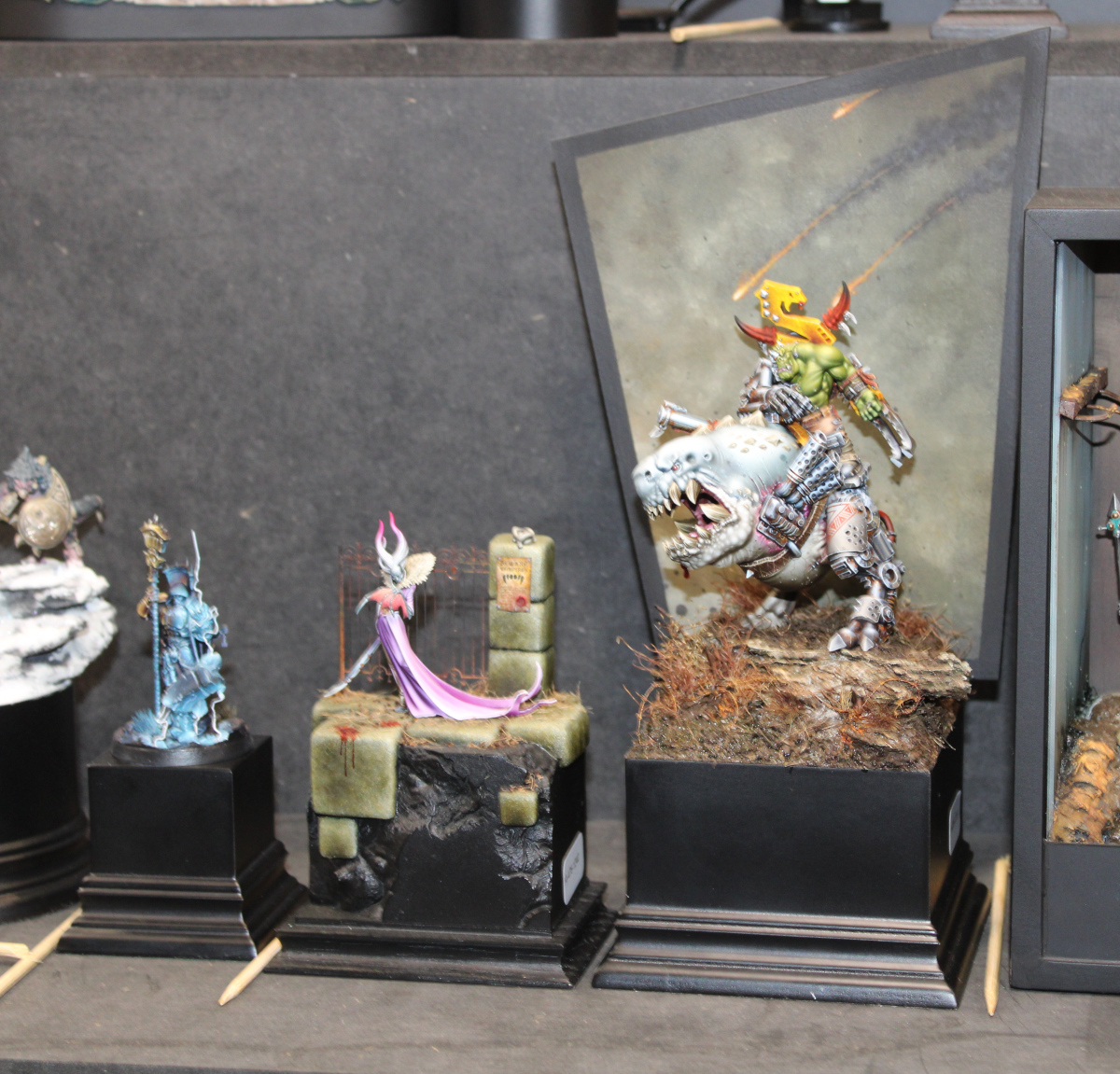
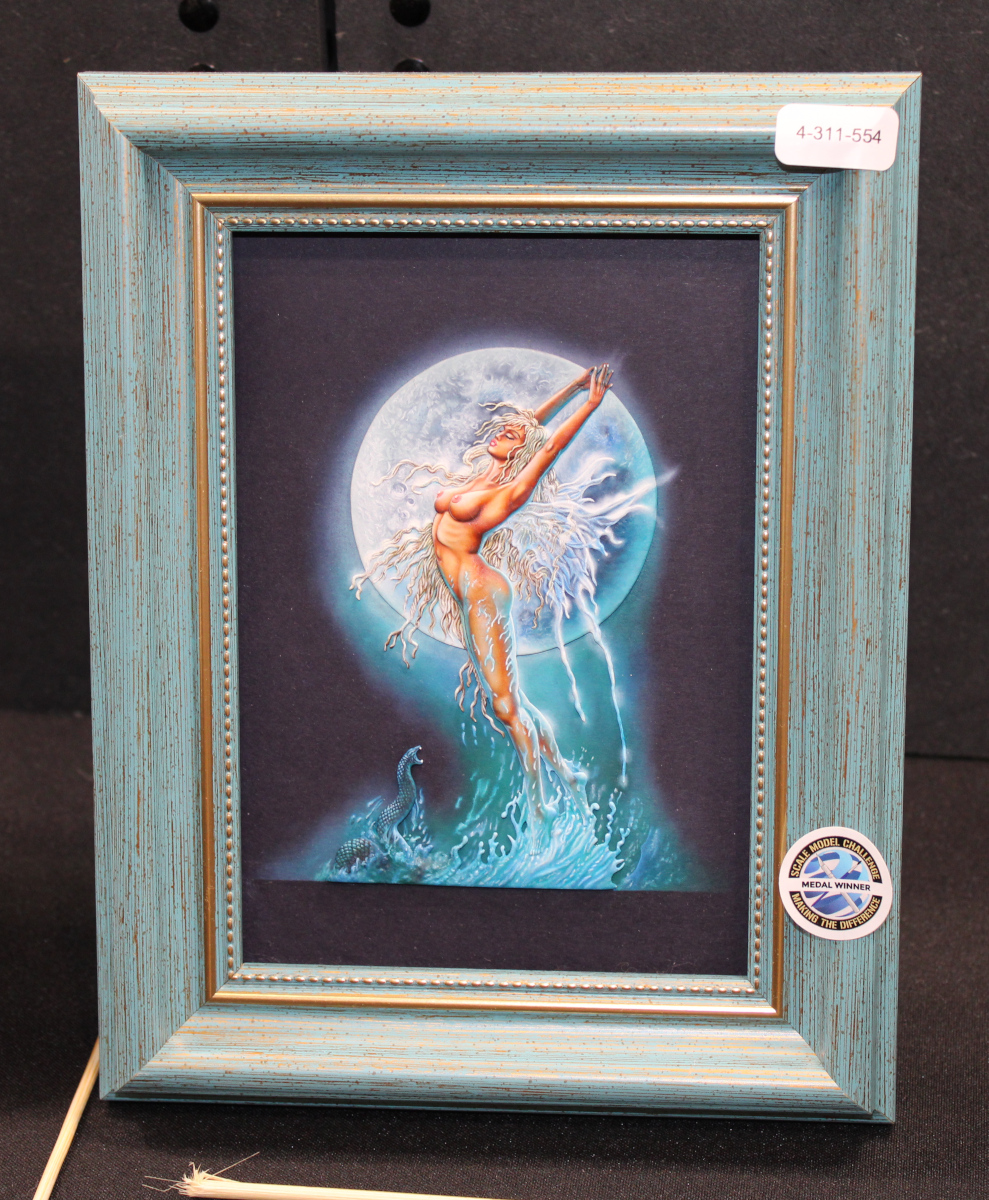
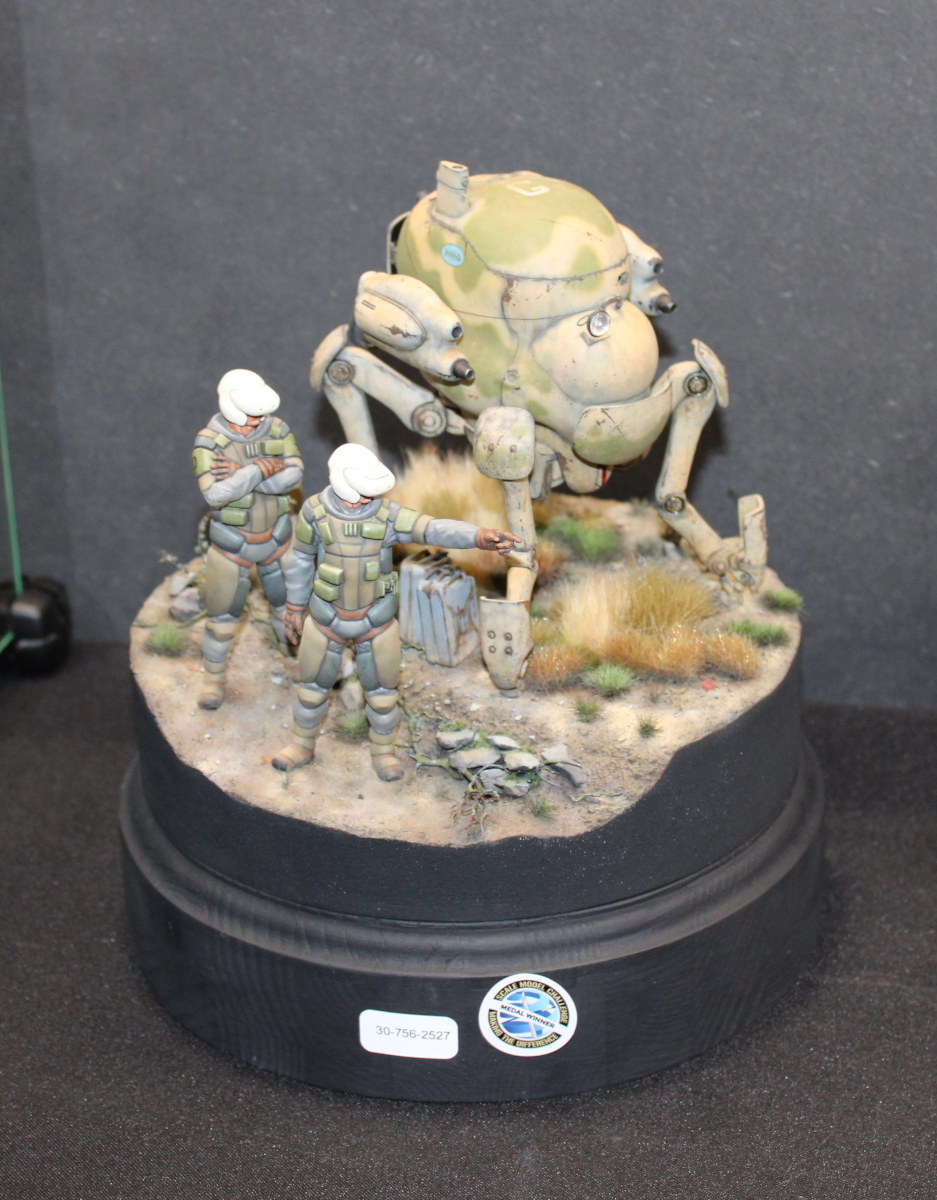
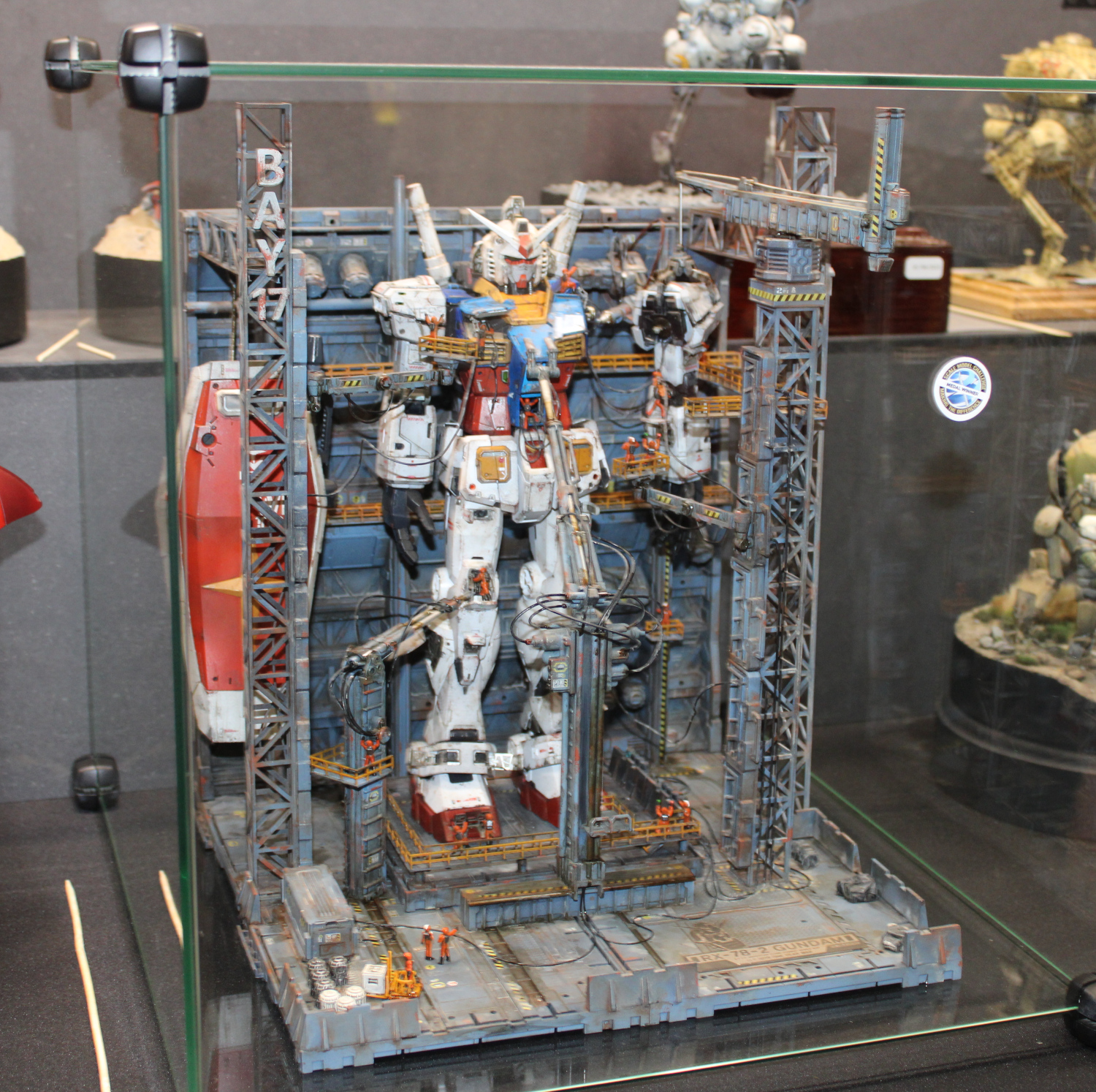
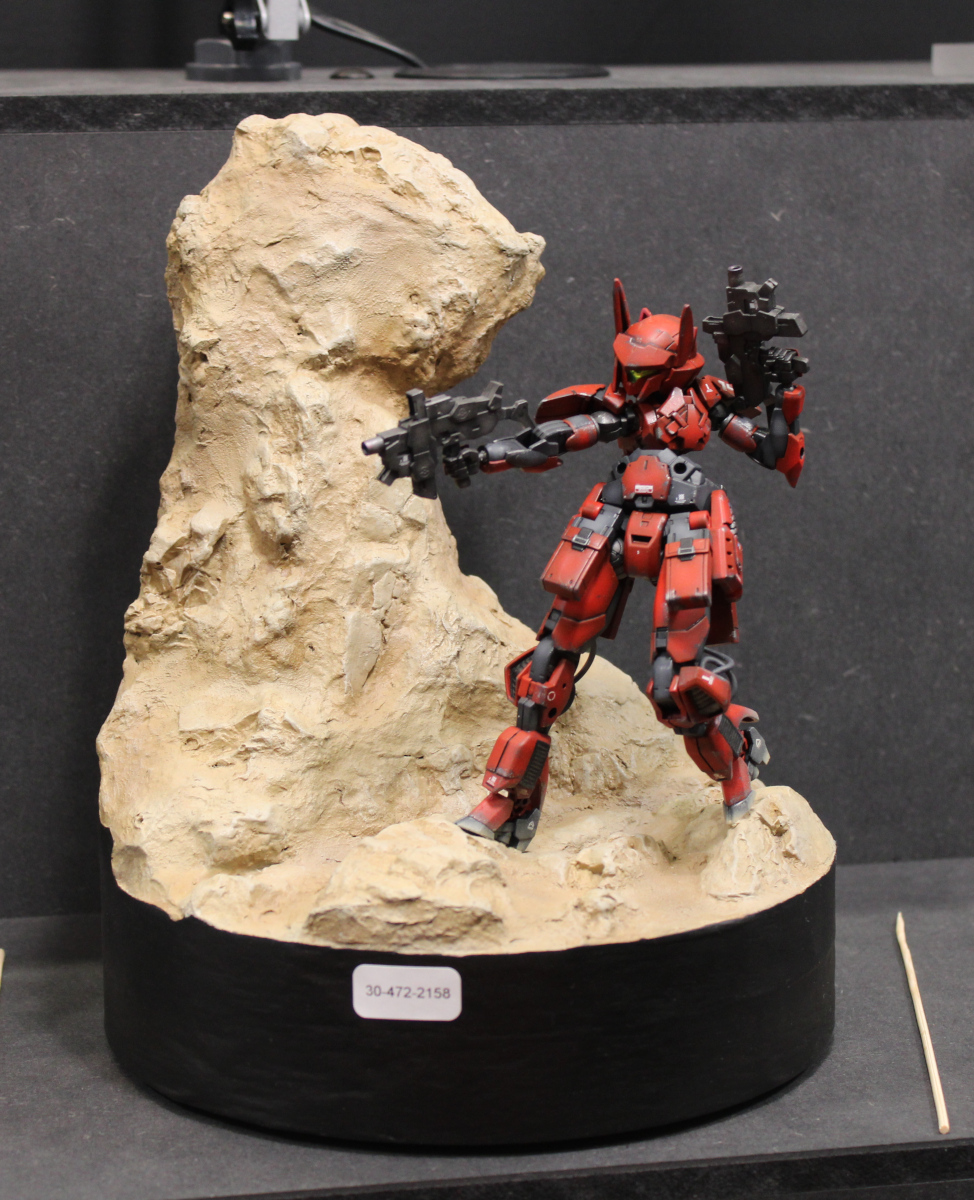
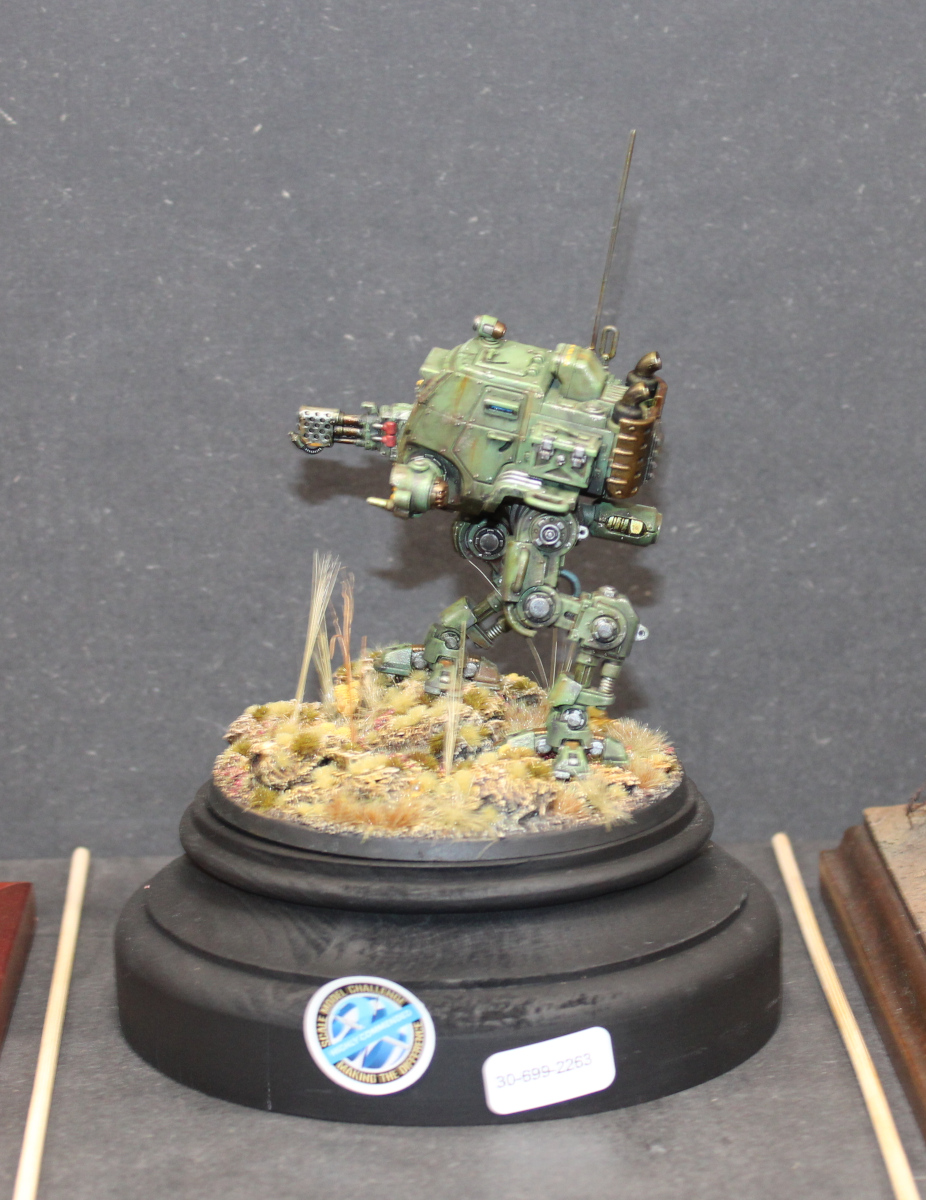
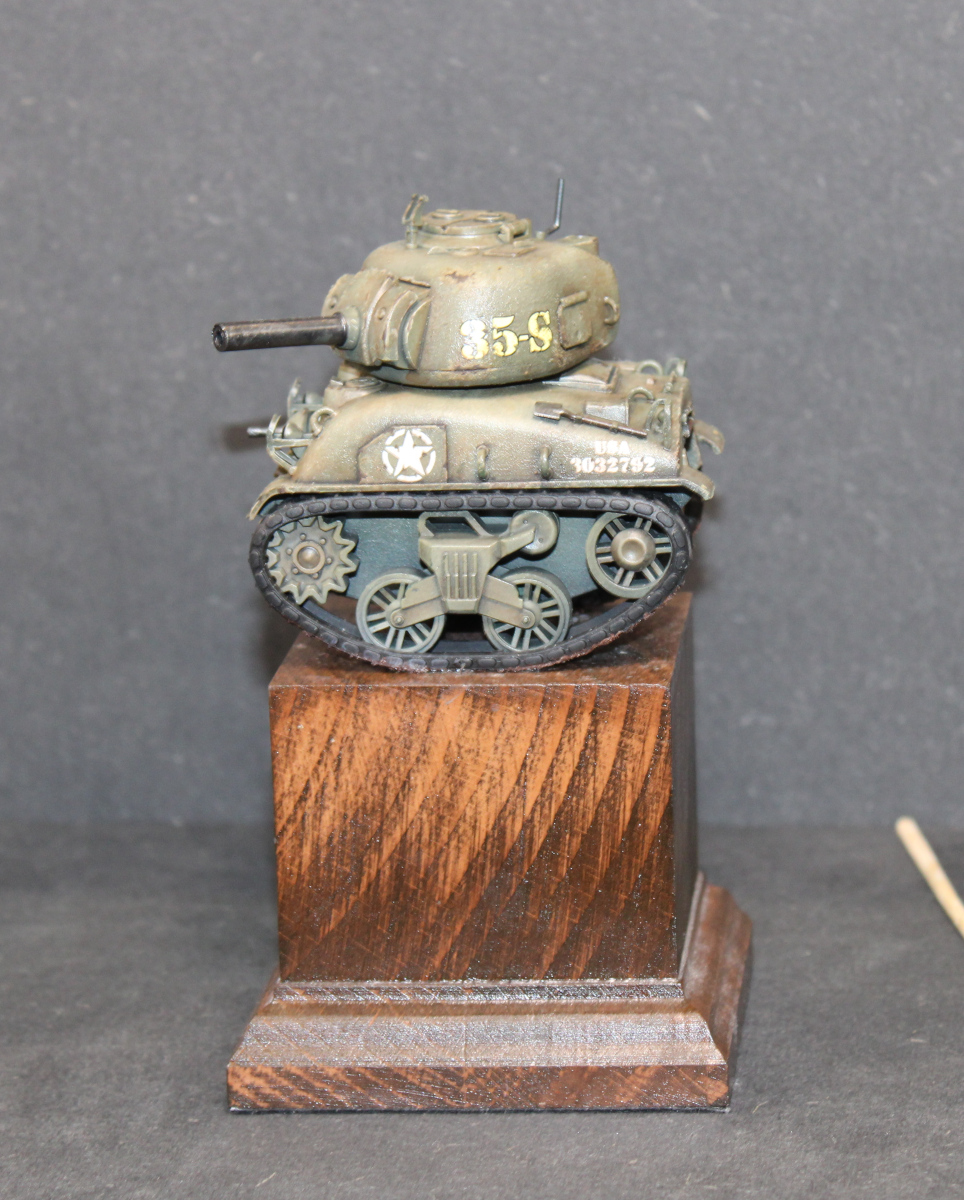
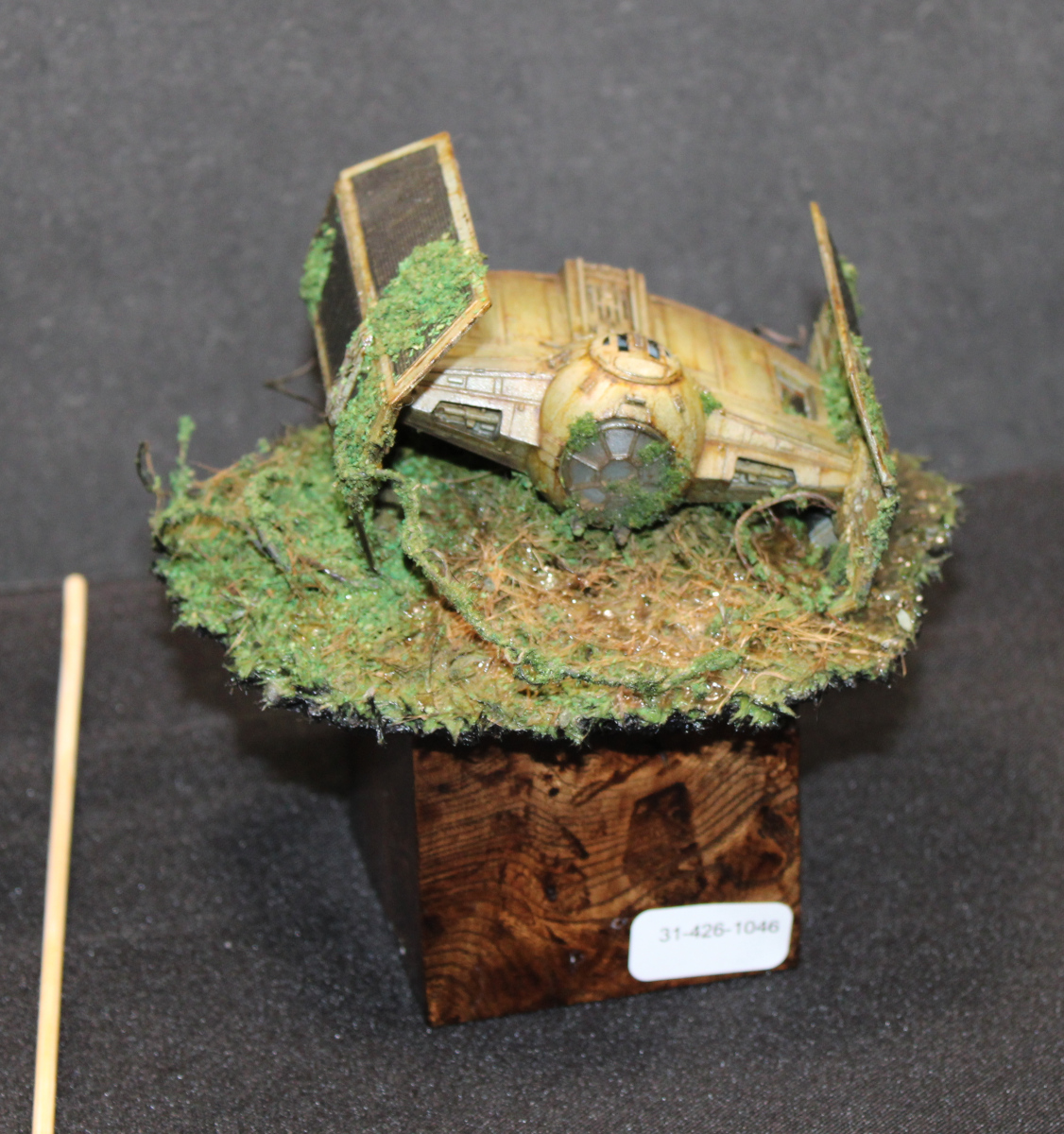
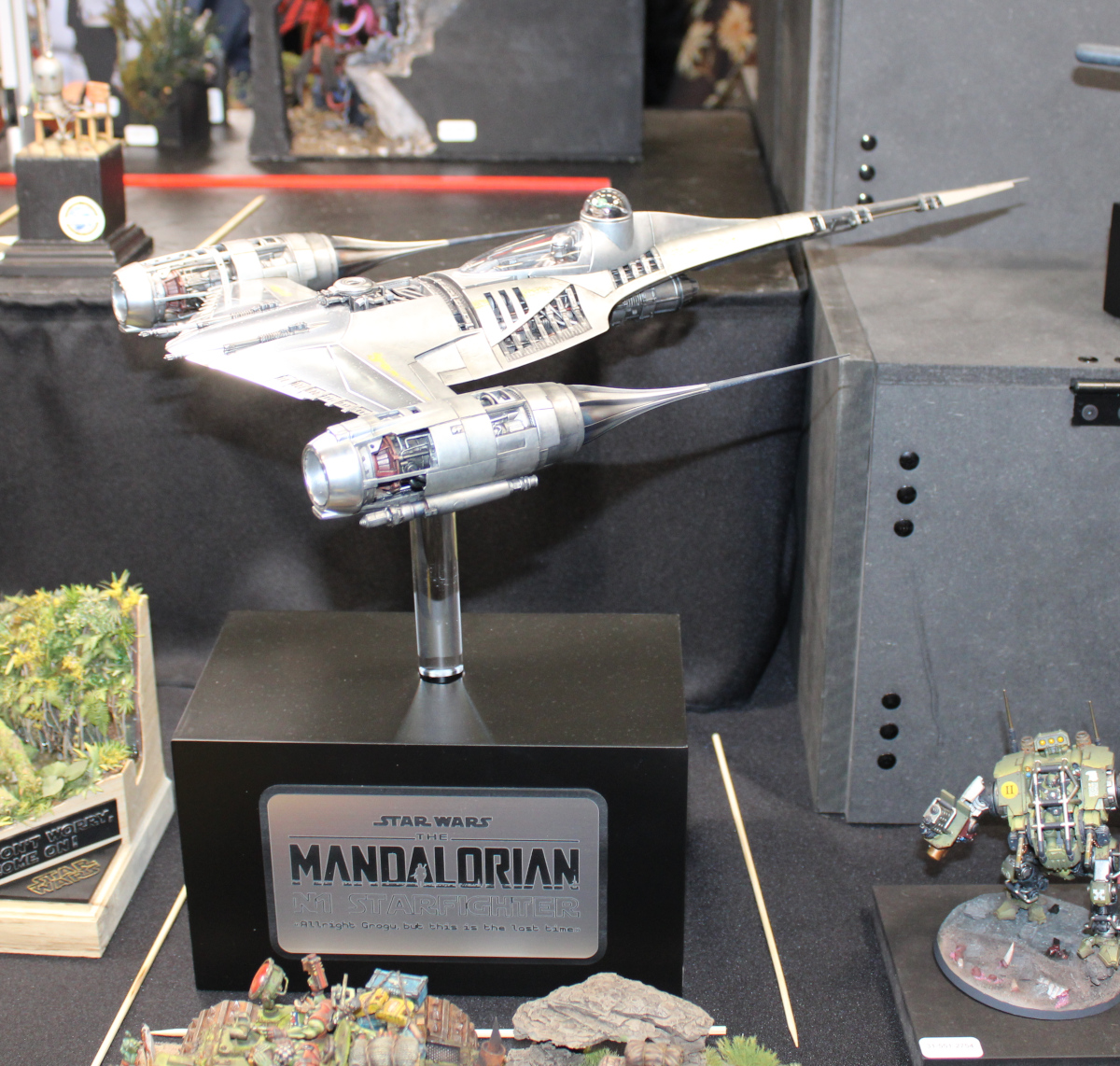
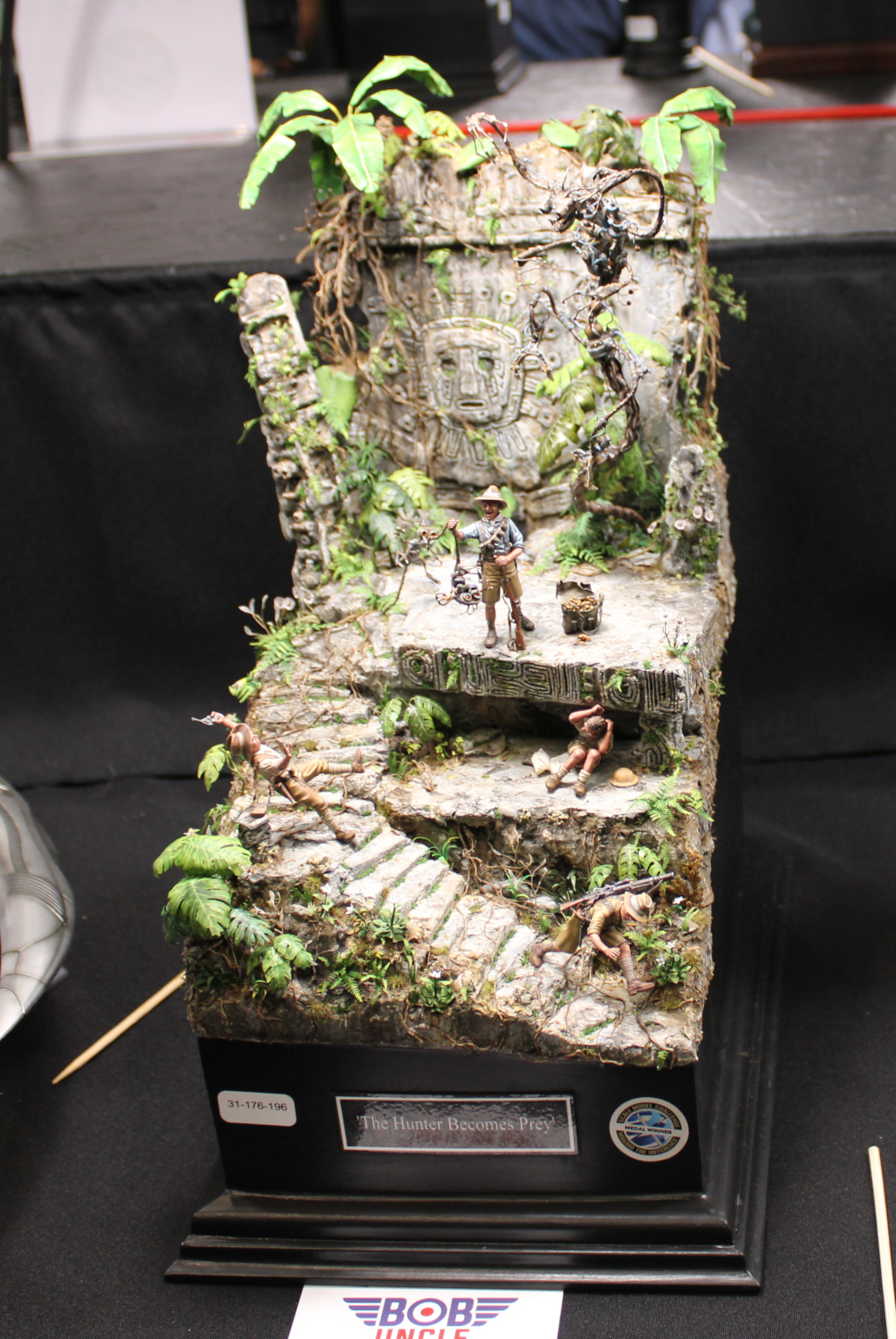
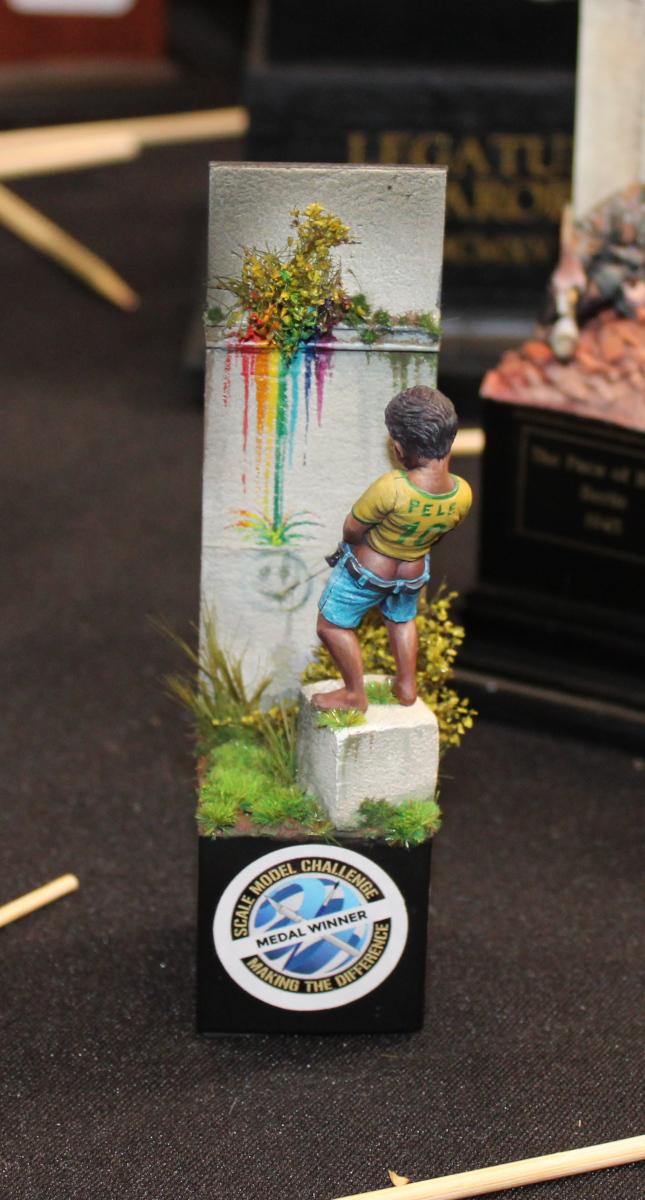
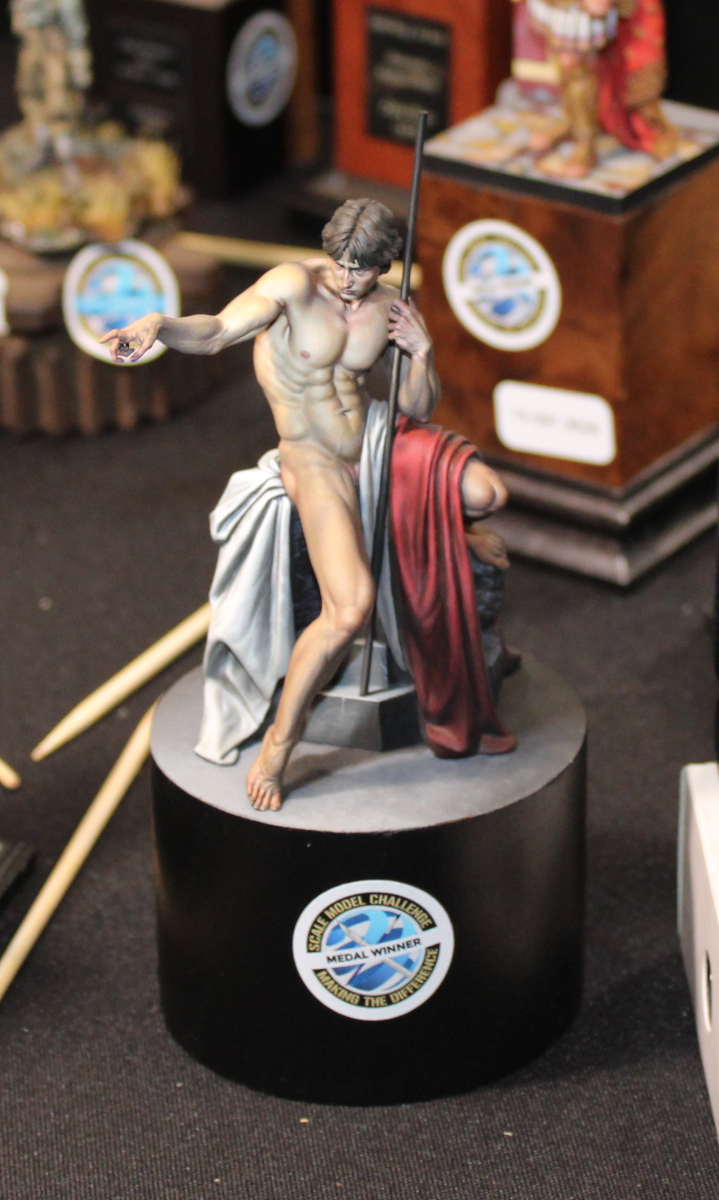
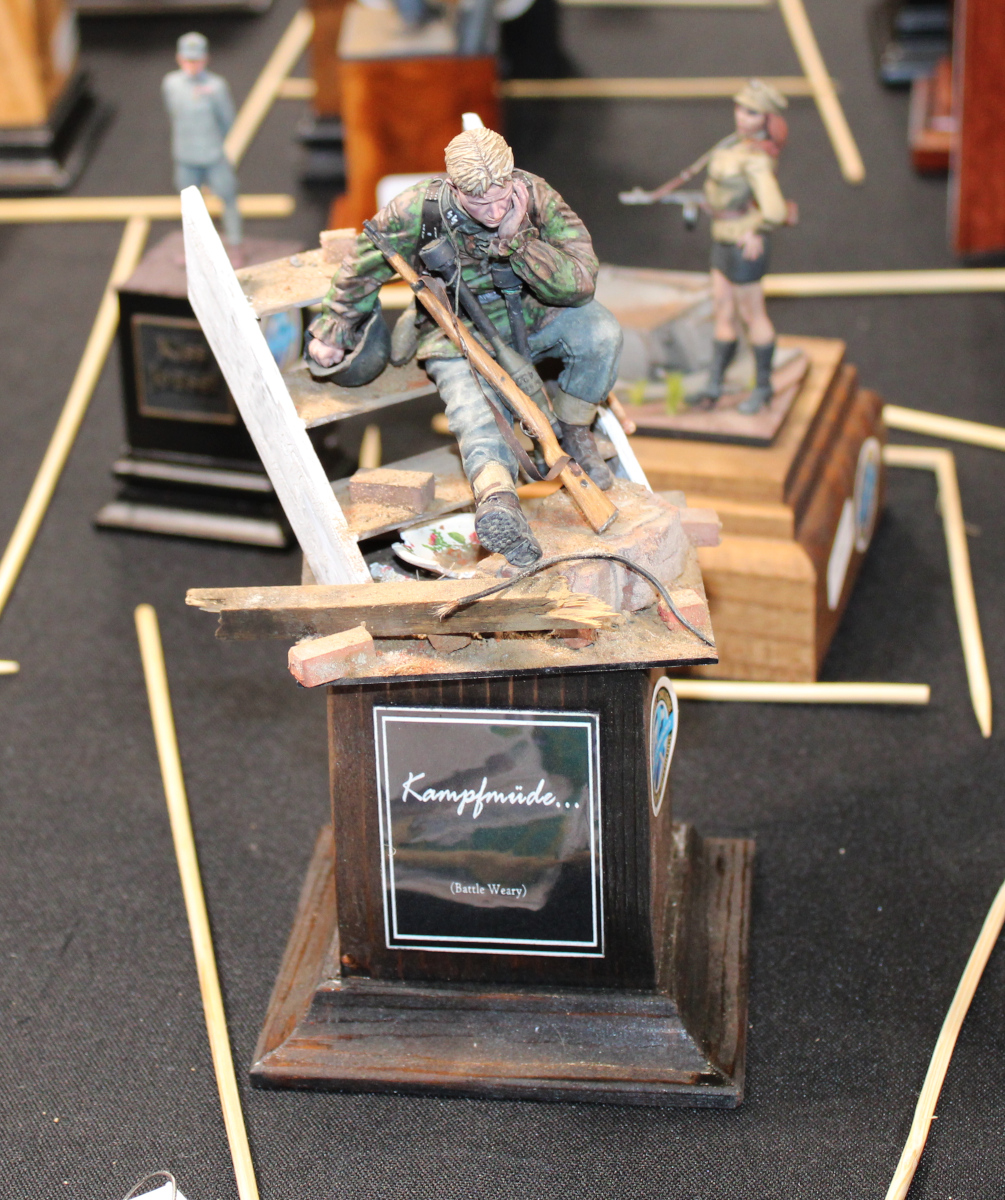
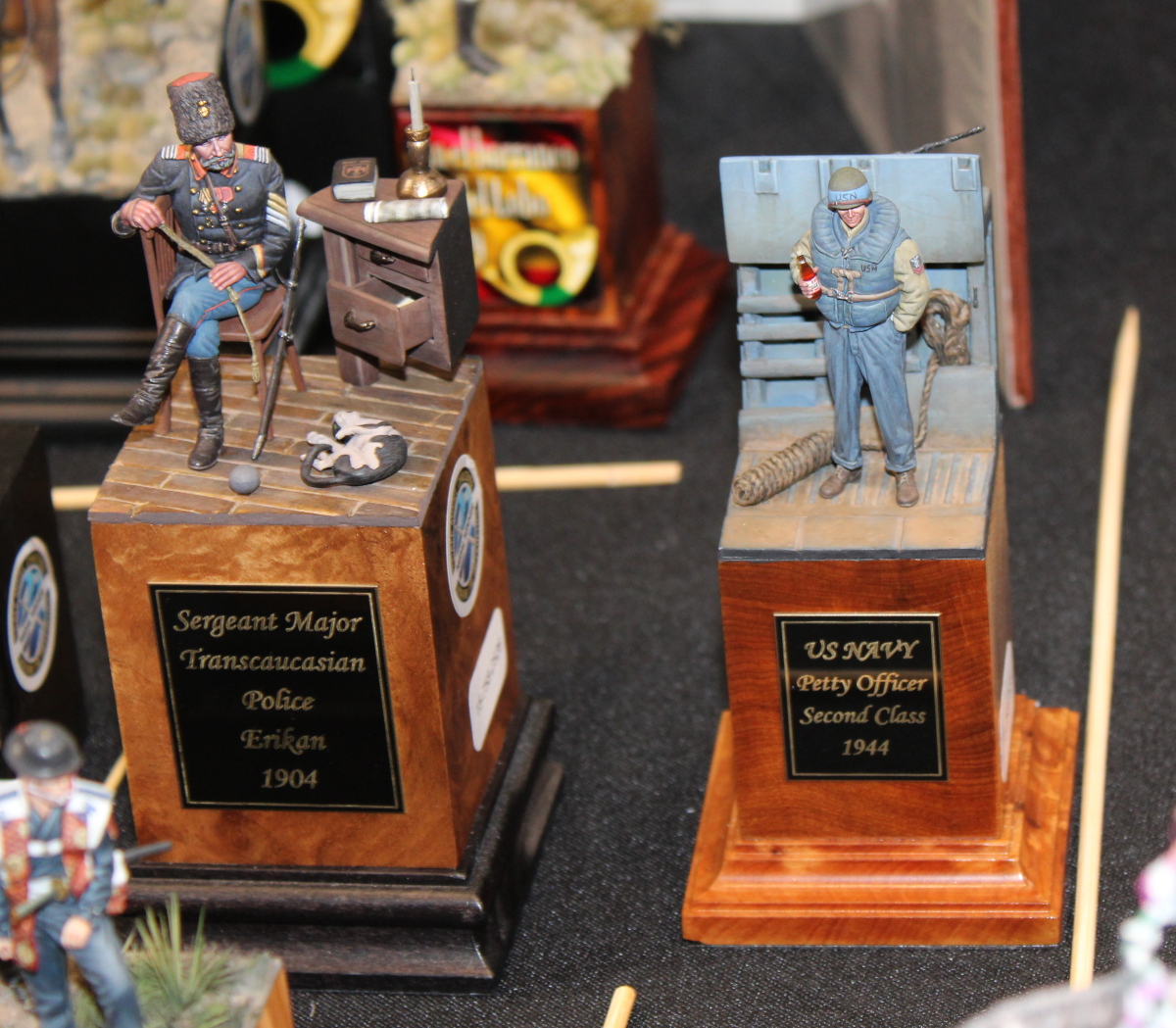
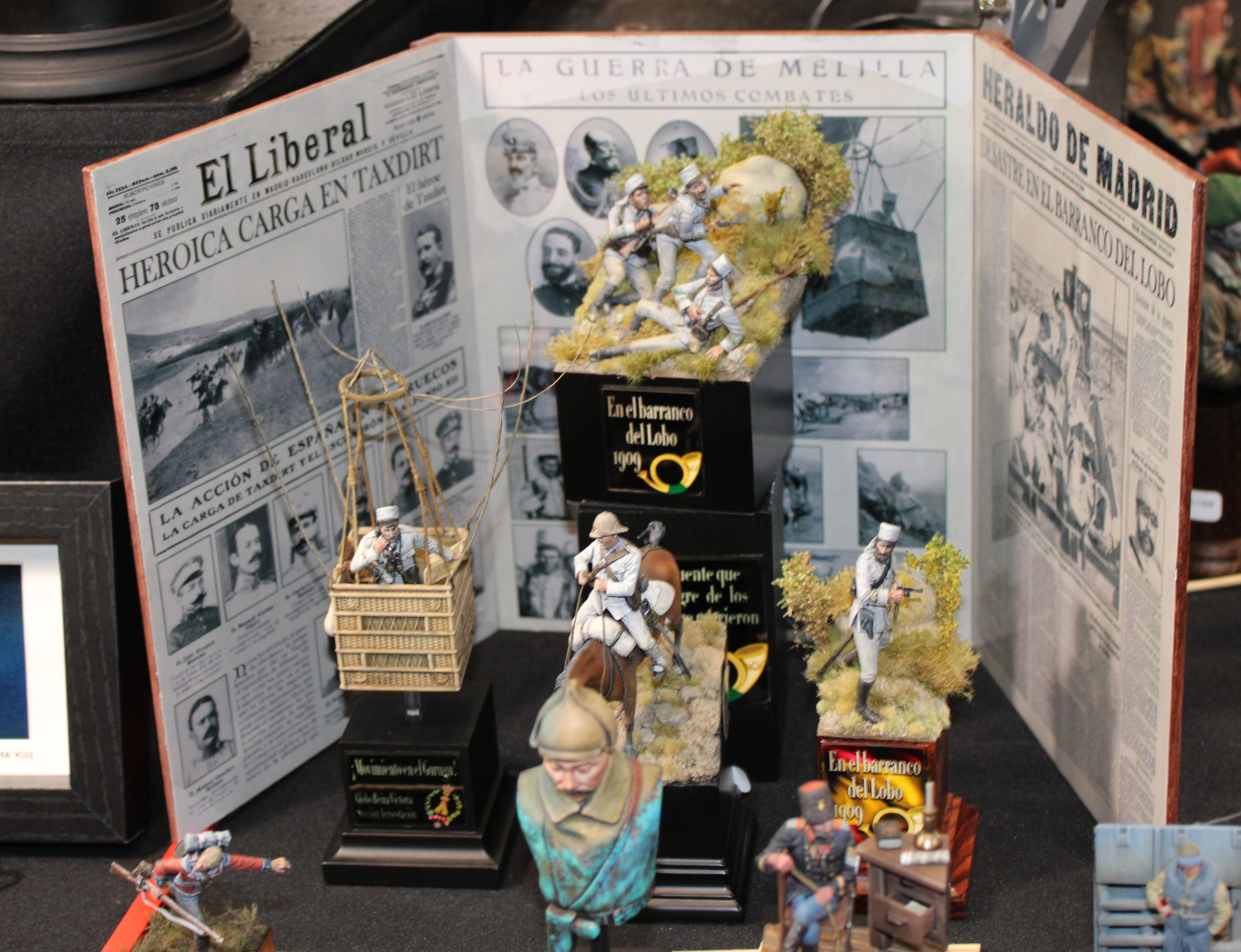
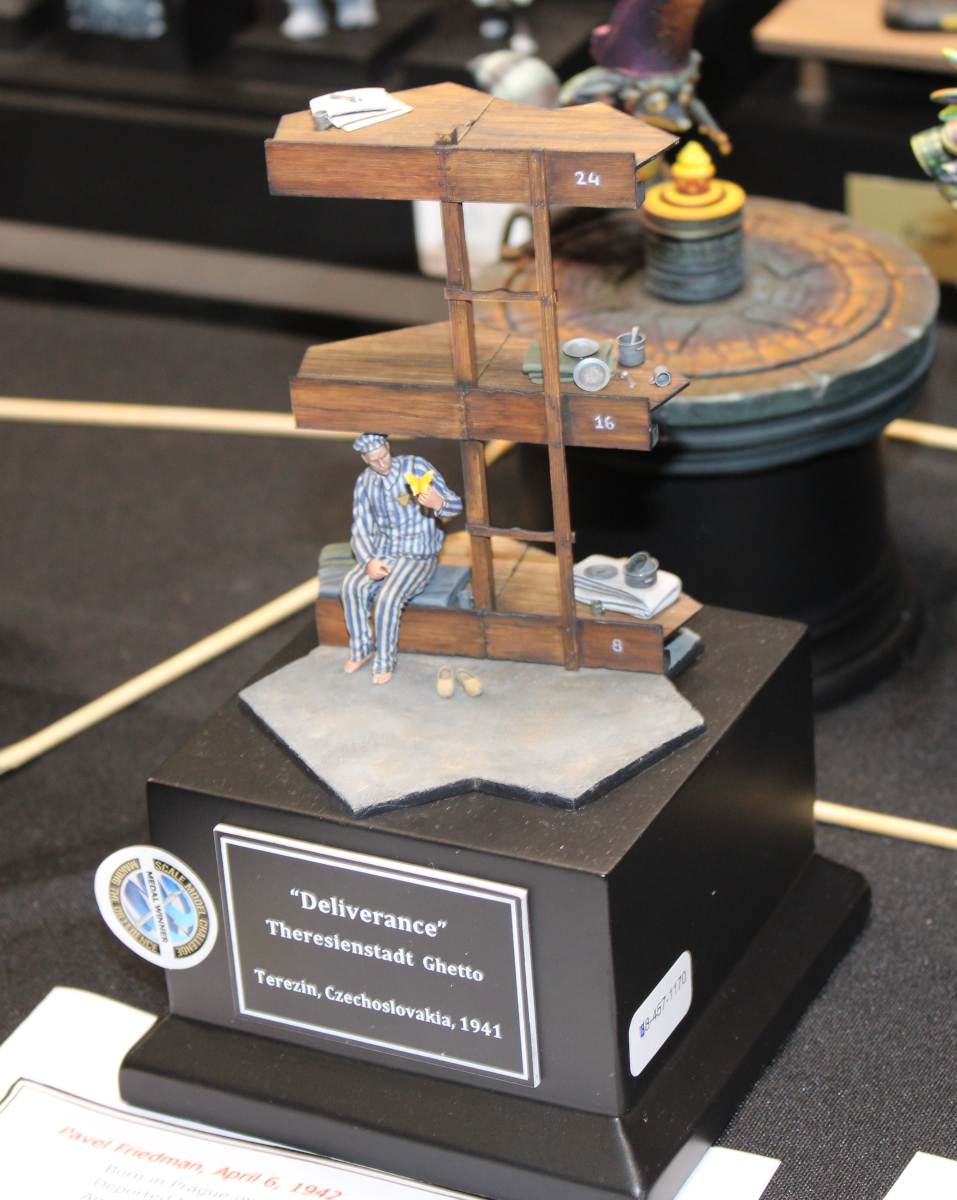
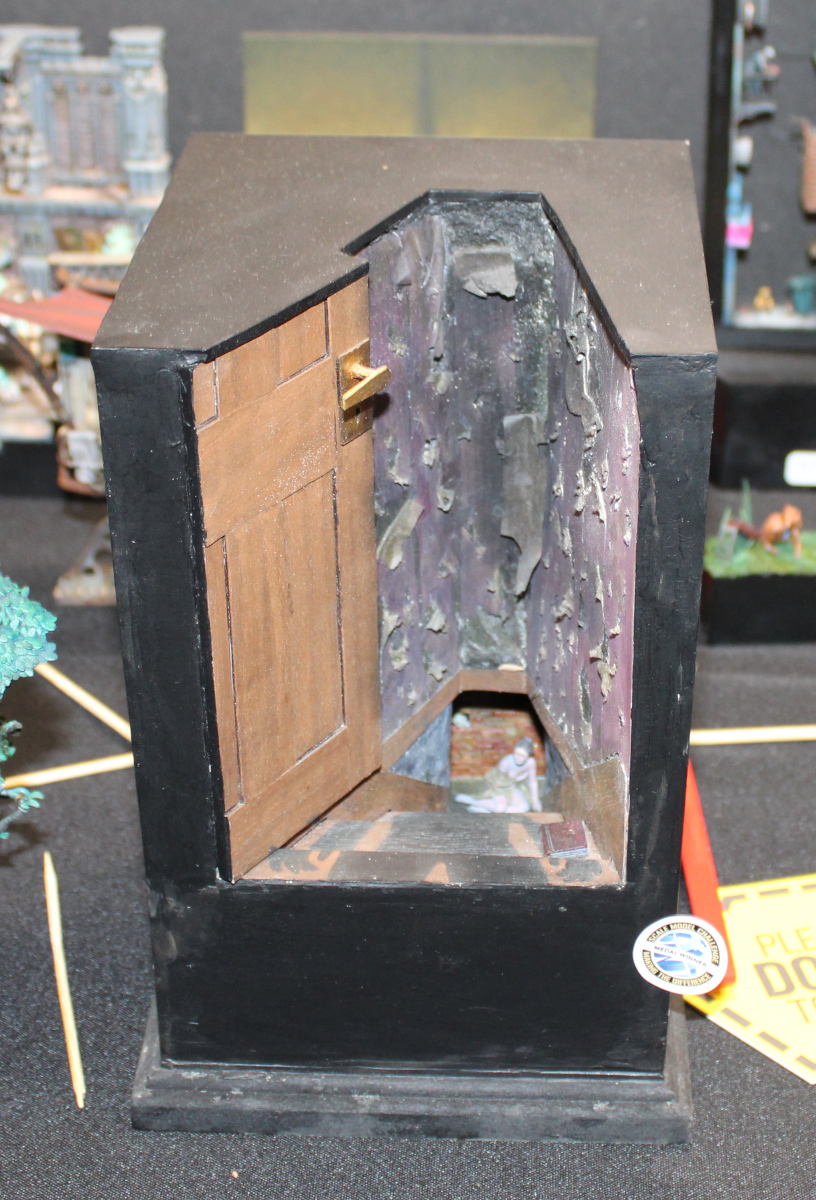
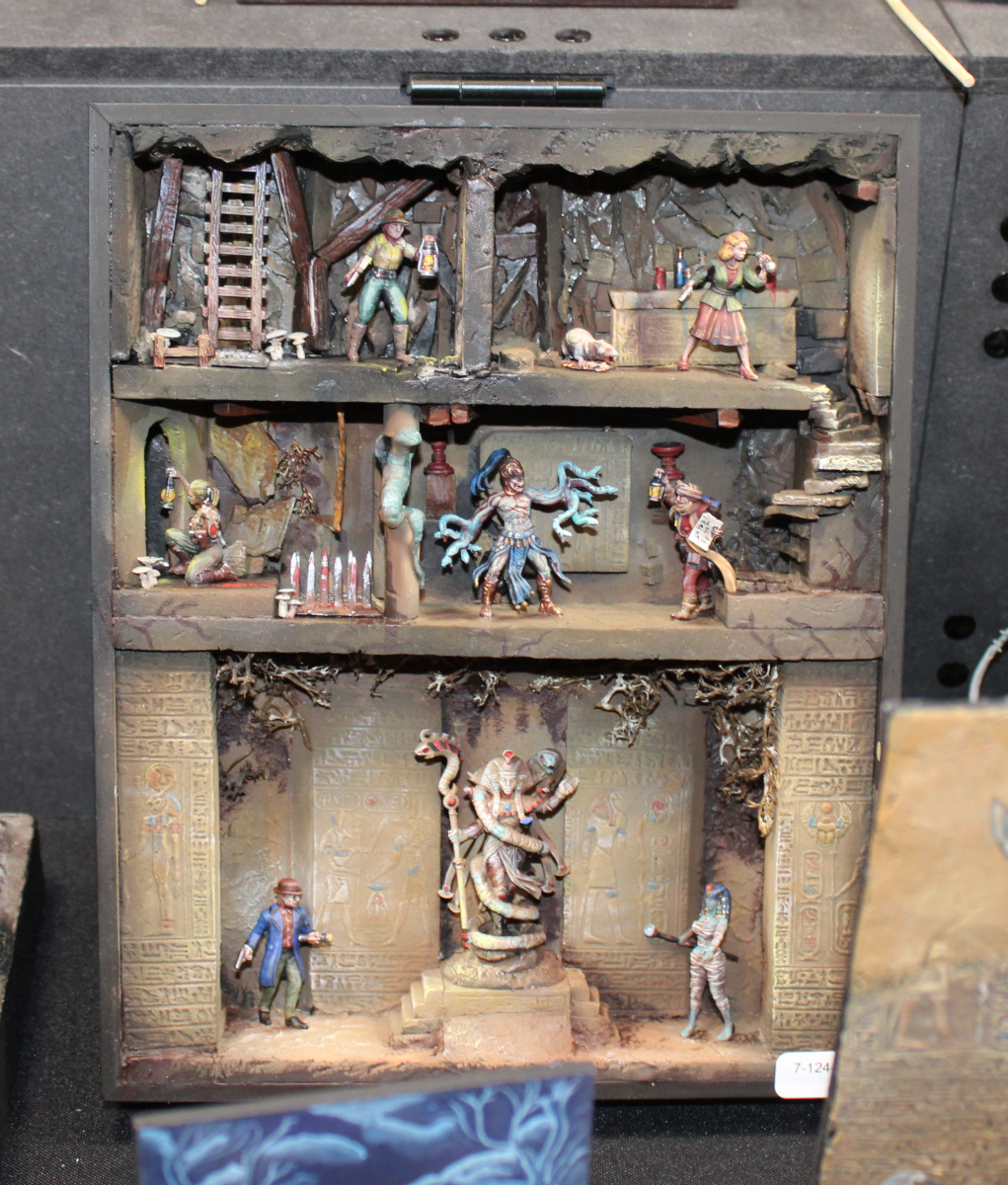
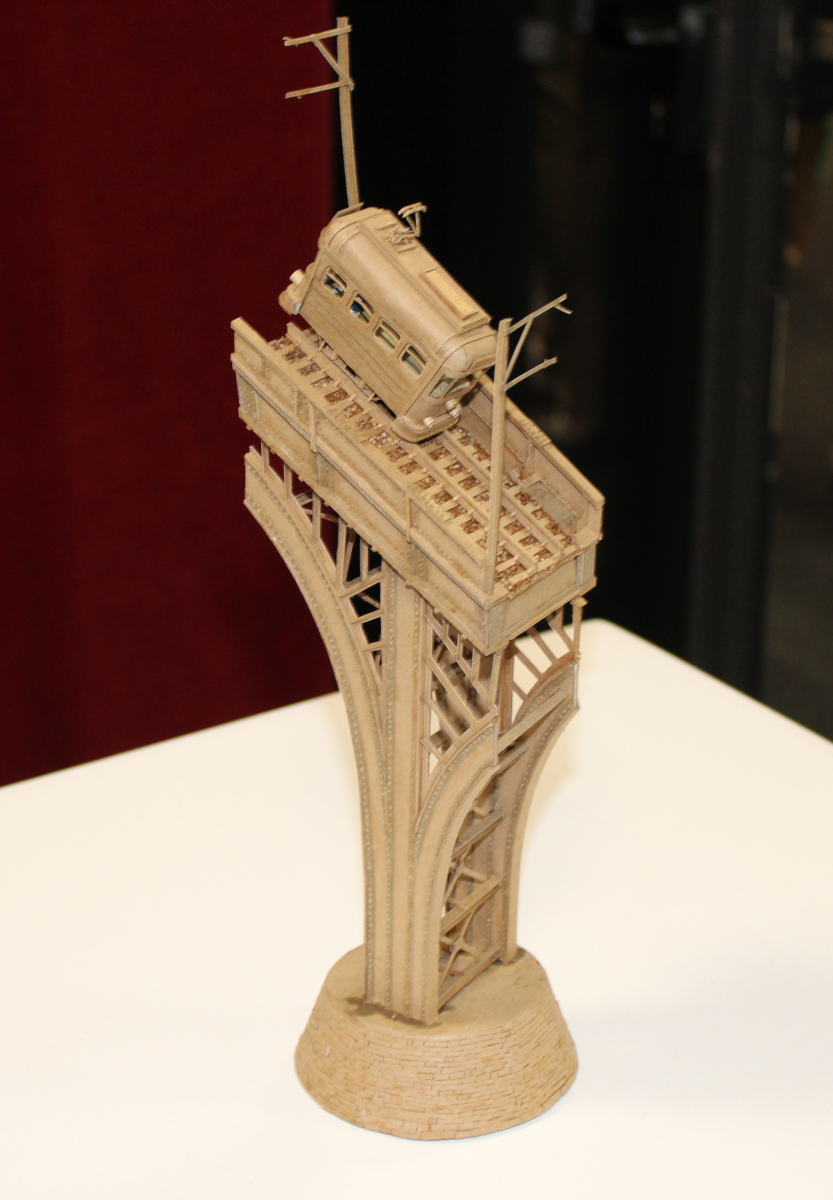
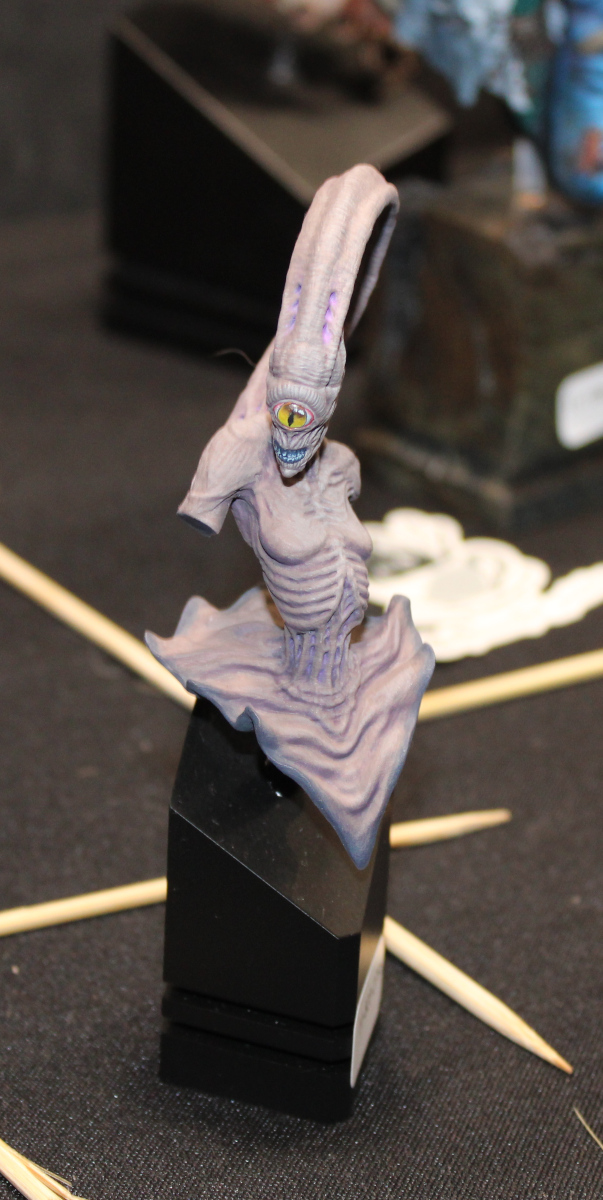
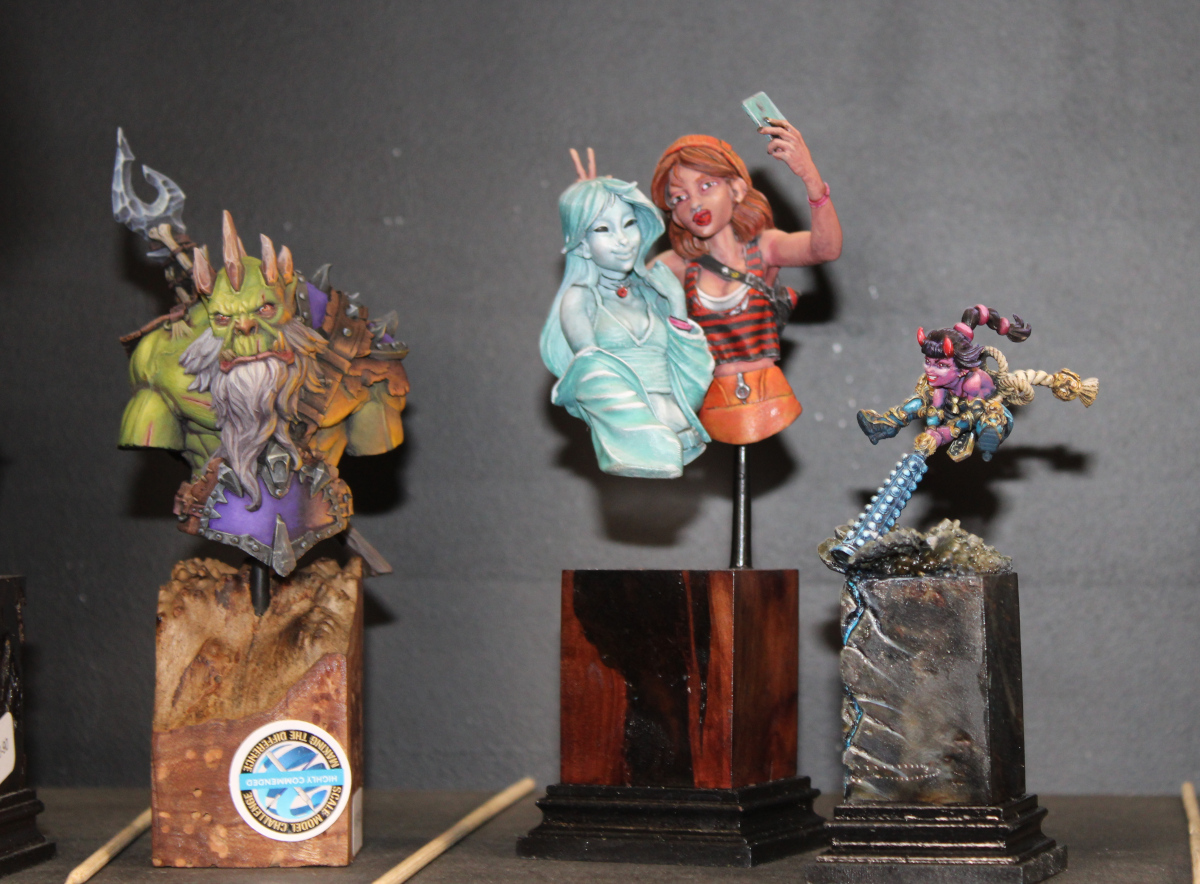
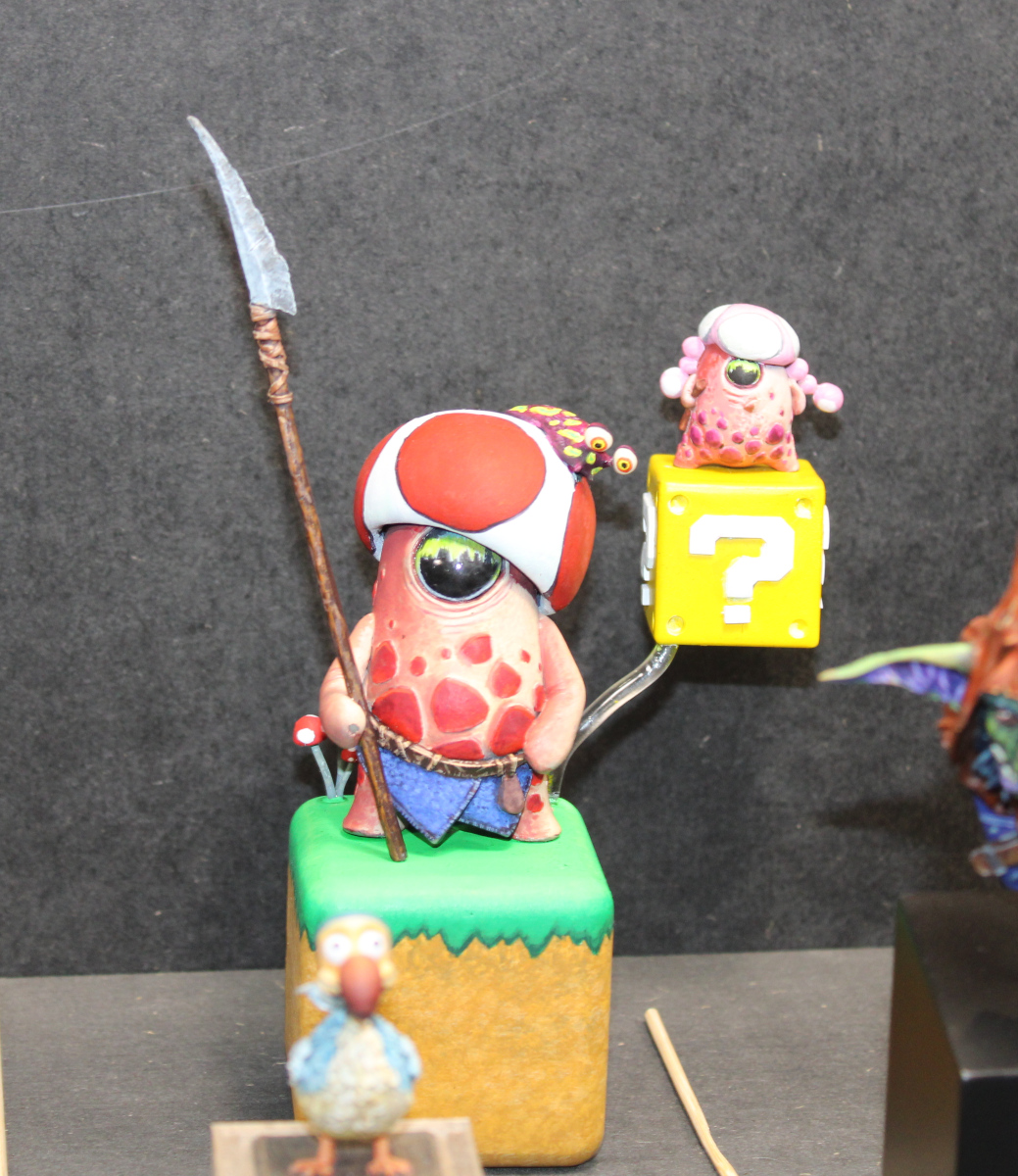
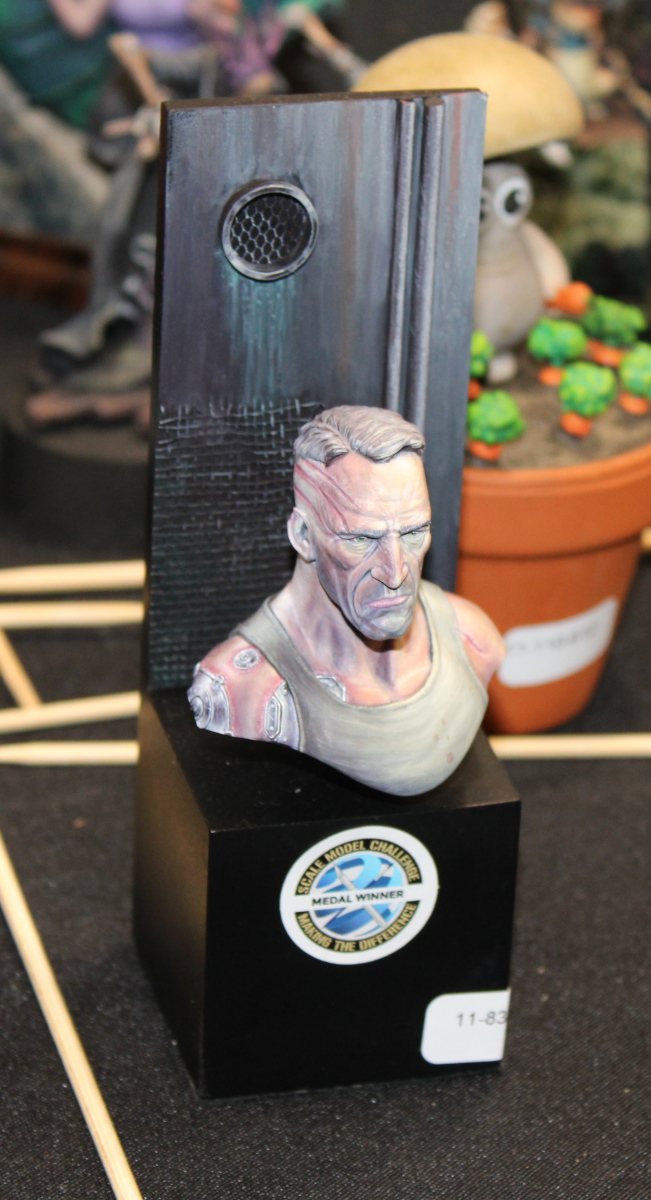
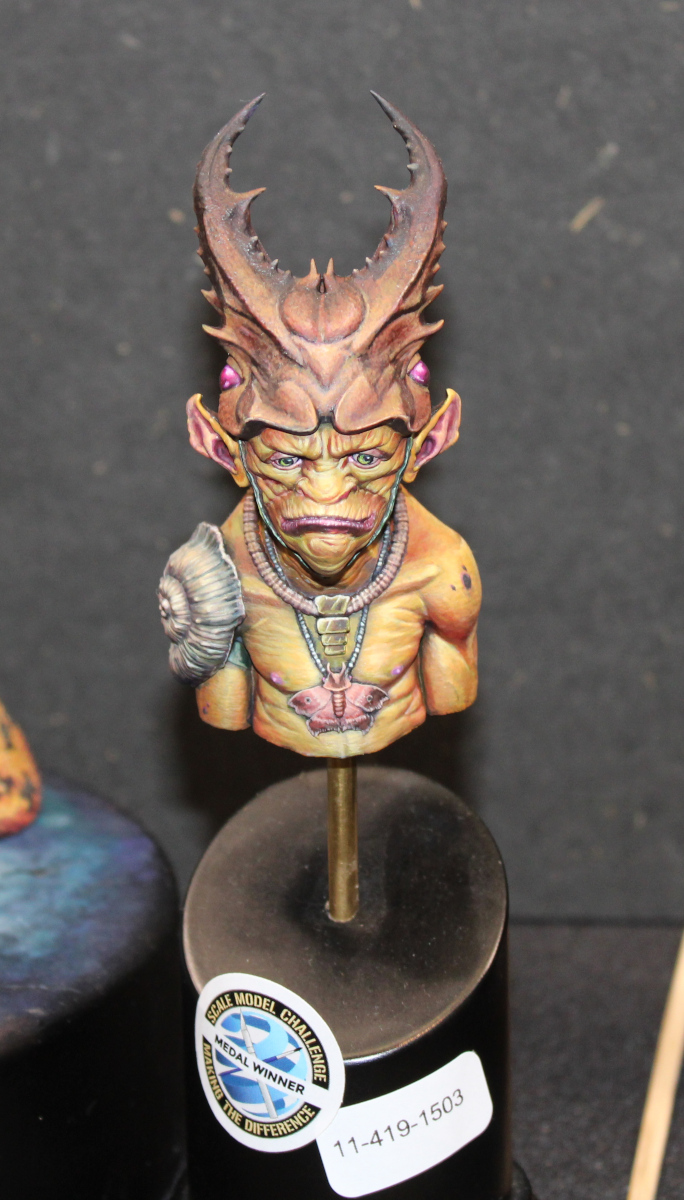
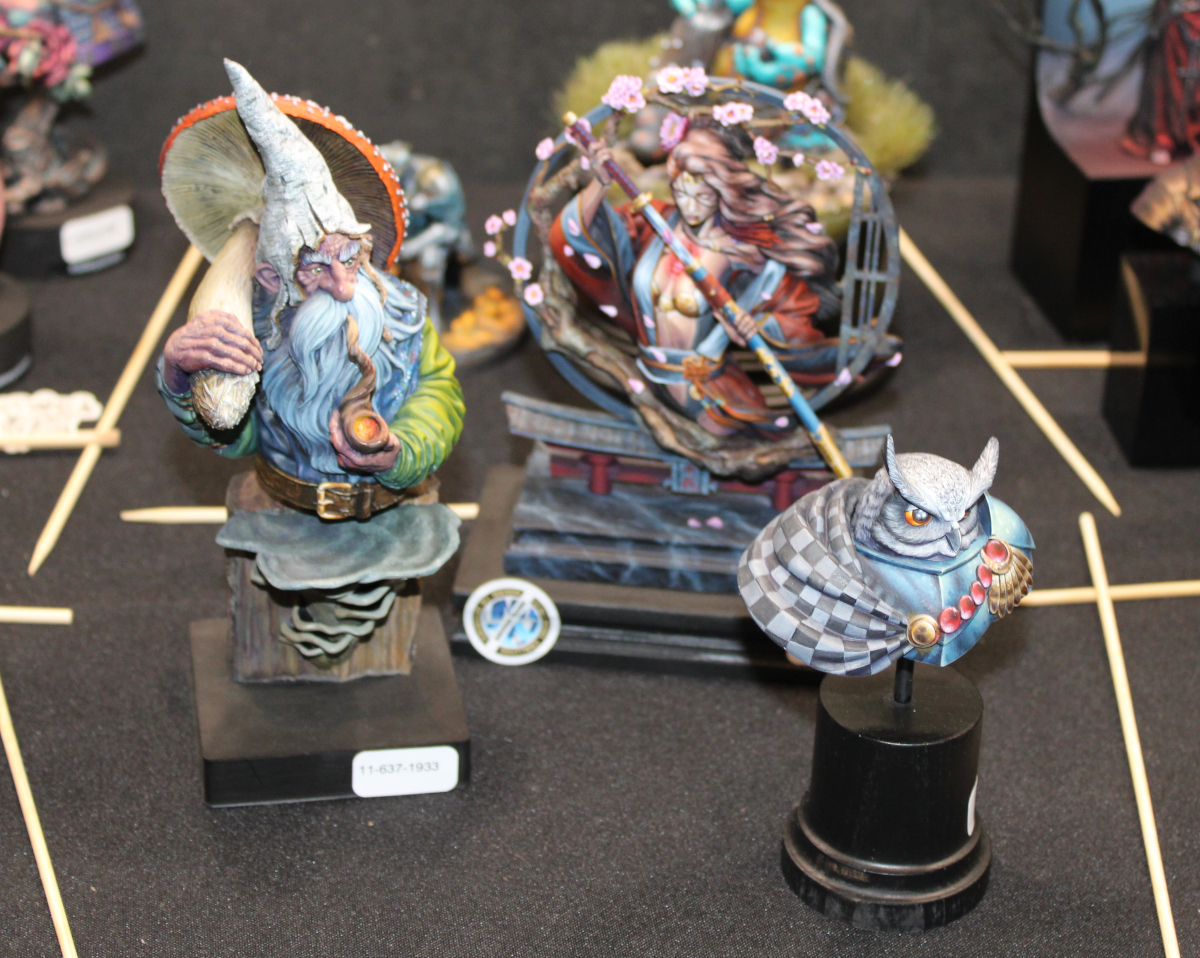
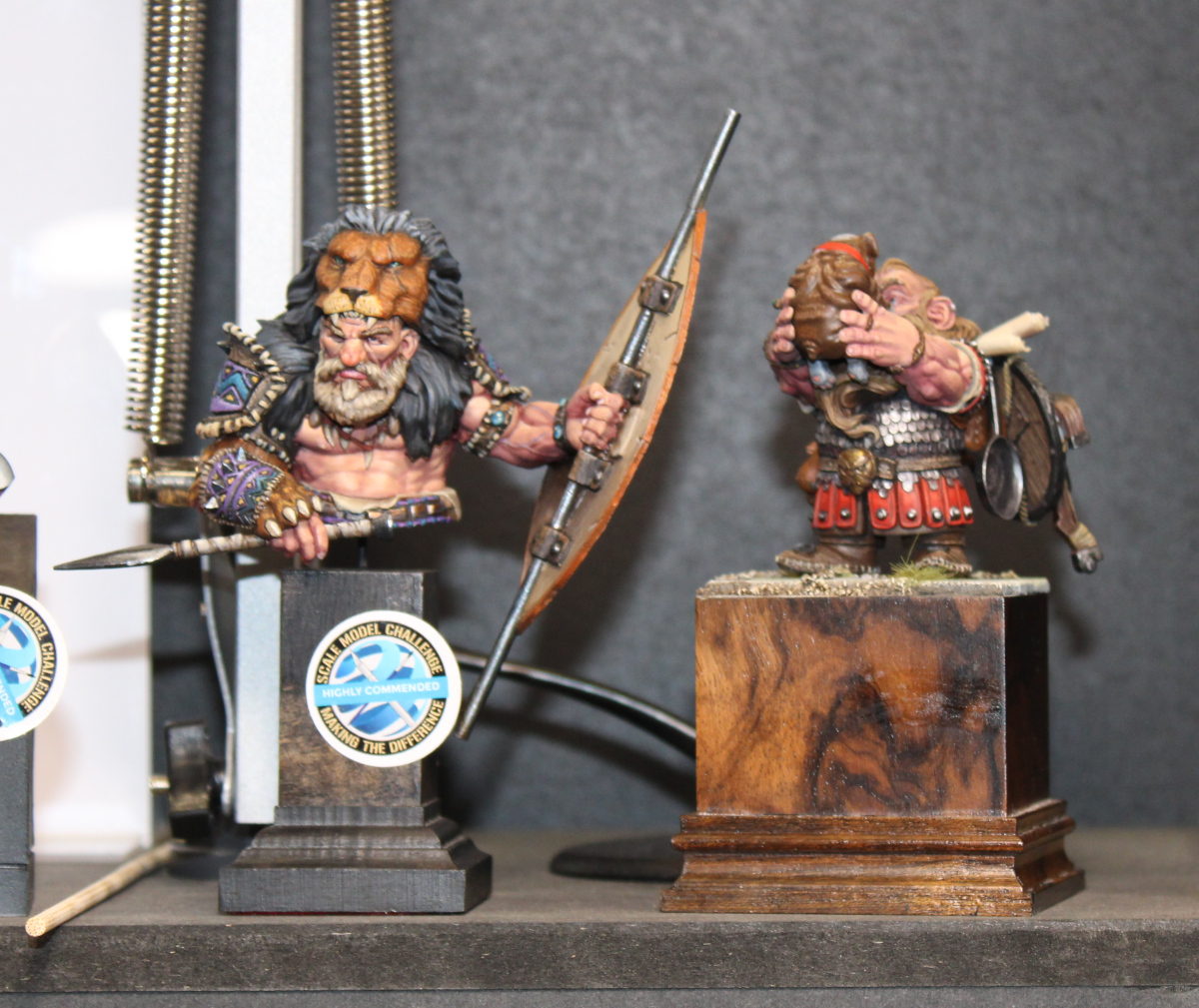
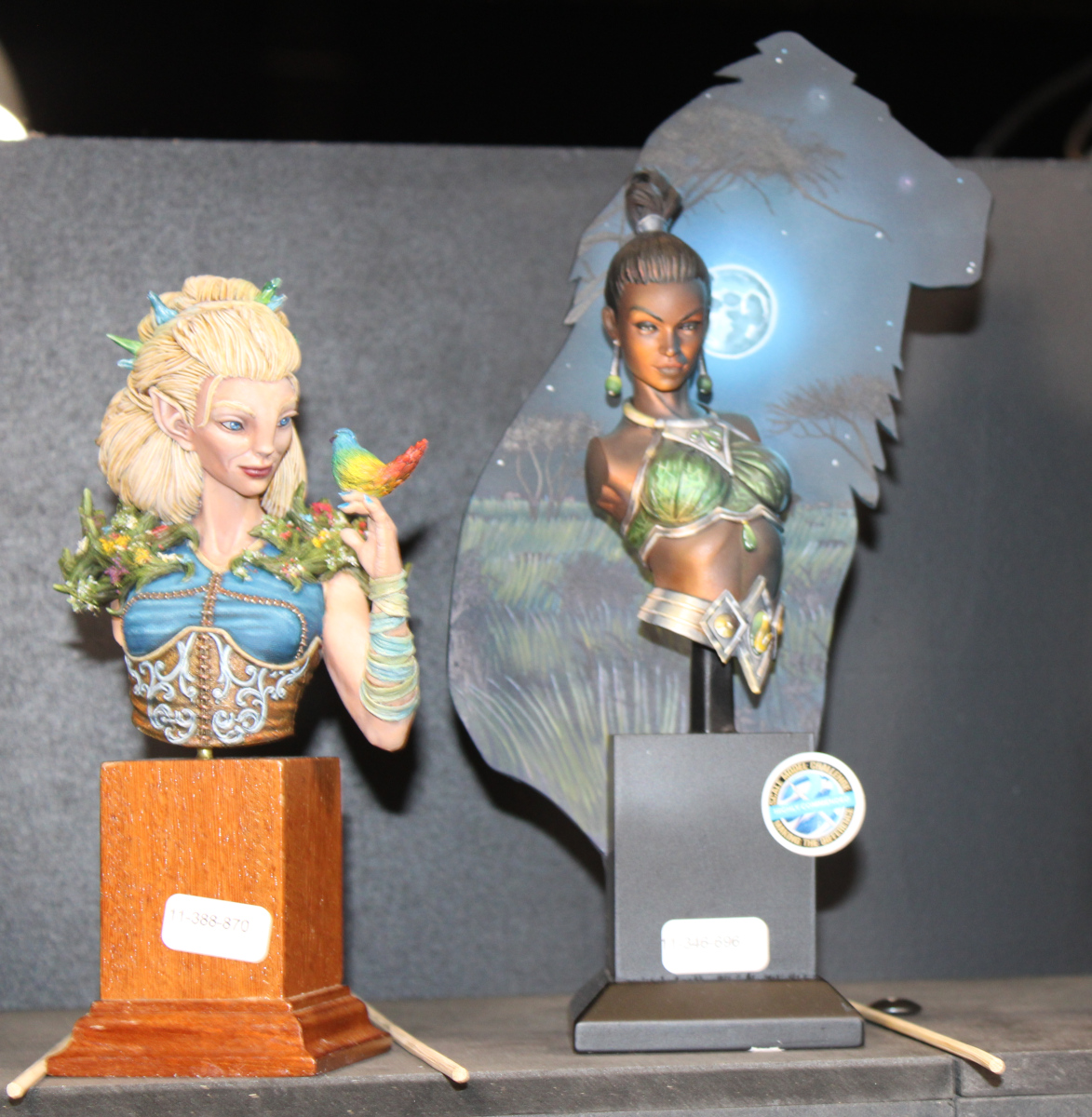
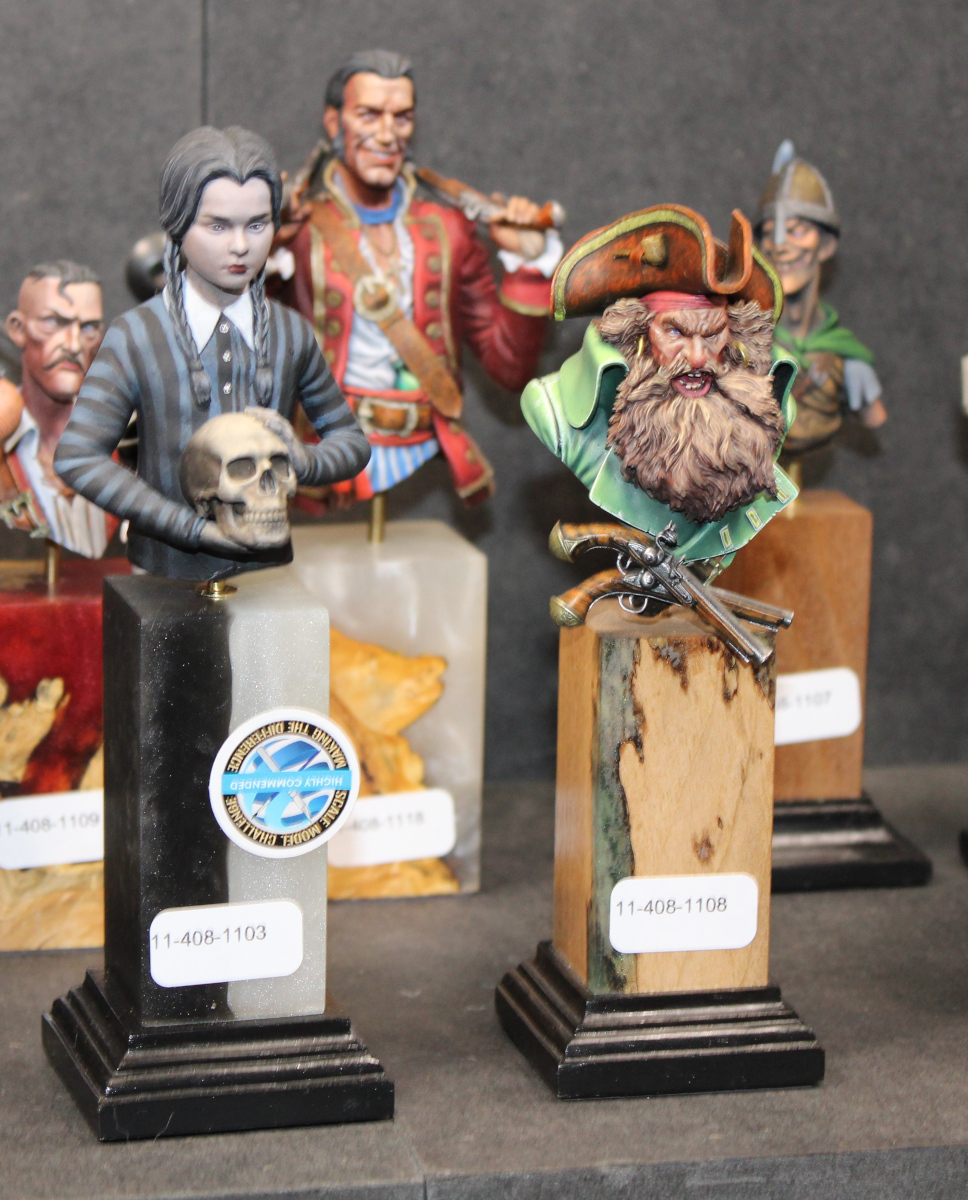
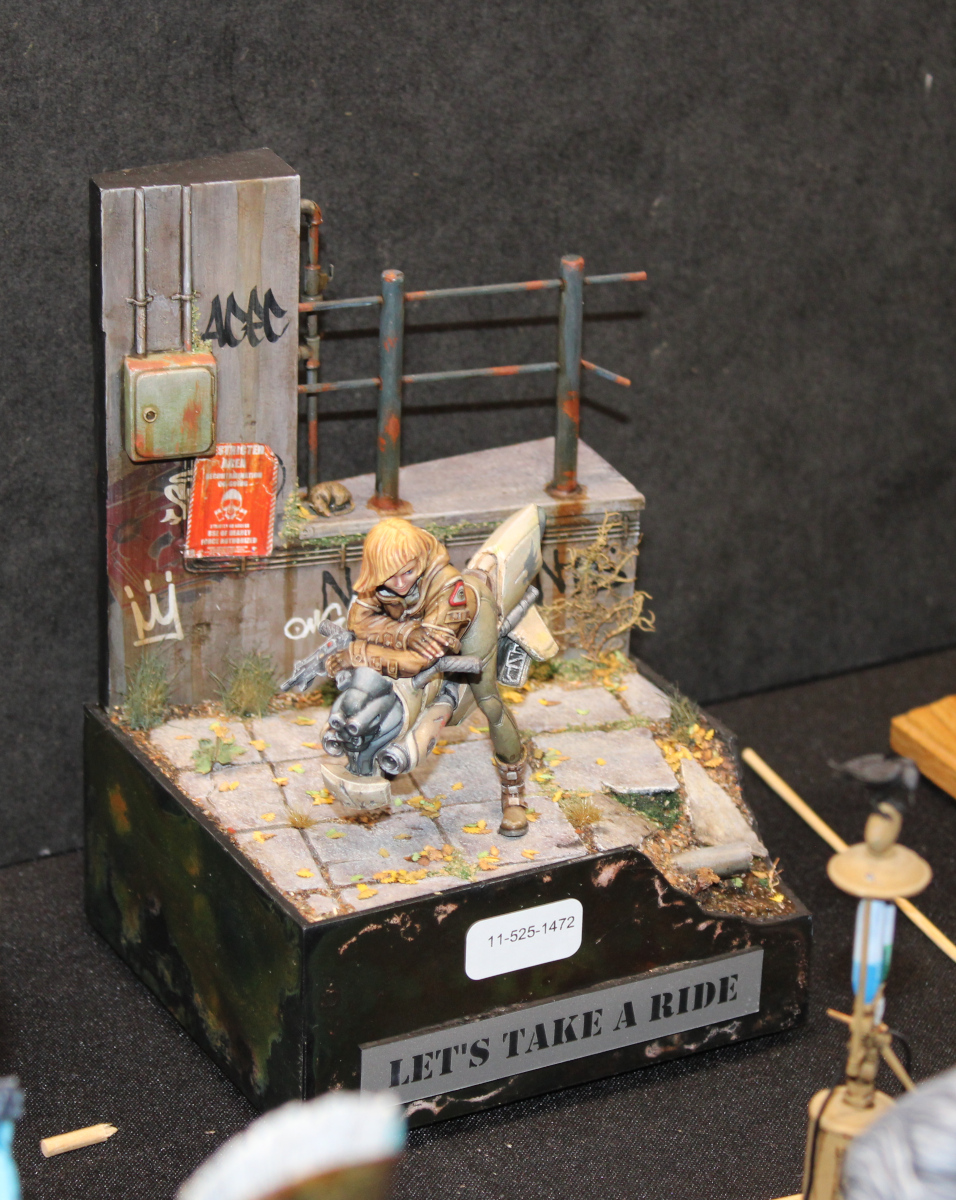
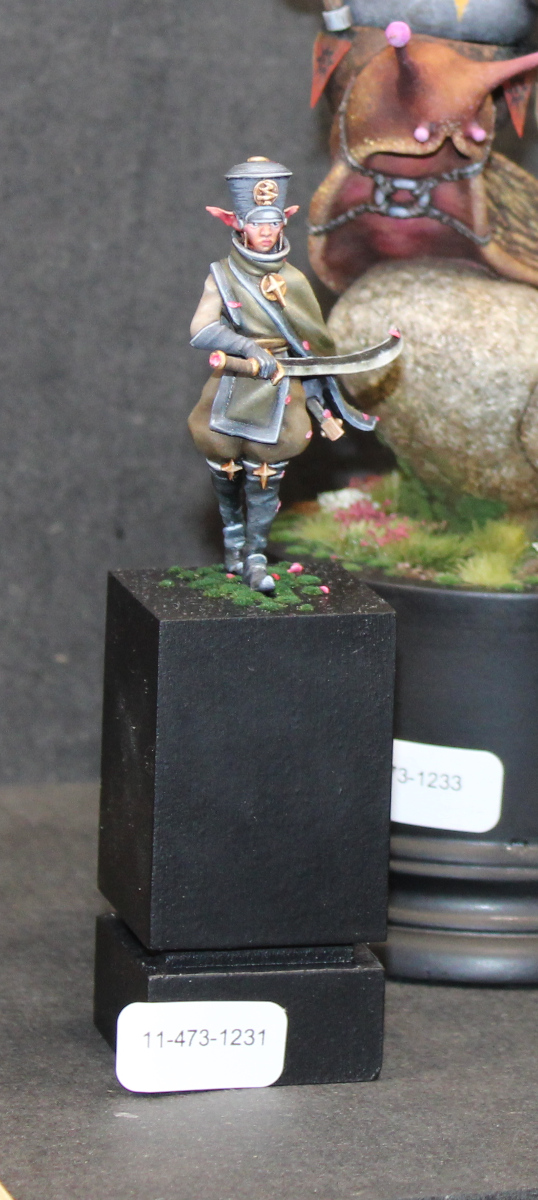
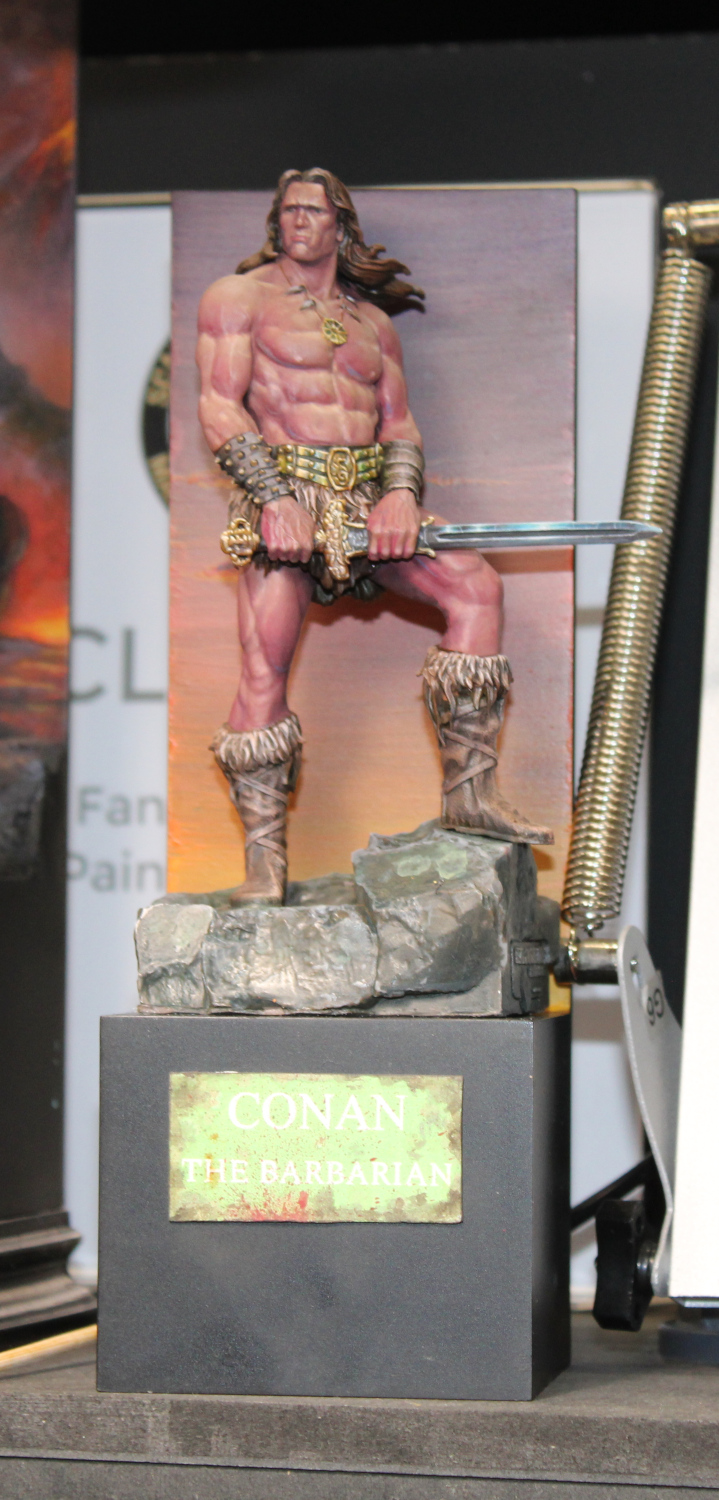
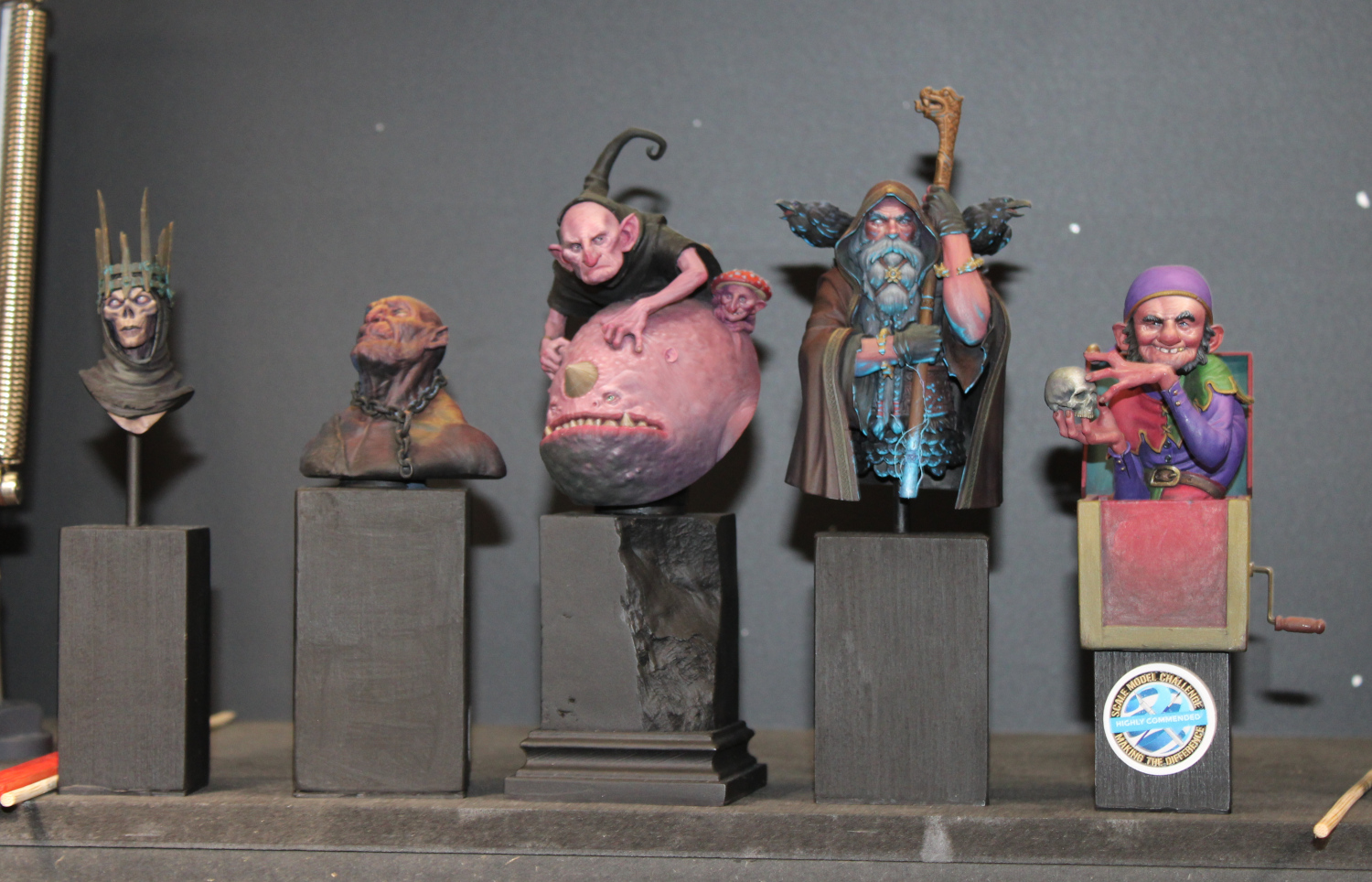
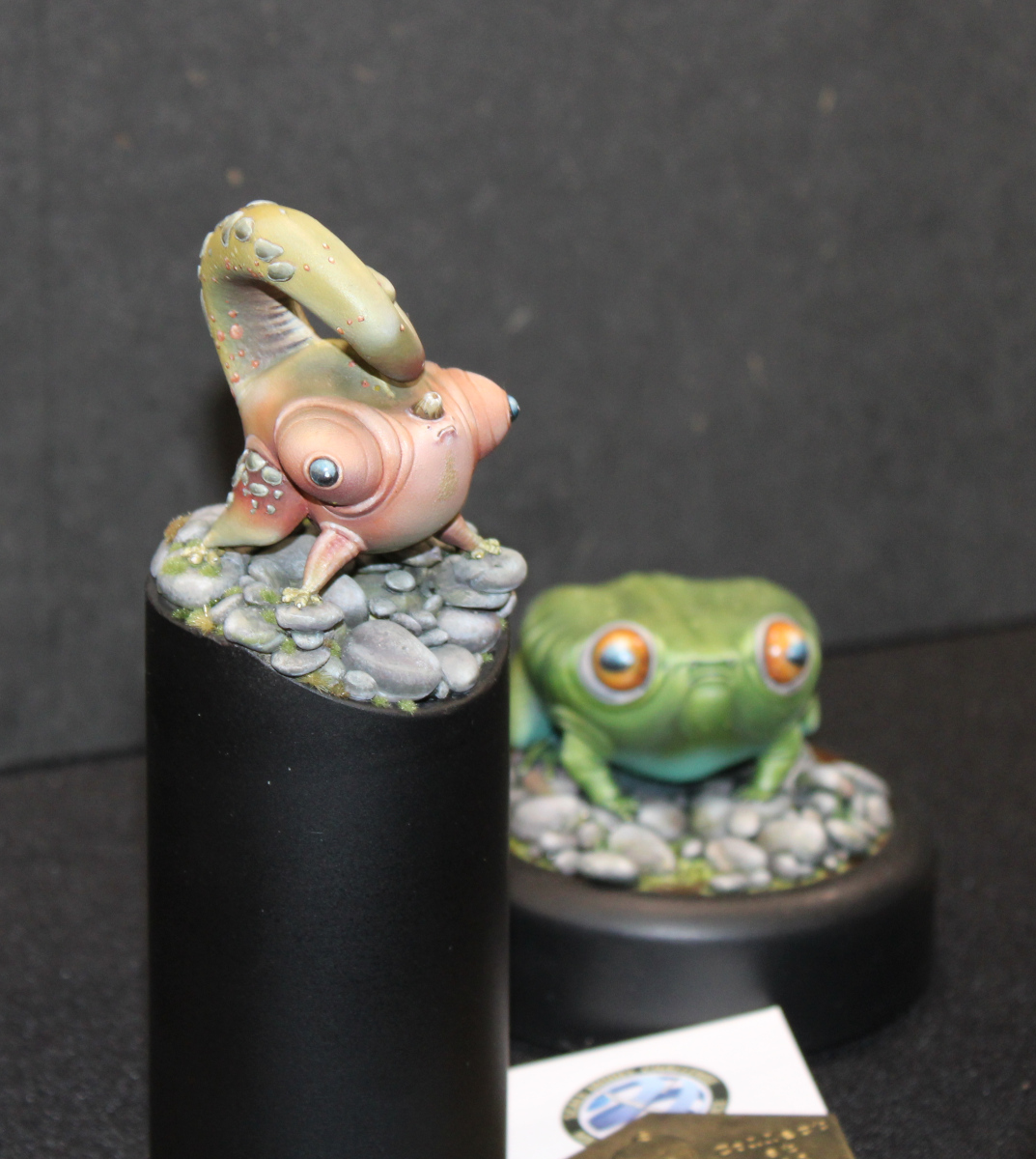
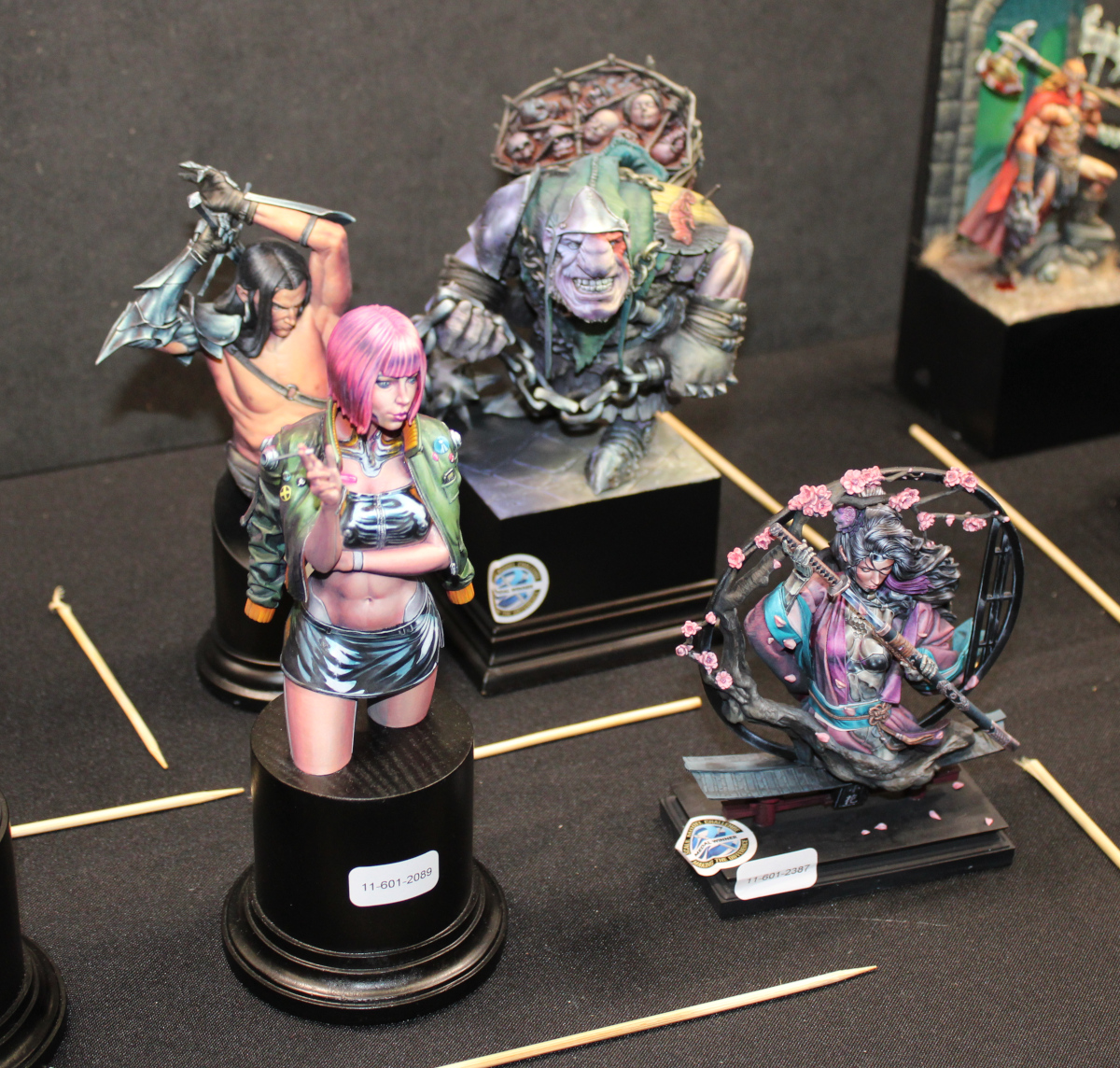
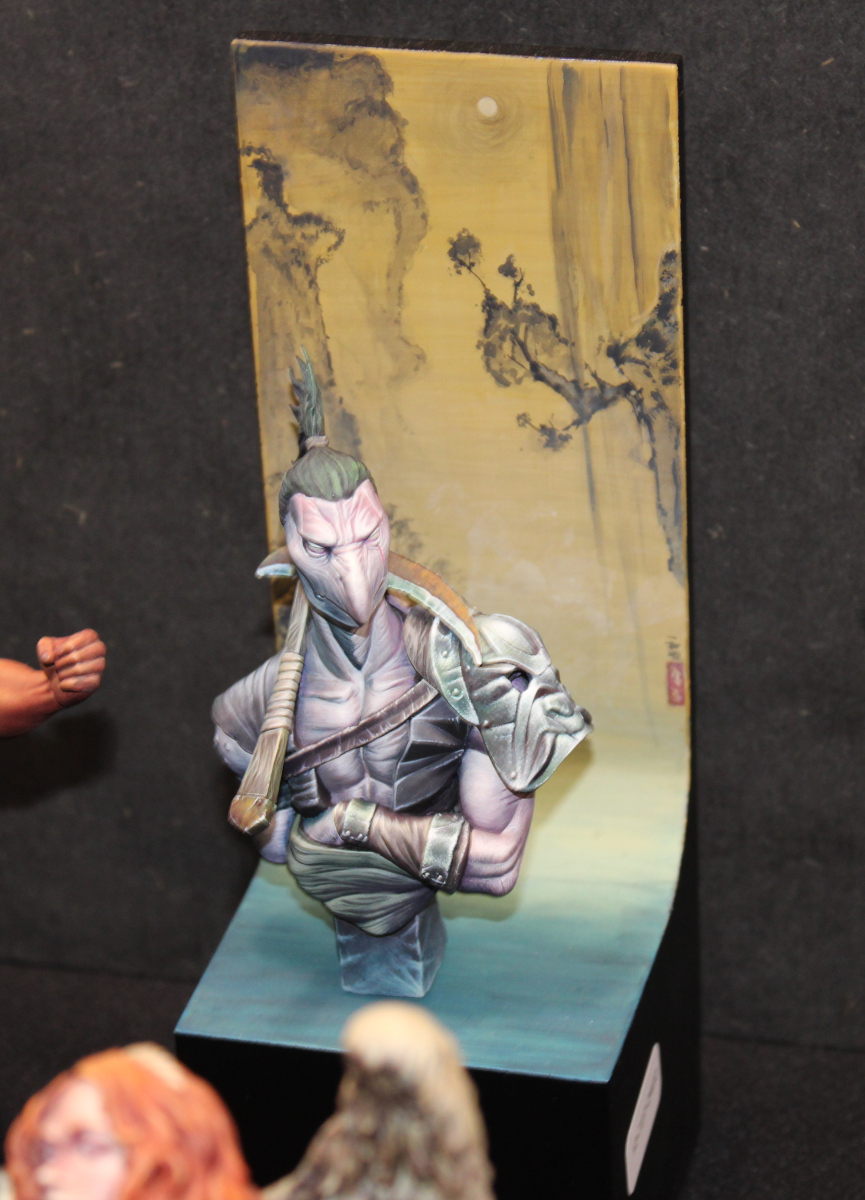
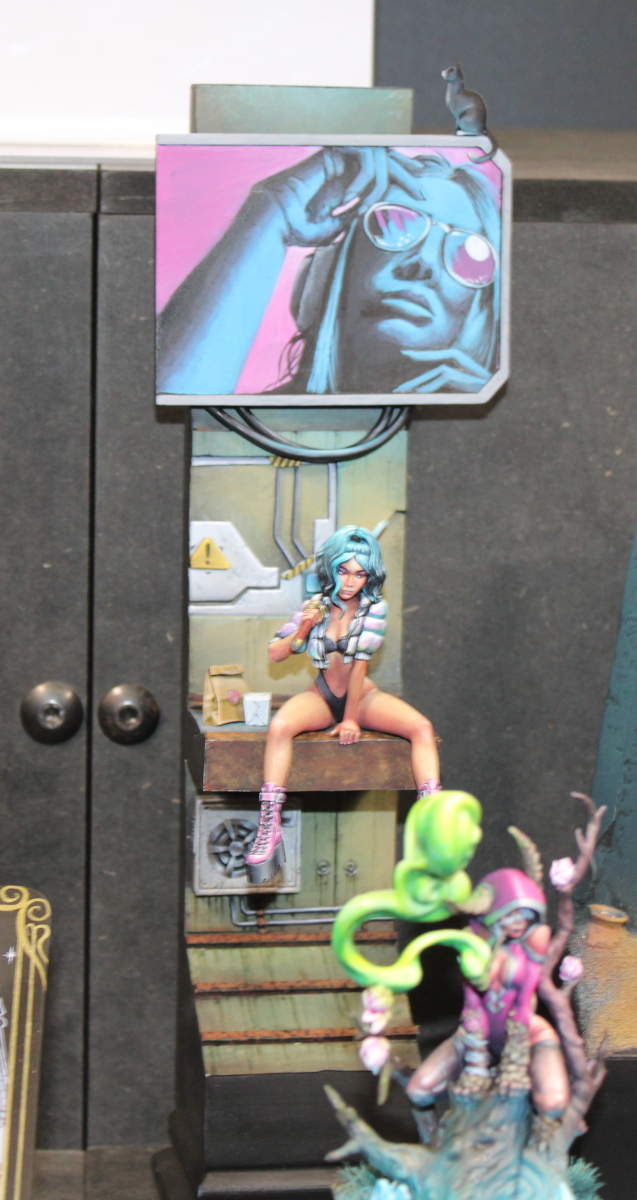
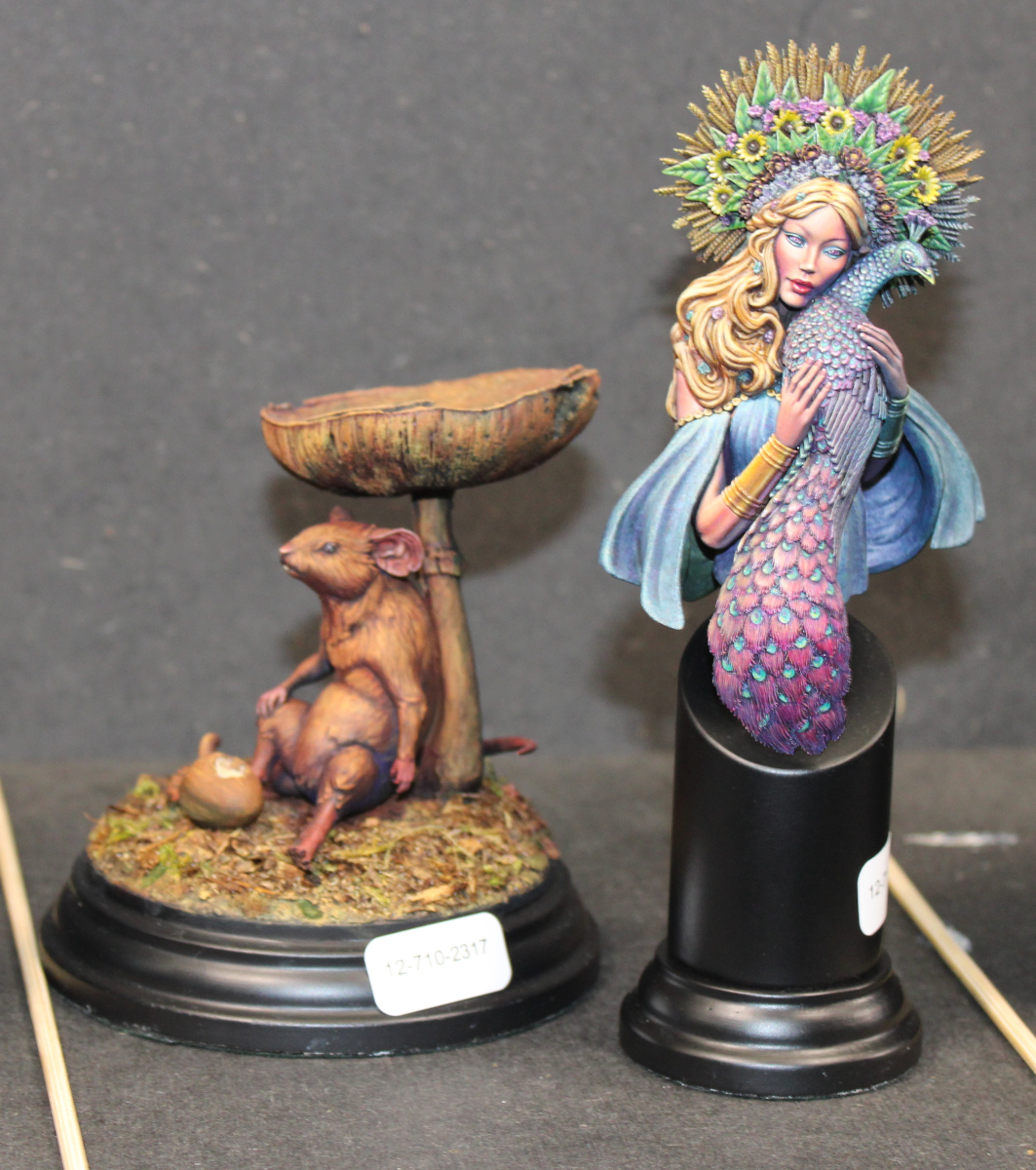
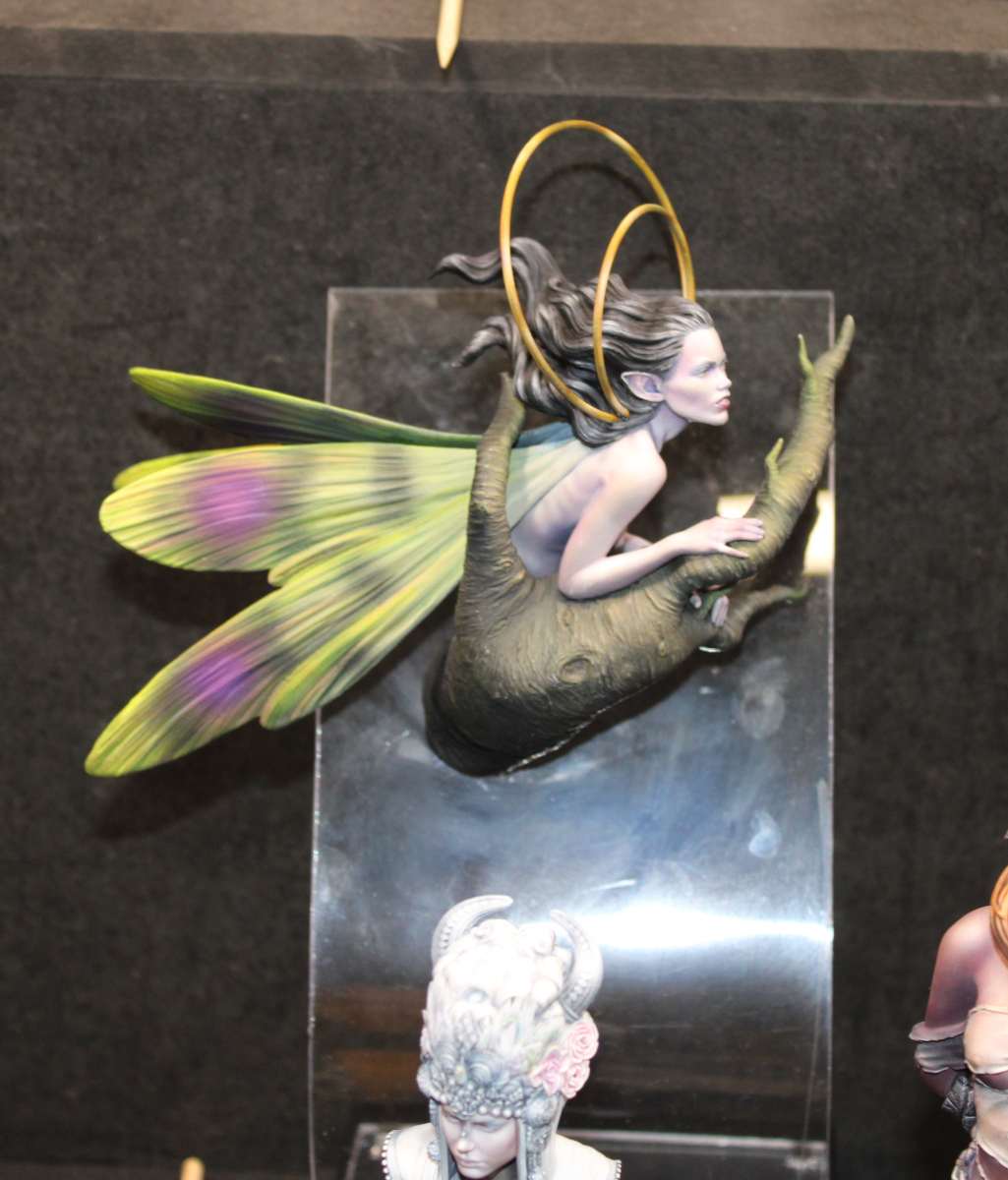
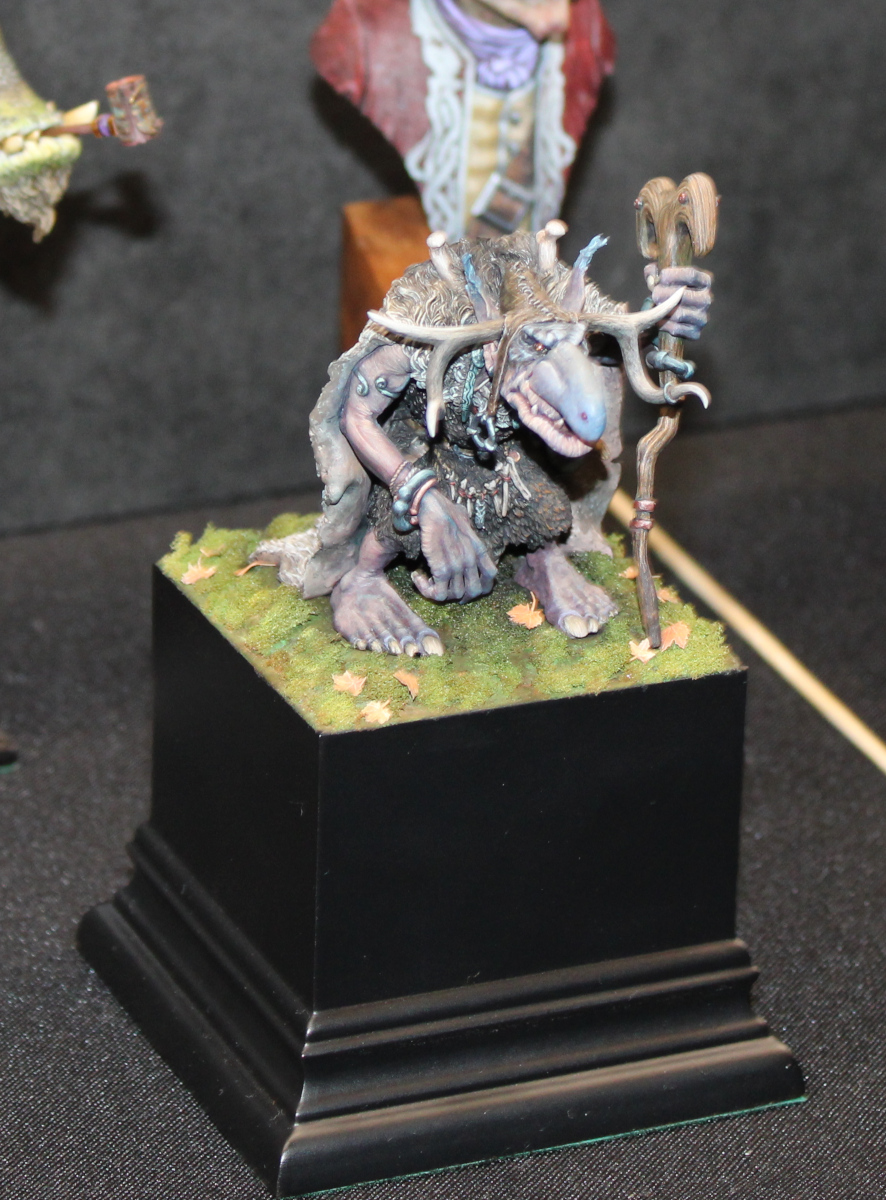
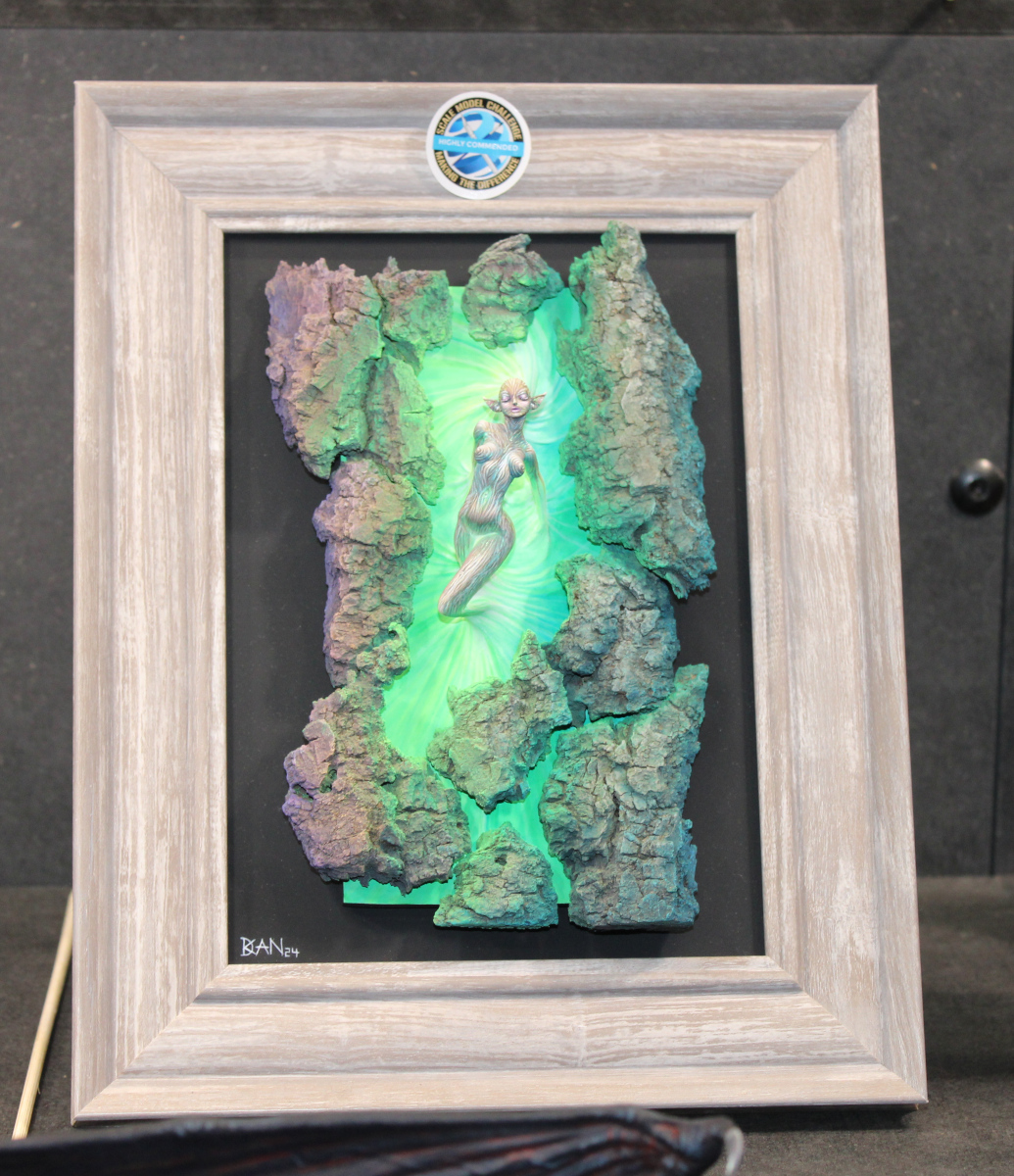
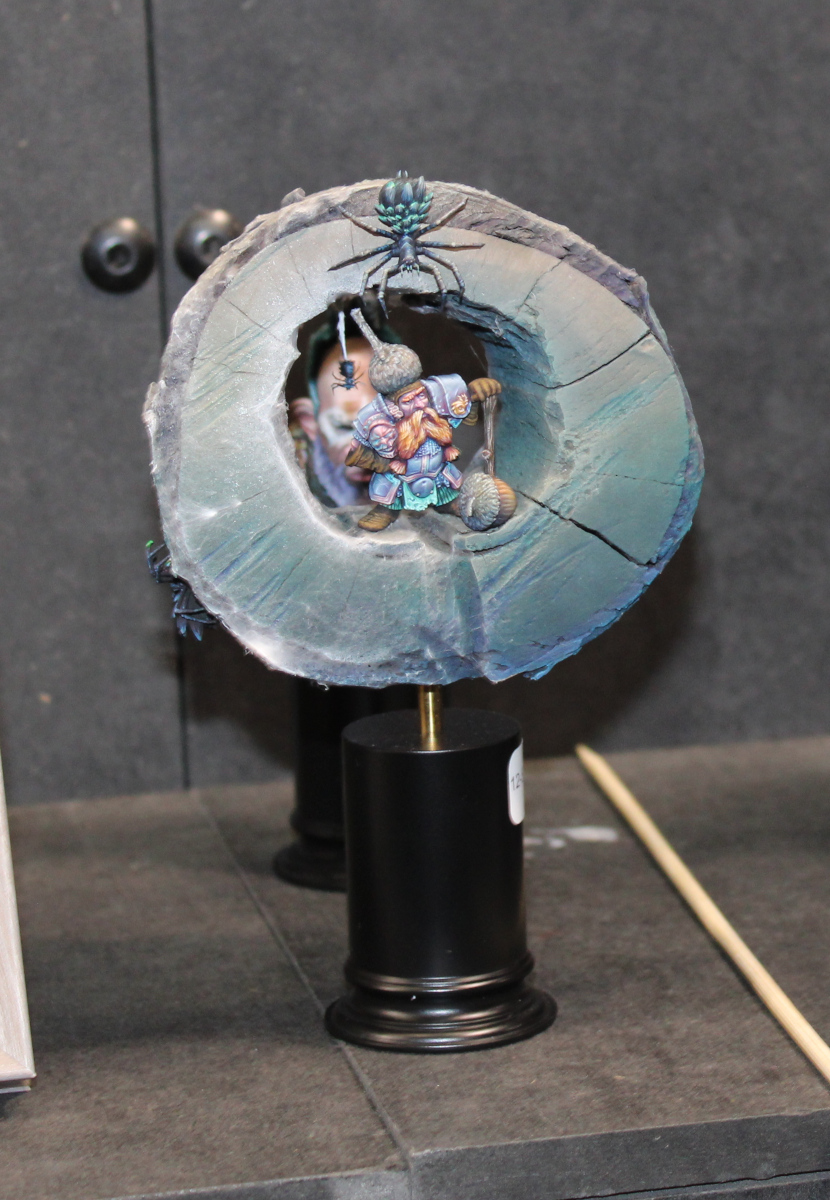
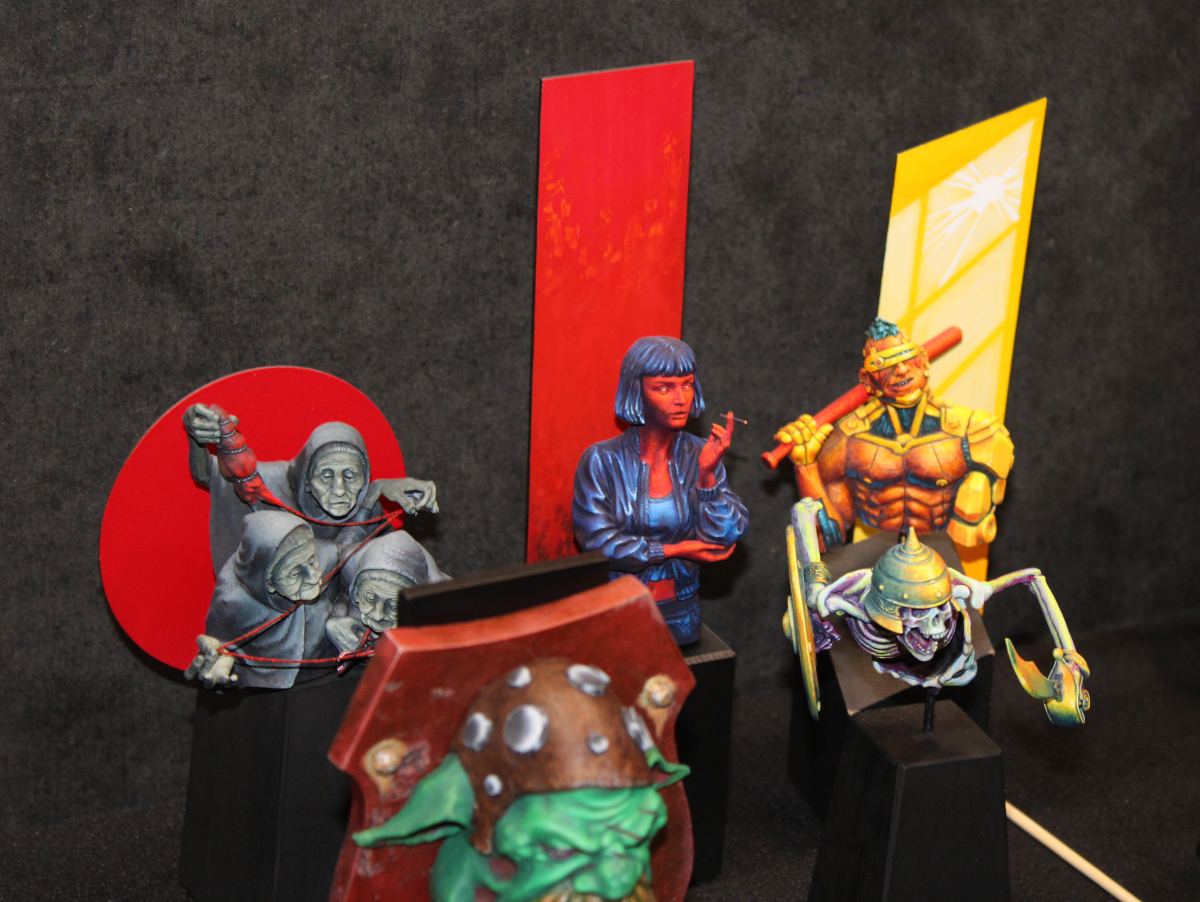
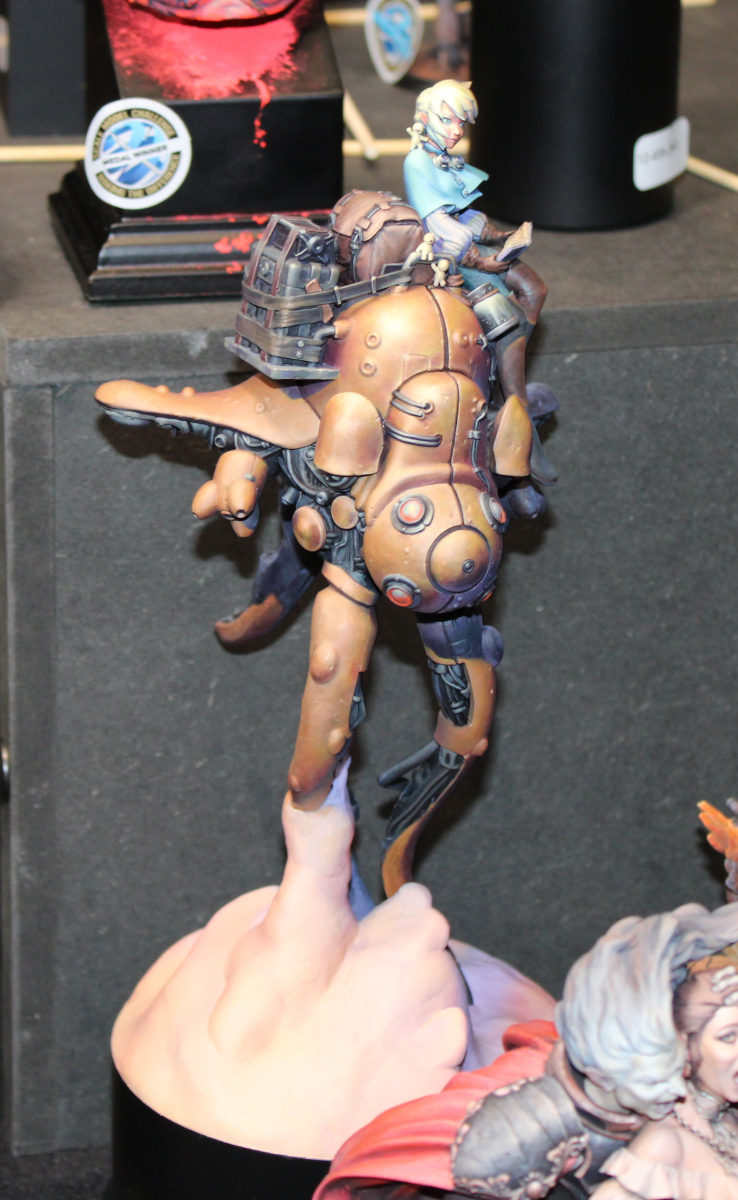
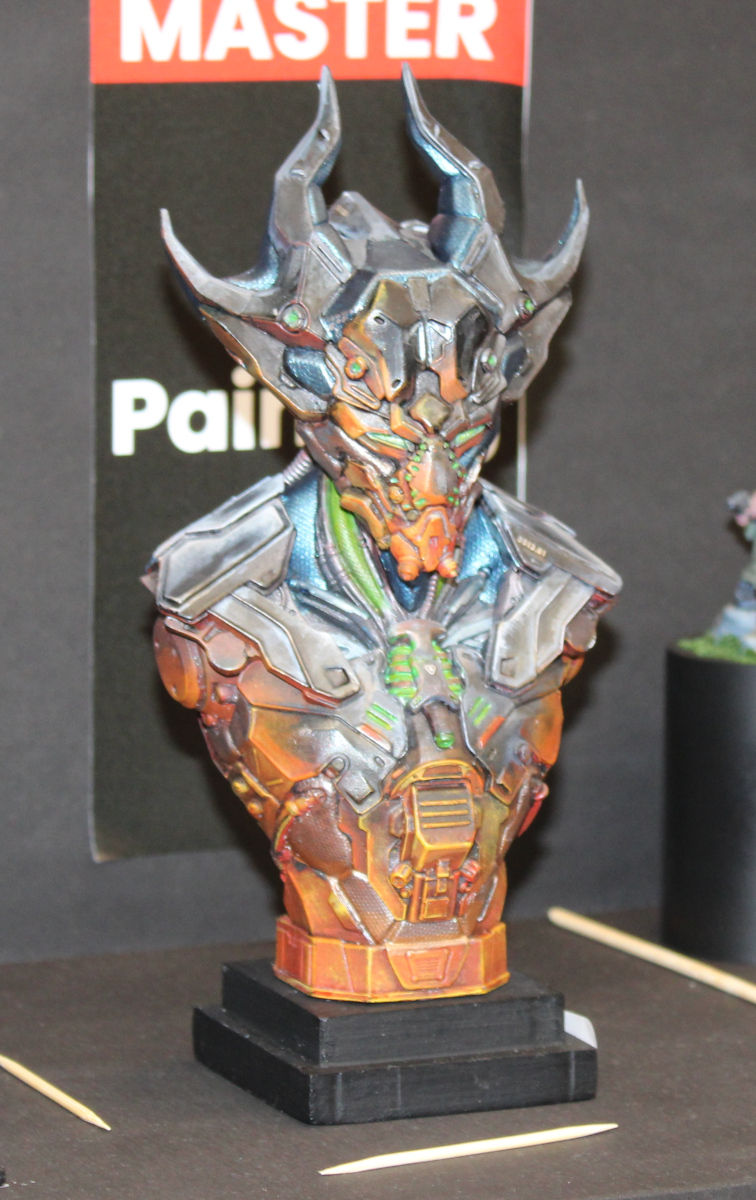
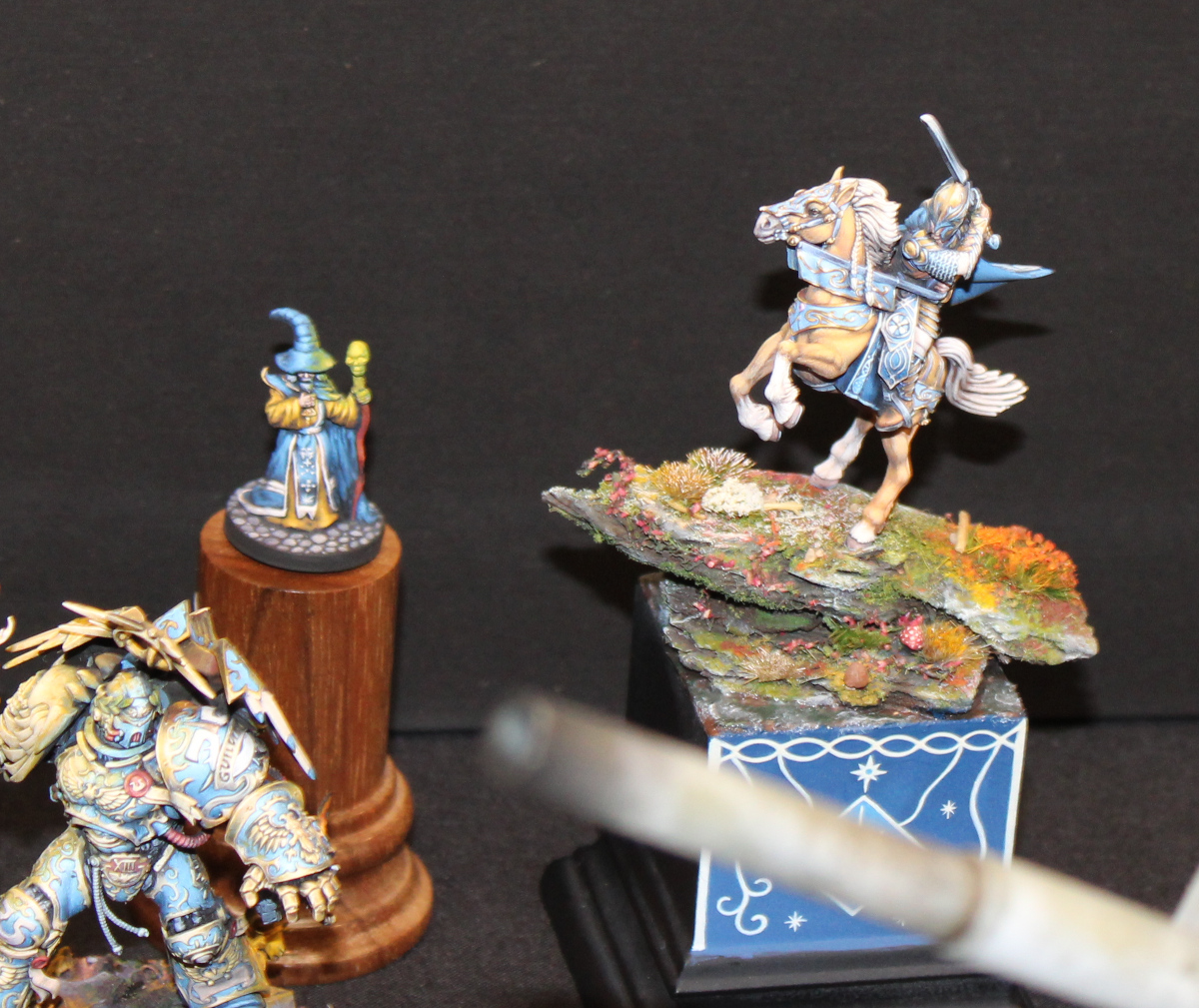
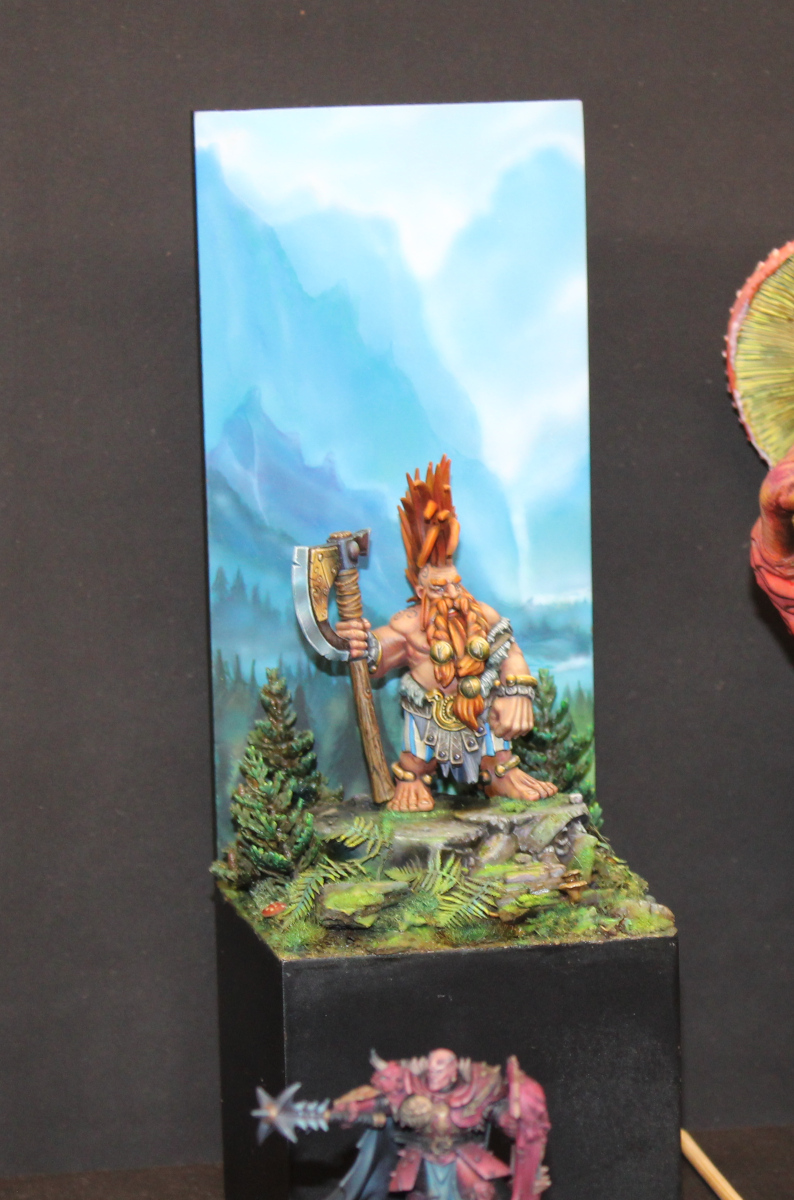
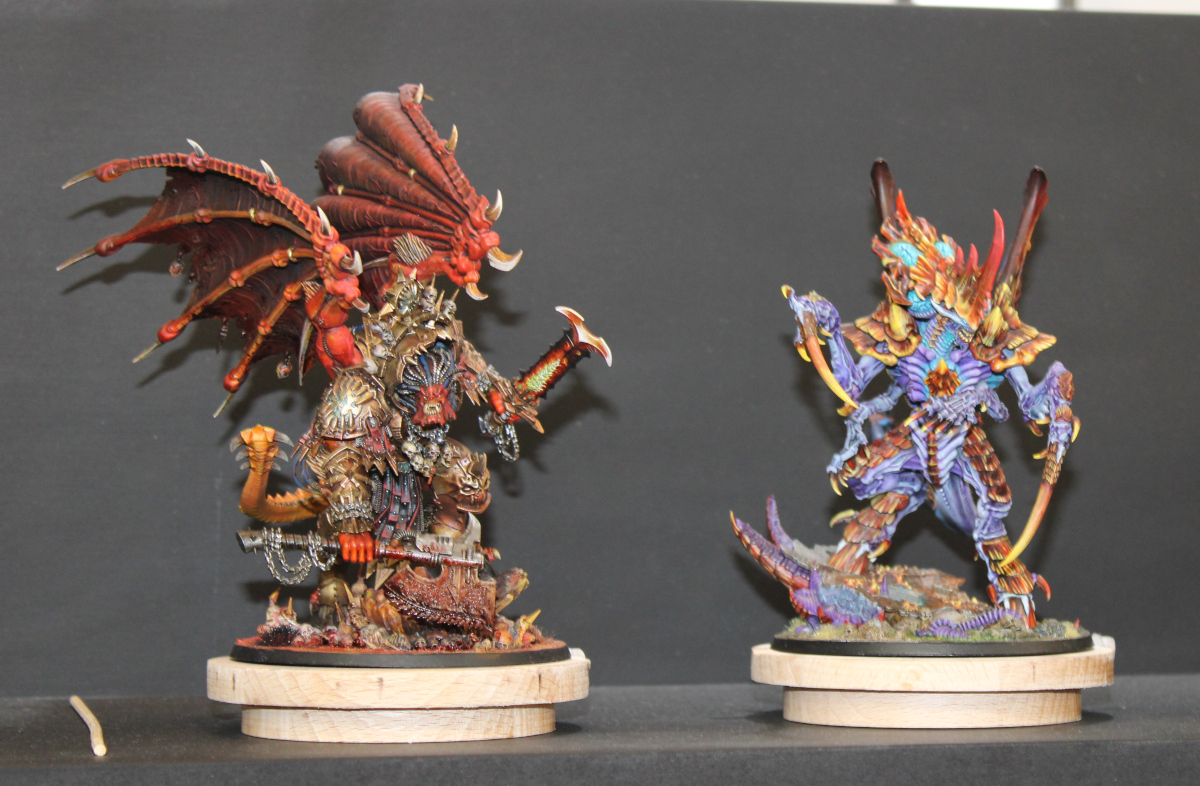
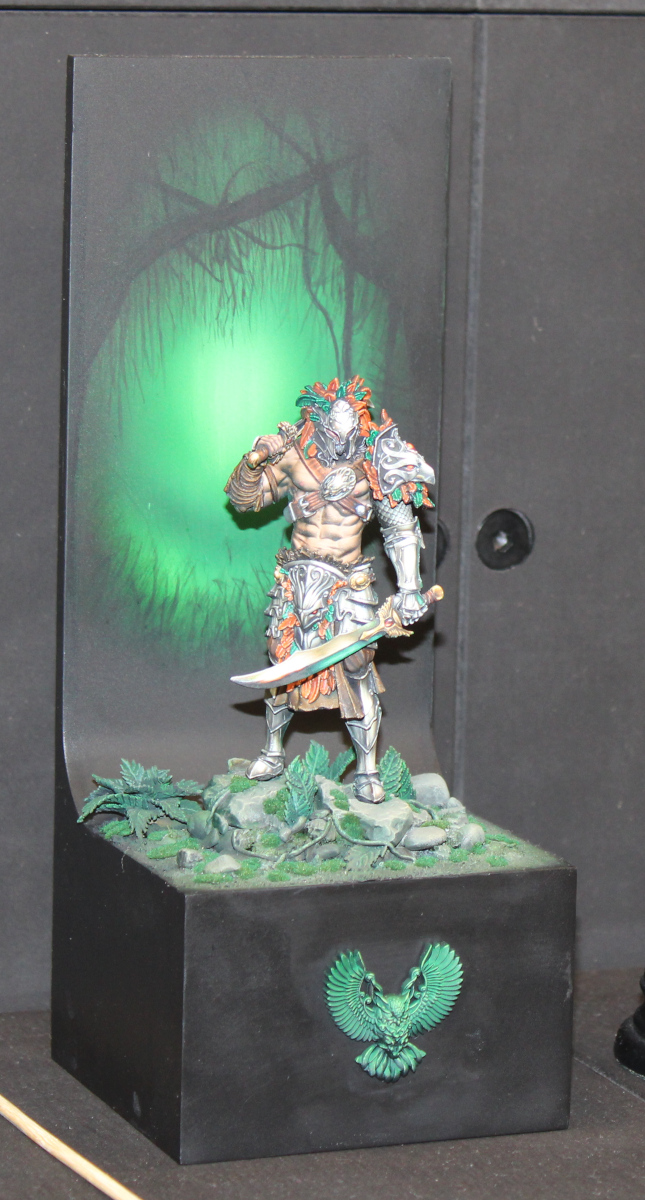
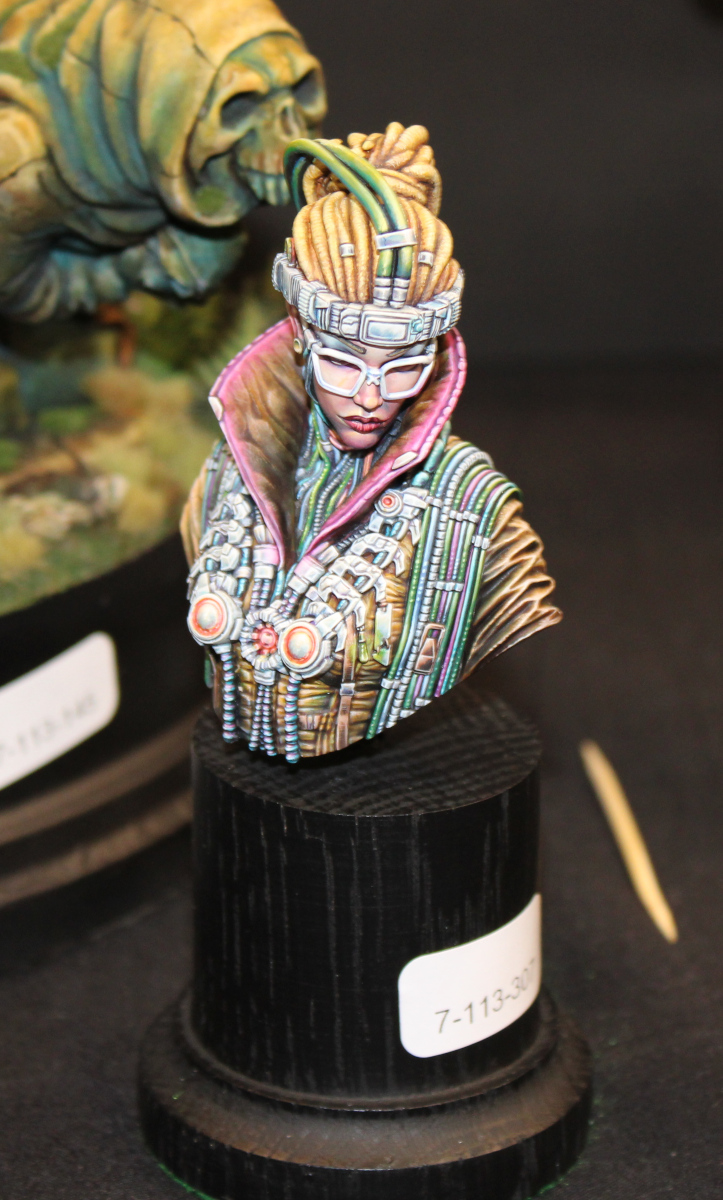
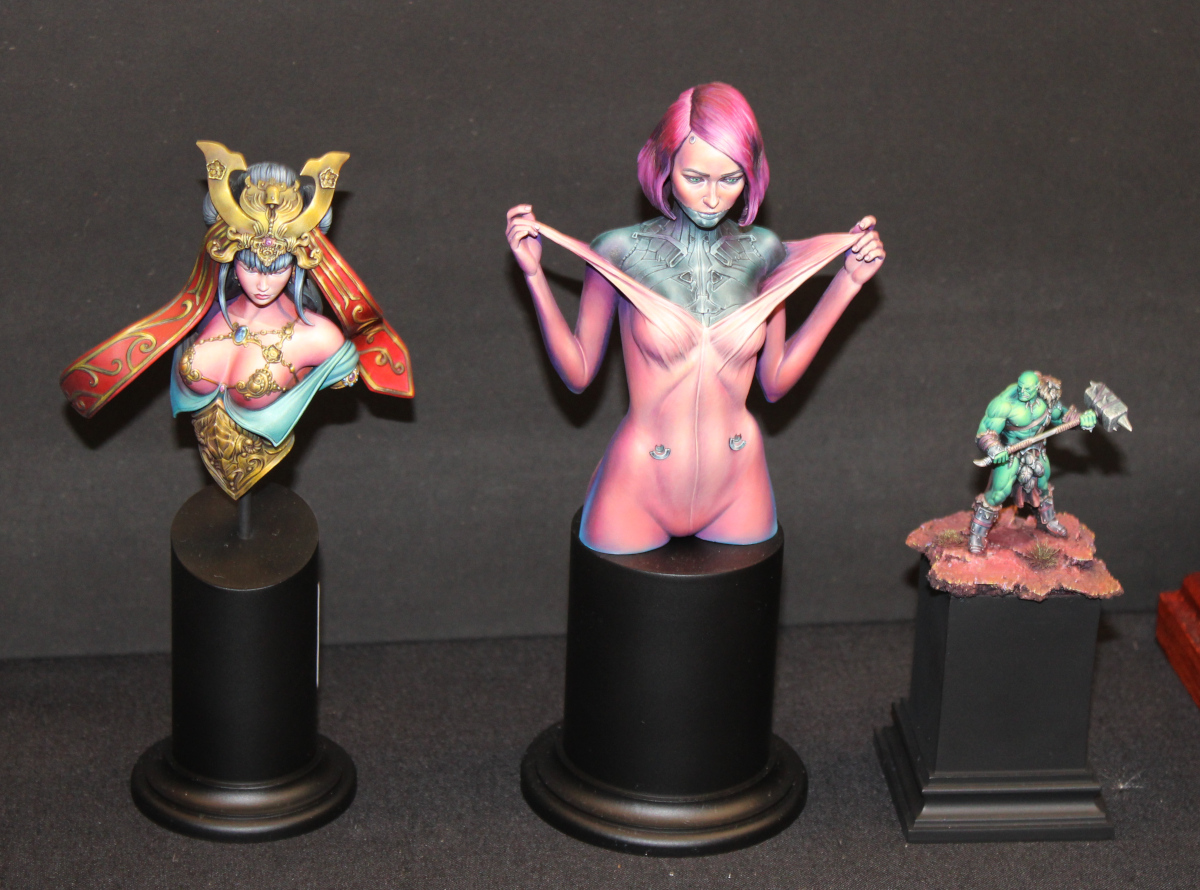
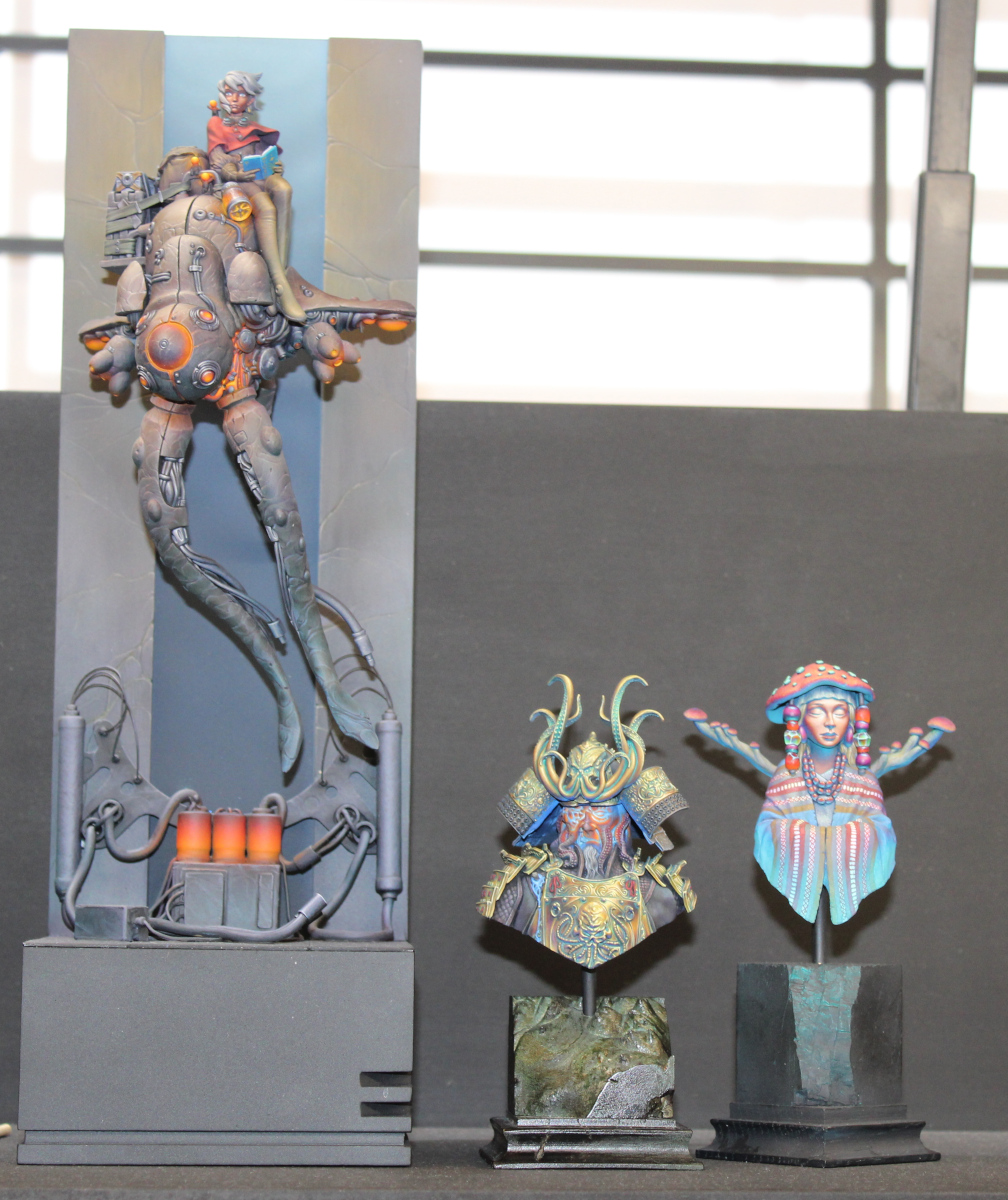
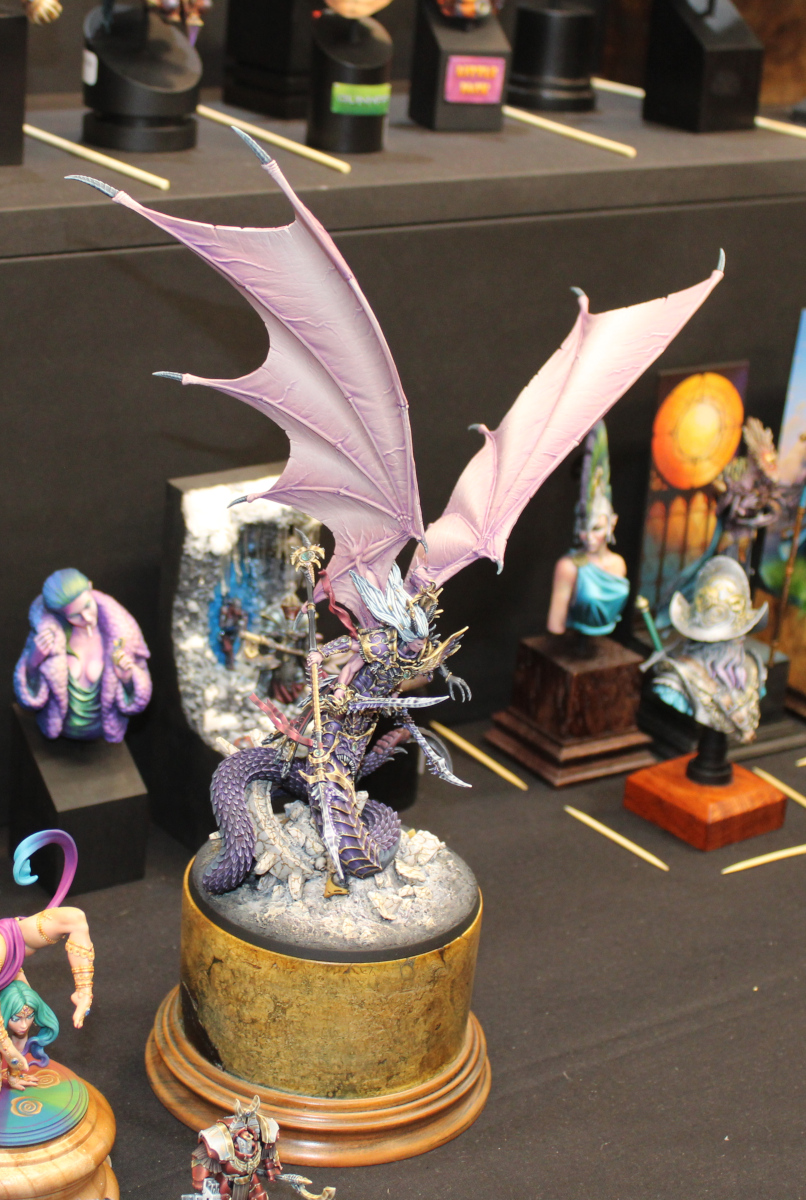
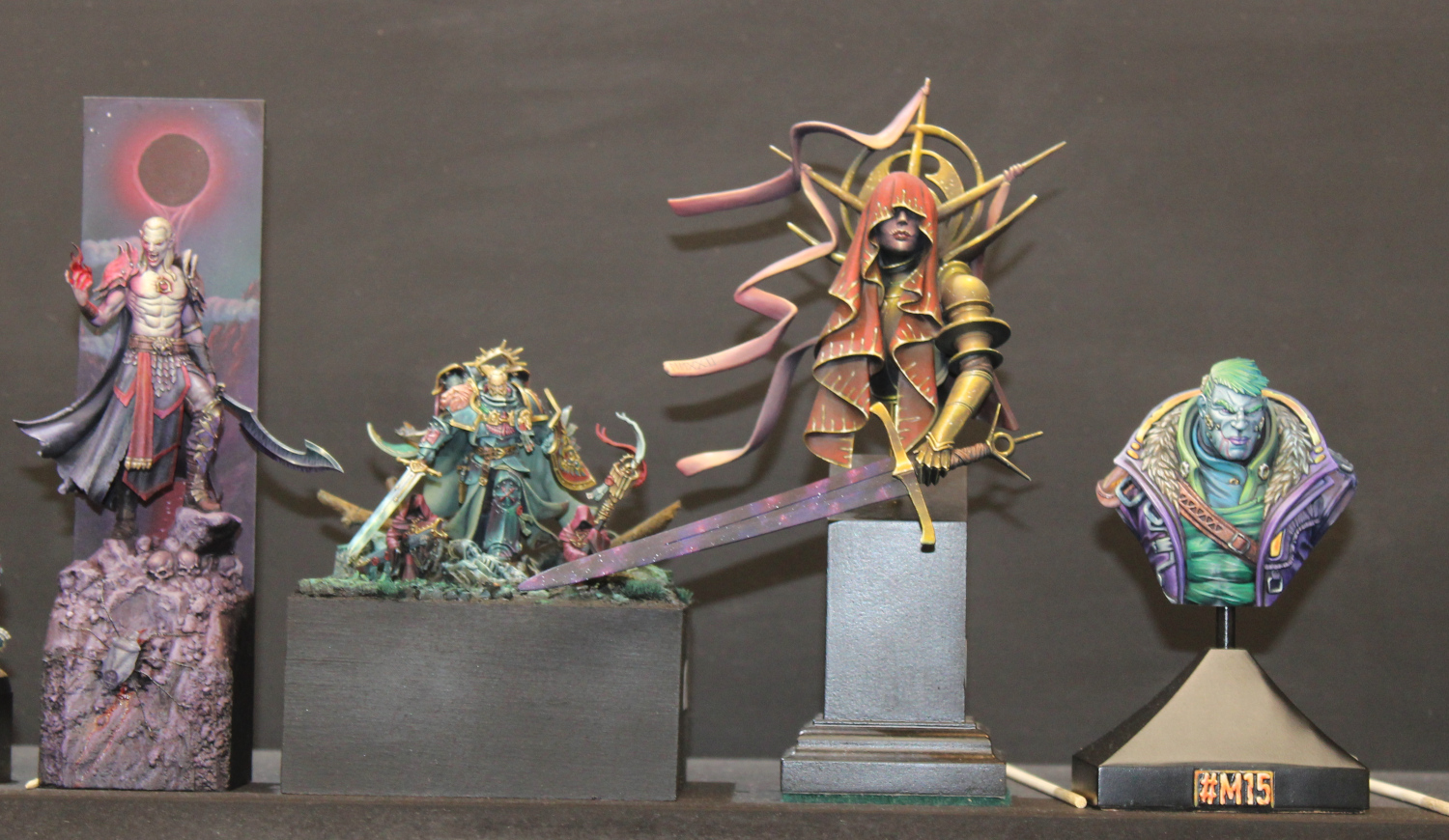
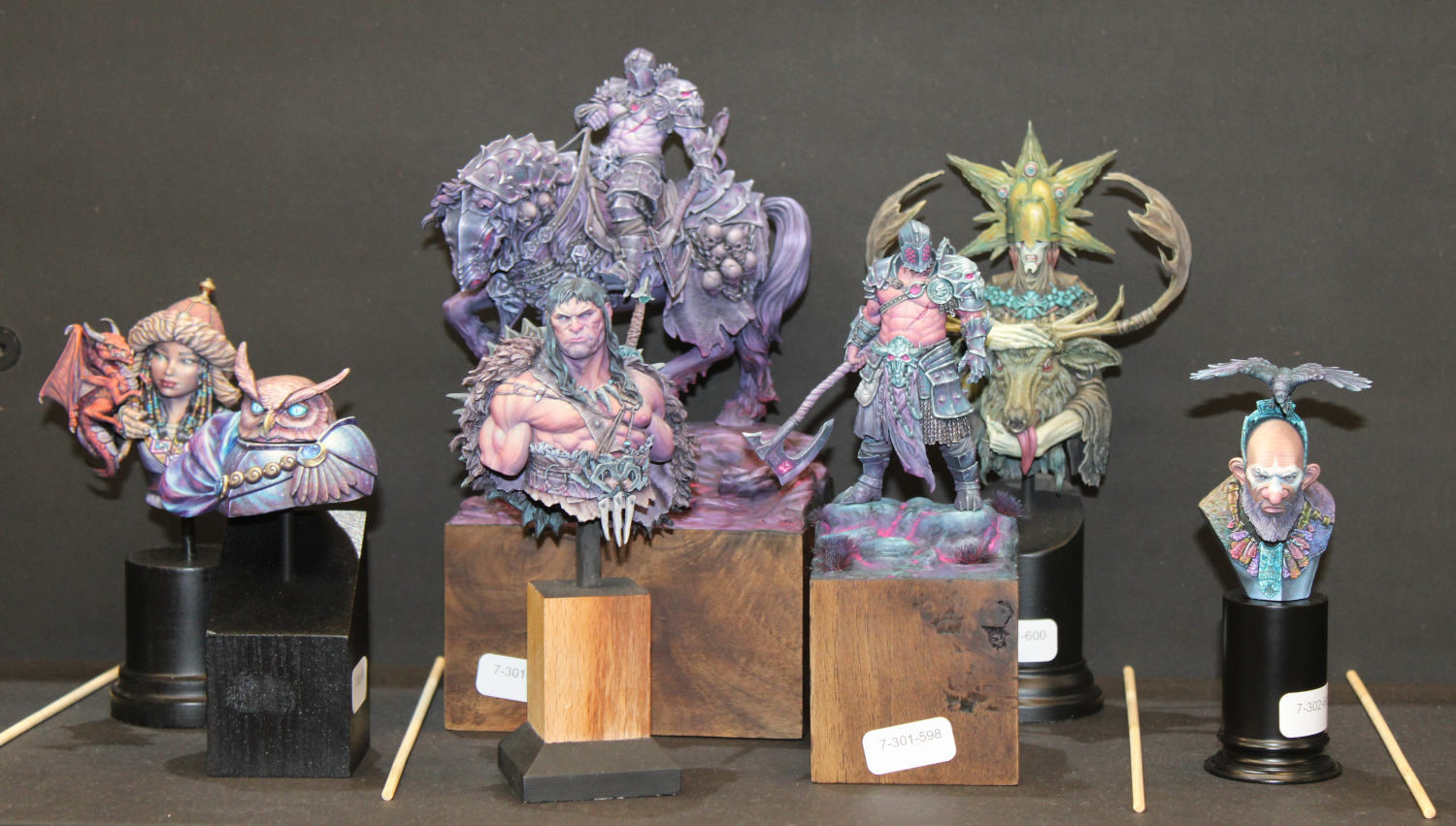
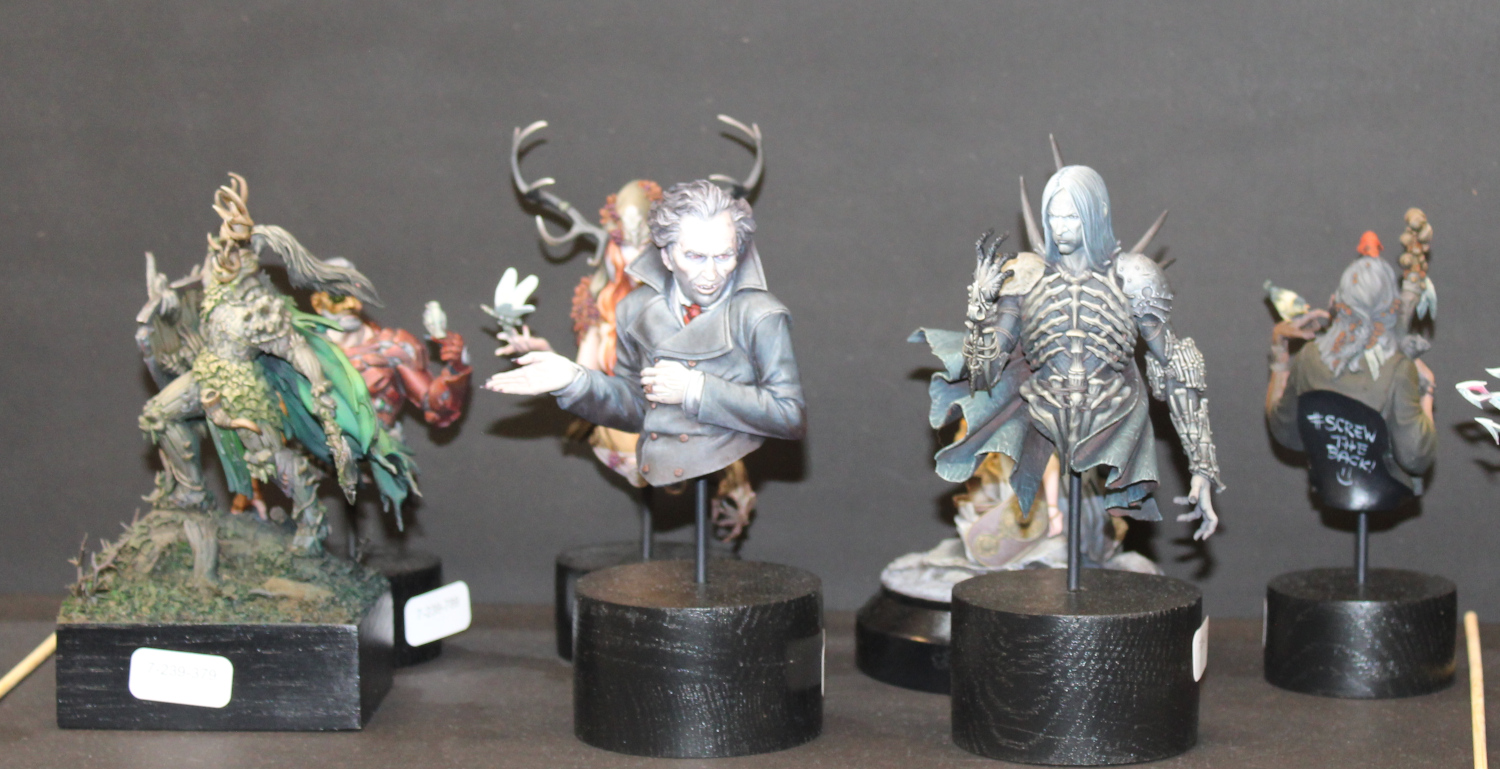
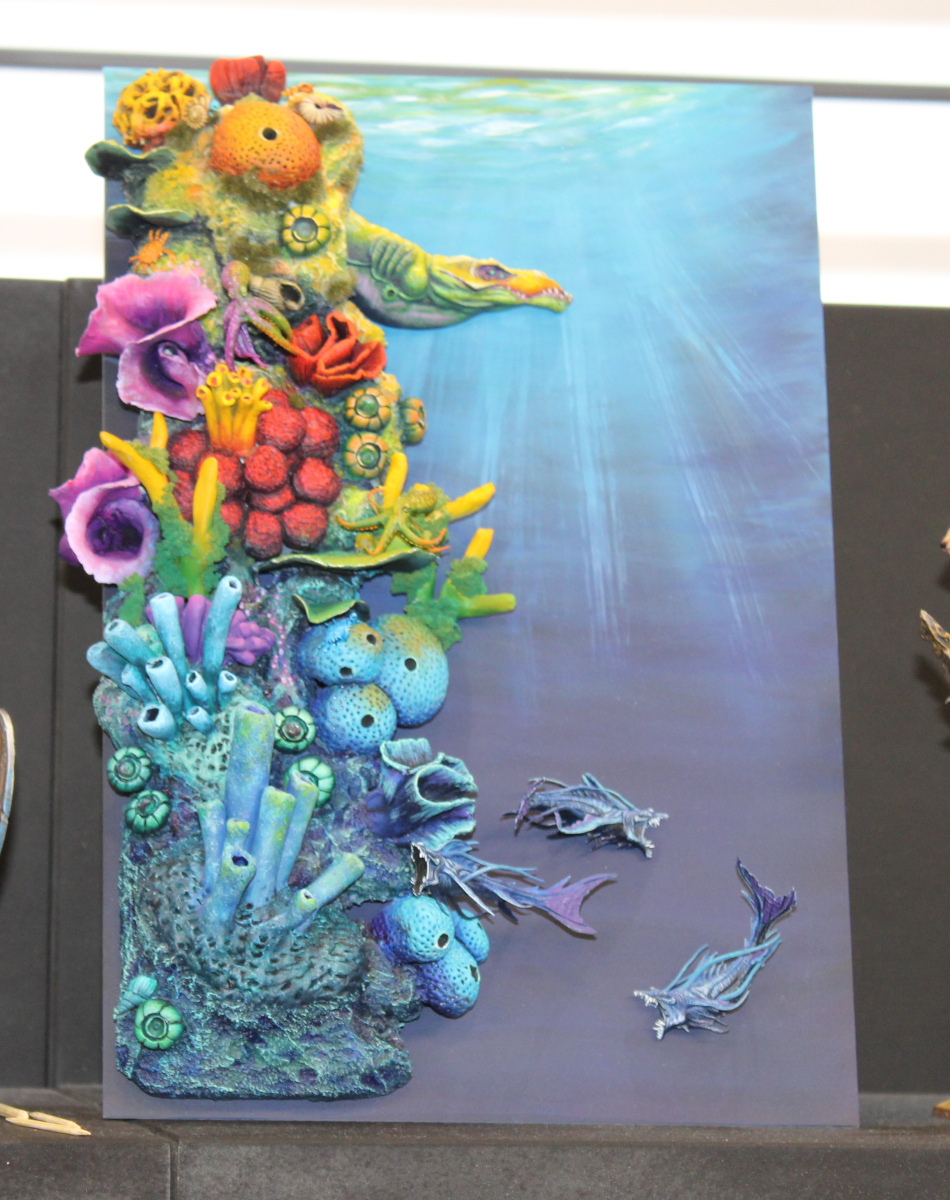
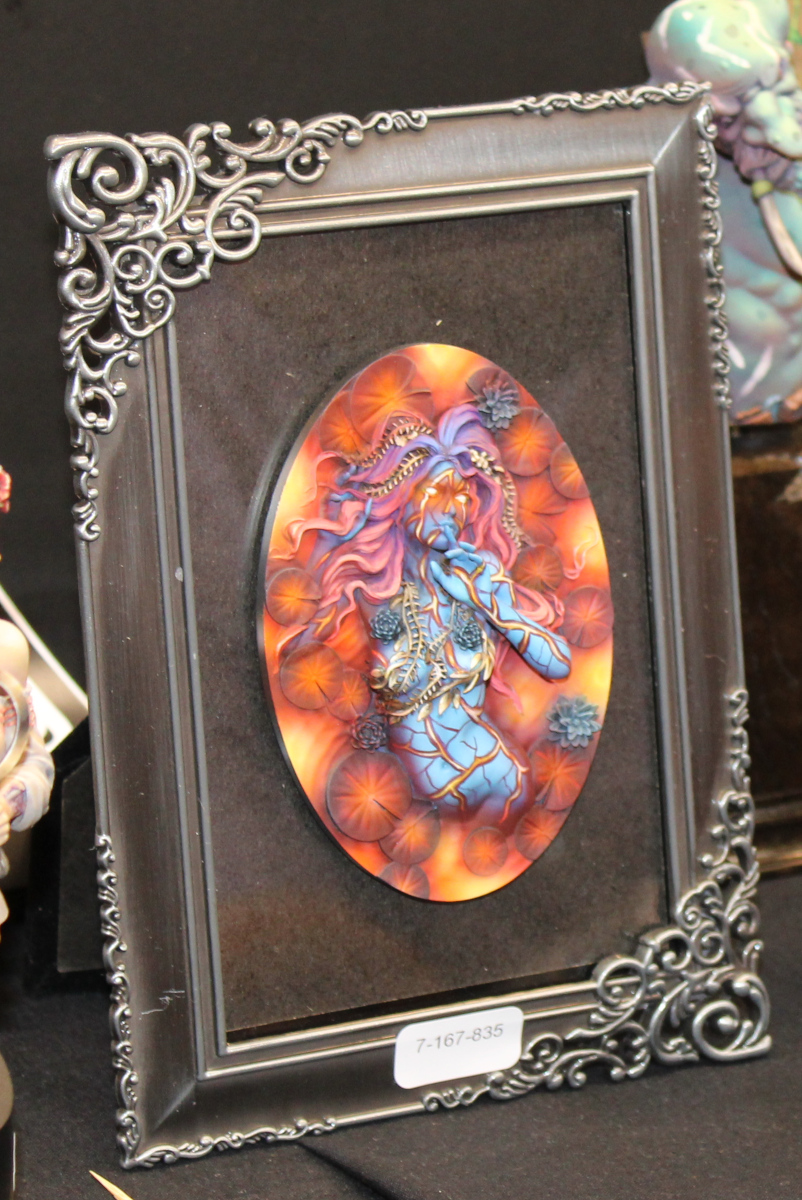
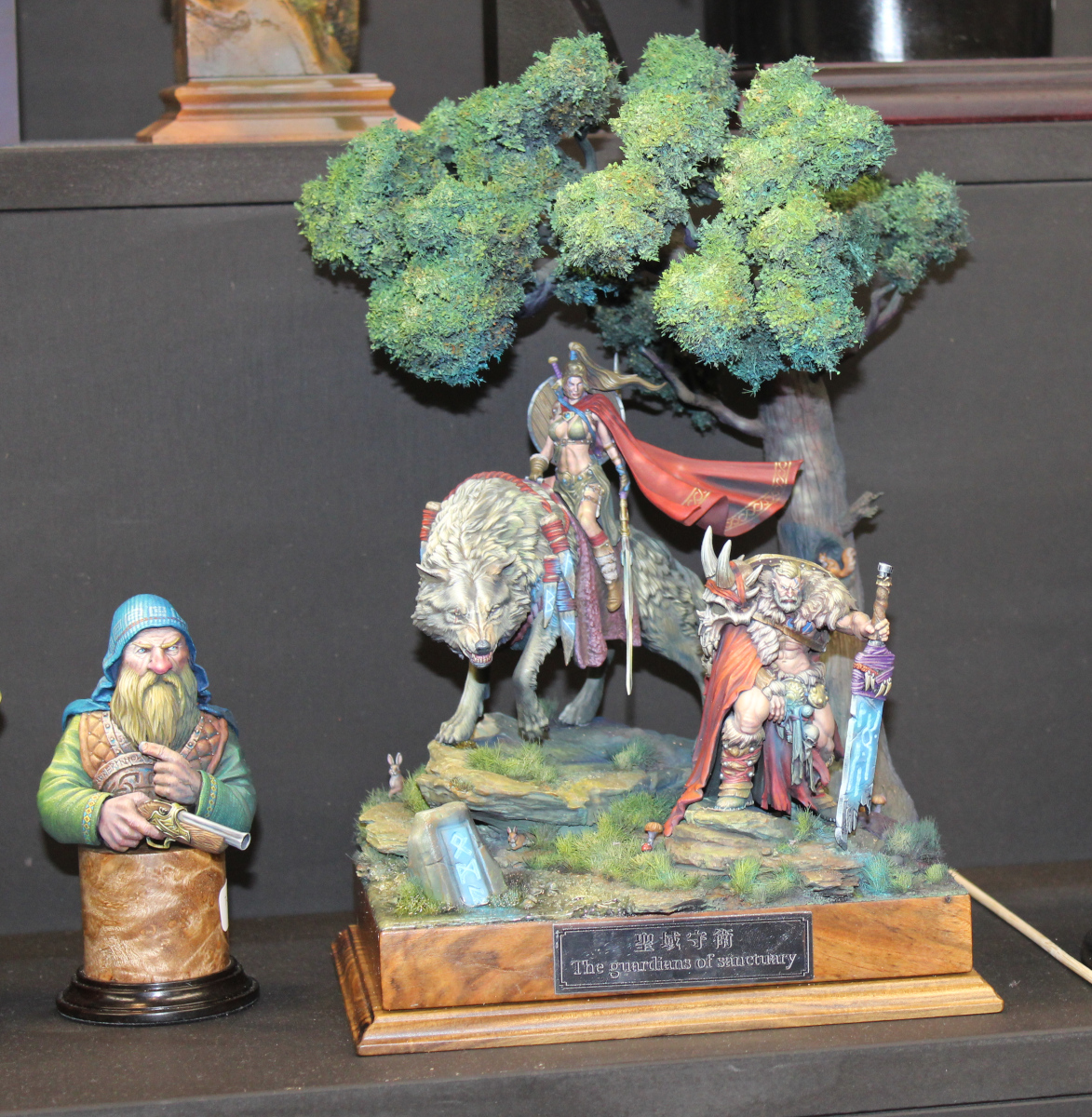
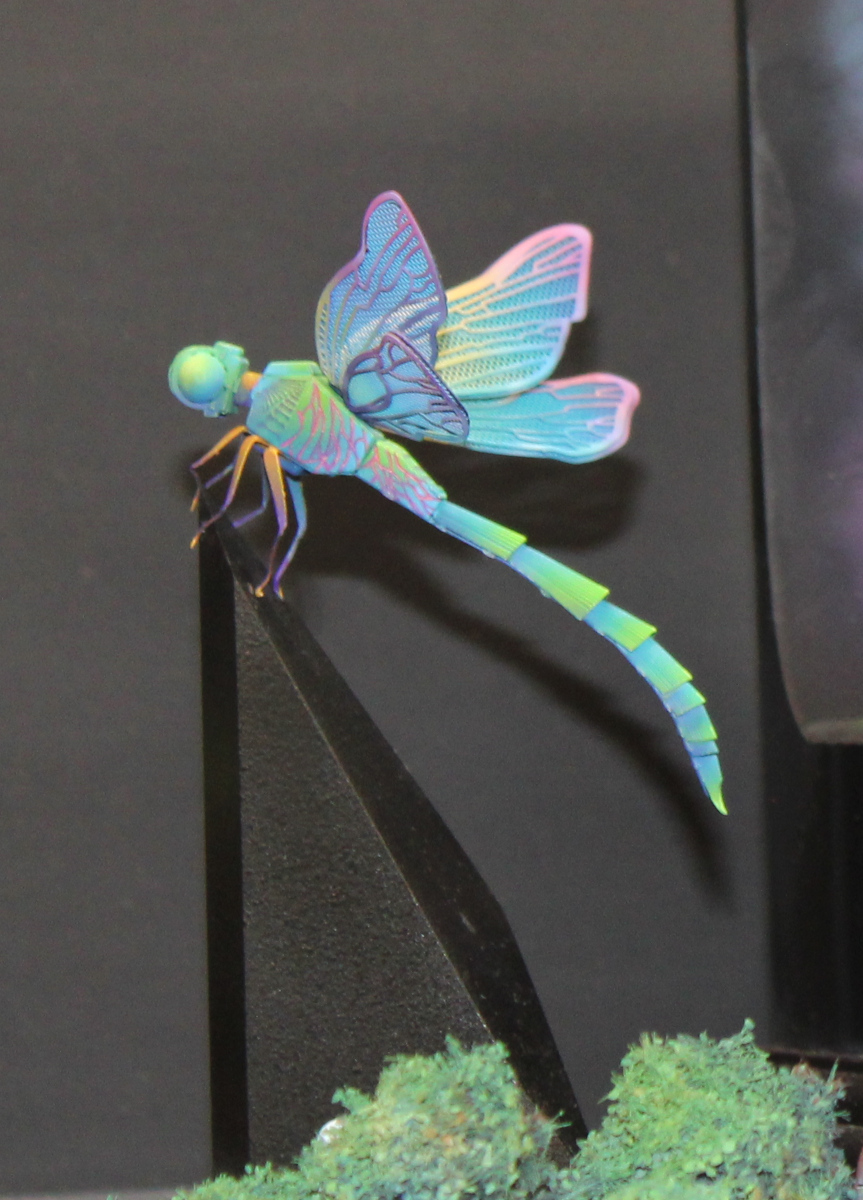
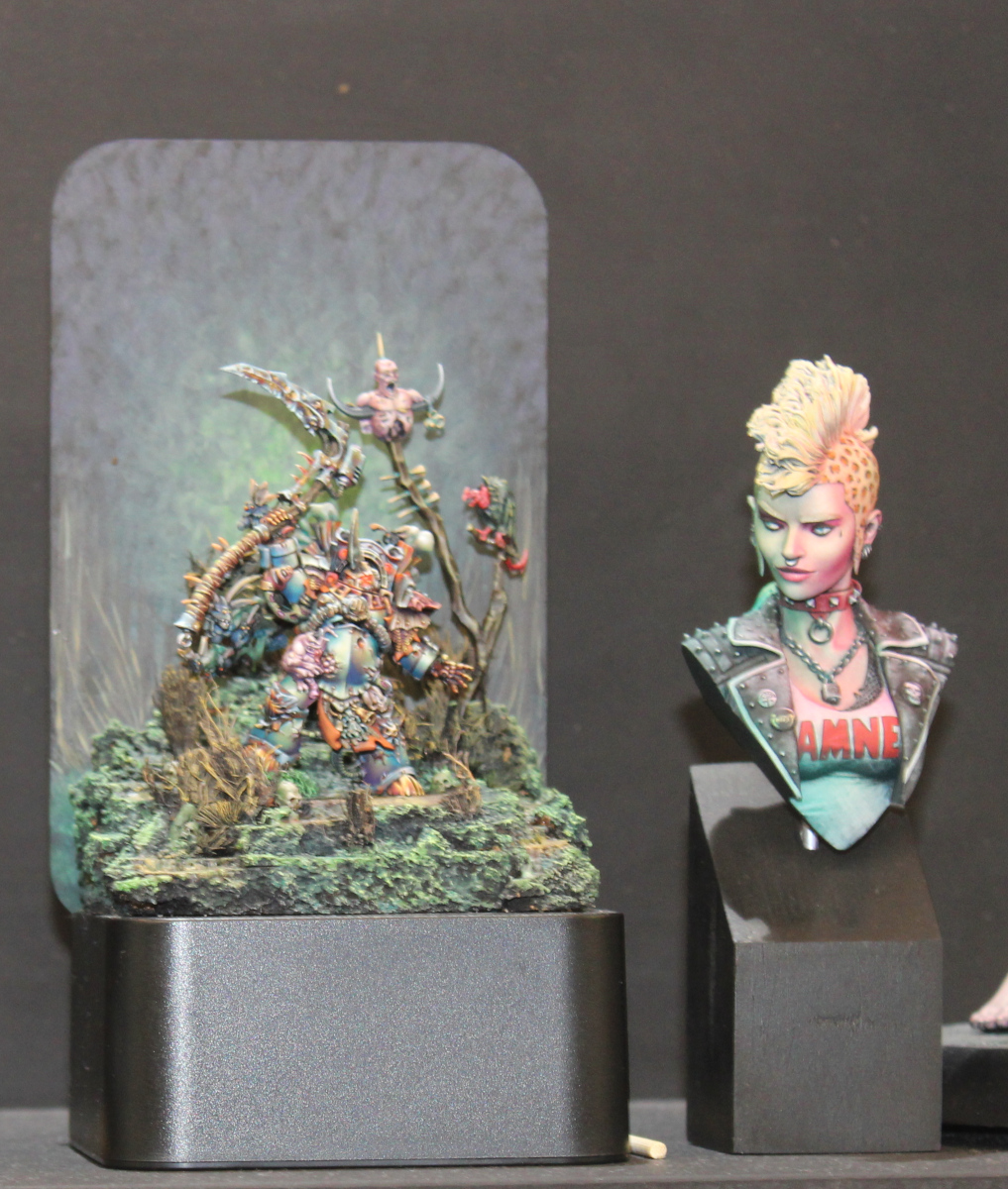
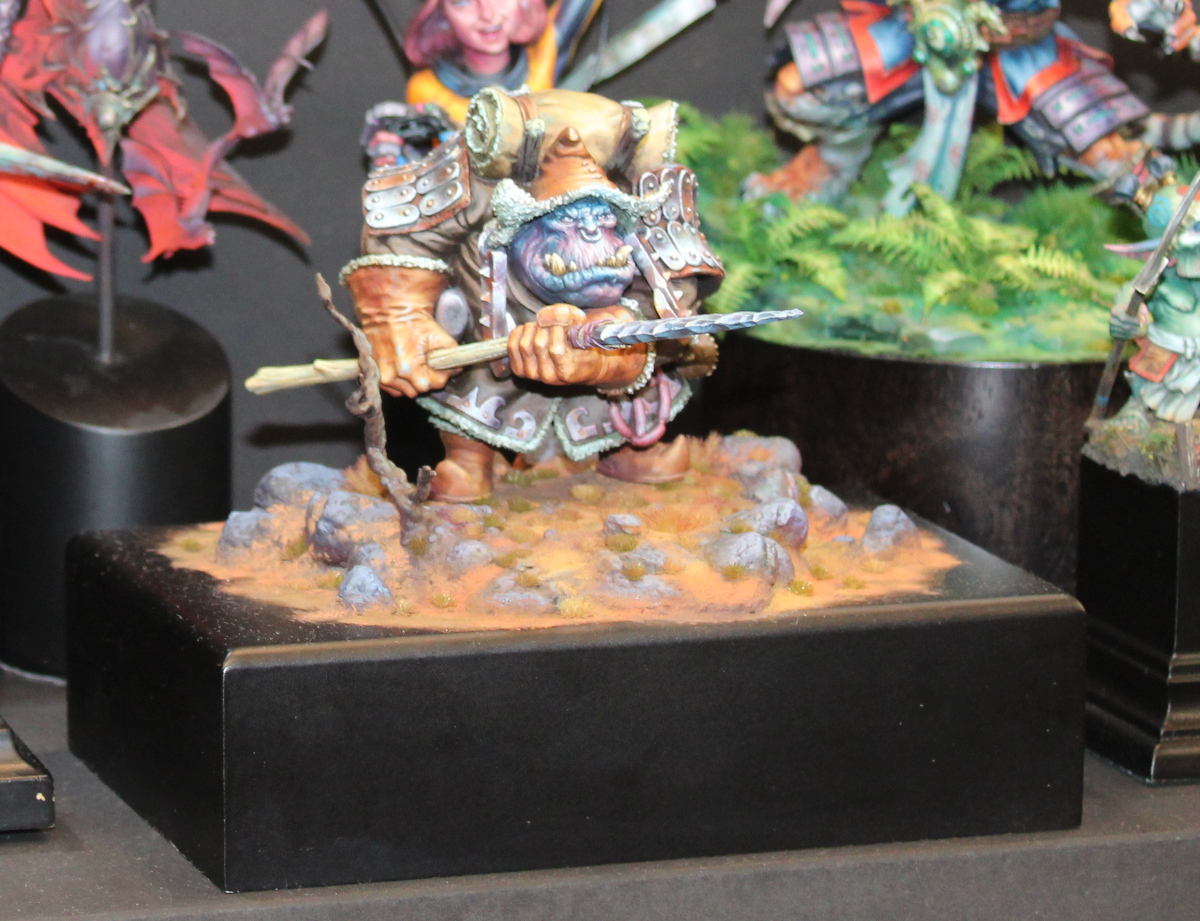
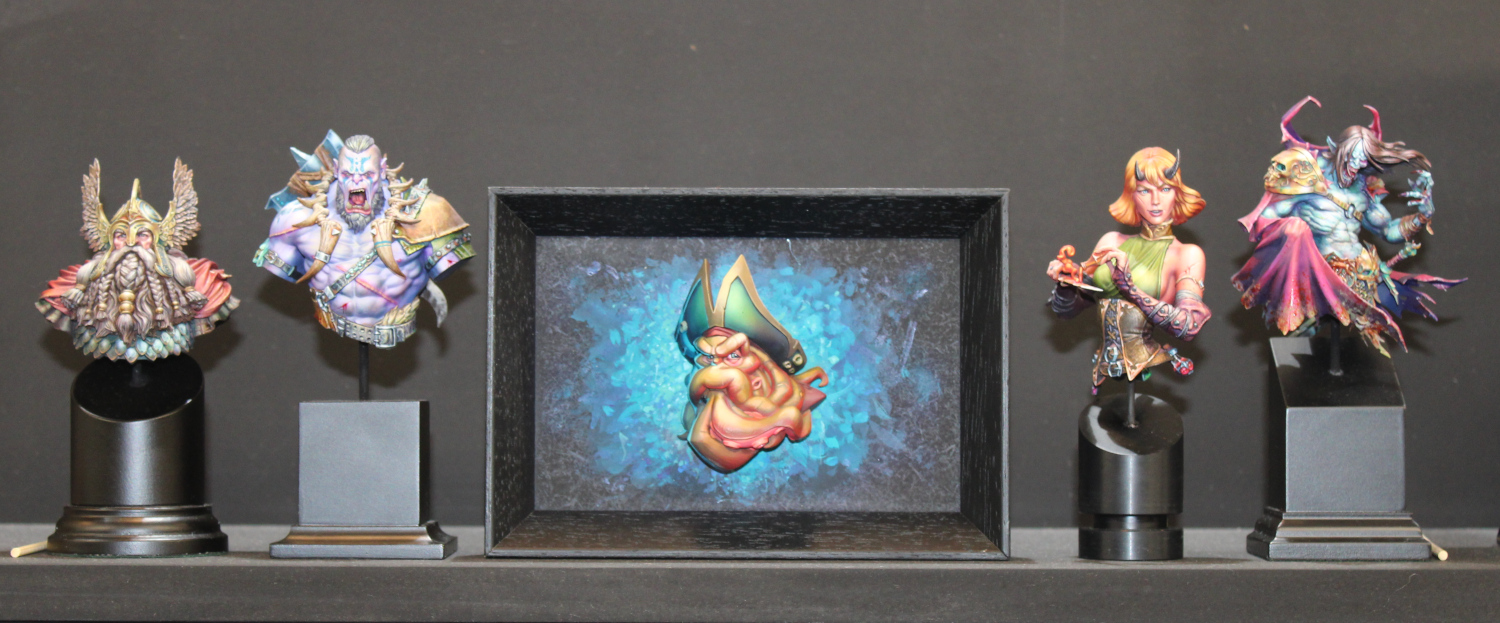
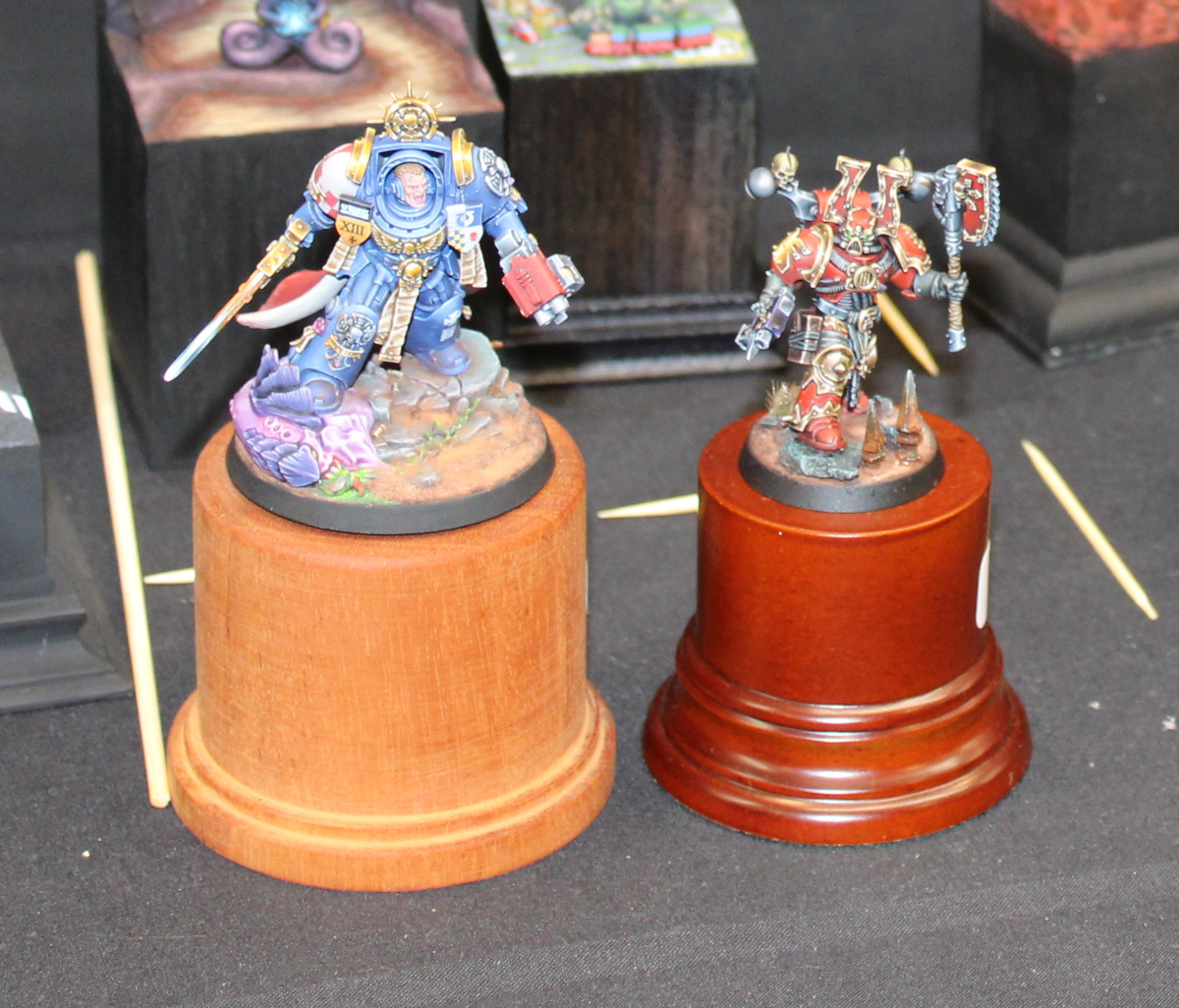
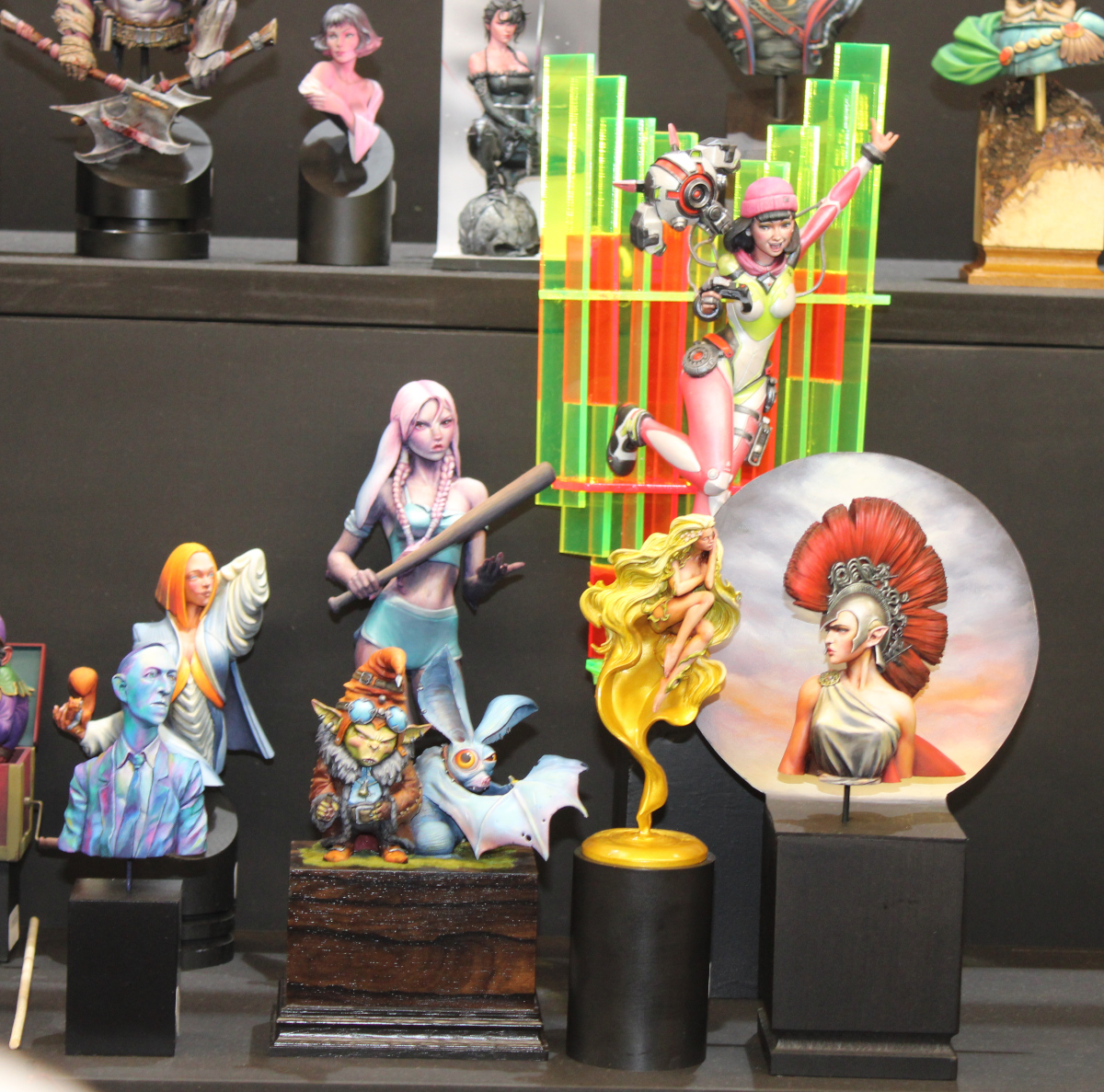
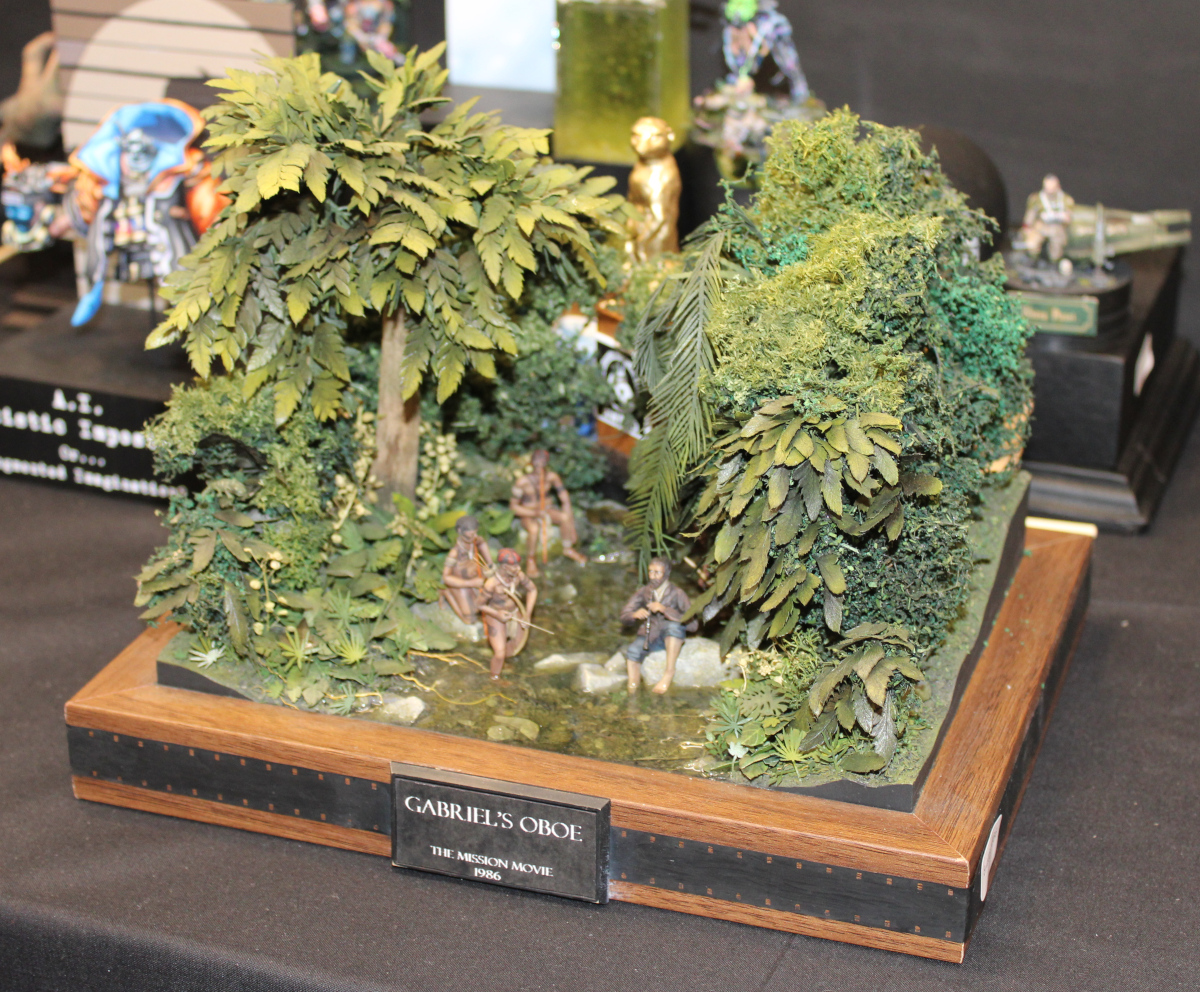
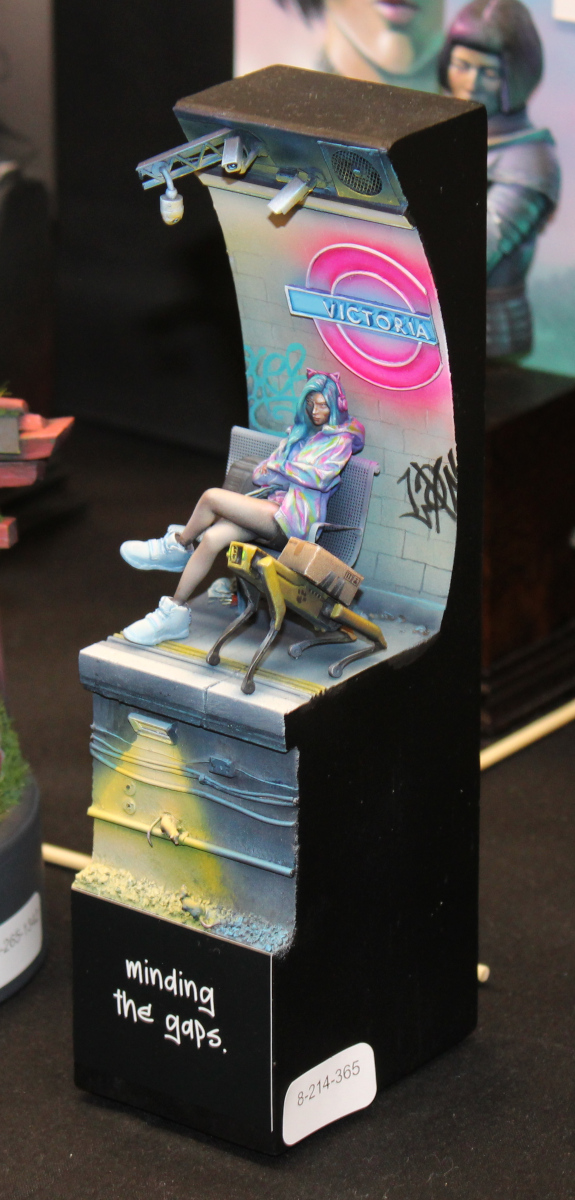
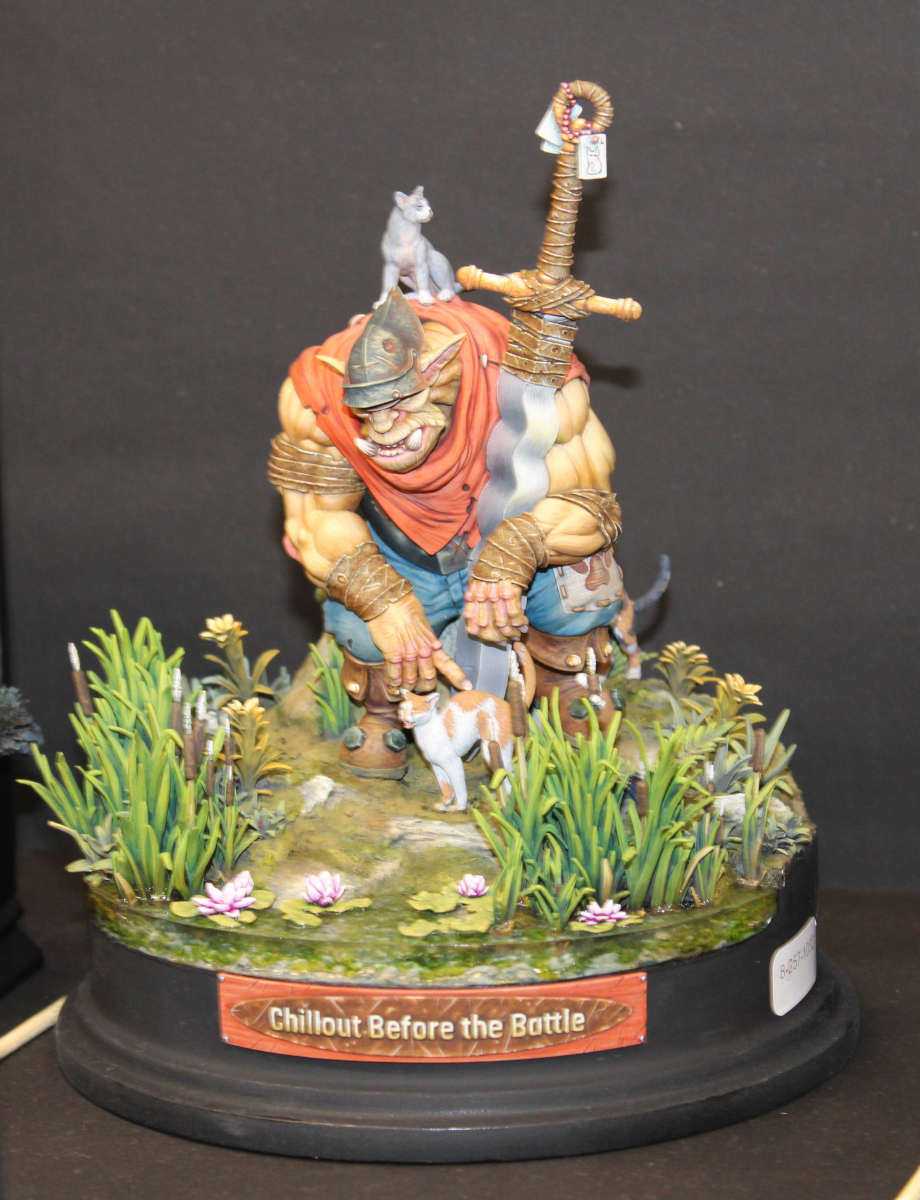
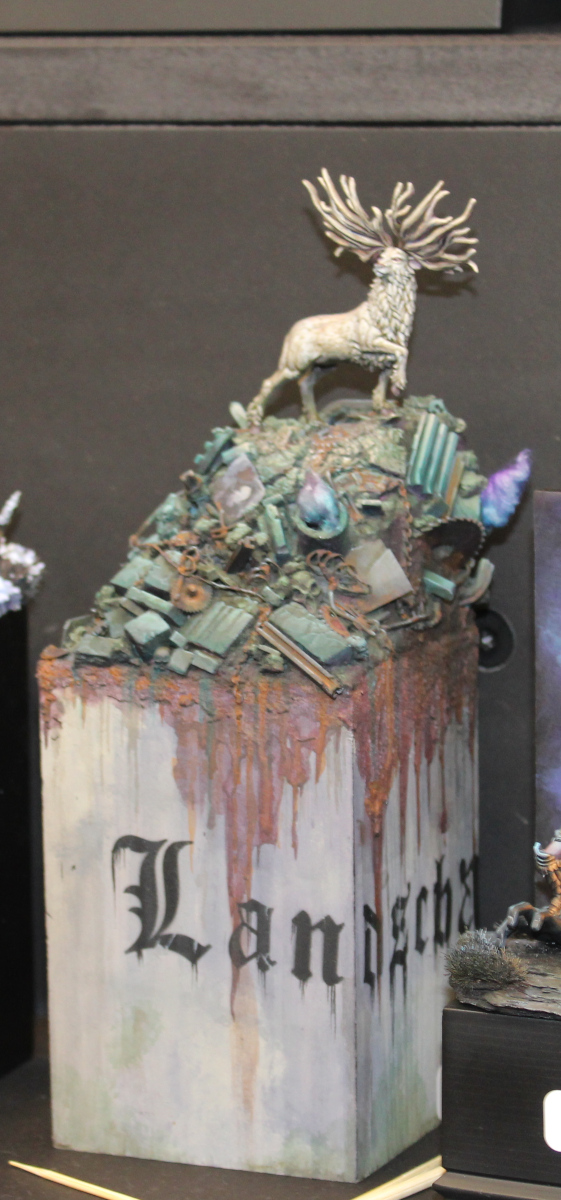
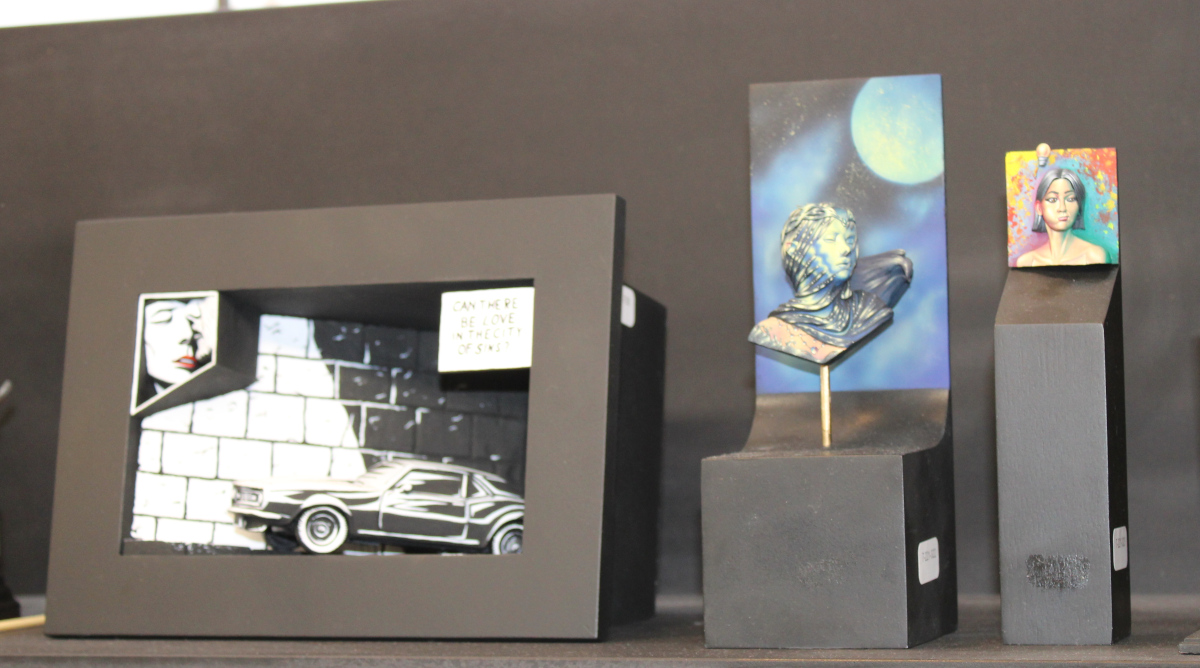
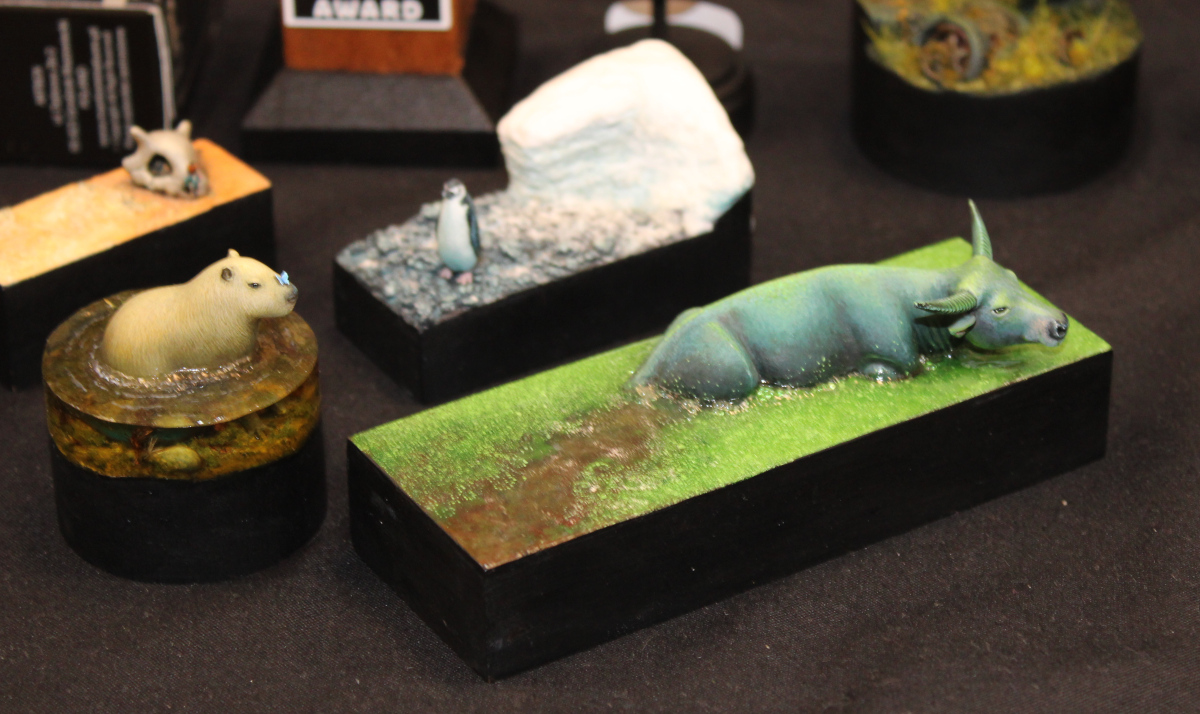
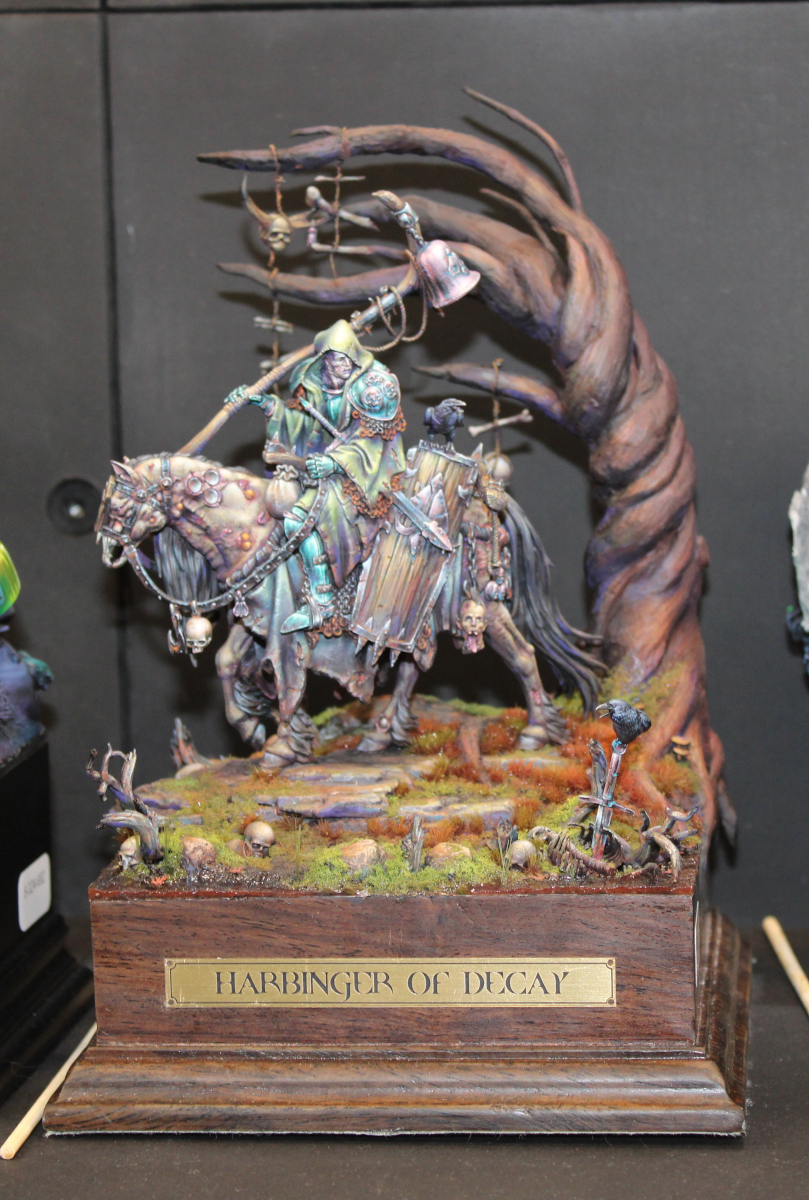
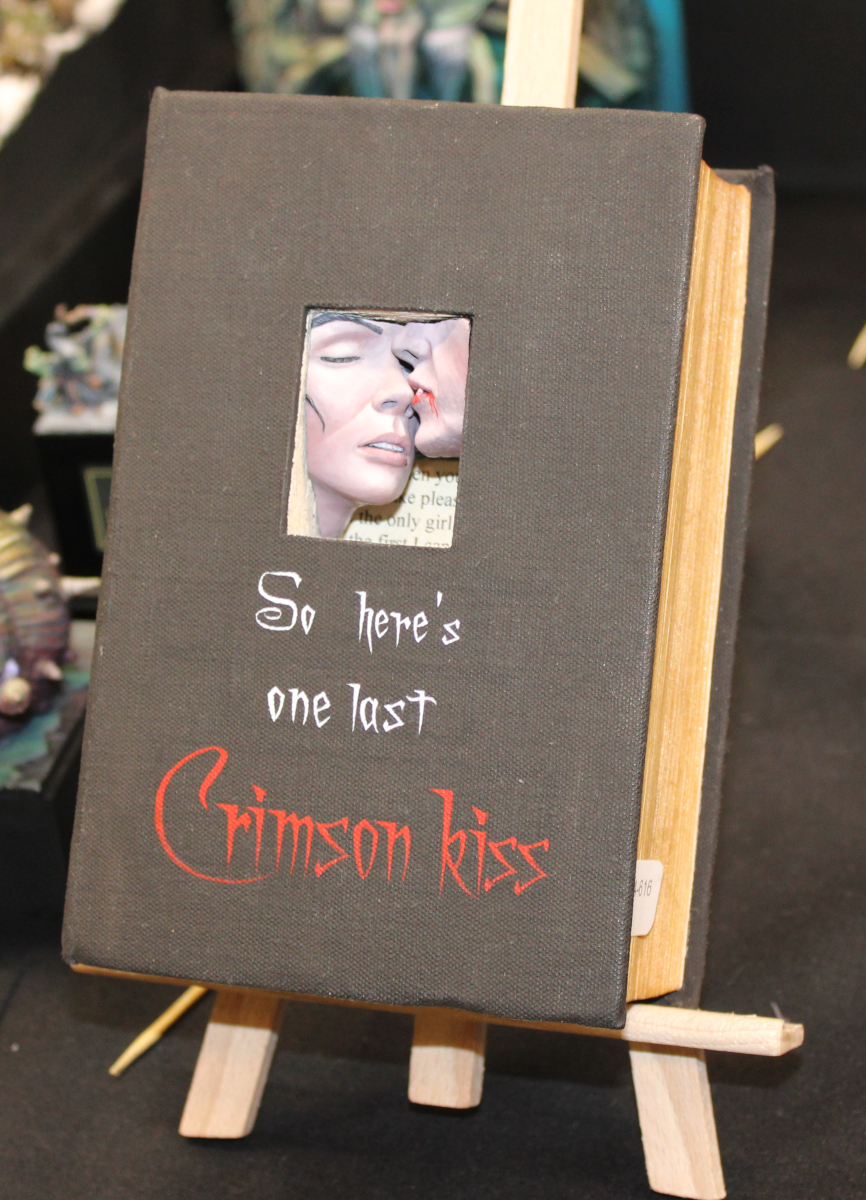
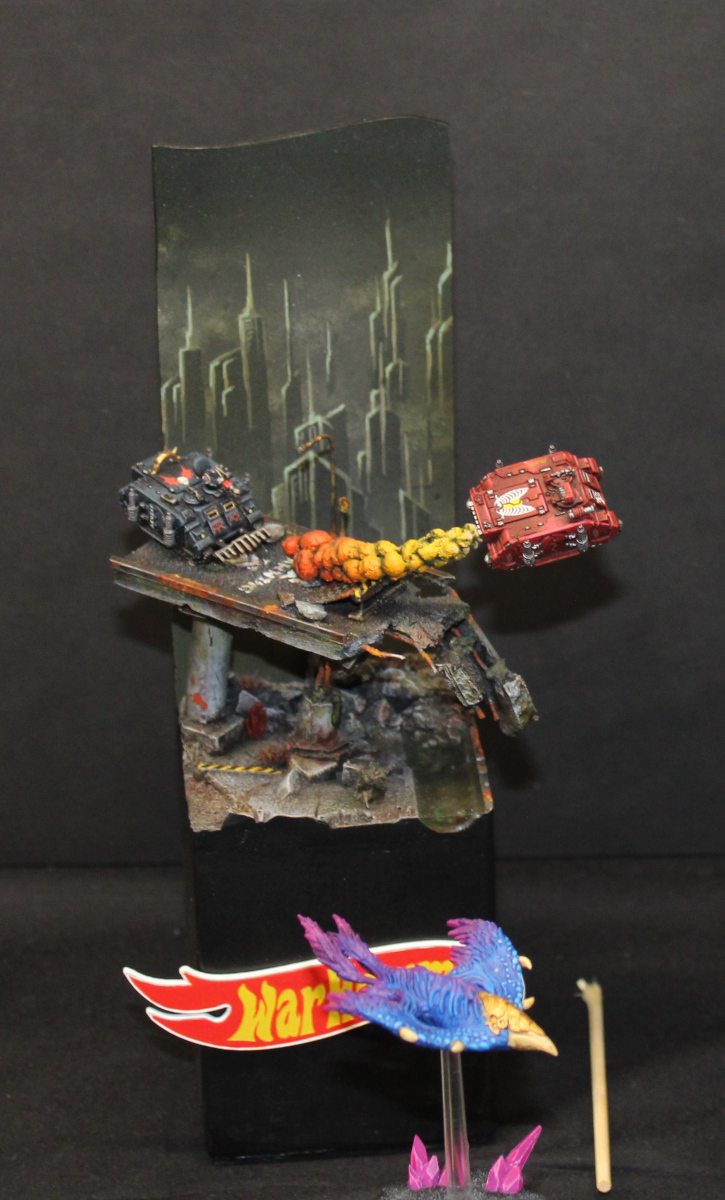
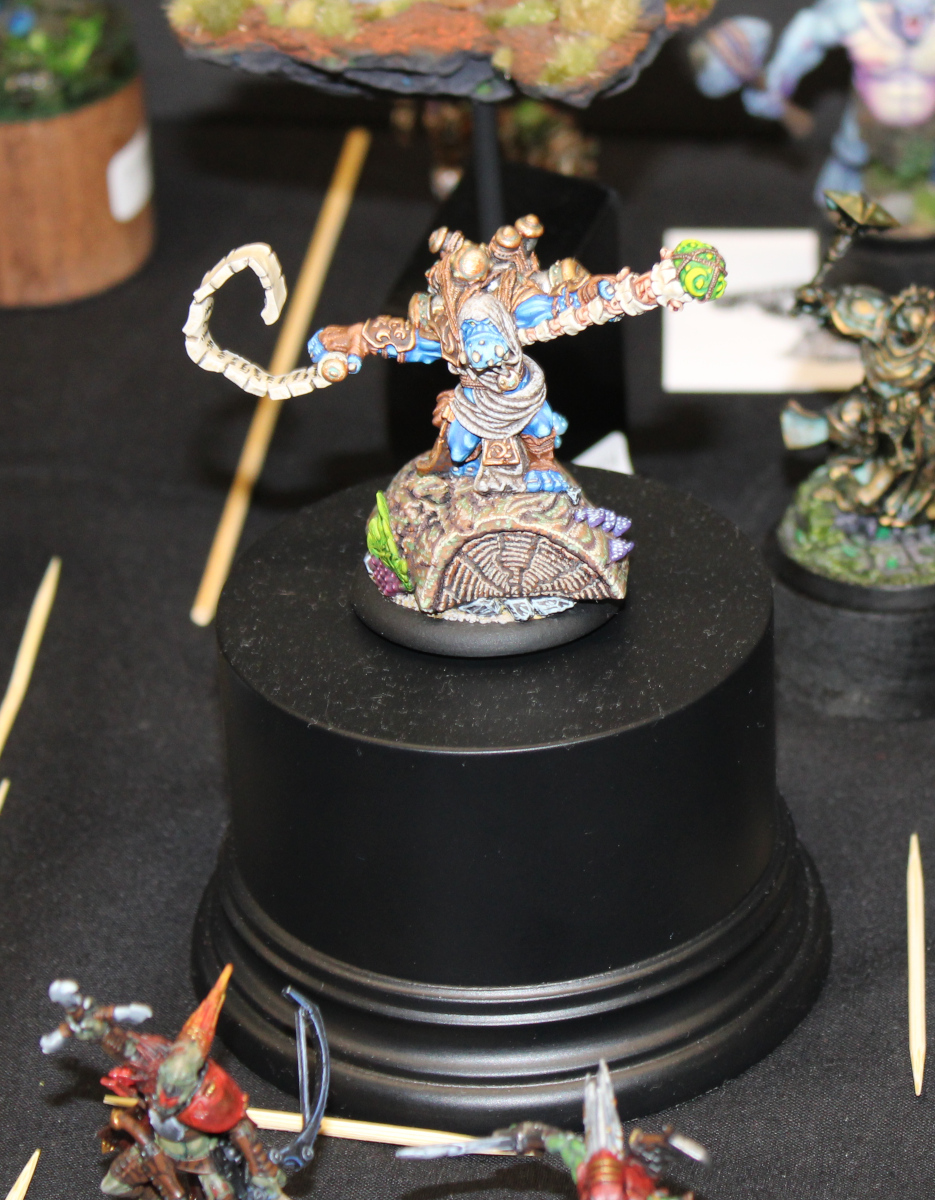
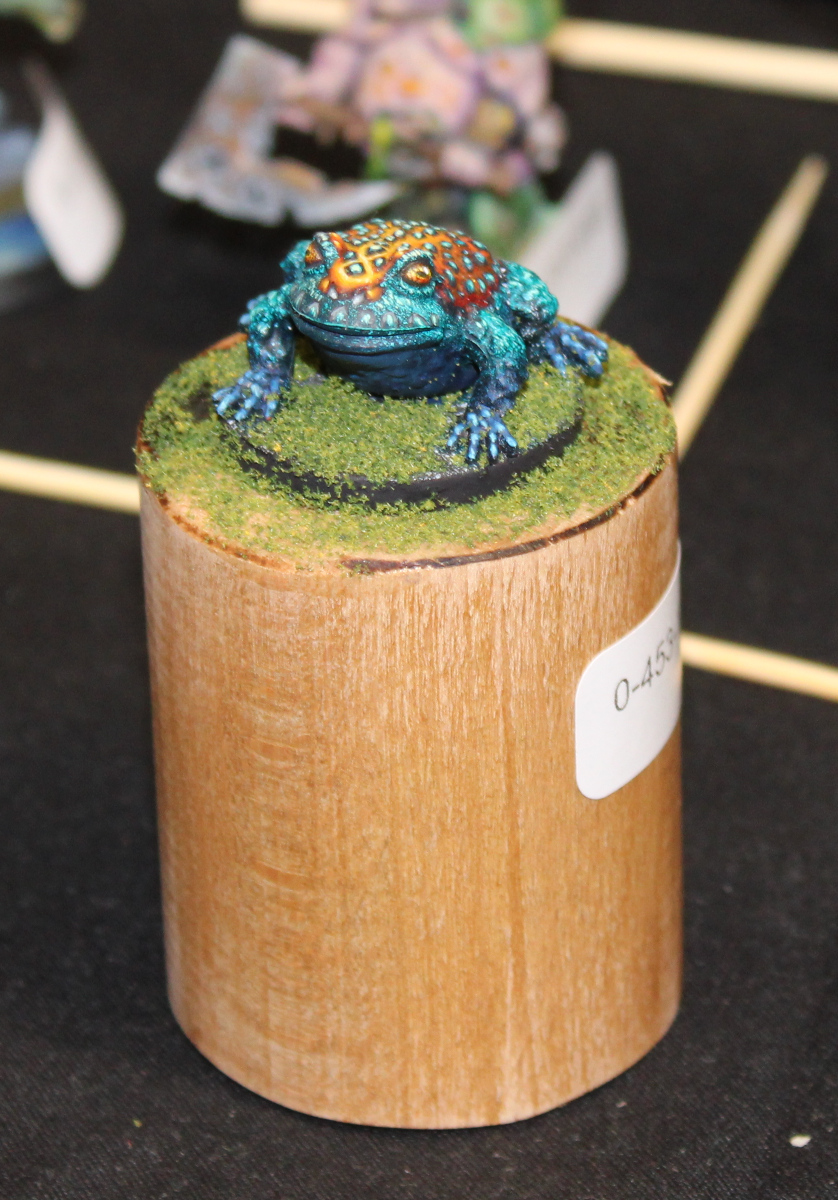
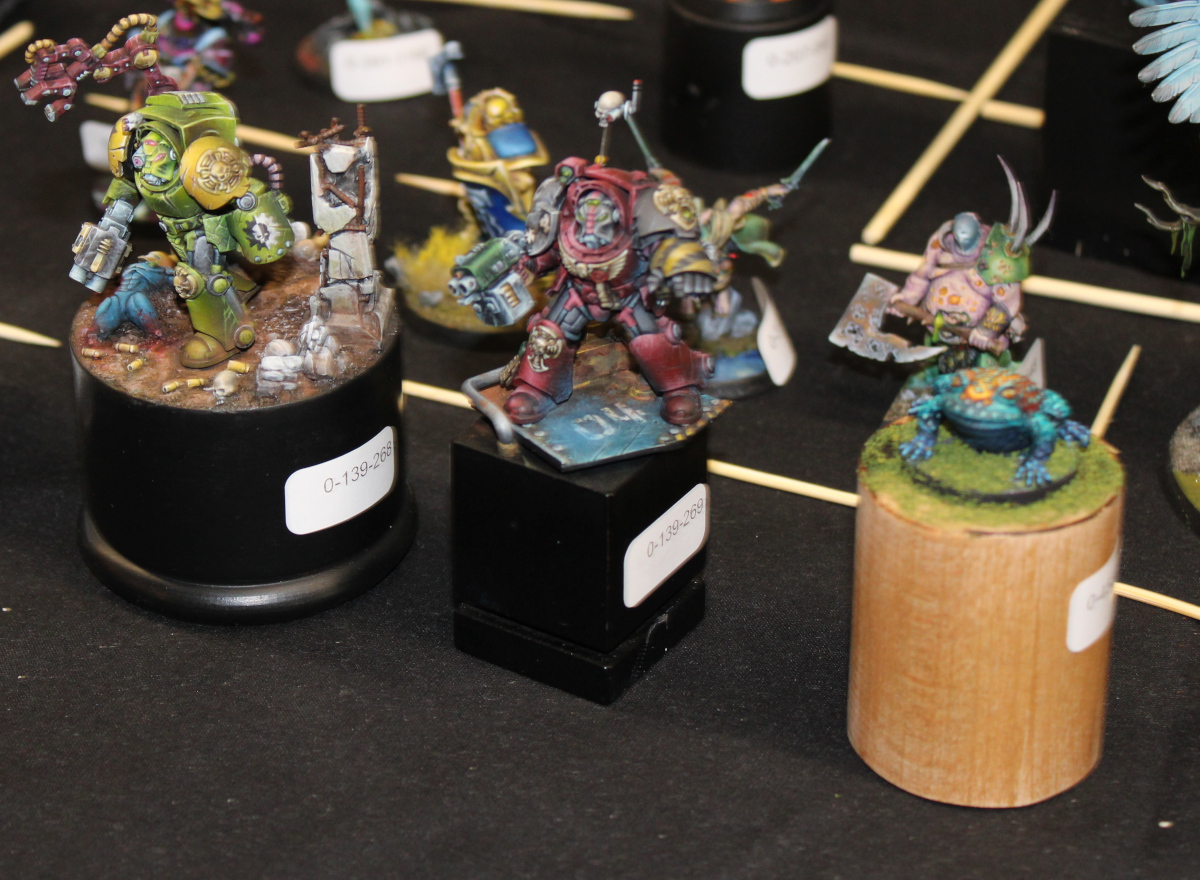
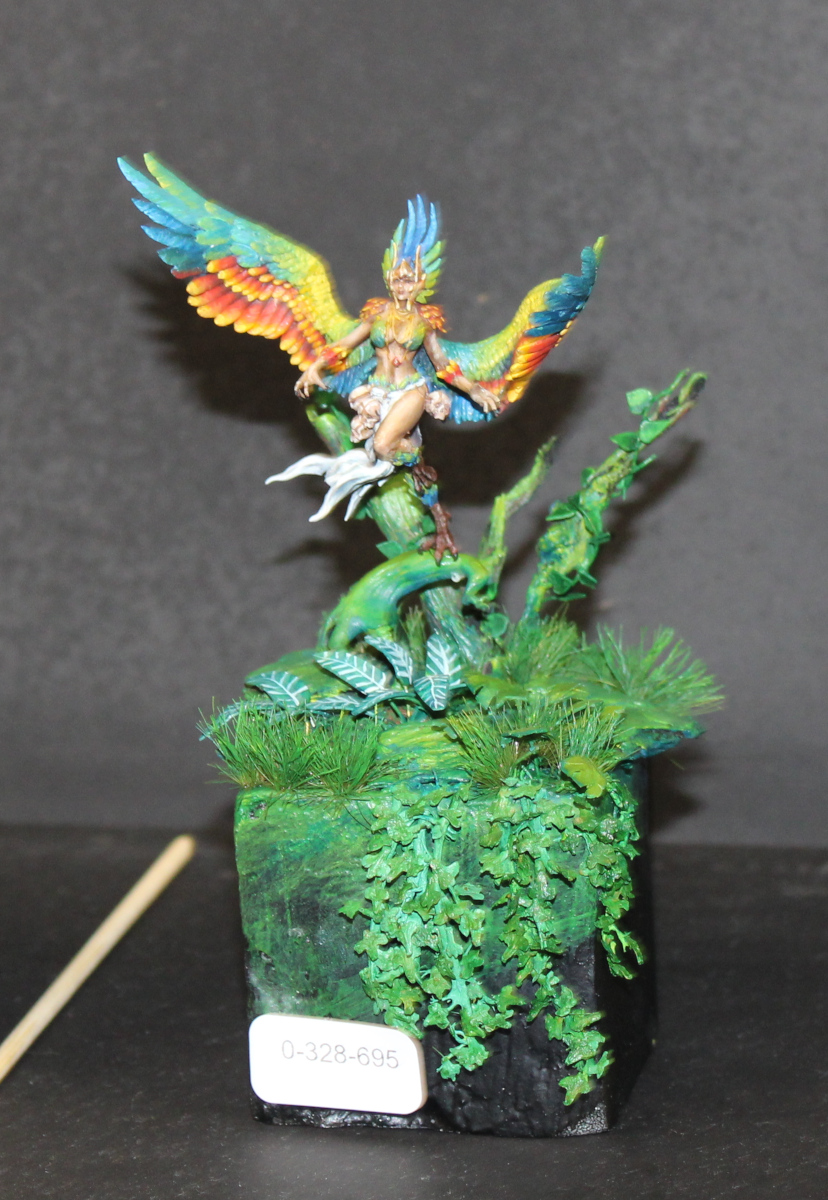
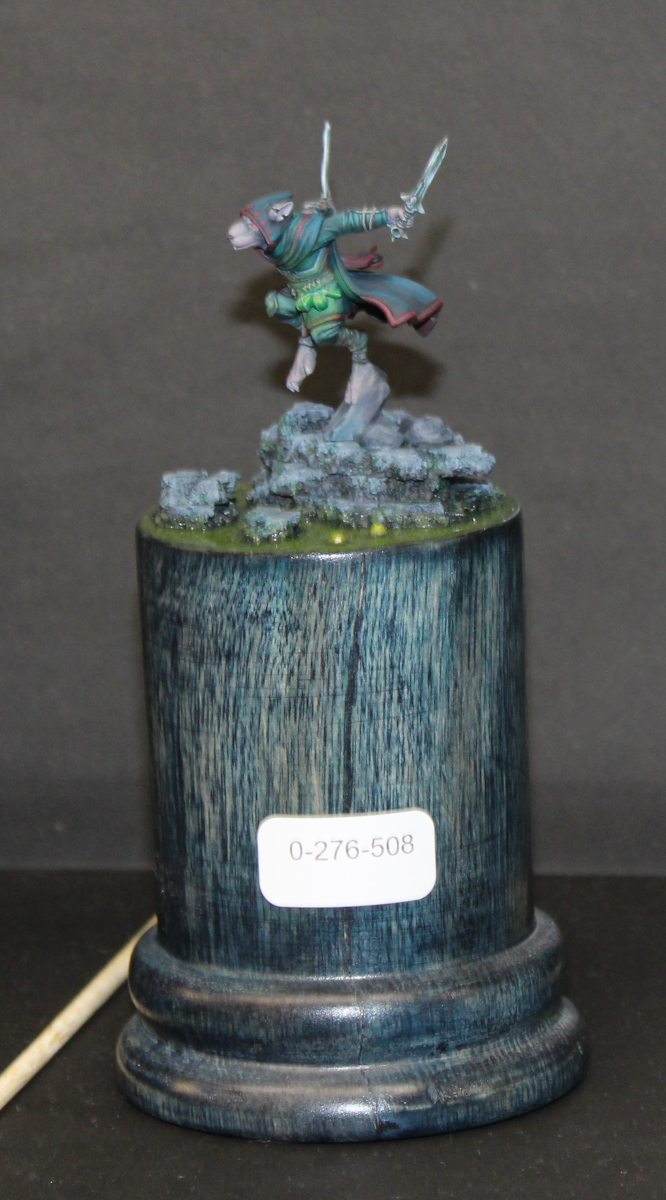
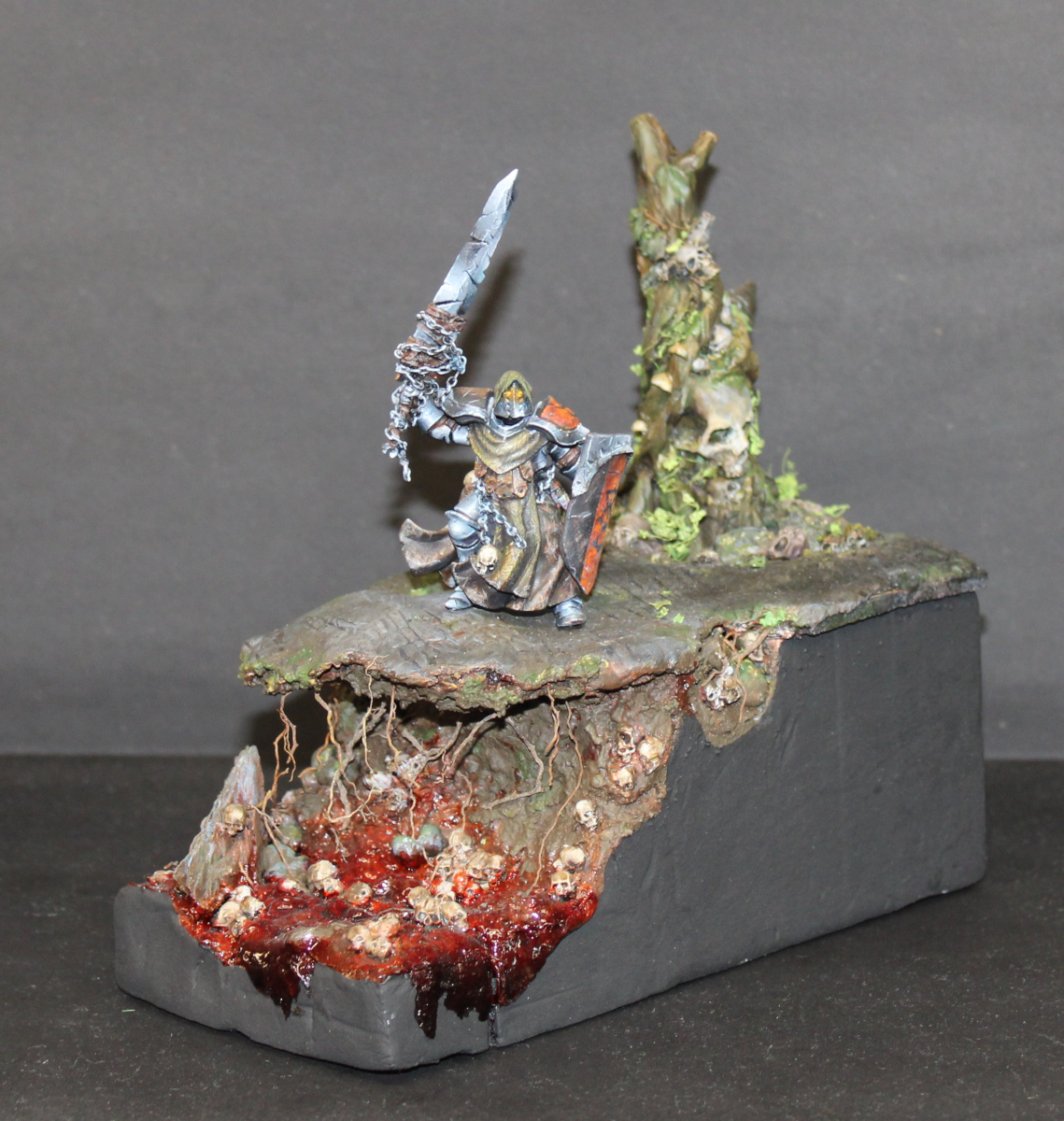
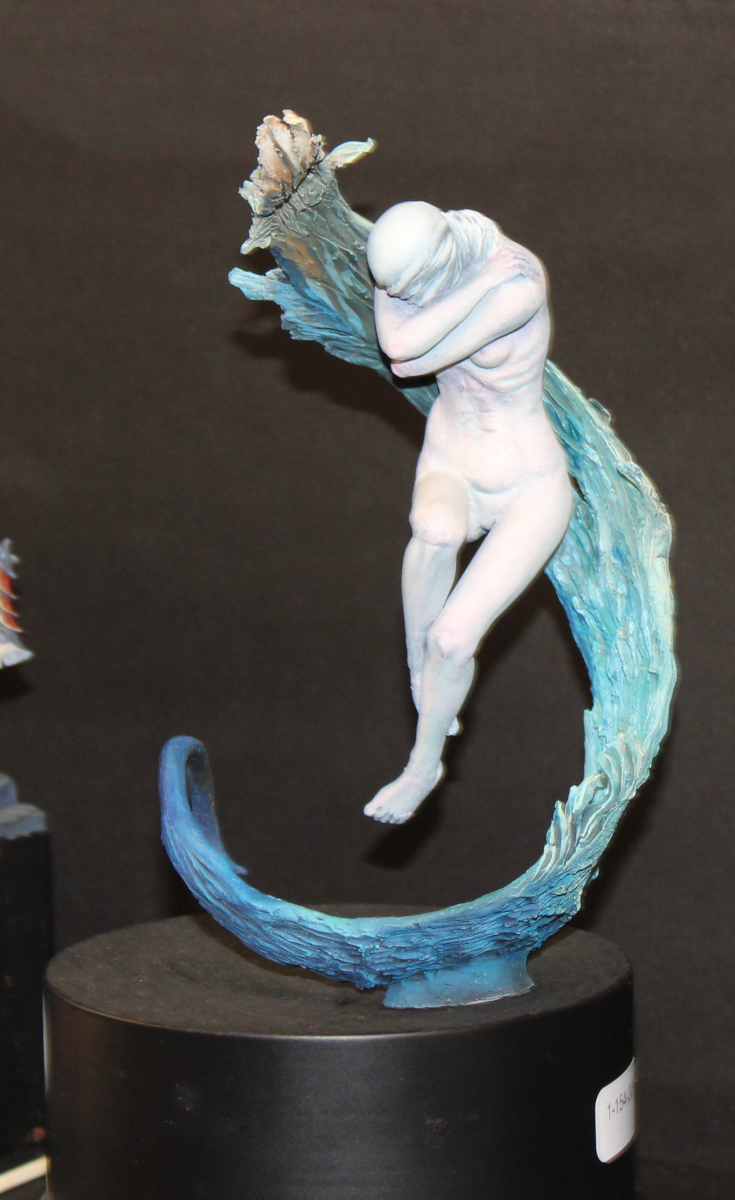
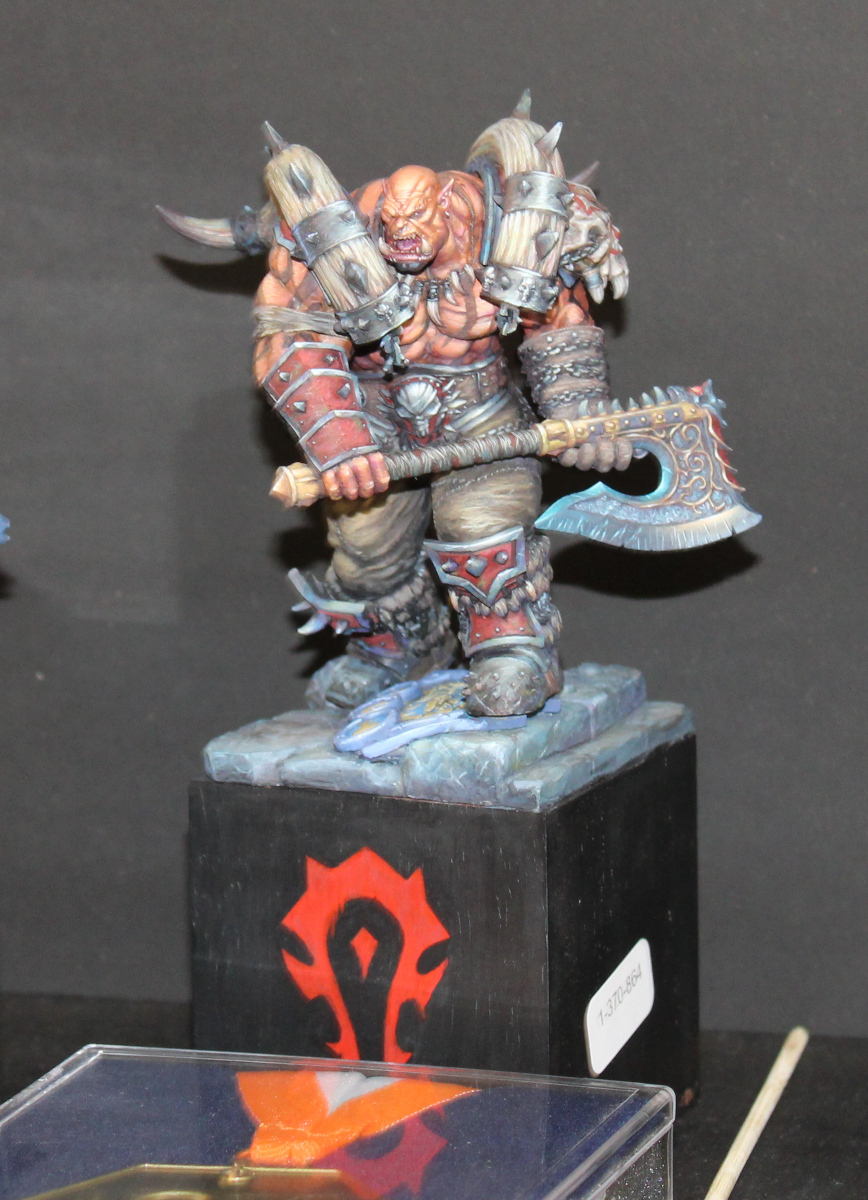
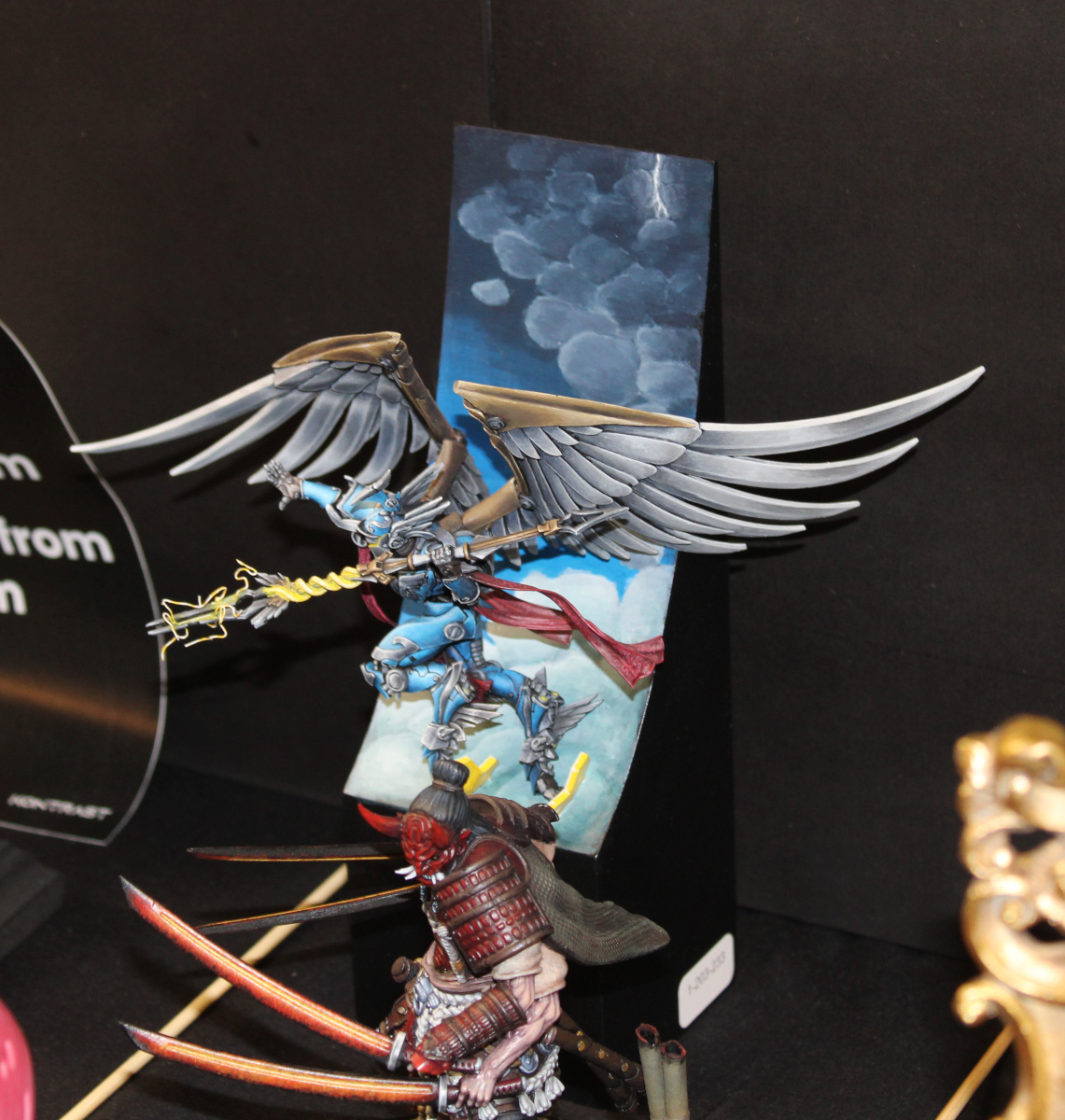
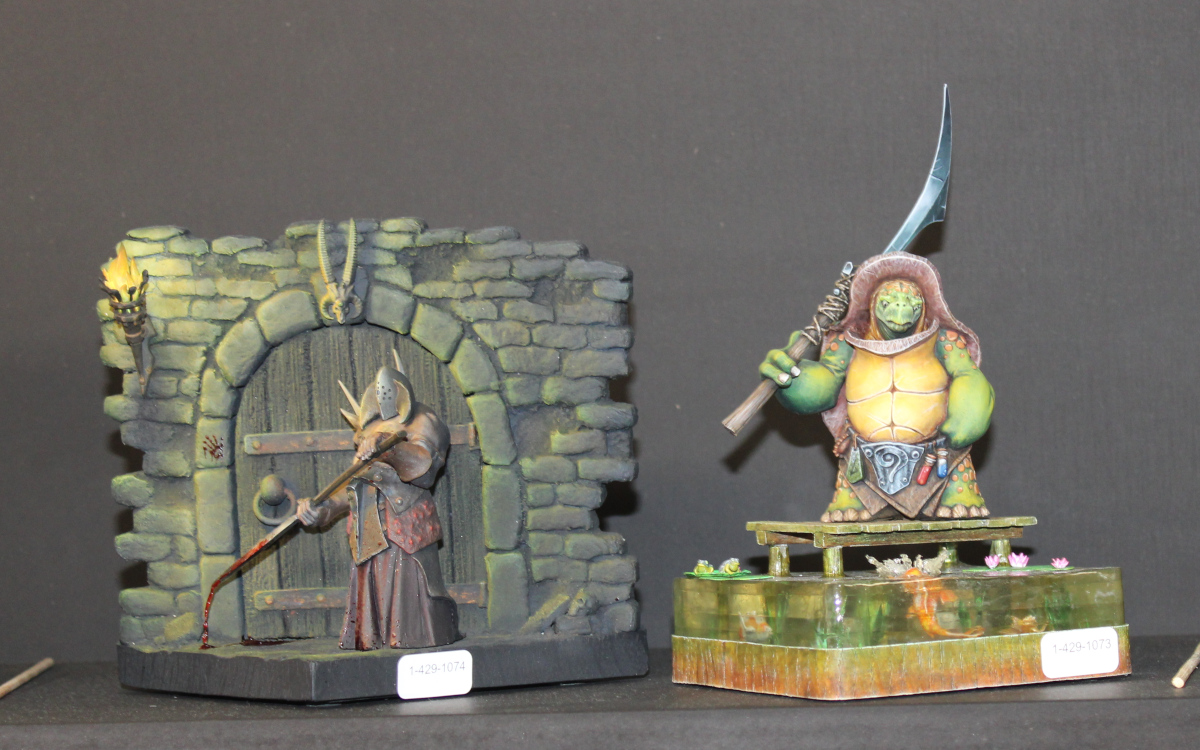
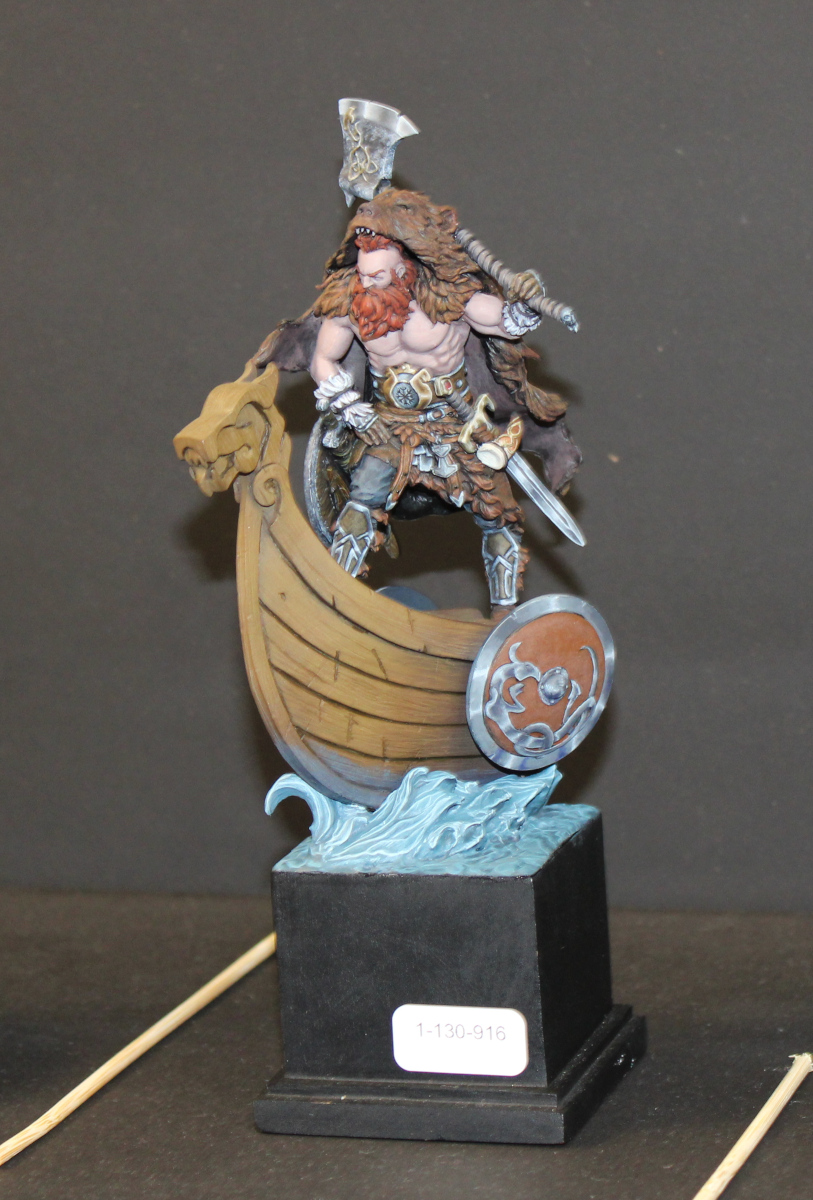
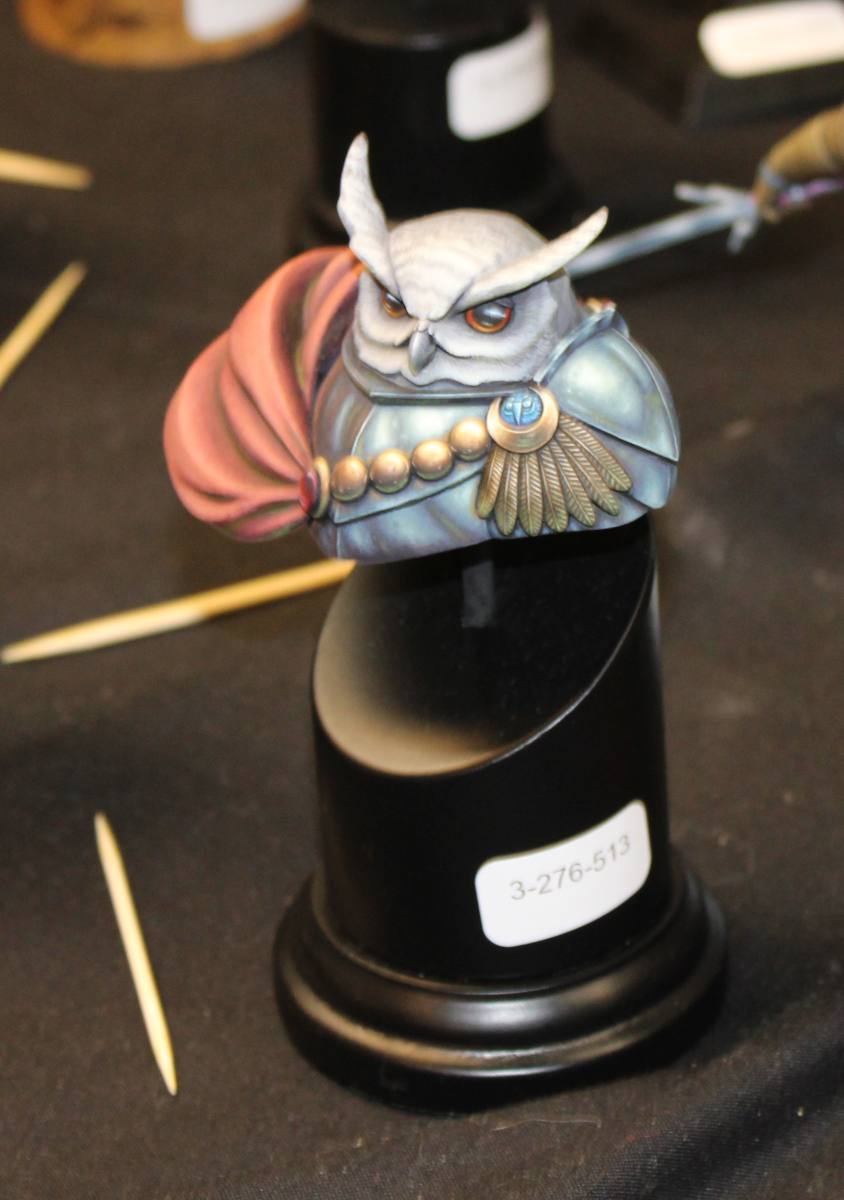
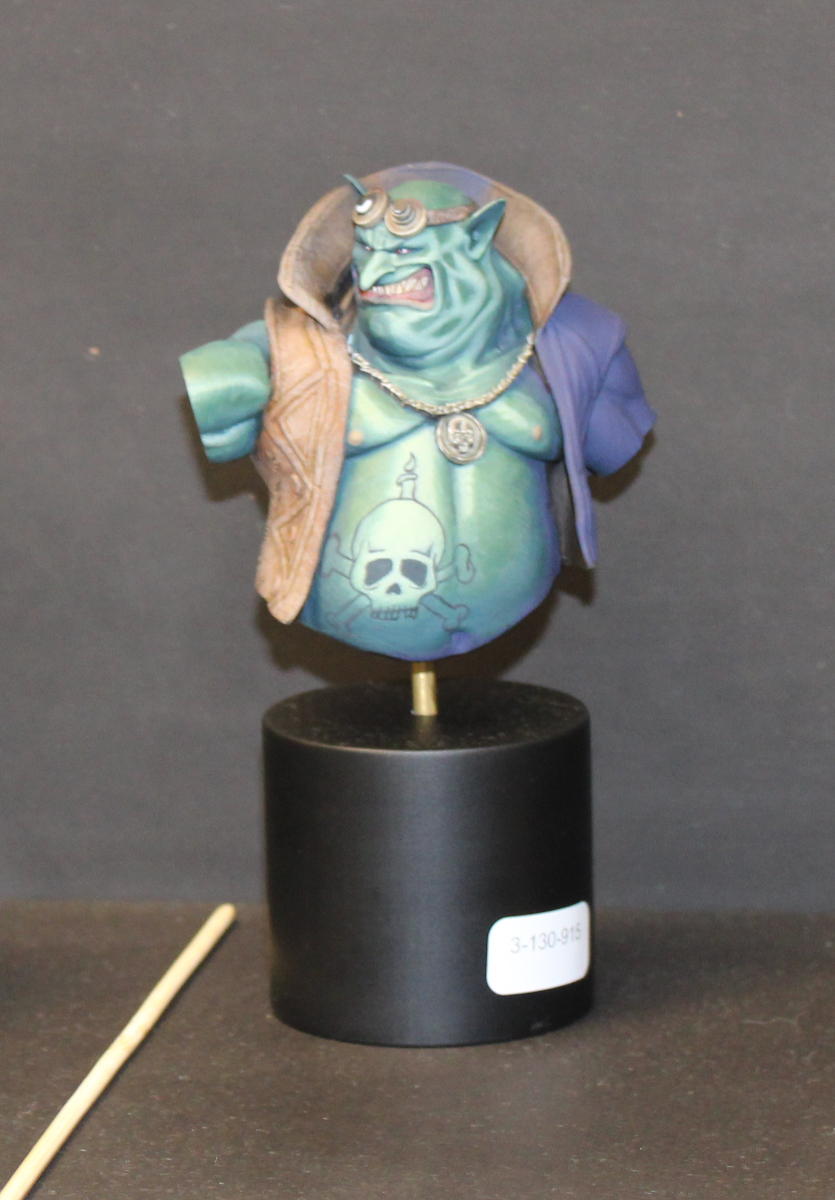
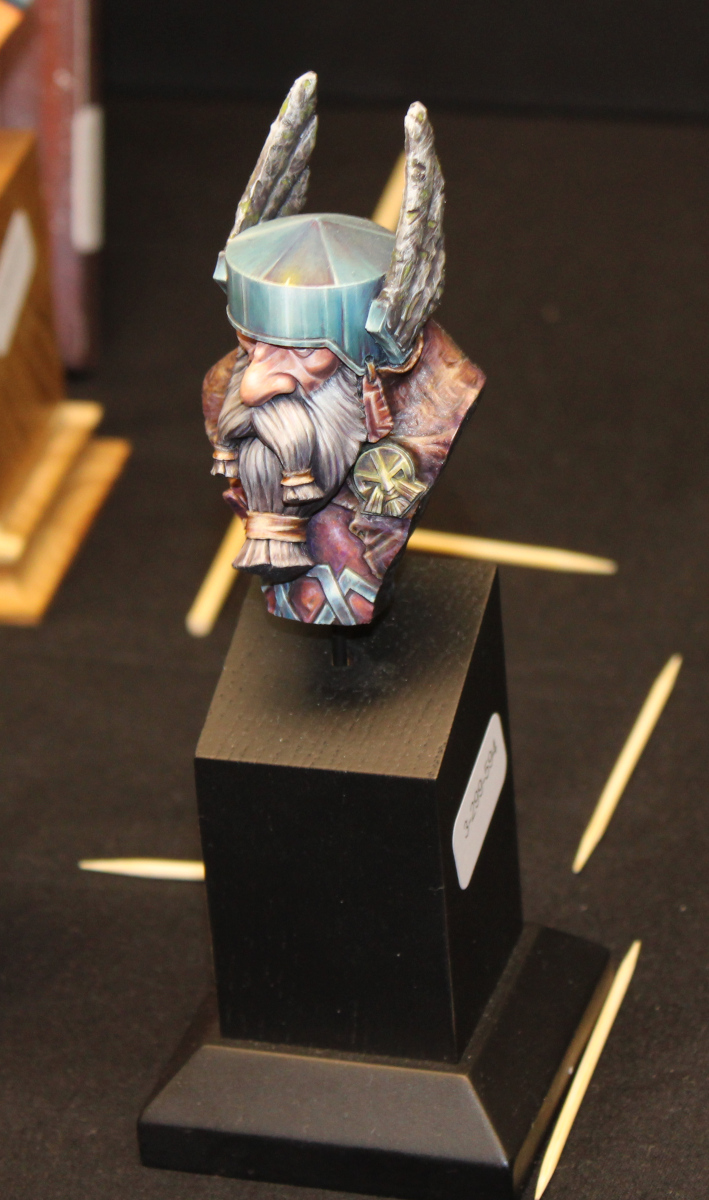
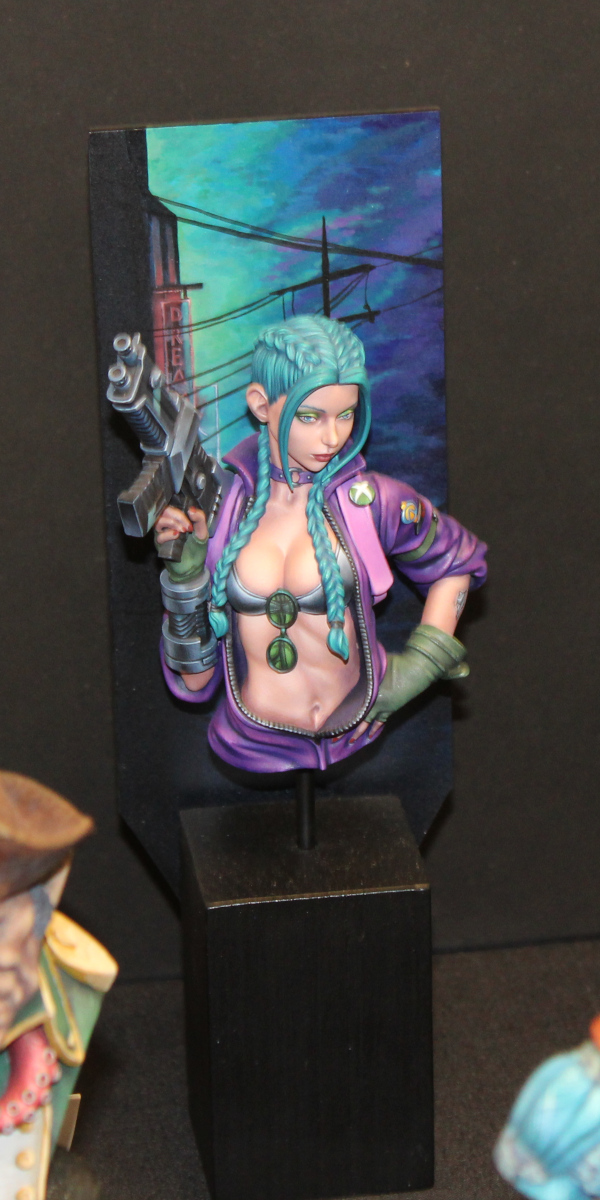
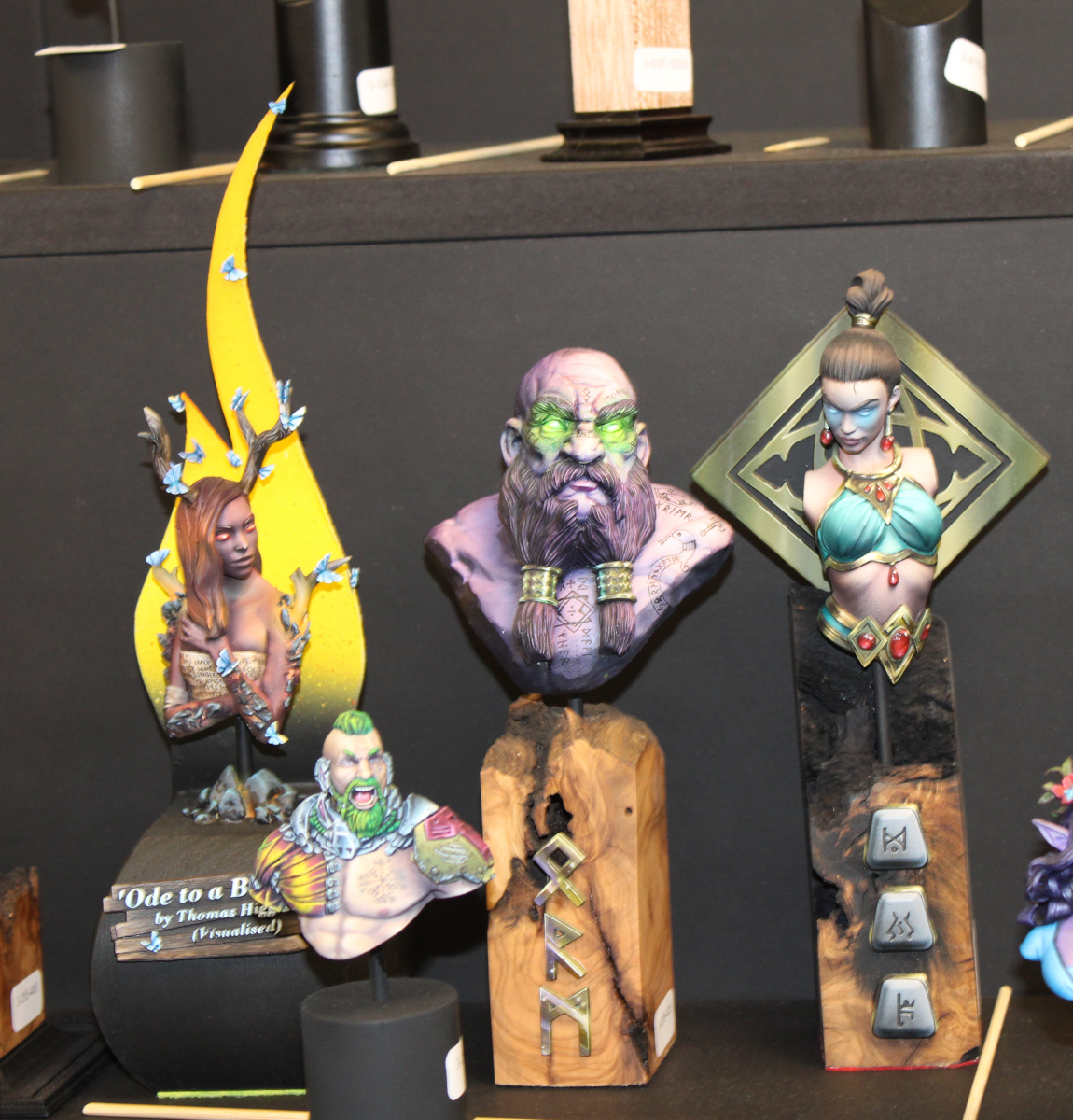
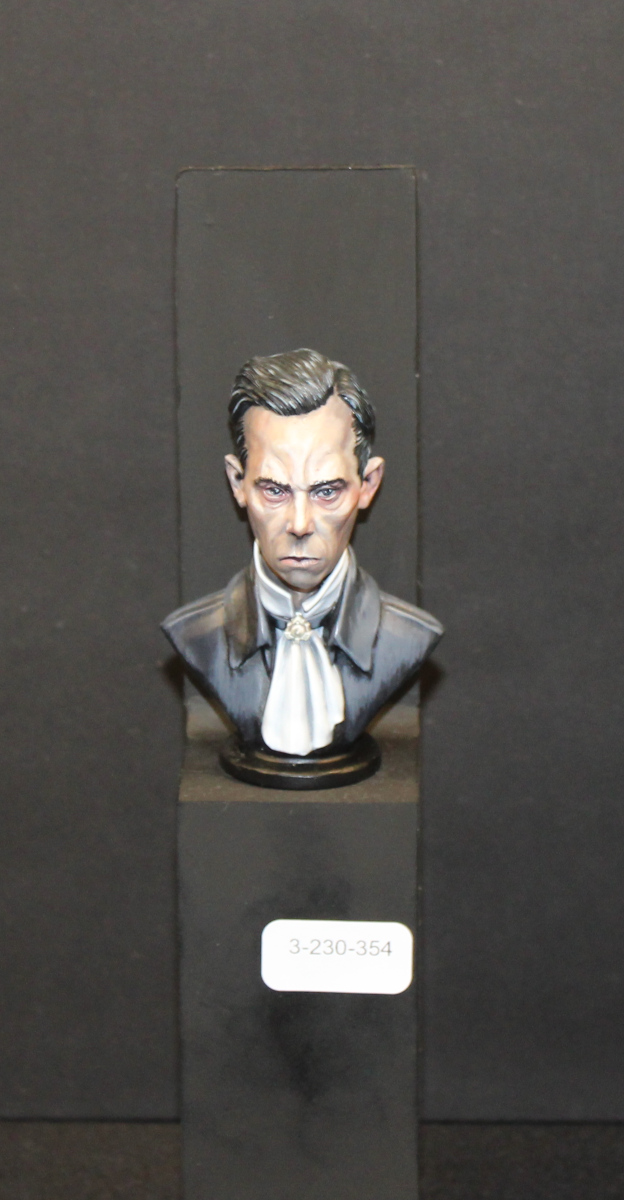
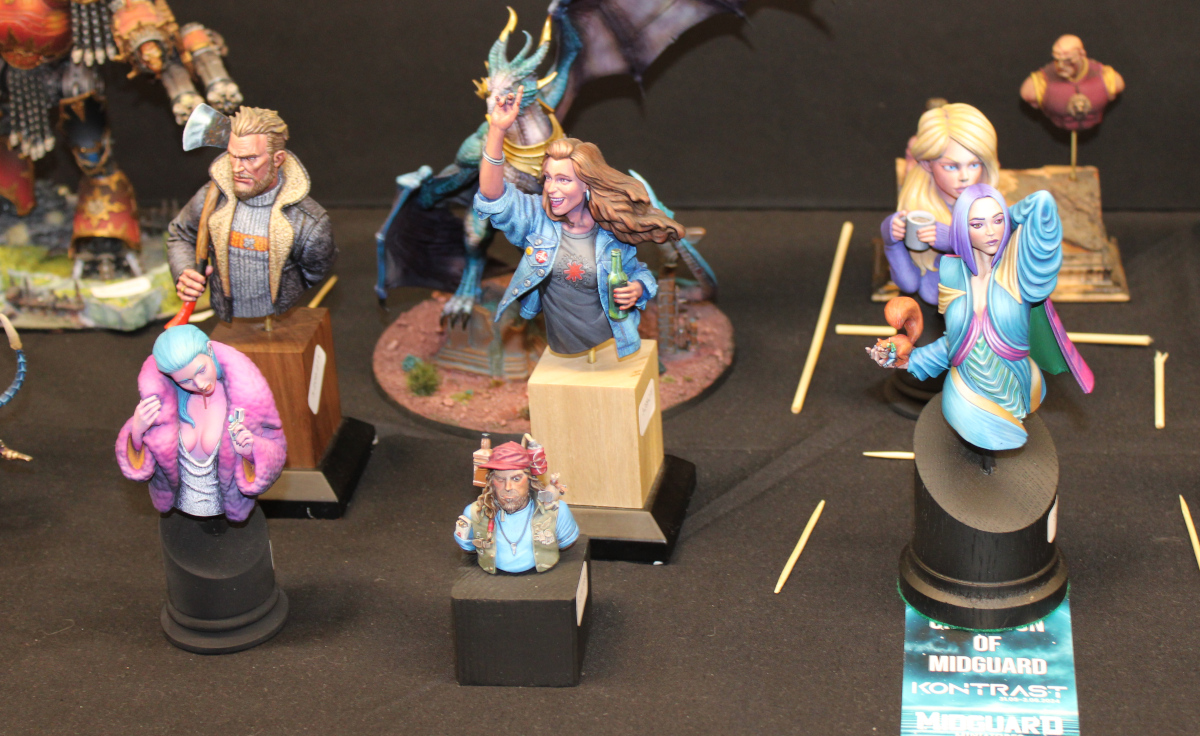
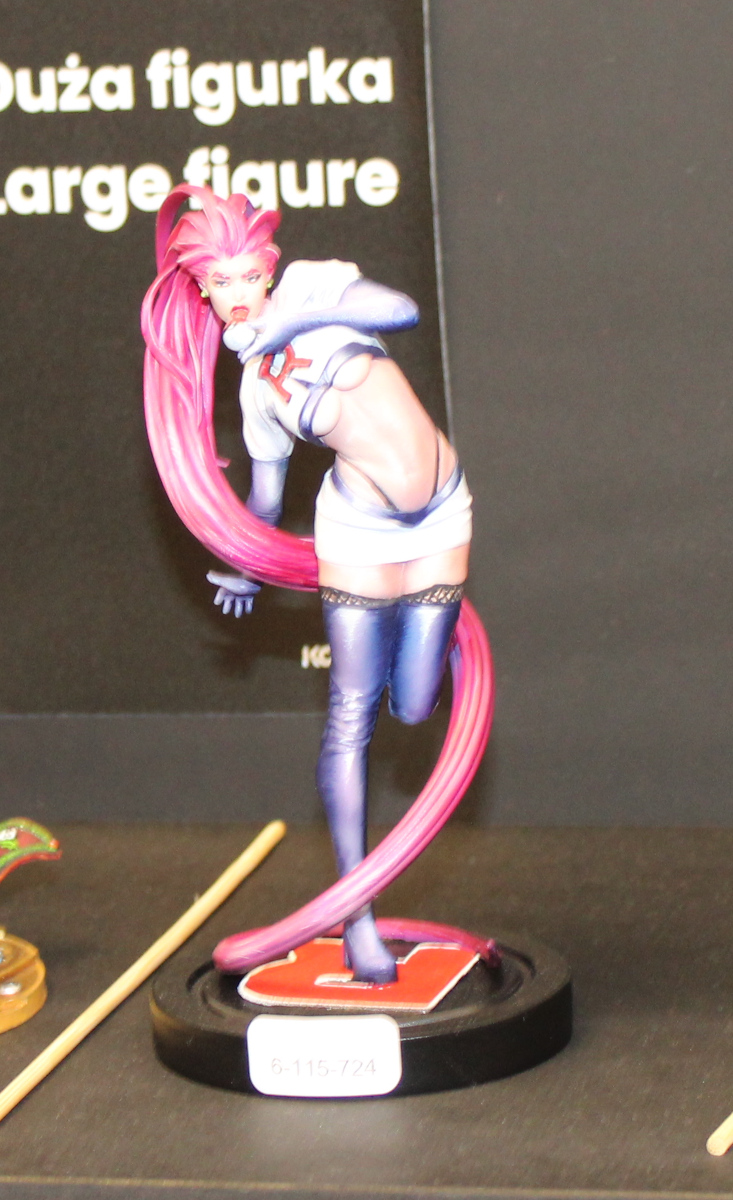
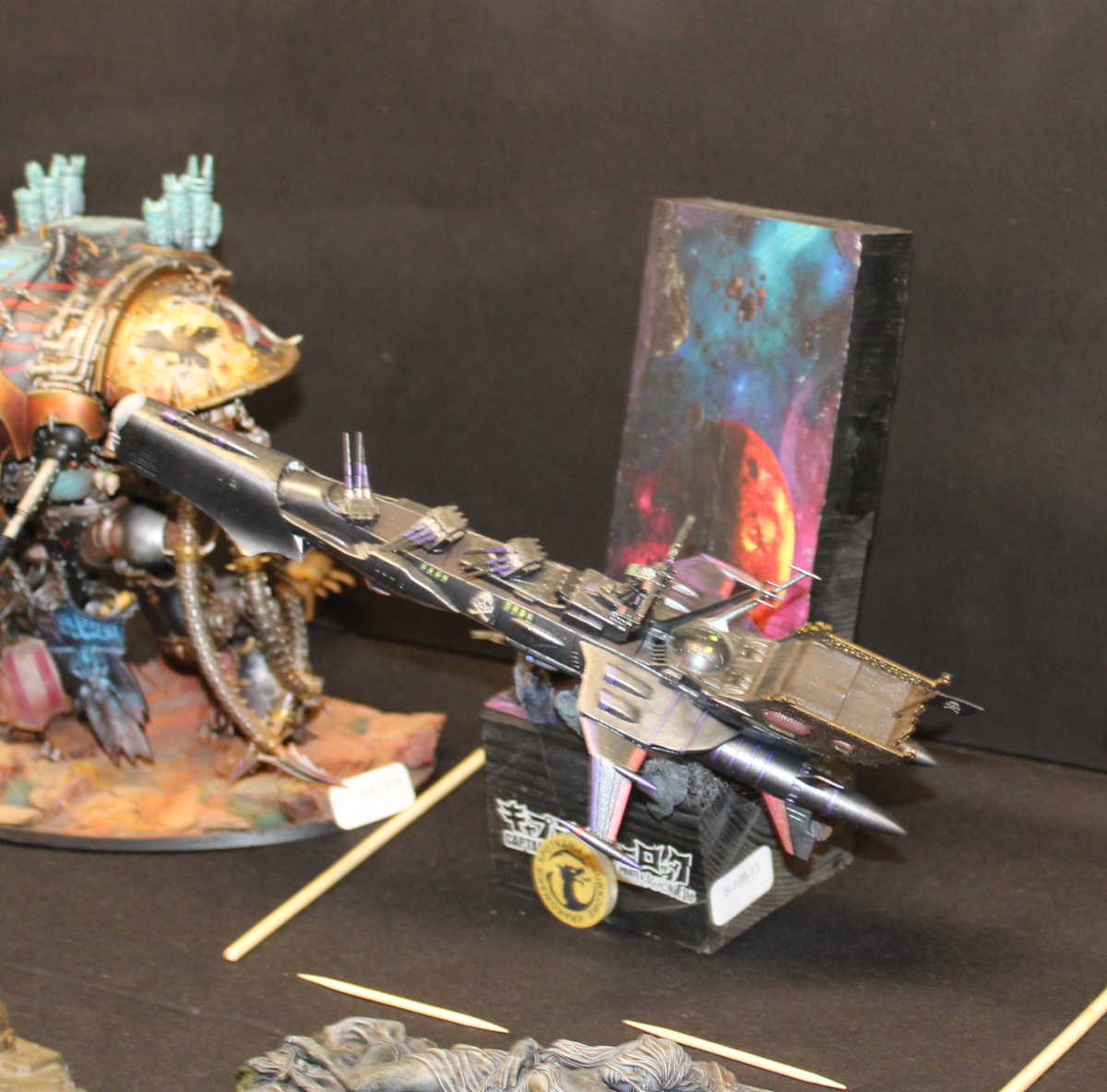
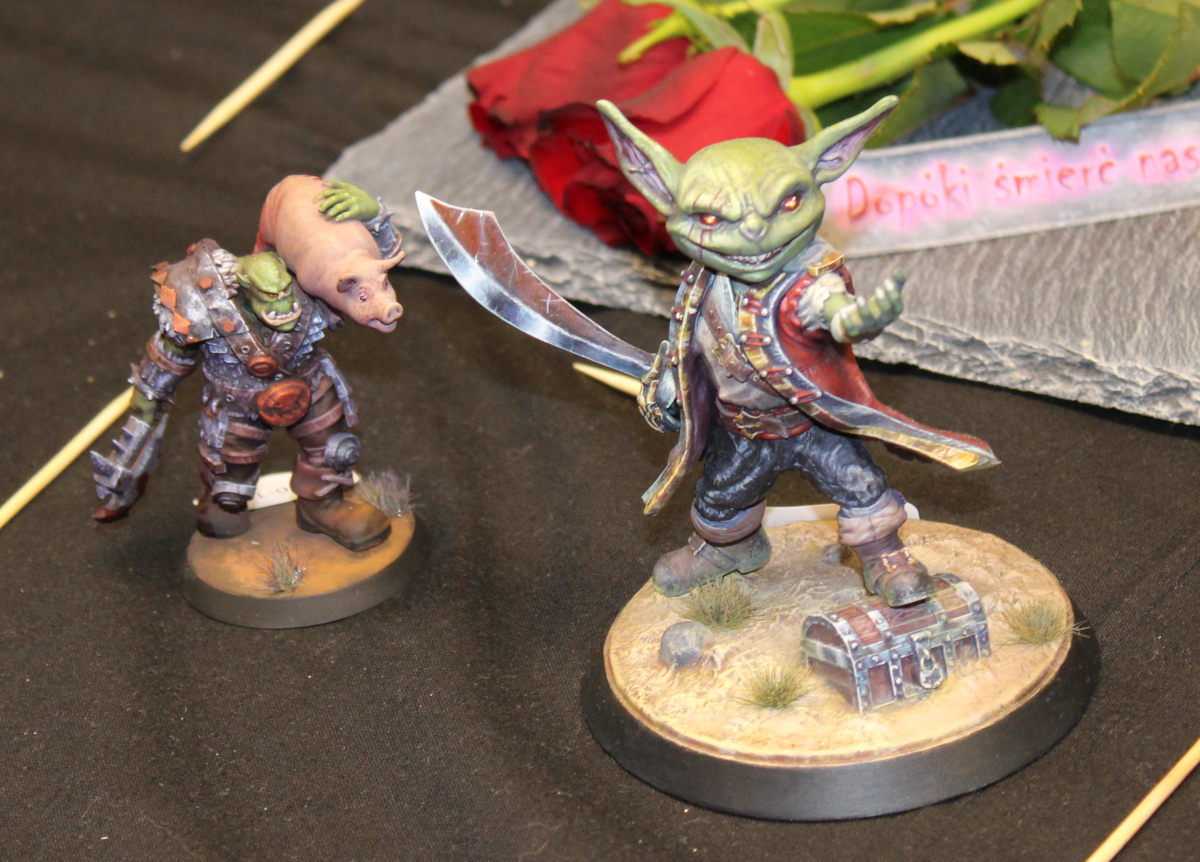
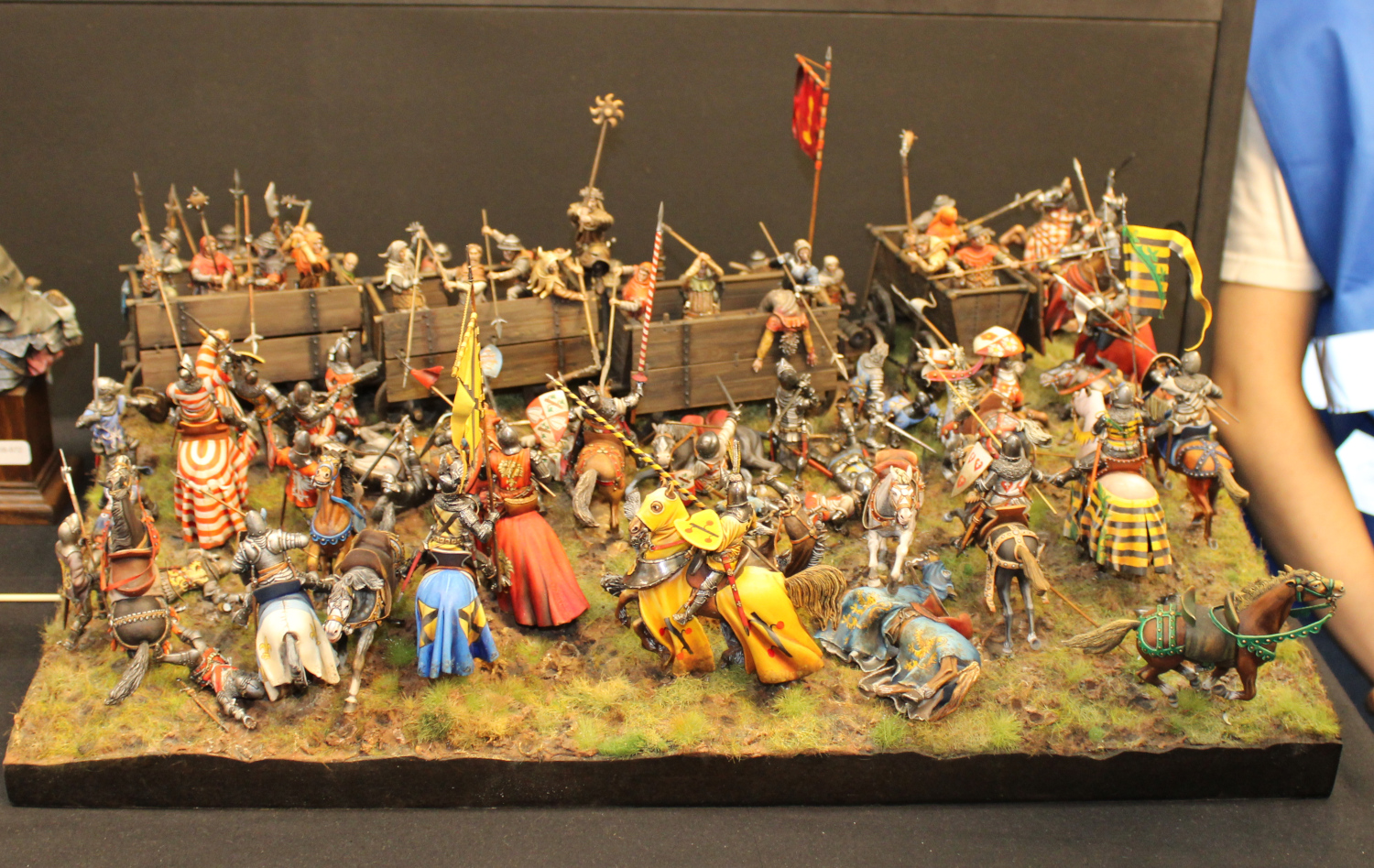
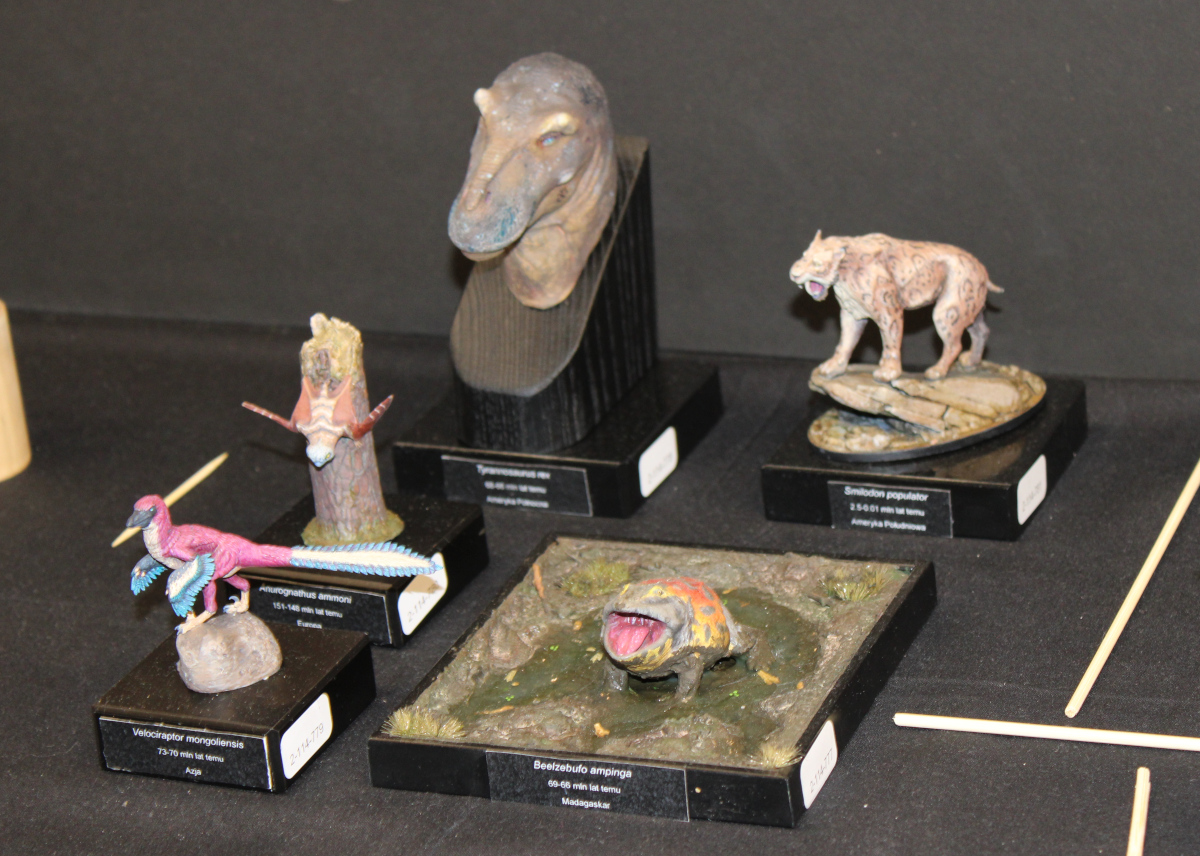
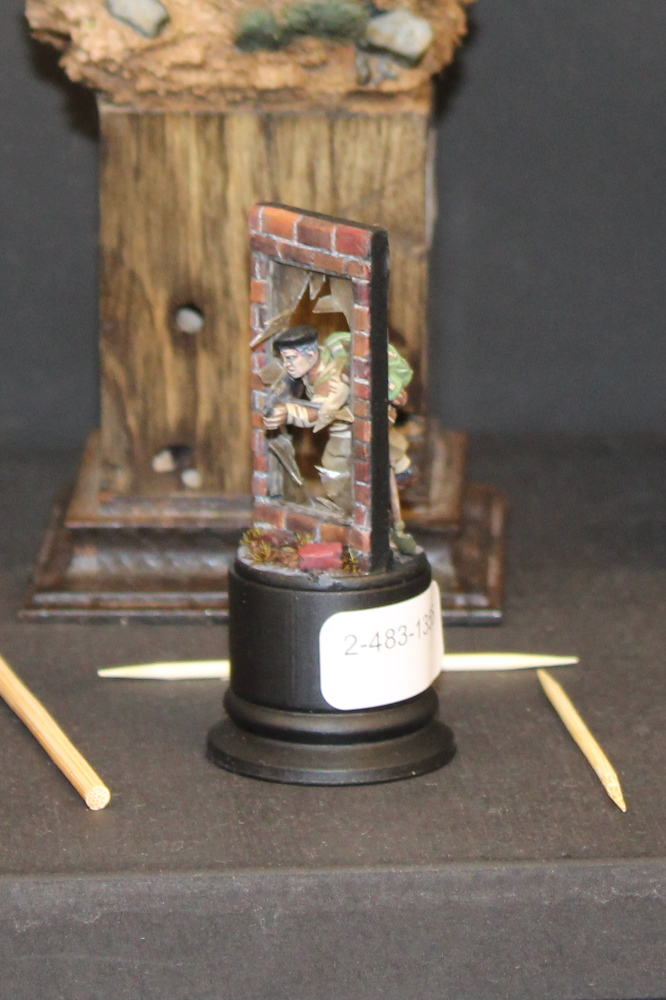
The show was a show, however, and I did try to capture some images. As you might have gathered, it was hard enough to get into the halls, let alone stand around taking hundreds of pictures, all while sweating profusely, so I ended up just focusing on getting some pictures of my favourite models while I was collecting mine at the end of the show. Note that some models that I really wanted to get pictures of had already been taken away, so here is the slightly abridged set of my favourites:

* For those of you keeping track of the asterisk note earlier. Do French people even drink water? I feel like I spent half the weekend looking for places to buy bottles of water. I could find iced tea and milk-based drinks easily enough, but never water. What the hell? In the end, I was saved by a British trader who’d found a supermarket with bottles of water, and later on by one of my lovely Danish friends, who are clearly always prepared.

Fet eats pies

As many of you know, I love pies. In New Zealand, we take pies very seriously – they’re essentially the national dish; we have taken the pie and made it an artform. Our pies are so good that even an average pie from a petrol station is better than a top-quality pie in a restaurant in most other countries. If you’re a Kiwi who’s lived overseas, you know that this is not an exaggeration.

The British, in particular, are terrible at pies.* Horrifyingly so. Anyone who thinks a British pie is good has never had a decent pie from anywhere else, let alone a pie from New Zealand. But you can’t tell them this – the national myth claims that British pies are excellent. As a result, they do not think that their pies can or should be improved. This is the sort of abomination that British people think is a good pie. Look at it. Actually, don’t. It’s offensive to nature. And don’t start me on pork pies. Horrid, gritty balls of fat, gristle and aspic.

(I should note that every British person I know who’s been to New Zealand since I emigrated here, I have advised to get a pie. Every single one of them has sent me a message while over in New Zealand telling me I’m right. That’s a great appeal to my ego on top of the obvious vindication.)

Because of this failure of British culture, I have spent nearly 20 years being forced to perfect my own pie recipes in order to have a good pie now and again, because I cannot rely on Britain to provide one. This isn’t the worst thing that could happen – I now know how to make a pretty decent pie – but sometimes I just want to be able to get a pie from the shop and not be facing disappointment.

There are certain features that make a good pie:

  • Flaky pastry top and bottom
    Note that flaky pastry isn’t puff pastry, and it certainly isn’t shortcrust. If I want a dry, bland pie stuffed with disappointment, I’ll use shortcrust. If I want a pie that doesn’t taste of misery, I’ll use flaky pastry. Flaky pastry is most similar to rough puff, but actually a bit easier to make as long as your kitchen isn’t too hot. It’s also more flexible and durable than puff pastry, which leads into the next point.
    Some people in NZ think shortcrust is okay for the bottom of the pie. Those people, I assume, are Australians.
  • Able to be eaten by hand – cutlery not necessary
    An ideal pie is eaten from a paper bag held in the hand. That’s part of the experience. It doesn’t affect the flavour, of course, but it does show that the pastry is well made, as noted above – the pastry needs some flexibility to hold up under these conditions.
  • Temperature
    This is pretty famous in NZ – a pie should ideally be ready to eat when you get it. You shouldn’t need it too cool down too much, and you also should never receive a cold pie. Relevant iconic cultural moment: Always blow on the pie.
  • Simplicity of filling
    A good pie doesn’t need a massive number of flavours or textures competing for your attention. The classic is mince and cheese – a perfect savoury blend. Ramming peas, carrots and corn into your mince pie is a crime. Some bakeries do this despite it very clearly being a terrible mistake.

On my trip through New Zealand over Christmas, I decided to keep a log of all the pies I ate. Not just so I can reminisce about how good the pies are, but so I can explain to all of you just how bad your pies are with illustrations and notes. If I had the energy, I’d even include charts. Also so I can improve my own pies.

I guess if you do ever visit New Zealand, you can take my notes with you and ensure you sample the best pies.

So, in chronological order.

Jimmy’s mince and cheese 

Jimmy’s is the classic where I’m from. They’re made in Roxburgh, and for many years you couldn’t find them north of Timaru. I managed to get this one in Nelson, which is several hundred kilometres north of Timaru, so I guess things have changed a bit. The pie had obviously been in the pie warmer for too long, but it was a lovely way to start my pie journey.

The classic Jimmy’s is quite salty, but this serves to improve the flavour of the cheese. It’s often easy to miss the cheese otherwise. If you’re in the South Island and not sure where to begin on your own pie journey, a Jimmy’s mince and cheese provides an excellent baseline. It’s a very solid upper-middle tier pie, and kind on the wallet.

Devon Bakery mince and cheese 

This pie came fairly highly recommended on Tripadvisor, which I should have realised was a mistake. Tourists use Tripadvisor. Tourists do not yet understand the joy of a good pie.

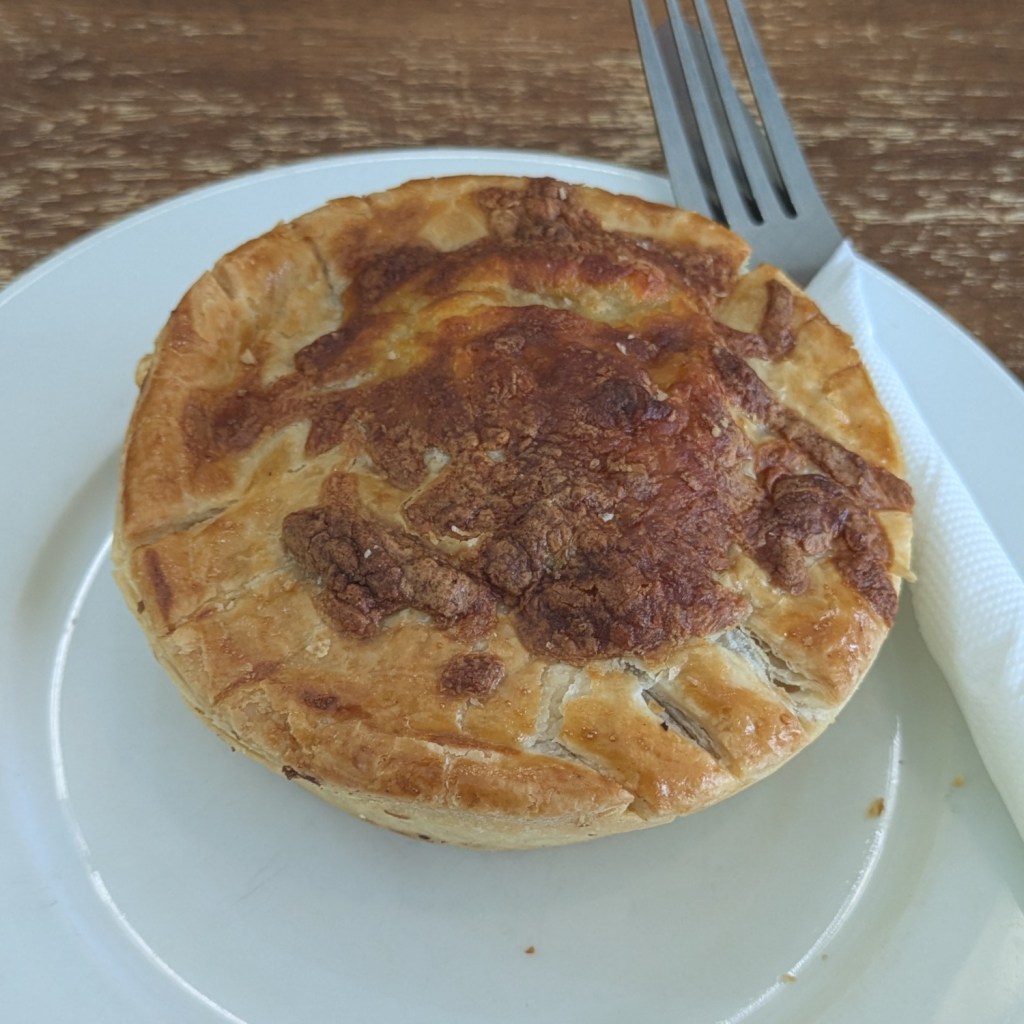
This one was, sadly, fairly plain (and, as you can see from the picture, a bit on the pale side, which should have been a giveaway). The gravy was bland; the cheese was unremarkable. Annoyingly, it also used shortcrust for the bowl of the pie rather than being flaky all round. It was otherwise competently made – it didn’t fall apart and it was a good temperature.

However, the coffee from the same place was overfilled and insanely hot. I nearly gave myself third degree burns just getting it to my table.

Patisserie Royale steak and beer 

On a day trip out of Nelson, we stopped at a nice cafe in Motueka. Sadly, they didn’t have mince and cheese, but I wasn’t about to let that stop me. There are plenty of other excellent pie fillings. So I thought I’d give this a go – in the UK, this would be a perfectly normal default pie filling, although it would be specifically ‘ale’ rather than ‘beer’.

Sadly, the flavour of the beer was not apparent. Just tasted like a plain steak pie. Not that that’s necessarily a bad thing, but it seems a waste of whatever beer they used. Despite this, it was a very good pie – it was filled precisely and all the fat had rendered into the gravy rather than finding chunks of it still stuck to the meat. I’d certainly go back to the cafe to try their other pies.

Rivers Cafe Murchison mince and cheese pasty.

When we passed through Murchison on our way south, we stopped at what seemed to be the most popular cafe in town. There was a very long queue and the promise of a large variety of pies. Sadly, all the pies they still had in stock were infected with mushrooms. In case you’re unaware: I’m allergic to mushrooms. This annoyed me greatly.

Anyway, rather than queue up again somewhere else, I made a rookie mistake and ordered a pasty. This was a ‘mince and cheese’ pasty, which I figured was close enough to a pie filling, but should have warned me off because it’s a gibberish filling for a pasty. Just as the UK is terrible at pies, NZ is awful at pasties. For quite a long time, I was afraid to try pasties when I moved to the UK because the ones in NZ are so goddamned atrocious. Still, I had made my order so I would have to at least give it a go.

Some sick godless motherfuckers put potato, peas, carrot and FUCKING SWEETCORN in the pasty. I can forgive the potato – it’s a pasty, so that at least makes sense. However, there was also no gravy – that’s right: it was just grey mince mixed with potatoes, peas, carrots and sweetcorn. To make matters worse, it was shortcrust and, as you can see, didn’t feature the normal pasty handle.

Could this pasty be worse still? Yes, of course it could. All the cheese that the pasty claimed to include had collected on one side and turned to rubber. This was a truly awful experience. That any town could countenance a pasty like this is criminal. I shall never return to Murchison. 

Four Square Murchison Kai Pies mince and cheese

As you might imagine, I couldn’t finish the ‘pasty’, so on the way back to the car I stopped in at a Four Square (like a corner shop in the UK) and picked up an actual goddamn pie. I was very pleased to discover that it was a perfectly normal mince and cheese pie. It was nothing special, but at least it was an actual pie and it didn’t suck.

Hanmer Bakery and Cafe mince and cheese

Hanmer Springs is a very nice sort of resorty town in the mountains. It’s mostly famous for its hot springs. We spent a few days there, during which I mostly neglected my pie journey. There was a pie stand in the middle of the town, but I had to discount it as an option because it advertised itself as being “Swiss” pies. I have no idea what a Swiss pie is, but I have to assume that, by default, it is inferior. It was also closed most of the time we were there.

The pie I did eventually get was quite good. It did break my pastry rule by having a shortcrust base (this was a real shame because the flaky pastry lid was very, very good), but otherwise it was up to scratch. In particular, I noted that it had a very tasty gravy that didn’t overwhelm the cheese. That’s quite a balancing act.

Four ‘n Twenty slow-cooked beef and pepper

We were on a long drive from one place to another and the town we ended up in only had a little shop, which only had these. I can’t even remember what the town was called, but I’ll make a point of remembering what it looked like so I can boycott it in the future.

Why? Because this pie is Australian. It was embarrassingly small. The pastry was pale and dry. The supposed “slow-cooked beef and pepper” tasted of pepper and nothing else.

I’m sure some Australian will insist that this is an anomaly, but it’s not far off my experience with other pies from Australia. You guys are better at pies than the British, but that’s really not much of an achievement.

Fairlie Bakehouse mince and cheese

I feel I should introduce the Fairlie Bakehouse with its reputation.

Fairlie Bakehouse is generally regarded as having the best pies in the country. They’ve won awards, but not as many as you’d think. There’s a really simple reason for this: the competitions are all held in the North Island, and require the competitors to provide a freshly baked pie. For bakeries in the South Island, that means setting up a temporary professional-grade kitchen in the North Island. For a pie competition. We may take our pies seriously, but we also recognise how dumb that would be. Hence, if you look at all the annual pie awards in NZ, they’re dominated by the North Island. Funny how it’s easier and cheaper to provide a fresh pie when you’re at least on the same island.

And despite all this, people still recognise that Fairlie Bakehouse, even if there’s no proof it’s the best in the country, is a damn fine baker of pies.

I’d never actually made it here before. When I lived in NZ, I very rarely had cause to pass through (or even really very close) to Fairlie. I should have made the effort.

This pie was truly worthy of the bakery’s reputation. This was very likely the most perfect pie I’ve ever eaten – a religious experience for a dedicated pie lover. It had magnificent flaky pastry all the way round. It was perfectly seasoned, and the cheese accentuated the mince rather than competing with it.

I would have gone back for more, but there was an enormous queue. Fairlie Bakehouse was clearly the primary tourist attraction in town.

Christina had the vegan mince and cheese and was equally impressed. I’ve tried over the years to develop a vegetarian mince and cheese pie for her so she can appreciate its beauty, but I’ve never really managed to. I can make a pretty decent one, but she did tell me that, alas, I’m not as good at it as the Fairlie Bakehouse.

Doughbins Wanaka mince and cheese

Wanaka is basically Christina’s favourite place in the world. If you ever go to NZ as a tourist, you’ll probably get told to go to Queenstown. Don’t do that. Go to Wanaka. It’s much, much nicer, just as pretty, and has about 90% fewer tourists. It also has what might be the most photographed tree in the world.

This was a pretty good pie. It ticked all the boxes you want to be ticked by a pie, but it was perhaps a little less well seasoned than a classic Jimmy’s. Very much a solid choice for a pie.

While we ate our pies on the beach, some crafty ducks kept sidling up hoping to steal bits of pastry. One of them even faked a limp that miraculously disappeared when a tourist nearby tossed some food for the ducks.

Jimmy’s fresh mince and cheese

Any visit to Otago is not complete without paying homage at the Pie Mecca of Jimmy’s in Roxburgh. Now, Jimmy’s isn’t the best pie in NZ. It’s probably not even close to that. But it is a reliable and delicious pie that has fuelled many students through their years at university in Dunedin. I was once one of those students. I have eaten many hundreds of Jimmy’s mince and cheese pieces. I remember the days when they cost $2.15 from the 24-hour dairy. Would you believe I never put on weight at university? I credit Jimmy’s mince and cheese pies.

Not only did I have to make regular treks to get a pie, I would do so in all weather. Nothing could stop me getting a pie. Snow, rain, wind, exams, orientation week. Nothing. The effort I would put into getting a pie clearly kept me fit and healthy.

Anyway, the real delight of going to Roxburgh is having a truly fresh Jimmy’s mince and cheese. The variety from a dairy in Dunedin is obviously not too far off this, but it might have been kept in the pie warmer too long. It might be from a frozen batch and not as fresh as it could be. So a real, fresh pie from Jimmy’s in Roxburgh is just that little bit more magical. I mean, look at it. It’s like a unicorn, if unicorns were made of pastry and delicious to eat.

If I must be critical, it doesn’t match up to the Fairlie pie – the pastry is a little thinner and the mince texture isn’t quite as refined – but that’s a tall order for any bakery.

Croque-o-dile (Dunedin Botanic gardens) mince and cheese

Dunedin is what I consider my home town, and the botanic gardens are really one of the city’s jewels. In the middle of the gardens is Croque-o-dile, which has never been refurbished as far as I can tell. It has a weird sort of charm as this slightly quirky structure housing what feels a bit like an English tea room from the 60s.

Matching up to its quirkiness, the pie was also quite non-traditional.

It had very thin pastry, which lacked the structural integrity to be completely eaten from the hand, so I scalded my fingers a couple of times when the pastry failed. They also elected to put the cheese below rather than on top of the mince. I’ve literally never seen this before, so it was a bit of a shock to discover. The second shock was that it actually worked: the cheese retained some stringiness and was distinct from the mince and gravy somehow. The mince itself was also nicely seasoned. Shame about the pastry, really.

Aroha Cafe Auckland Airport mince and cheese 

Maybe this pie was intended for British diners? It was burnt like I’ve seen many British pies. Dry and crumbly pastry that threatened to collapse at a moment’s notice. And yet, somehow, it also had too much cheese. I have to wonder what it might have been like if it hadn’t been so overcooked. Maybe a decent pie was hiding in there ten minutes before they removed it from the oven.

It was a little sad, really, that this was the final pie of my journey.

To compensate, I have been endeavouring to truly master the mince and cheese at home. I occasionally dream of quitting my job and just making pies, but then I remember that making pastry that’s 50% butter is a massive pain in the arse unless you live in a fridge. Maybe, one day, I’ll invest in a walk-in chiller, and then I can make all the pies I shall ever need.


* In defence of British food (other than pies), they do make a lot of excellent dishes, and the British sausage roll, which is really a close companion to a pie, is unbeaten in my experience. British food has some genuinely magnificent dishes, but pies are most assuredly not one.

Monte San Savino 2024

The Monte San Savino Show has always been held on the second weekend in November. This means that everyone books their accommodation a year in advance. I’m fairly risk-averse, though, so I refuse to book anything (especially a villa in Tuscany with a non-refundable deposit) until the dates are confirmed. In 2024, my paranoia was justified – Monte was to be on the third weekend in November. Imagine my schadenfreude as I watched Facebook meltdown in a torrent of indignation. I gleefully hopped over to my preferred villa provider and attempted to book my preferred villa.

It was already booked out.

This is how we ended up staying in the middle of nowhere. It wasn’t quite nowhere – it was that awkward distance from Monte that’s sort of there but mostly just a little too far away to be useful. Two miles isn’t a massive distance, but there are hills and the weather is unpleasant. Thankfully, Martin’s surgery earlier in the year meant he hardly drinks at all and thus promised to drive us around. I suppose that makes up for it all.

For 2025, I’ll be aiming to snag the better villa that’s only 250m from the town centre, but I’ll probably be gazumped again because I will not be fooled into booking before the dates are finalised.

Our trip to Monte this year was also a tale of collecting strays. We’ve been gradually adding to our menagerie each year, and this year we ended up rescuing a sculptor at the last minute. Ari, it seems, had booked a villa 15 miles away from Monte and had no form of transport. Taxis do not seem to exist in rural Tuscany (who would have thought?), and I suspect Uber and its ilk haven’t yet penetrated that far into the countryside. We’d had a last-minute cancellation, however, which meant we had some space.

I should add a warning here for anyone who hasn’t been to Monte yet and plans on staying in a villa: bring warmer clothes than you expect. And maybe extra blankets. And a heater. The villas charge an extortionate rate for heating, and the size and structure of the buildings mean that it’s almost pointless even trying to heat them. I have high tolerance for the cold, but most people don’t. It’s really fucking cold in those places.

Anyway, on with the report.

It has been brought to my attention that the photos I provided for my last review (Scale Model Challenge) weren’t entirely incompetent. There was suspicion I’d upgraded my tools. I trust that you, my readers, will be comforted to see that my photography is, once again, absolute dogshit.

Just for a change – and because I’m sure everyone is quite sick of me talking about storytelling and narrative devices – I thought I’d instead discuss a few pieces that really stood out for me. I’ll probably end up discussing them in terms of narrative and all that, but I guess if you’ve read this far and made it through my atrocious photography, then you’re probably invested and will tolerate it.

Habitat, by Maren Wolff (work in progress)

While this isn’t finished, I was really taken by it. It’s a great exercise in composition and worldbuilding – the little details already start to tell you about the lives of the inhabitants, and the little nods to real-world architecture help cement those ideas. It’s quite obvious that this isn’t a difficult thing to build – it’s a few blocks and some basic shapes glued together – but the eye to compose them and to manage the level of detail is excellent.

I think seeing this as a WIP also helps expose the creativity in action; sometimes it’s easy to lose sight of a modeller’s creative vision when it’s a finished work, because it’s unclear how much of the composition is actually their own work and not that of the sculptor.

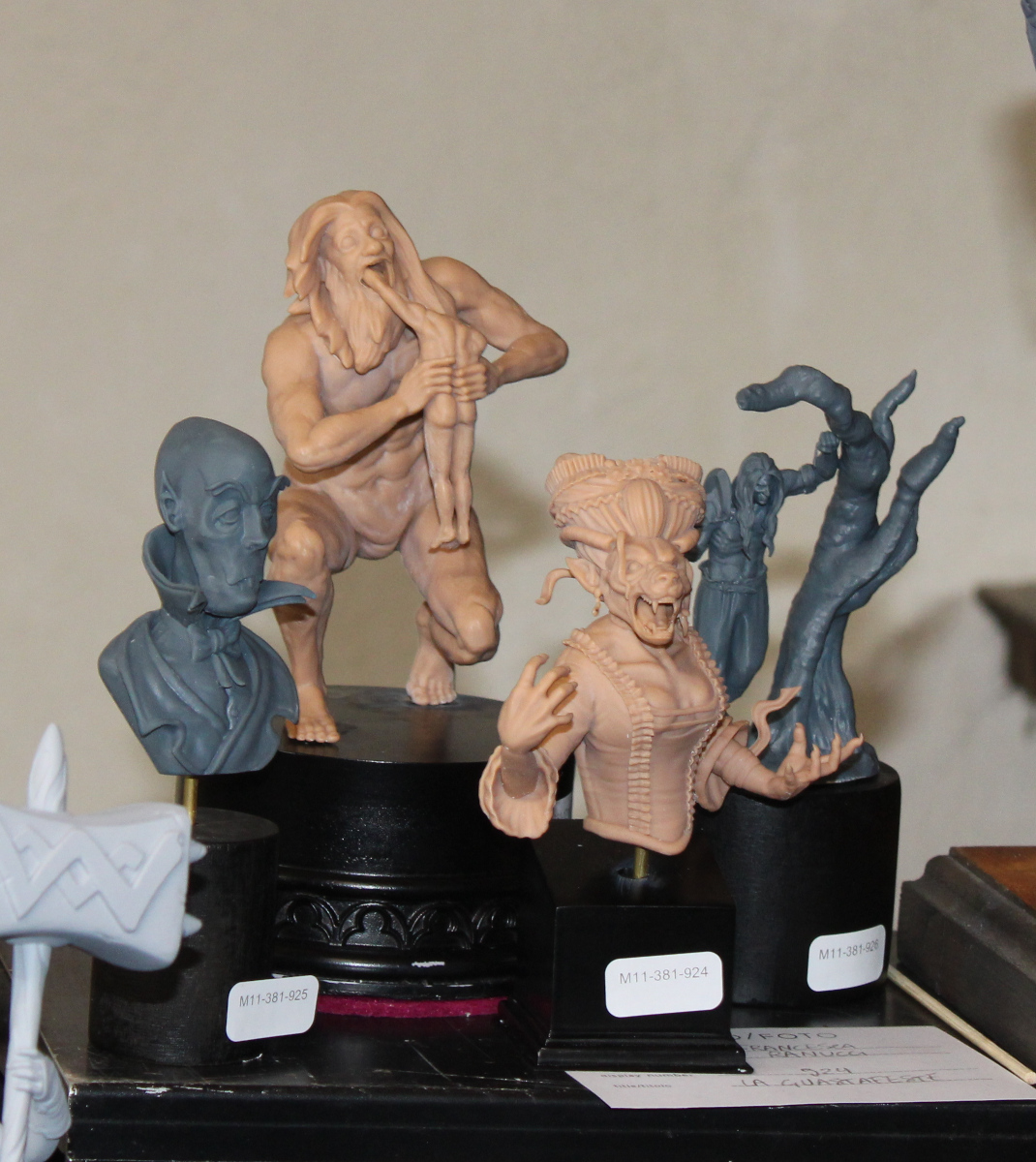
Saturn Devouring His Son, by Francesca Ranucci

Now, I often see sculptors recreating works by artists and get a little bored – we don’t need more nude warrior women, and I don’t want to see yet another model painted to be viewed from only the one angle that the original painting presented the view from.

On the other hand, Goya is a pretty special artist, and the style of the painting really doesn’t lend itself to being converted into a ‘realistic’ three-dimensional figure, and that’s what made this stand out for me. Being able to take a Vallejo, Brom, Frazetta, Ferri, etc. and turn it into a model is one thing; being able to interpret the emotion and torment of Goya’s masterpiece and render that in three dimensions is quite another. I think so, anyway.

I should see if I can get a copy in 1/72 scale.

Dioramas by Michael Volquarts

Michael actually had dioramas all over the place – it’s really his specialty. The thing I always like about his work is that he eschews military topics to focus on really lovely, quiet scenes – there’s no excessive drama (or melodrama), just a moment that’s often quite relatable. He also seems to have an unending supply of pigeons, which is pretty great.

Kirsten Dunst as Marie Antoinette, Vogue Cover September 2006, by Gabi Tysarzik

I mean, obviously. More of this sort of thing, please, and less of the endless “Sergeant Wilberforce Gravebottomly IV, Battle of Cudgington Meadows, November 13th 1729, 4:28pm”.


Monte was, once again, an enjoyable experience, and it continues to evolve in small ways. One of this year’s evolutions that may not have been as popular was the decision to move the prize giving outdoors. There’s obviously a risk with that: it’s mid-November, so it’s cold and there’s a decent chance of rain. However, the number of attendees now means that the theatre where the prize giving was traditionally held is no longer large enough (to be fair, it probably hasn’t been large enough for a number of years). I’m not sure if there are any other spaces of suitable size for the future, or if the show will have to continue gambling on the weather.

So, while the weather was fine and the prize giving went off largely without a hitch, there was no guarantee this would be the case – I’ll be interested to see how they deal with continued growth in the future, as FMS may need to face a similar challenge at some point.

As to the subject of the prize giving, the Ely crew did admirably:

  • Kev: silver in standard storytelling, bronzes in standard historical and fantasy painting.
  • Joey: silver in masters historical painting and bronze in masters sci-fi converted.
  • Martin: silver in masters storytelling, bronzes in masters historical and fantasy painting.
  • Fet: silver in masters storytelling.

I was also pretty pleased to be told by Roman Lappat that I just barely missed out on the Massive Voodoo prize for creativity, which is very cool.


To address the elephant-sized burger in the room, the most amazing burgers in the world are no more. Last year, we discovered that the takeaway pizza place just outside the city walls actually did incredible burgers – I had a Toulouse sausage one that blew my mind. Sadly, it seems that the restaurant passed into new hands since then and now the specialty is lasagne. I have nothing against lasagne, but I had been eager to have another burger.

Also lasagnes have a tendency to hide mushrooms, which is just perverse.

Scale Model Challenge 2024

Last year, as you may recall, Martin made the foolhardy decision to drive to Eindhoven for the show. I swore I wouldn’t do that again. Sure, it was handy to have the car there so we could get in and out of the show at our leisure, and take breaks on the journey whenever we wanted. We didn’t have to put up with the ridiculous security theatre at the airport, etc. But it took hours. The ferry bar is inferior to airport bars. Car seats may be marginally more comfortable than plane seats, but you’re stuck in them for hours.

So this year, we drove again.

Granted, the journey out was fine. Nothing noteworthy like getting stuck in a traffic jam in France that curiously ended at the Belgian border, or getting lost in Antwerp because the satnav in the car was massively out of date (or the Belgians were messing with everyone by uploading a fake map). However, the journey back coincided with one of the worst traffic jams in British history.

As soon as we left Dover, we were stuck in a sequence of diversions that took us through horrifyingly posh villages perched next to suburban hellholes populated by the worst dregs of British society (probably – I mostly noticed that all the houses had weirdly narrow doors. Is this a Kentish thing?). For four and half hours, we crept along, watching the red line on Google Maps get longer and longer ahead of us.

At one point, Martin decided to get out and take a look ahead to see if the traffic was clearing. He took the keys with him, like a prize idiot, so when there was the tiniest bit of space, Kev could only let off the handbrake and roll forward in a straight line. I’m sure the (probably) drug dealers in the cars around us thought this was hilarious.

Anyway, never again. (We’ll probably do it again.)

Pictures:

SMC this year broke all its previous records – more people, more models, etc. Initially, we actually thought the show was down on attendance, but that was mostly due to Robert doing some clever tweaks to the layout that made it feel a bit more spacious. As always, though, even a ‘quiet’ year at SMC is still a massive show – thousands of models from across the hobby spectrum.

An extra touch they added this year that I was very pleased to see was a set of ‘exhibitions’ – essentially special displays by a small number of modellers whose work deserves to be considered in isolation, rather than within the swarm of the competition tables. Unfortunately, the setting meant my camera really hated trying to take pictures of them. You’ll just have to satisfy yourself by checking out the artists’ Instagram pages:

There was also a display by Joris van Os, but he doesn’t seem to have an Instagram account.

For the first time, I also decided to sit in on a couple of discussions – one panel discussion about going to competitions and dealing with the stress of it led by Tue Kaae, and one on storytelling and dioramas by Mike Blank. In previous years, I’d never bothered with the talks because I felt like they’d take away time that could be spent looking at models or socialising with other painters. However, what I hadn’t considered was that I often need to get some space when at SMC – it’s all a bit overwhelming and a little claustrophobic for me at times. The talks, it turns out, gave me a nice break from it all. I’ll probably check them out again next year.

So, to the competition.

Regular readers may recall that last year was the first time SMC had included a ‘storytelling’ or ‘ambience’ category. The judging last year I felt was a bit incoherent – some pieces seemed to be rewarded for being really well painted, but without any sense of narrative whatsoever, while other pieces with strong stories were given bronzes or commended. I obviously take storytelling quite seriously (who would have thought a published novelist with a master’s degree in English lit and experience working as a narrative designer might have opinions on this?), so I was a bit anxious about what would be entered based on last year’s results and how they’d be judged.

Would the highly technical painters be emboldened or treat the category like an opportunity for another medal? Would the judges tighten up on a clearer set of definitions for the category? Or would there be a continuation of the storytelling category from Monte San Savino last year, which was incredibly strong?

As it turned out, sort of yes and no to all of them. It’s evolving. Early on, before all the displays were out, I was a little underwhelmed by what had been entered. There were some great stories, of course, and some interesting and creative pieces, but there were also quite a few that were little more than a fancy base and some lighting. But by the time the hall closed for judging, there was a decent array of pieces that stood out as clearly strong storytelling.

I think a lot of this is still down to there being a lack of a clear definition for storytelling and what fits in that category. For me, the clearest definition is that the painter is trying to make the model part of something larger – the model isn’t the whole focus as it is in painting categories.

This also means that ‘readymade stories’ are inherently weak. You can buy a lot of pieces that have a built-in story, but that just means you’re still only engaging with the model – you’re not extending beyond that to look for or to create something else. You can certainly build on those as a basis – that’s kind of fundamental to telling original stories – but you can’t rely on it, and you need to make sure you make the narrative your own, because everyone else looking at it is probably going to read the sculptor’s narrative first, and they might not get to yours.

I think the major limiting point has been the insistence on still referring to ‘ambience’ but without clarifying that this should mean there’s an ambience to the scene, not that there’s ambient lighting. As I believe I’ve mentioned many times, lighting can build drama and work with narrative; lighting by itself is very rarely a narrative.

The judging of the category was actually pretty coherent this year – there were a couple of pieces I thought were hard done by, but overall the displays that did well were the ones I thought had the strongest narrative work. Hopefully the show can build on the consistency and watch the entries improve as people get a better grasp on narrative.

Anyway, that’s quite enough ranting for now. Ely crew results were exceptional:

  • Martin: silver and bronze in masters.
  • Joey: two commendeds in masters (!).
  • Kev: one of each in standard – gold, silver, bronze and commended.
  • Fet: gold and silver in masters.

I should note that the silver I won was for Crowley. Somehow. I doubt I’ll ever understand that, but it was nice that he got something, weirdo that he is.


Meal of the weekend goes to the Italian place that had reinvented itself as a posh restaurant and the chef who went out of his way to make food that wouldn’t poison me. The restaurant also gave us plenty of free limoncello as a digestif. It turns out the rest of the Ely crew are uncultured swine who don’t like limoncello. Woe unto my (lemon-scented) liver.

Kontrast 2024

It’s taken some time to write up this show report, which I put down to burnout. Just as it’s possible to burn out on model shows, it’s also possible to burn out on writing them up. After the torrent of shows between April and June, it has taken some time to recover. So now I’m writing this a week before SMC and the start of the last part of the model show season for 2024, so I suppose I’m just hurting myself. Anyway…

Way back at the end of May/start of June, I jaunted over to the continent once again to go to Kontrast in Warsaw. I went last year, in what I think was its third outing, and we’d had a really good time, and I wanted to keep supporting a show that’s trying to break out of the usual mold of model shows.

Last year, we stayed in a fantastically Soviet-era hotel in the middle of the city. We’d figured that it would be useful as a base, especially as the metro was fast and cheap. We didn’t end up doing a lot in the city centre, however, so this year I booked us an apartment a couple of hundred metres from the show. There’s a relatively good selection of restaurants nearby, on top of the street food area set up outside the show, so there’s not really any great impetus to spend half an hour on the metro each way.

The apartment was very nice, and concealed in what we can only assume is also Soviet-era architecture. You could tell from the corridor that the apartment was intended for tourists: while the other apartments kept their steel doors and bare decoration, this one had a wooden veneer, including an artificial door frame. Very fancy indeed.

Another change this year is that Martin and Joey dipped out for dubious reasons like “needing major surgery” and “going to a wedding or something”. Meanwhile, Kev’s partner Charlotte joined us for her first international show.

Anyway, on with the appalling photography:

Last year, Kontrast stood out as a particularly hard show. They’d been victims of their own success and ended up with several hundred more models than expected, which also meant they had a relatively limited number of medals that they could award. The result was that the judges were apparently advised to be strict with the prizes. I was wondering if this year the same level of difficulty would apply.

As it happens, there were about the same number of models entered, but with presumably many more medals available to be awarded. In the end, however, I’m not sure they actually did award more. It’s hard to know, however, as they also restructured the categories, so it’s not easy to make a direct comparison. I would say that the judging still felt hard. There were a lot of pieces I was surprised to see ‘only’ get bronze, for instance, and the number of golds certainly felt exclusive.
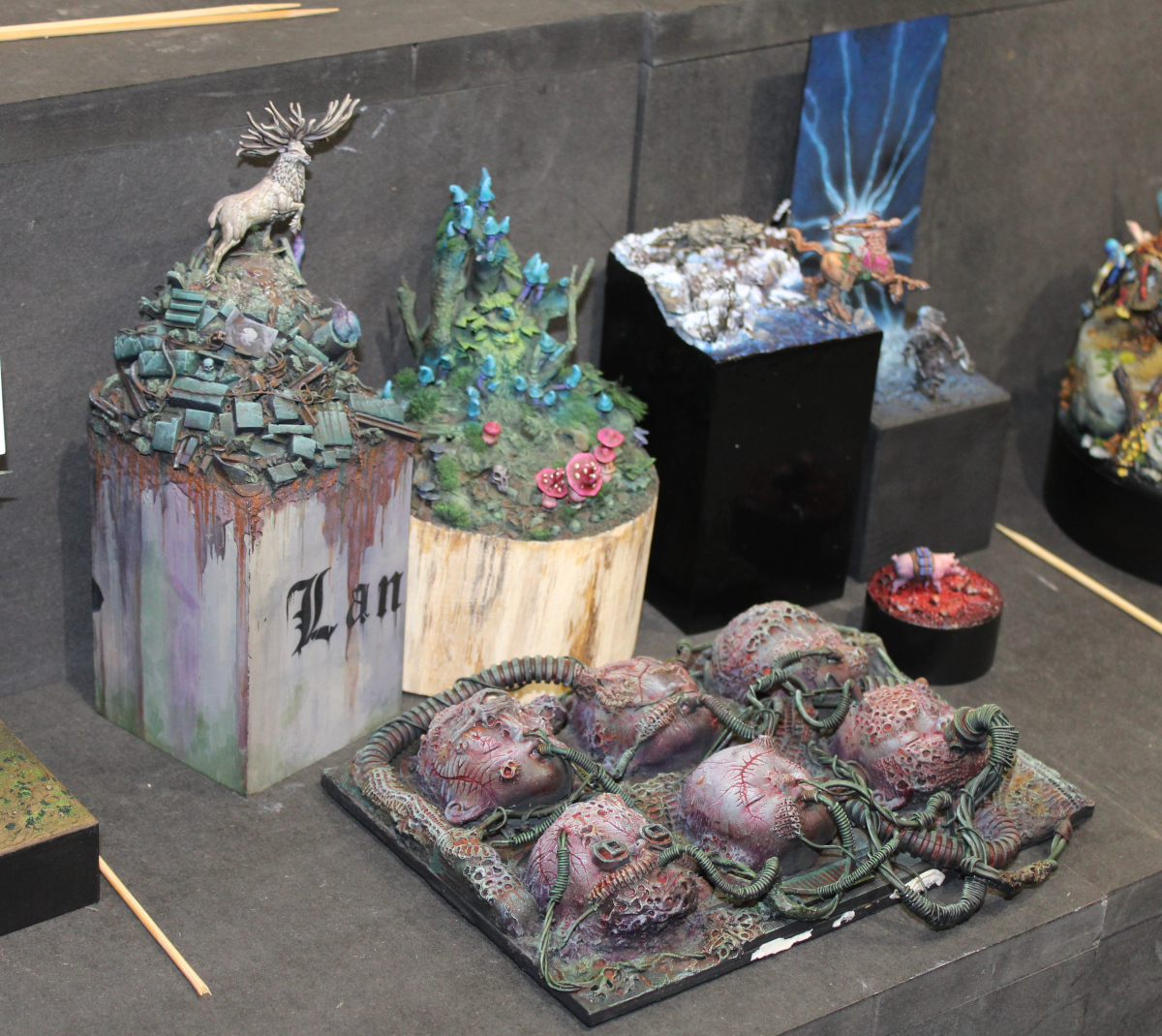
Like Monte, SMC and MPO, Kontrast is also getting in on the storytelling bandwagon, which is – for me, anyway – awesome. One of the things I like about it is that it’s not just labelled ‘diorama’. Obviously, diorama categories have existed for a long time, but they’re normally defined mechanically or taxonomically: at Golden Demon, for instance, they had to have at least three models; at IPMS-style traditional shows, they need a vehicle and figures. Those distinctions suggest there’s something essential about those things, but it ignores the reality of the person who makes the diorama: they’re trying to tell a story. As such, the key requirement for such a category should be that there’s a story.

So having shows make this linguistic distinction is a good way of clearing the air and opening up expectations. As I mentioned in my report on Monte last year, changing the name from ‘ambient’ to ‘storytelling’ clearly paid dividends.

And at Kontrast, the same was true. There was a fantastic presentation of narratives and creative ways of evoking a response from the viewers. Once again, I found the standard-level storytelling stuff especially good. There was one piece with a tree covered in tiny people that was my favourite model of the show. Seriously great, thought-provoking work.

There was some other simplification in categories beyond this, which I think helped eliminate distinctions that don’t actually matter. It seemed like a lot of this was focused on the masters’ categories rather than standard, which was an interesting approach. If anything, I would have expected more simplification in standard to help encourage people to enter. Of course, perhaps it’s the other way around and newer painters need more structure to feel comfortable entering.

What was very nice to see was that the changes in format and reputation for difficulty didn’t change the vibe of the show – just like last year, it felt very relaxed and friendly. The layout was also improved, so it wasn’t as much of a struggle to see all the models, which reduces stress in general because you’re less concerned about making sure you see everything when it’s easy to come and go. If the display area is cramped or difficult to navigate, you become loath to leave once you get in because of the effort involved in actually getting to see the models. This means that any time spent away from the displays can be slightly anxious – did I see everything? Was there a particularly special entry that I’ll kick myself for not noticing? Oh, god, if I’ve missed anything, I need to join that slow-moving queue again to gradually get dragged around the models…

Anyway, to the results:

  • Kev: gold (standard single figure >54mm), silver (storytelling) and two bronzes (historical and single figure <54mm).
  • Fet: gold in masters’ storytelling and, apparently bronze in historical (I discovered this when the official results were posted – I didn’t notice my name being called at the prize giving!).
  • Charlotte sadly got snubbed despite bringing the most magical space marine terminator in the world.

There is one negative to the show: I once again failed to find pierogis I can eat.

I’m aiming to come back to Kontrast next year (and perhaps find some delicious pierogis at last), but I have a long trip to NZ over December/January that might limit the number of international shows I can make it to in 2025. If I’m not there, someone must please hunt down the Danes and drown Thomas in booze on my behalf. It’s what the maître d’ at Sphinx would want.